



Glendalough Monastery & Wicklow Mountains National Park Guide
By ANL | UPDATED:
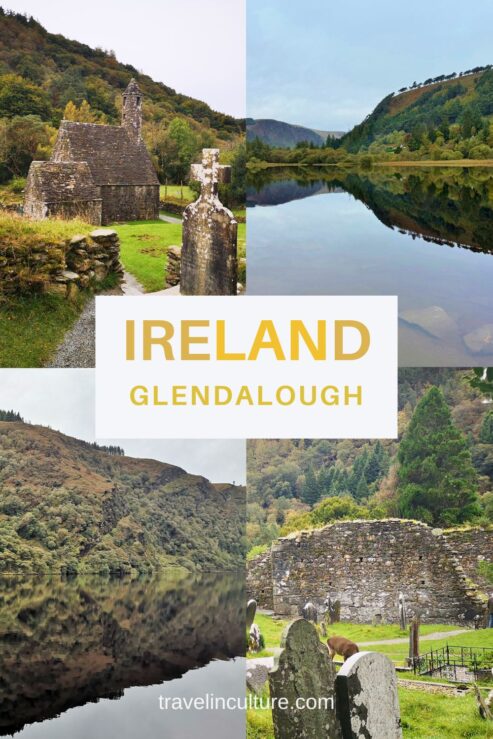
Glendalough Monastery in Wicklow Mountains National Park is one of the best places to experience Ireland’s unique blend of history, culture and natural beauty. Founded by St Kevin in the 6th century, the monastic settlement became one of the most important religious centres in medieval Ireland and remains a major pilgrimage site today.
Visitors can explore the famous Round Tower, St Kevin’s Church, the cathedral ruins and a historic cemetery before continuing to the spectacular Upper and Lower Lakes. With excellent walking trails, stunning mountain scenery and easy access from Dublin, Glendalough is an ideal day trip for travellers seeking both Irish heritage and outdoor adventure.
Whether on a day trip from Dublin or as part of an Ireland tour, Glendalough in the Wicklow Mountains National Park is a must-see! Glendalough has a lot to offer: scenic beauty, numerous hiking trails, and fascinating ancient history of the monastic site ruins.
Visitors interested in meaningful travel experiences may also enjoy learning about our cultural travel method, a practical approach to discovering destinations through their history, traditions and local heritage.
Where is Glendalough National Park
Nestled in the stunning landscape in the Wicklow Mountains National Park is the village of Glendalough. The two lakes at Glendalough are adorably picturesque and much-favoured photo spots. They are the focal point of a fantastic area filled with exciting history and adventurous trails for hiking in the hills and mountains.
Glendalough is also a filming location used in Braveheart and other films. Taking a day trip from Dublin to the Wicklow Mountains National Park is easy, as several tour operators offer half- or full-day tours.
In Wicklow Mountains National Park, Glendalough, with its fascinating history and cultural heritage, is one of the must-see locations.
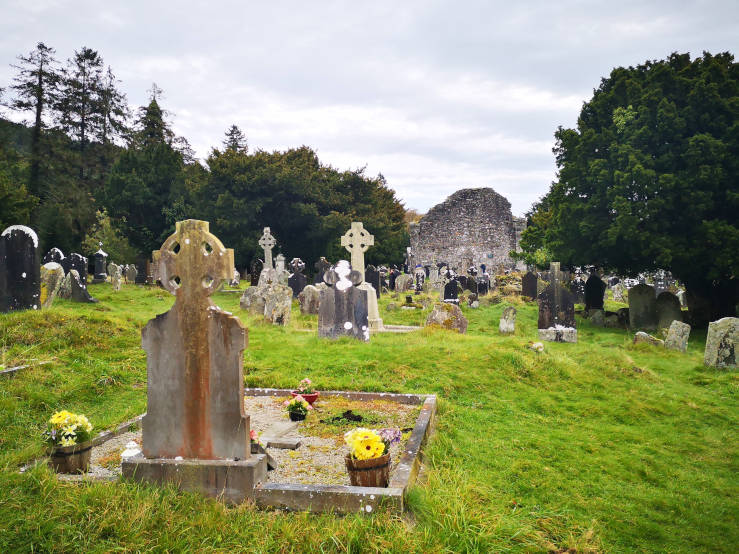
Photo: Travel In Culture
According to written sources, Glendalough Monastic Site was founded by St Kevin, a 6th-century monk who led a hermit’s life in the isolated Wicklow Mountains.
Wicklow National Park Ireland | Photo: Travel In Culture
The hermit dedicated his life to Christianity, a new faith in an ancient Celtic culture. He is believed to have settled in a remote cave by the Glendalough Upper Lake, where he could live the austere life that his faith demanded.
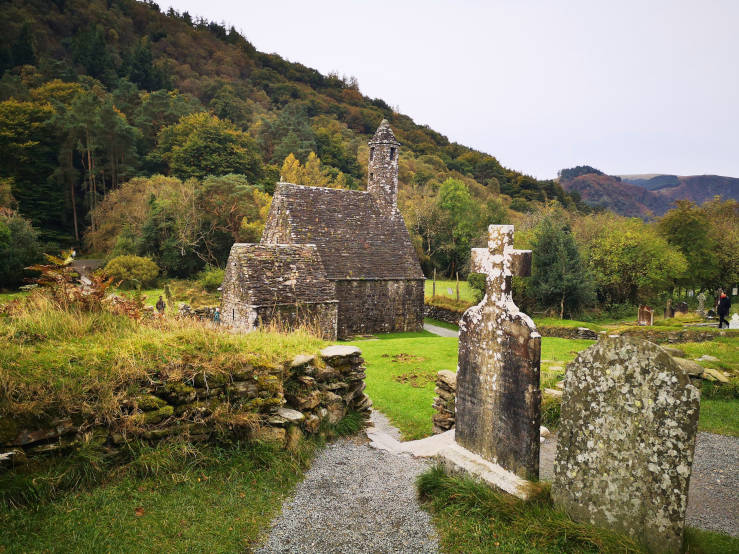
St Kevin’s Church | Photo: Travel In Culture
As a former Christian settlement, the Glendalough archaeological site includes a Cathedral, St Kevin’s Church, and the ancient St Kieran’s Church, of which only the foundation has been preserved. Glendalough is unique in Ireland, and the monastic settlement is considered one of the best-preserved in the country.
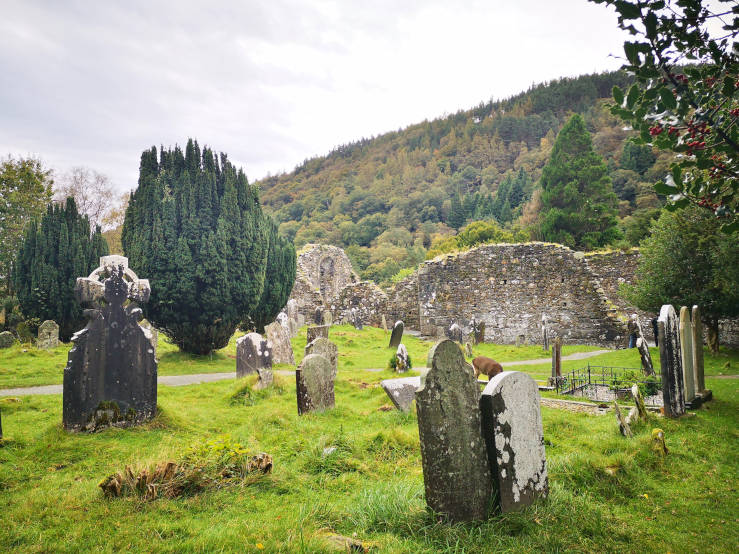
Photo: Travel In Culture
The oldest ruins of the Monastic Site thus date back to St Kevin’s time, but most of the current ruins are not quite so old. The Glendalough Cathedral was built in the 10th and 11th centuries – and has partly been restored in the 19th century to preserve the architecture and cultural heritage of Ireland’s past in the Wicklow Mountains.
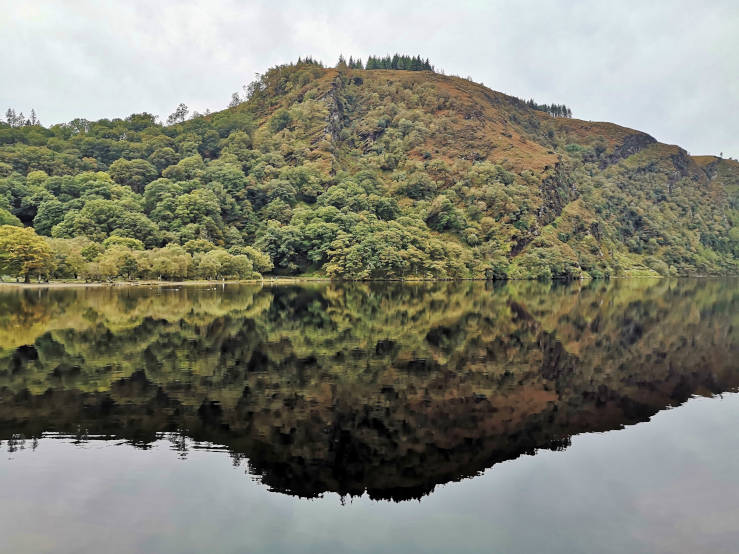
Photo: Travel In Culture
Today, the ruins bear witness to the place’s former function and its heyday when it was a symbol of a new religious era. In addition to being a sanctuary, Glendalough Monastery was a sacred place where the monastery residents could devote themselves to writing, poetry, teaching, traditional crafts, and agricultural practices in Eastern Ireland. Not surprisingly, a small religious community emerged here in the middle of what is now the Wicklow Mountains National Park. The evidence is the large number of headstones scattered around the small church.
Glendalough Wicklow | Photo: Travel In Culture
There is an instructive visitor centre where visitors can learn about Glendalough as a Christian monastic settlement and get information about the best hiking routes and viewpoints to enjoy the scenic beauty of the Wicklow Mountains National Park. A visit to the centre will give insight into the early history of Glendalough and its location in unspoilt natural surroundings, among the most breathtaking in Ireland.
If you are planning to stay in the capital before visiting Wicklow, see our guide to the best things to do in Dublin and where to stay.
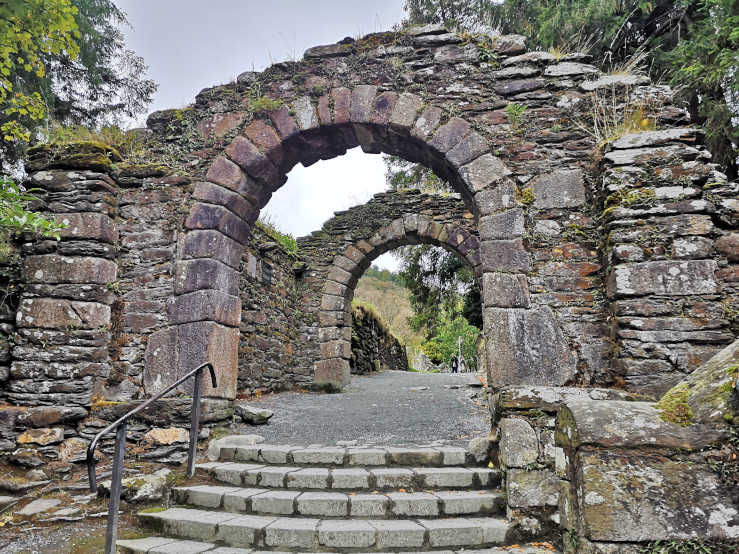
Photo: Travel In Culture
Coming from the Visitor Centre, the arched Gateway marks the main entrance to the monastic site. Continuing into the graveyard, hundreds of Celtic crosses emerge as visible proof of the religious significance Glendalough had a thousand years ago. Celtic crosses are Christian crosses with a ring, an Early Middle Age feature in Irish Christianity. They exist in three variants: plain crosses, as here at Glendalough, abstract ornamental crosses, and carved scriptural crosses. Often, the Celtic Cross is interpreted as Christ conquering death!
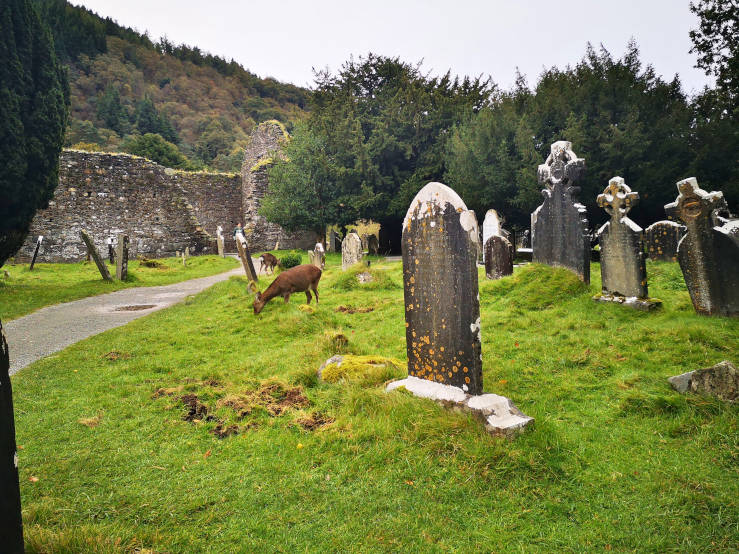
Photo: Travel In Culture
Graves and headstones still stand in the cemetery as they have done for centuries.
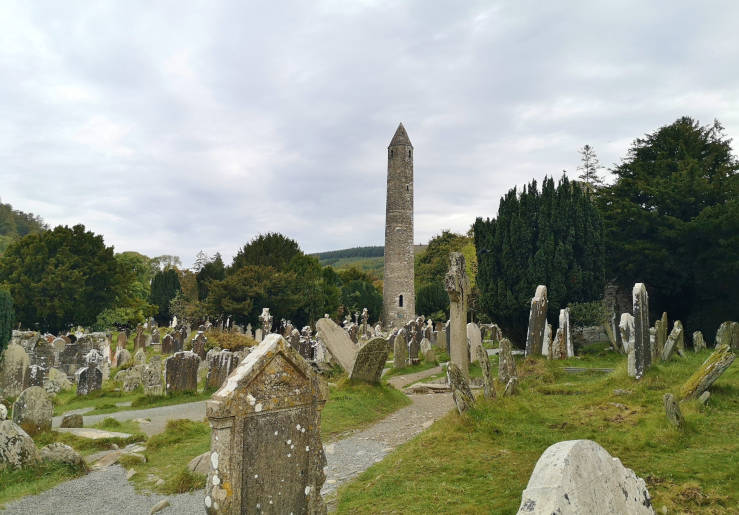
Photo: Travel In Culture
No visitor can be in doubt that Glendalough’s landmark is the 30-metre-high Round Tower, which can be seen from afar. However, there has been much speculation about its former function. Guesses range from the solid tower with 1-metre-thick walls being a simple bell tower to serving as a secure hiding place in case of an invasion by hostile people. The latter would also explain why the entrance door has been elevated from ground level. A ladder, which could be removed if desired, was thus required to enter.
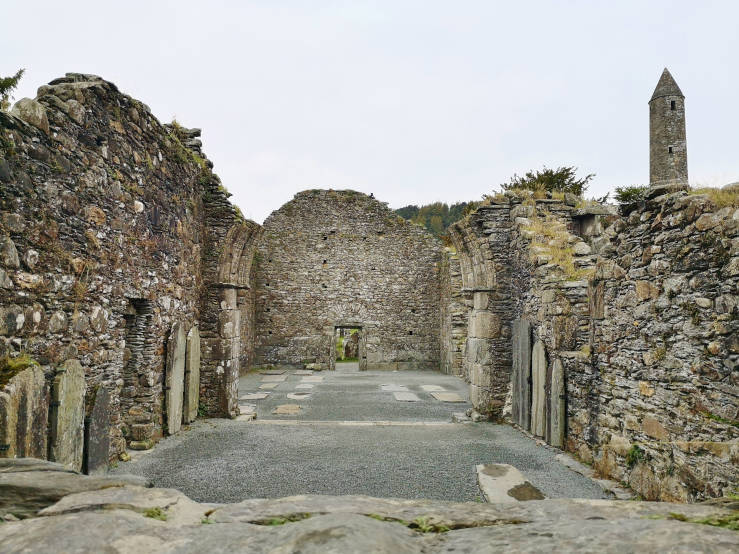
Photo: Travel In Culture
Also, in a direct line from the Gateway, the ancient Cathedral, dedicated to St Peter and St Paul and probably built in the 10th and 11th centuries, impresses visitors with its solidity and details. Most likely, it was once the centre of Monastic City, where the monks gathered for prayer.
In addition to St Kevin’s Cross and hundreds of other Celtic crosses, the ruins of the Priests’ House still exist. The Priests’ House is believed to have housed the dead priests as a resting place!
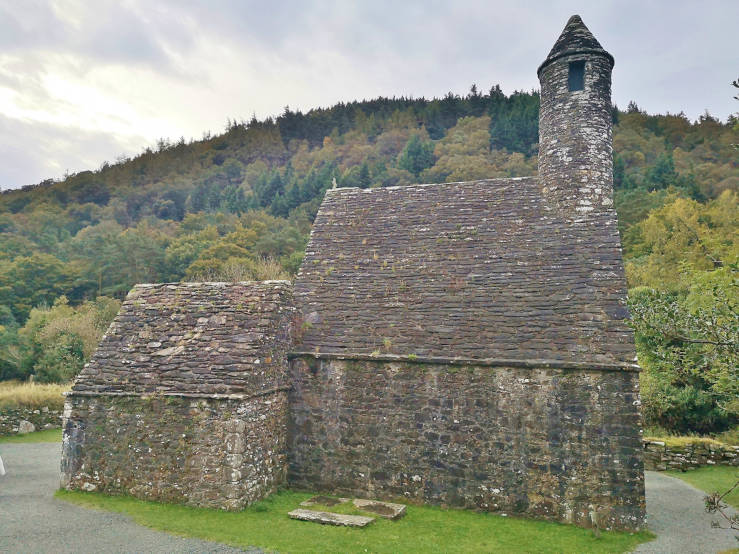
Photo: Travel In Culture
One of the highlights is St Kevin’s Church, a picturesque stone church with a rustic stone roof and an integrated round tower! The tower is accessed from the church roof. St Kevin’s Church dates to the 10th century and is the perfect photo spot at Glendalough!
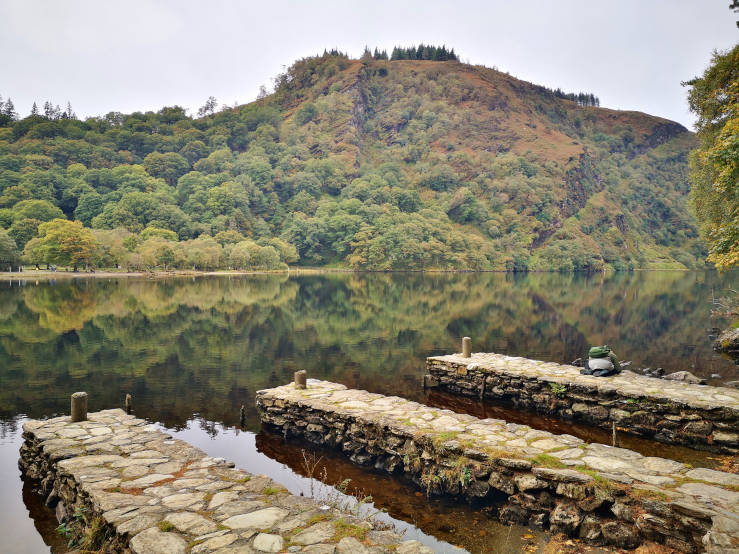
The Upper Lake | Photo: Travel In Culture
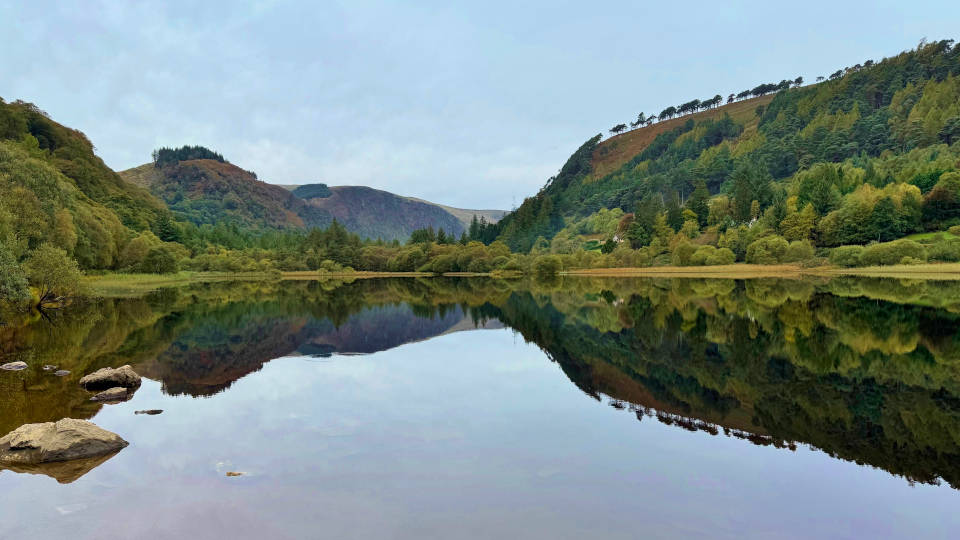
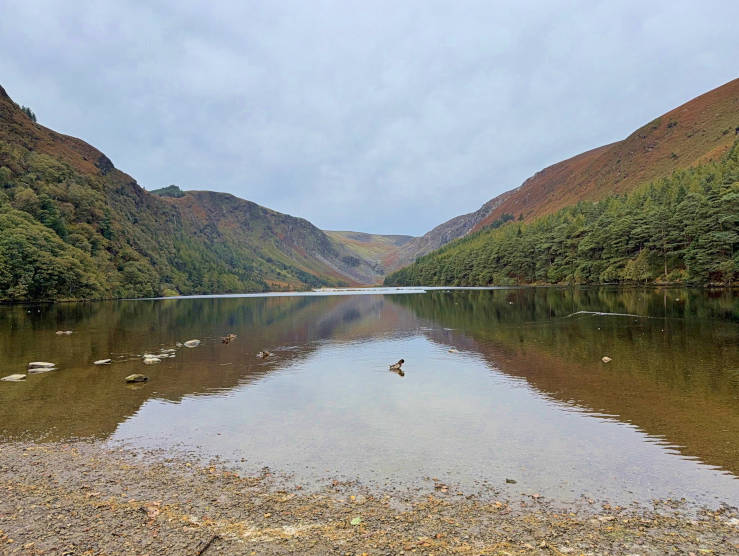
Afterwards, continue to the lakeside for spectacular views of the surrounding mountains and trees reflected in the lake mirror on a calm day. The name Glendalough originates from Gleann Da Loch (meaning ‘valley of the two lakes’ – the Glendalough Upper Lake and Lower Lake).
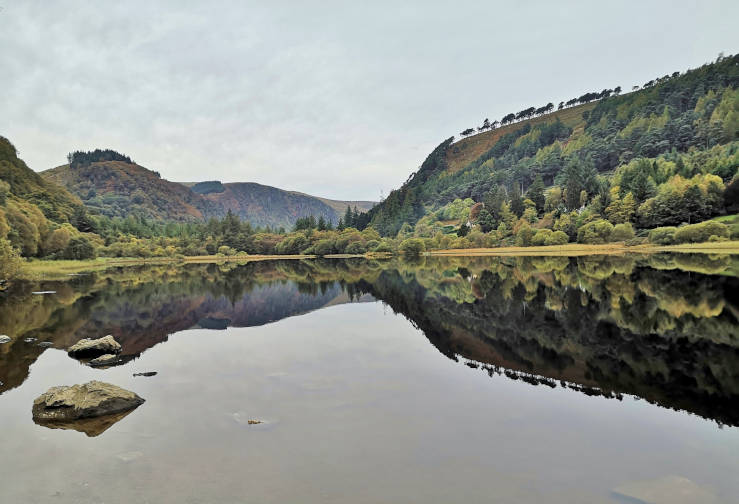
The Lower Lake in Glendalough Valley, Glendalough National Park | Photo: Travel In Culture
The nearest lake is the Lower Lake, a breathtaking small lake surrounded by forested hillsides.
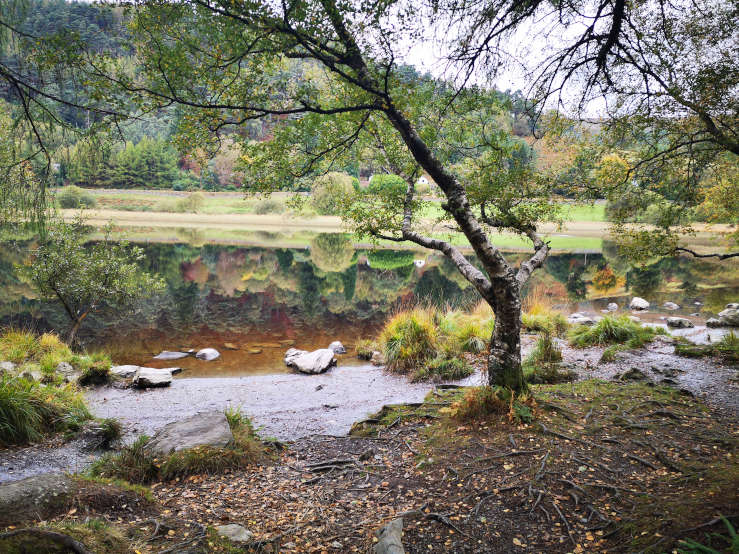
Photo: Travel In Culture
The larger Upper Lake is equally beautiful, with numerous secret spots along the lake. One location to look for is St Kevin’s Bed, a natural cave above the Upper Lake, a pilgrimage site today. According to the legend, this was what St Kevin used as a retreat where he could ponder and pray.
Travellers looking for another spectacular coastal landscape near Dublin should also consider the Howth Cliff Walk, one of Ireland’s most rewarding day trips.
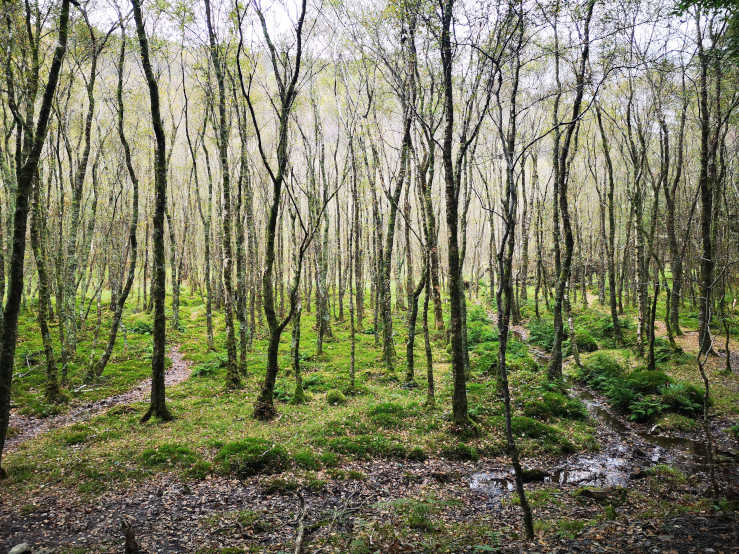
Photo: Travel In Culture
Today, Glendalough is still a famous Irish pilgrimage site. Particularly, June 3rd (St Kevin’s Day) is a popular time to visit the ancient Glendalough Monastic City.
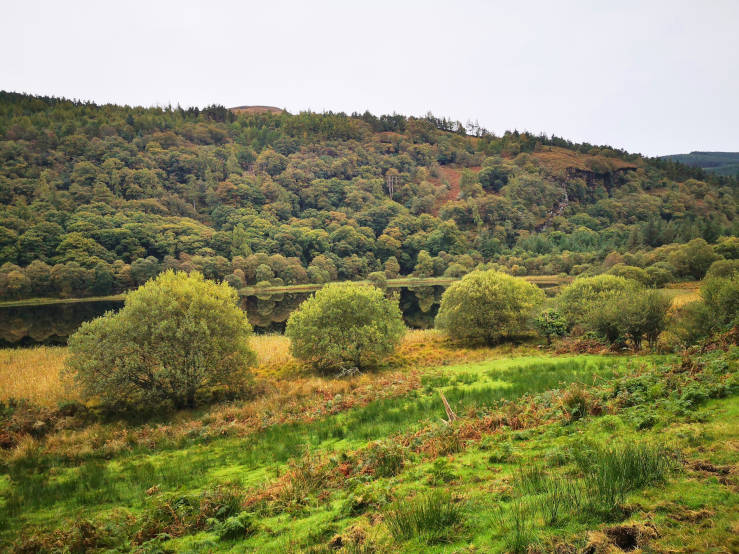
Photo: Travel In Culture
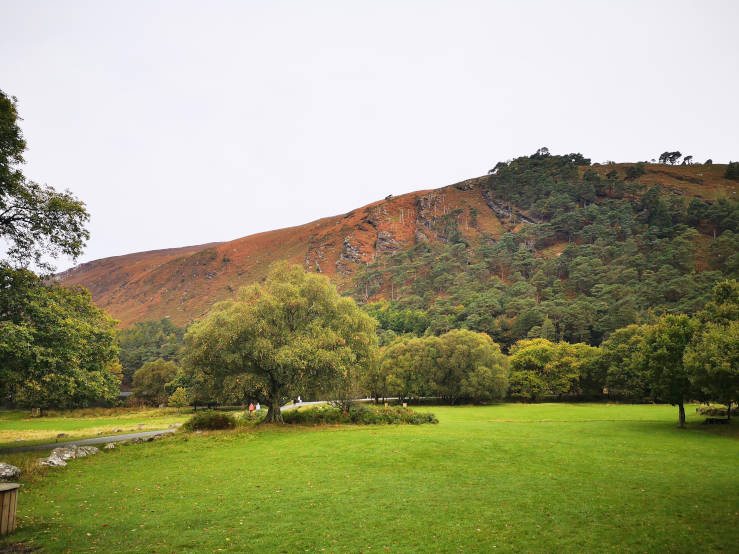
The Wicklow Mountains National Park is a stunning Irish landscape of forested mountainsides, scenic lakes, flowing streams, and soft green hillsides and valleys where the sheep graze. It stretches a large area south of Dublin.
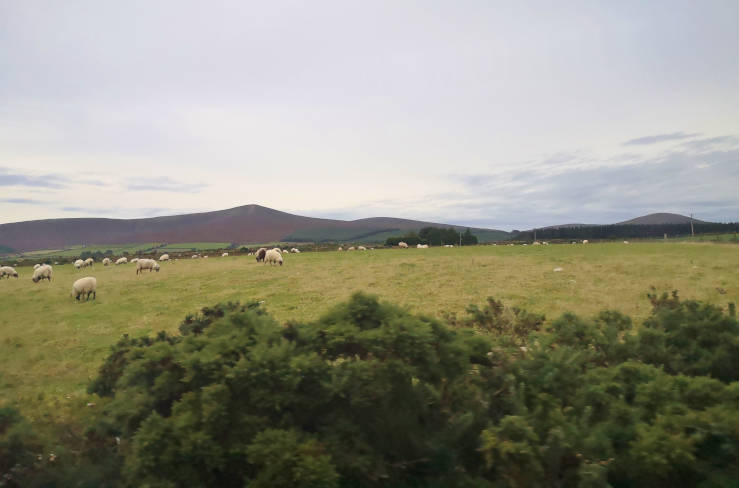
Photo: Travel In Culture
When you are visiting Dublin and also want to experience some magnificent Irish scenery, the Wicklow Mountains National Park is perfect for a day trip out of the city. Wicklow is the largest national park in Ireland and the only one within a reasonable distance from Dublin. Including the ancient culture at Glendalough is a must for the culturally interested. Other cultural heritage sites in the Wicklow Mountains National Park include two mines, where lead, silver, and zinc were mined until 1957.
Wicklow Mountains National Park Ireland | Photo: Travel In Culture
The area is absolutely walkable, and there are two popular paths: the Wicklow Way and St Kevin’s Way, the latter being an ancient pilgrimage route.
Frequently Asked Questions
How far is Glendalough from Dublin?
Glendalough is approximately 50 kilometres south of Dublin and can be reached by car in about one hour. Guided day tours are also widely available.
Is Glendalough worth visiting?
Yes. Glendalough combines one of Ireland’s most important monastic sites with beautiful lakes, hiking trails and mountain scenery.
What is the best time to visit Glendalough?
Spring, summer and early autumn offer the best weather and longest daylight hours. Early mornings are often quieter throughout the year.
Can you hike in Wicklow Mountains National Park?
Yes. The park has numerous marked walking routes ranging from short lakeside walks to longer mountain hikes such as the Wicklow Way.
How much time do you need at Glendalough?
Most visitors spend between two and four hours exploring the monastery, visitor centre, lakes and nearby walking trails.
Who was St Kevin?
St Kevin was a 6th-century monk who founded the monastic settlement at Glendalough and became one of Ireland’s most revered saints.
Is there an entrance fee for Glendalough Monastery?
The monastic site and surrounding landscape are free to visit. Charges may apply for parking and certain visitor facilities.
What are the highlights of Glendalough?
The Round Tower, St Kevin’s Church, the cathedral ruins, the cemetery, the Upper Lake and the Lower Lake are among the main attractions.
Can you visit Glendalough without a guided tour?
Yes. Many visitors travel independently by car or public transport and explore the site using the visitor centre information and walking trails.
Read next: Where to Stay in Dublin & 9 Cool Things to Do