




Iguazú Falls in Argentina: Explore Iguazú National Park and Rainforest Adventures
By ANL | UPDATED:
1. Iguazú National Park Argentina: Overview
2. Where to Stay near the Falls
3. Top Trails and Viewpoints
4. Wildlife and Rainforest Experiences
5. Argentine or Brazilian Side of Falls
6. Tips for Visiting
1. Iguazú National Park Argentina: Overview
Iguazú National Park in Argentina lies on the border with Brazil, protecting one of the world’s most extensive waterfall systems. Designated a UNESCO World Heritage Site in 1984 and later recognised as one of the New Seven Wonders of Nature, the park brings together vast waterfalls and lush subtropical rainforest in a landscape of striking ecological significance. Covering nearly 67,000 hectares, it forms part of a protected ecosystem extending across the border into Brazil. Together, these reserves preserve not only one of the most extraordinary waterfall systems on the planet, but also the rainforest that sustains its remarkable biodiversity.
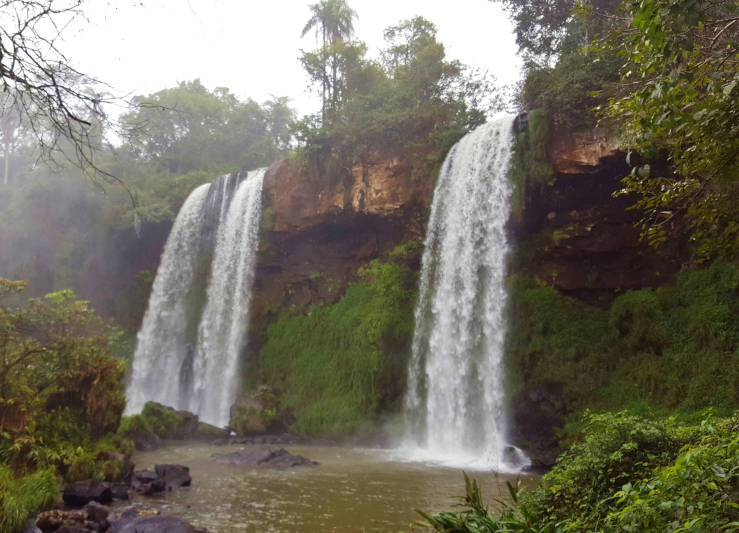
Hundreds of individual falls combine to create the immense scale that defines Iguazú.
Arriving from Buenos Aires, we immediately sense the shift in climate. The air feels warmer and heavier, almost tropical in intensity. Humidity clings to our skin as the rainforest surrounds us the moment we step off the plane, dense and intensely green.
The park contains between 150 and 300 separate falls, depending on the season, with the tallest drop reaching 82 metres, surpassing Niagara Falls in height. In fact, the entire waterfall system stretches nearly three kilometres in width, making it wider than both Niagara Falls and Victoria Falls, and placing it among the broadest waterfall systems on Earth. It creates a panorama of cascading water that feels almost endless. This immense scale is one reason the falls rank among South America’s most compelling natural attractions. No description we encountered before arriving fully captures the sensation of standing here. Watching water pour relentlessly over the cliffs, we feel the experience not only visually, but physically, in the subtle vibration beneath our shoes and the constant thunder in our ears.
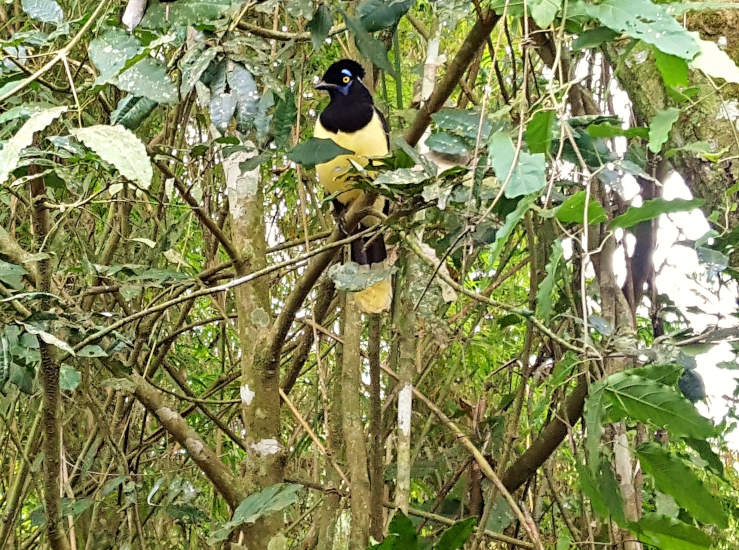
A plush-crested jay pauses in the rainforest canopy, one of the many vibrant bird species found in Iguazú National Park.
The surrounding rainforest is part of the Paranaense subtropical forest, within the Interior Atlantic Forest. Once far more extensive, it has been reduced over centuries by logging and agriculture, yet what remains teems with life. Towering trees form a dense canopy, sunlight flickering through the leaves, while the air hums with the calls of birds and the rustle of unseen creatures. We catch a glimpse of a toucan flitting between branches, a small but vivid reminder of the forest’s abundance.
More than 2,000 plant species, around 400 bird species, and approximately 80 mammal species inhabit the park, making it one of Argentina’s richest protected areas for wildlife observation. As one of the last substantial stretches of the Atlantic Forest, one of South America’s most threatened biomes, the park plays a crucial role in biodiversity conservation. For travellers seeking both natural beauty and environmental significance, Iguazú offers a rare combination of spectacle and substance. We are not simply visiting waterfalls – we are stepping into a living ecosystem, where water, forest, wildlife, and climate interact in an intricate, ever-changing balance. This immersive perspective reflects a broader philosophy of cultural and place-based travel that shapes how we experience the world.
Travellers seeking a different perspective may wish to explore guided excursions and boat experiences within the park:
2. Where to Stay near Iguazú Falls in Argentina
We have chosen to stay as close as possible to the park to maximise our time at the falls. After reviewing multiple options, we settled on the Gran Meliá Iguazú. It is easy to travel to this hotel when you arrive at Cataratas del Iguazú International Airport as it lies just 10 to 12 kilometres away, around 15 to 20 minutes by taxi. The airport is closer to the park than to the town of Puerto Iguazú, which is approximately 20 to 25 kilometres from the airport. From Foz do Iguaçu International Airport on the Brazilian side, the distance to the park is roughly 25 to 30 kilometres, or 45 to 60 minutes by taxi, depending on border crossing times.
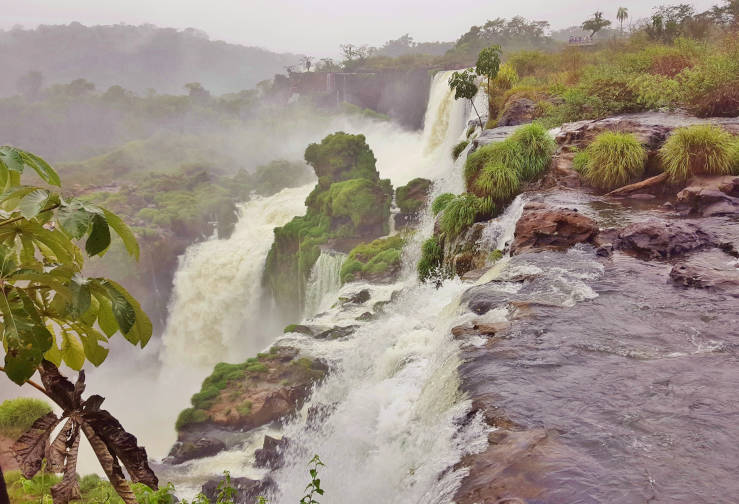
Up close, the movement of water reveals intricate textures and shifting patterns shaped by constant flow.
However, for our first night, we stay at a more affordable hotel between the park and Puerto Iguazú. The hotel has a large outdoor swimming pool and friendly staff, offering free Wi-Fi and breakfast. This combination of one practical night and one immersive night inside the national park itself proves both economical and deeply rewarding.
For those preferring to stay outside the park, Hotel Carmen and Hotel Saint George are convenient alternatives. For travellers considering alternatives, Hotel Carmen, set on the outskirts of Puerto Iguazú, sits within a peaceful forest setting and features two outdoor pools. Hotel Saint George, just 300 metres from the city centre, combines gardens and pools with convenient transport connections to the falls. Both hotels are well-suited for travellers wishing to stay near the falls in Argentina without the higher cost of accommodation inside the national park. Staying in Puerto Iguazú also allows easy access to restaurants, shops, and transport connections, which may suit visitors planning to explore both the Argentine and Brazilian sides of Iguazú Falls.
The same taxi driver who collected us at the airport takes us directly to Gran Meliá in the morning, saving time and allowing us to begin our exploration early. We now have a full 24 hours, nearly a day and a half, inside Iguazú National Park ahead of us, maximising every hour within the park.
Located inside the park itself, the hotel allows guests to wake up to the distant sound of cascading water and the calls of tropical birds. From our room and the infinity pool, clouds of mist from Iguazú Falls in Argentina rise above the treetops. The outdoor pool and spa provide welcome relief after long hours on the trails, while the generous breakfast buffet, with exotic fruits and regional specialities, prepares you well for a full day of exploration. Staying inside the park means stepping out early, before most day visitors arrive, and returning at dusk when the rainforest grows quiet again.
3. Top Trails and Viewpoints at Iguazú Falls
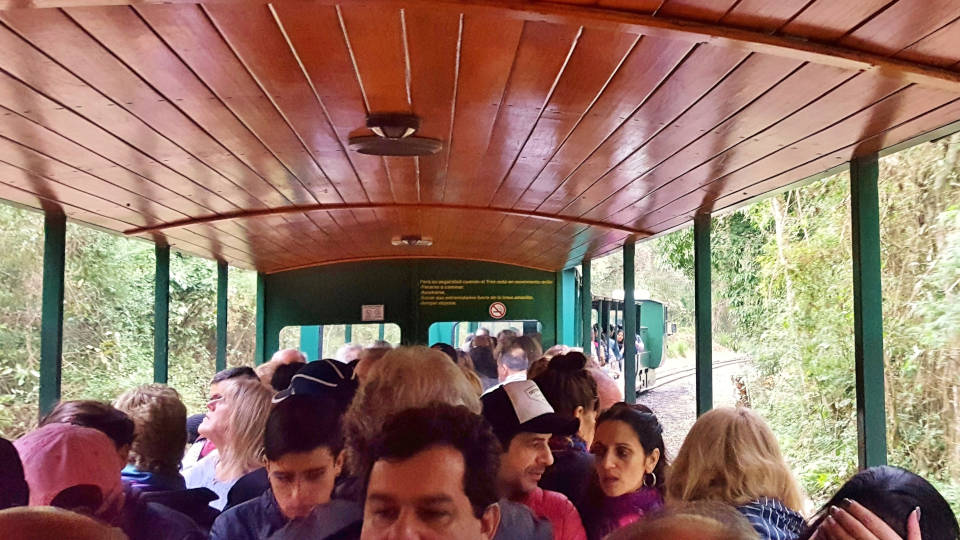
Once inside the park, we plan our itinerary to include the must-see trails. The Green Train of the Jungle carries visitors through dense rainforest to the Devil’s Throat or Garganta del Diablo. Full of expectation, we step along the trails towards the thundering falls.
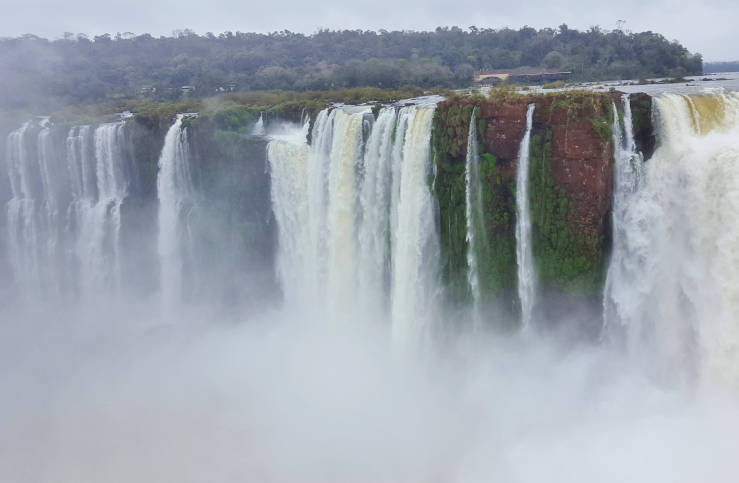
Garganta del Diablo, the dramatic heart of Iguazú Falls, where water thunders into a vast cloud of rising mist.
Wearing rain ponchos to protect ourselves from the spray, we feel the intensity building with every step. The closer we come, the louder the roar becomes, until conversation is almost impossible. By the time we reach the rim of Garganta del Diablo, we are completely soaked, despite our precautions. The water plunges into a vast chasm more than 80 metres deep, creating a permanent cloud of mist that drifts skywards like smoke. This is the dramatic heart of the waterfall system, and for us it feels almost primeval, raw and untamed. It feels overwhelming, elemental, and utterly impossible to ignore.
The Upper Circuit offers elevated views of cascading water and smaller falls, giving us a chance to absorb the rainforest and its extraordinary flora from above. Colourful birds move between branches, and butterflies flicker through the humid air. The well-maintained walkways make this section accessible and relatively easy, suitable for most fitness levels. Walking along the Upper Circuit, we often pause, inhaling the humid, earthy air and gazing down at the ribbons of water streaming through the deep green vegetation.
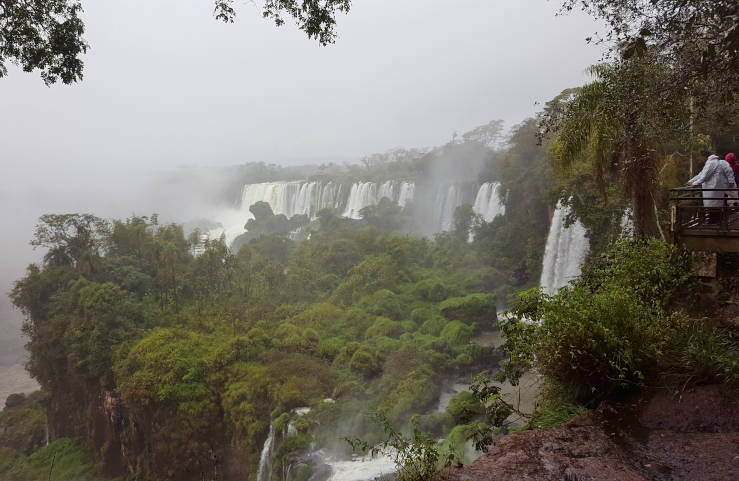
View from the Upper Circuit in Iguazú National Park, offering sweeping perspectives across the falls.
The perspective shifts constantly, each bend in the walkway revealing another cascade, another angle, another display of the river’s relentless force. From this vantage point, boats appear almost toy-like as they approach the cascades below, offering passengers a surreal yet exhilarating encounter with the crashing water. Watching them from above reinforces the immense scale and force of the river. It is not an experience for the faint-hearted.
The Lower Circuit allows us to experience the falls up close, walking among the roaring waters and feeling the sheer force of the cascades. Here, standing almost at water level, the sound reverberates through the body. Looking up at the torrents from below creates an entirely different perspective, one that feels enveloping and dramatic at the same time. Water droplets speckle our skin and clothes, and we laugh at how futile it seems to remain dry, despite our rain gear. Here, remaining untouched by the falls is impossible. We are part of the atmosphere now, moving through mist rather than merely observing it.
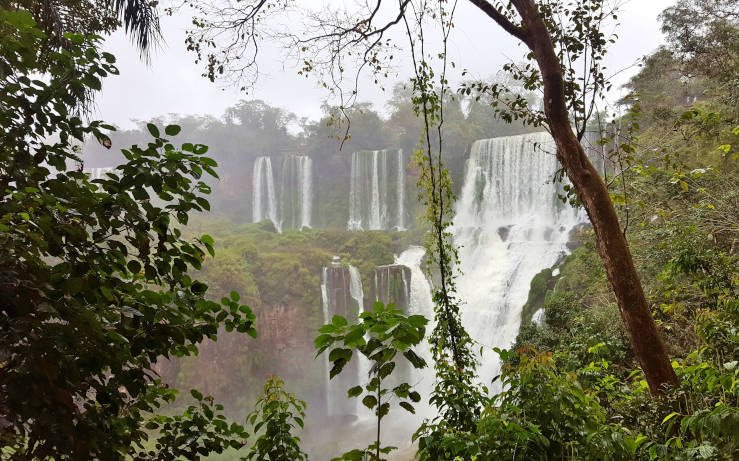
The dense Atlantic Forest surrounding Iguazú Falls forms one of South America’s most biodiverse ecosystems, where fine spray from the waterfalls lingers in the humid air.
For most visitors, one full day allows time to explore the Upper Circuit, Lower Circuit, and Devil’s Throat at a steady pace. However, spending two days at Iguazú Falls in Argentina provides a far more relaxed and rewarding experience, especially in the warmer months when heat and humidity intensify. We make the most of our two days here, immersing ourselves fully in the trails, viewpoints, and rainforest.
The touch of luxury at Meliá begins with a reception for all guests before dinner. It is precisely what we need after a long day immersed in rainforest humidity and the roar of waterfalls. Digging out our nicest (and only!) shirt and dress from the bottom of our rucksacks, we get ready. A team of attentive waiters greets us beside a long table laid with Argentinian wines and glasses resting on crisp white linen.
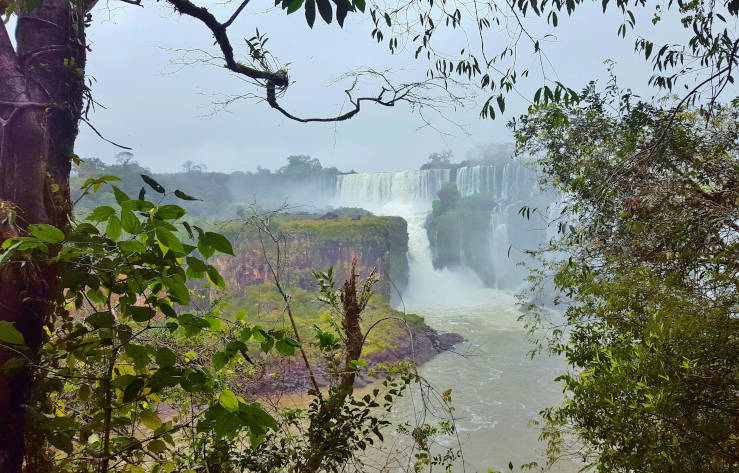
A picture-postcard panorama of Iguazú Falls, where cascading water stretches across the rainforest horizon.
As evening falls, we sit quietly overlooking the jungle canopy, listening to the layered sounds of humming insects and distant water.
4. Wildlife and Rainforest Experiences in Iguazú National Park
In the morning, we wake to lively bird activity in the treetops and the most lavish desayuno yet on our South America trip. Dozens of exotic fruits, many completely unfamiliar to us, sit alongside every breakfast delight we could imagine. We even try the traditional Argentine infusion, yerba mate, often chosen over coffee or tea. Served in a hollowed gourd with a metal straw called a bombilla, the ritual of drinking yerba mate feels both social and distinctly local, connecting us to the culture around us.
After the sumptuous breakfast, we set out for a morning hike through the jungle. We follow the Macuco Trail, a longer and deeper path leading down to the river, intending to tackle just the first section. If we are fortunate, we may encounter more wildlife along the way.
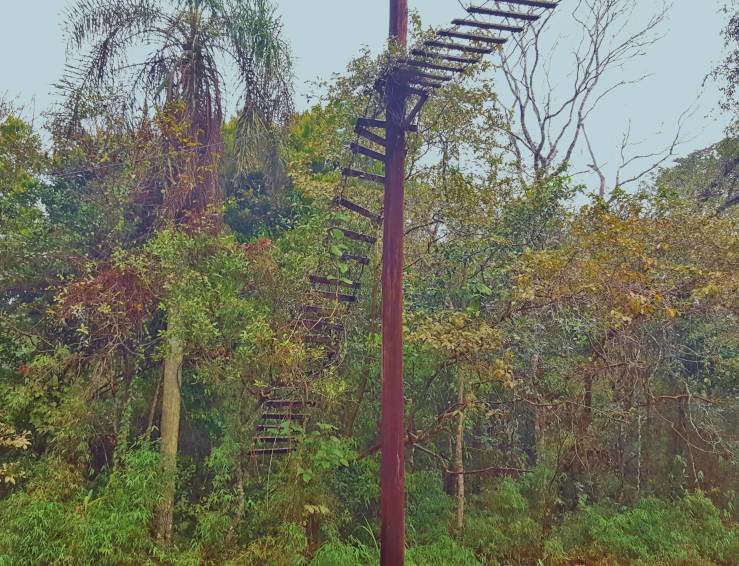
Wildlife crossings allow animals to move safely between sections of rainforest divided by roads.
Wildlife in Iguazú National Park is exceptionally diverse. Moving quietly along the forest paths, we notice monkeys travelling swiftly along what seem like invisible highways in the treetops, rarely descending to the ground. Coatis wander near the trails, alert and opportunistic, watching visitors carefully.
We learn that the Green Trail occasionally offers rewarding wildlife sightings. It is not long but twists through the dense forest. We keep looking to register even minor movements through the undergrowth. Giant ants cross our path, but it is not until we are on our way back that we get a chance to view something special.
A group of children walking ahead of us suddenly stops and begins whispering excitedly. We catch the word ‘tapir’. A tapir steps cautiously from dense vegetation, far larger than we imagine, its presence both gentle and unexpectedly imposing. It grazes calmly, seemingly indifferent to us, before slipping back into the undergrowth as silently as it arrives. For a few seconds, the forest feels almost suspended in silence.
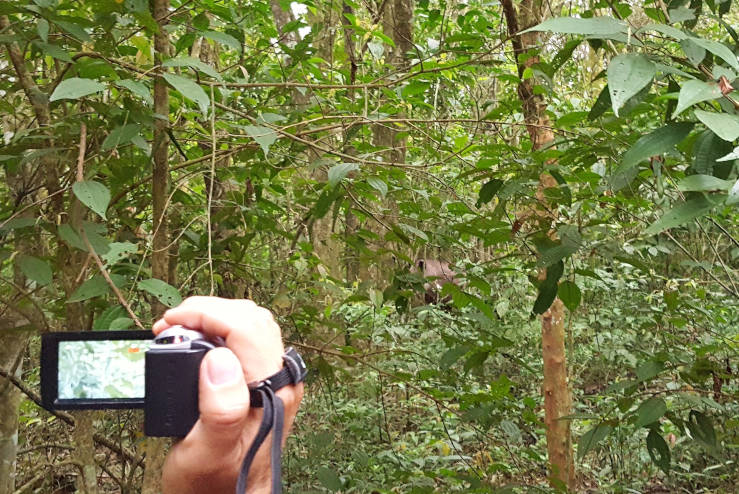
A rare moment in the jungle: a tapir emerges quietly from the undergrowth, reminding us of the park’s remarkable wildlife.
The birds are vibrant and abundant, including toucans and other exotic species, while colourful butterflies flit through the humid air. Even from the hotel, we hear the rainforest waking up at dawn, birds calling, and insects moving through the dense vegetation. Staying within the national park amplifies this connection to nature, as the sounds of the forest form a constant backdrop, from the first light of dawn to the gentle hush of nightfall. For visitors interested in Iguazú National Park wildlife, patience and quiet observation greatly increase the chances of meaningful encounters.
The park trails allow for intimate encounters with nature, from tiny jungle ants making their way across our path to the thrill of spotting larger mammals at a distance. Staying inside the park enhances this experience, offering constant access to the sights and sounds of the rainforest. Few places in Argentina offer such a concentrated combination of waterfalls and biodiversity within a single protected area. Nature does not feel distant. It feels immediate and alive.
5. Choosing Between the Argentine and Brazilian Sides of Iguazú Falls
Choosing which side of Iguazú Falls to explore felt challenging at first.
Approximately 80% of the waterfalls lie on the Argentine side, offering multiple trails and varied perspectives, including views from above, below, and behind the cascades. The Brazilian side, centred around Foz do Iguaçu, provides a more panoramic perspective of the falls, but we opted to limit ourselves to Argentina to maximise immersion in the jungle trails and the intimate scale of the falls.
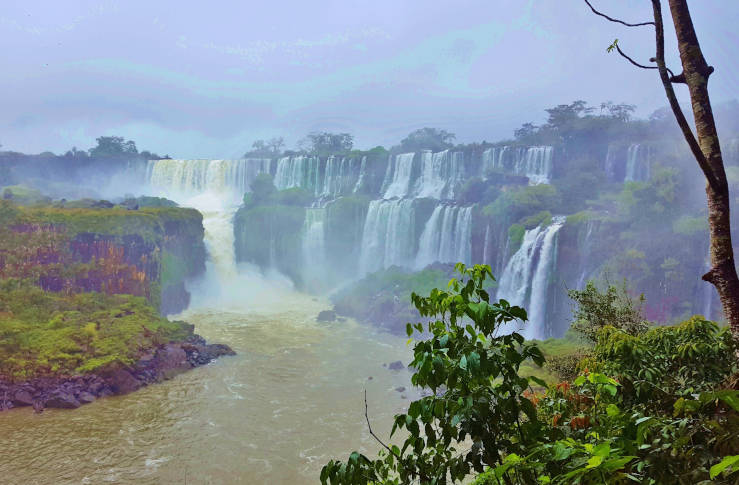
A sweeping view of the falls reveals the vast scale of one of the world’s largest waterfall systems.
In practical terms, the Argentine side of Iguazú Falls offers depth and variety, with several kilometres of walkways and multiple circuits allowing close encounters with the water. The Brazilian side, by contrast, delivers the iconic wide-angle panorama. Here, the full sweep of the Argentine side of the falls can be admired from a distance. If time allows, visiting both provides a complete understanding of the landscape. However, with only one or two days available, focusing on Iguazú Falls in Argentina ensures a richer and more immersive experience.
Travellers frequently ask which side of Iguazú Falls is better, though the answer depends on how much time you have and how you prefer to experience the park: those seeking immersion and extensive walking generally favour the Argentine side, while visitors prioritising sweeping views may prefer Brazil. The difference is not simply geographical. It is experiential.
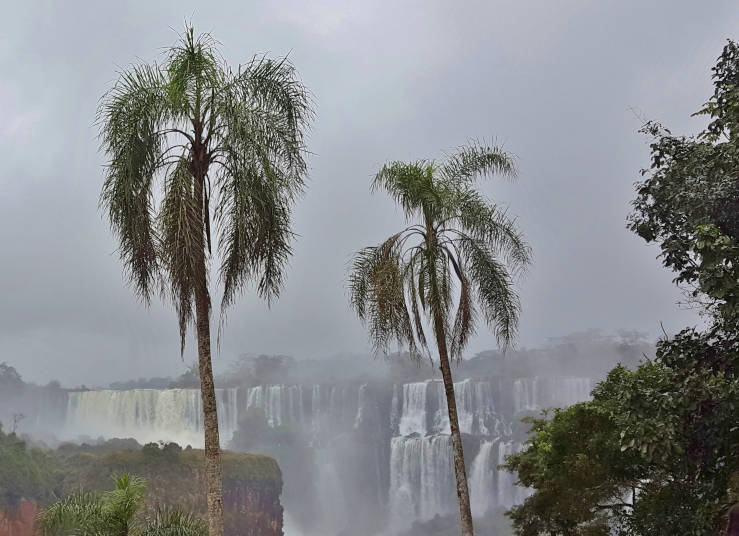
Towering palms and thick vegetation frame the trails, immersing visitors in the humid Atlantic Forest landscape.
On the Argentine side, we walk within the landscape. On the Brazilian side, visitors contemplate the falls from afar, with the panorama stretching wide to reveal the full grandeur of Iguazú Falls in Argentina, showcasing the river’s immense force. Experiencing both sides, even briefly, gives a complete sense of the falls’ majesty, yet each leaves a distinct impression on the senses and the memory.
The Argentine side also offers boat excursions beneath the waterfalls and across to San Martín Island for more adventurous visitors. We plan carefully and spend the day immersed in the park, following the trails from sunrise to evening, surrounded by the constant roar of the waterfalls.
6. Tips for Visiting Iguazú Falls in Argentina
The best time to visit Iguazú Falls in Argentina depends on what you value most. Higher water levels between November and March create more dramatic cascades but also bring heat and humidity. Cooler months from May to September offer more comfortable walking conditions, though water volume may be lower. During these months, the air feels clearer and walking long distances along the circuits becomes noticeably easier, particularly in the early morning light. During peak holiday periods, visitor numbers increase significantly, so arriving at opening time helps secure a quieter experience at Garganta del Diablo.
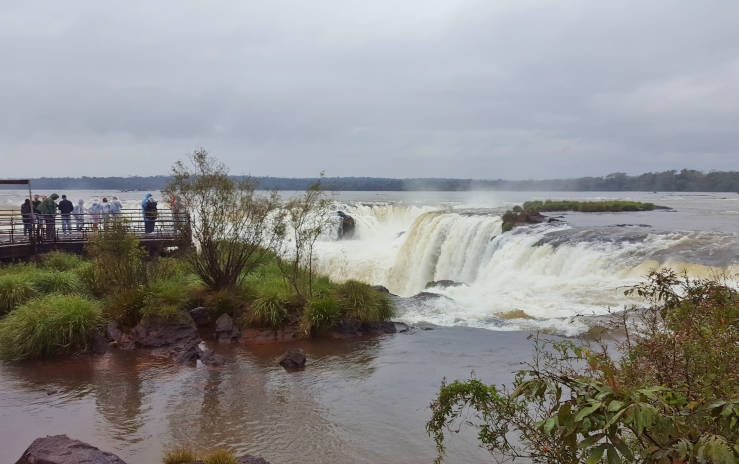
Visitors peer into Garganta del Diablo, where the river plunges more than 80 metres into a churning abyss of mist.
Tickets can be purchased at the entrance, but checking opening hours in advance is recommended, especially during public holidays.
We find that staying inside or very near the park makes a significant difference in our visit. Arriving early in the morning, with early check-in available from 9 am, and leaving our luggage at Gran Meliá Iguazú helps us avoid peak visitor numbers and begin exploring before the walkways grow busy. That said, not much gear is needed for the park, although rain ponchos and waterproof shoes are highly advisable, particularly at Devil’s Throat and along the Lower Circuit, where spray saturates the air. Light, breathable clothing proves far more comfortable in the humid climate than heavy fabrics. Bringing sufficient water, sun protection, and insect repellent is advisable throughout the year.
Although Iguazú National Park is teeming with wildlife, some of the animals integrate very well with the civilisation around the hotel. The monkeys in particular appear entirely at ease around the hotel grounds. A member of staff politely reminds us that under no circumstances should we leave our balcony door unlocked. The monkeys rule here, and they are astonishingly clever. Balcony doors left unsecured are treated less as boundaries and more as invitations. Without proper precautions, monkeys have been known to enter guest rooms in search of minibar refreshments, an amusing anecdote for some but a genuine inconvenience for most.
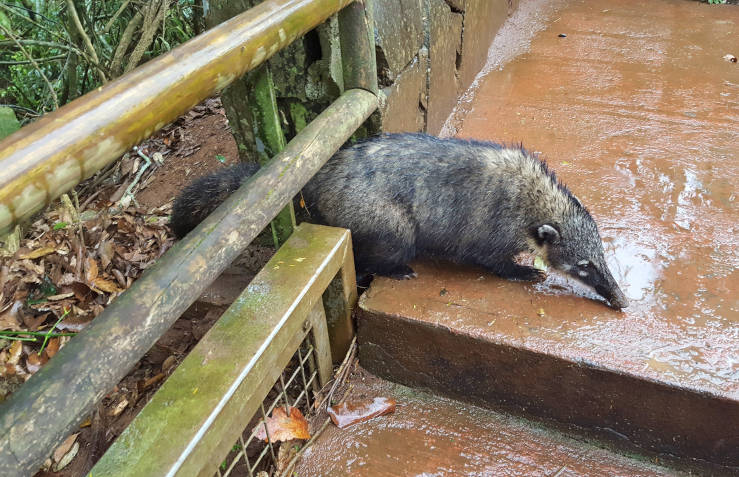
Coatis frequently roam the hotel grounds, opportunistically searching for food.
Likewise, we keep an eye on the coatis that frequently circle around the hotel. We are advised not to eat near them, as they are likely to attempt to snatch food.
Taking our time on several hikes and pausing throughout the park ensures a more immersive experience during our two days. Allowing time simply to stand, listen, and observe enhances the experience far beyond a day visit, rushing between viewpoints.
We stay in touch with the taxi driver who brought us to the hotel and arrange for him to collect us when we leave for the airport on the Brazilian side. This way, we do not lose any time at the park arranging a new ride. As we leave Iguazú Falls in Argentina, we carry more than photographs. What first felt overwhelming now feels grounding. This is not merely a destination to tick off a list, but an invitation to slow down, observe, and recalibrate one’s sense of scale within nature’s vast systems. It reminds us how vast nature remains and how small we are within it. For anyone planning a journey through Argentina, Iguazú Falls is not simply an optional stop, but one of Argentina’s defining natural experiences.
In many ways, Iguazú Falls in Argentina reflects our cultural travel approach, where immersion, patience and proximity transform a destination into something far more meaningful.
Frequently Asked Questions
How many days do you need at Iguazu Falls in Argentina?
One full day is enough to see the Upper Circuit, Lower Circuit, and Garganta del Diablo at a steady pace. Two days allows a more relaxed experience and more time to explore the rainforest trails.
When is the best time to visit Iguazu Falls in Argentina?
November to March offers stronger water flow and more dramatic waterfalls, but with higher heat and humidity. May to September provides cooler walking conditions and a more comfortable overall experience.
Is it better to visit the Argentine or Brazilian side of Iguazu Falls?
The Argentine side offers closer views, walking circuits, and immersion in the falls and rainforest. The Brazilian side provides wider panoramic viewpoints that show the full scale of the waterfall system.
Where should you stay when visiting Iguazu Falls in Argentina?
Staying inside Iguazu National Park offers the most immersive experience with early access to the trails. Puerto Iguazu provides more affordable hotels with easy transport connections to the park.
Do you need tickets to enter Iguazu National Park and what are the opening hours?
Yes, entry tickets are required and can be purchased at the park entrance. Opening hours vary by season, so checking times in advance is recommended, especially during public holidays.
How do you get to Iguazu National Park?
Most travellers fly into Cataratas del Iguazu International Airport, which is the closest to the park. From there, it is a short taxi ride of around 15 to 20 minutes to the entrance.
What should you wear and bring to Iguazu Falls?
Light, breathable clothing, waterproof shoes, and a rain poncho are highly recommended due to constant spray. Sun protection, insect repellent, and drinking water are also essential.
Is Iguazu National Park safe in terms of wildlife encounters?
Wildlife such as coatis and monkeys are common and usually safe if left undisturbed. Food should be stored securely, and visitors should avoid feeding animals or leaving items unattended.
More Information
Read next: Travel Guide to Buenos Aires
