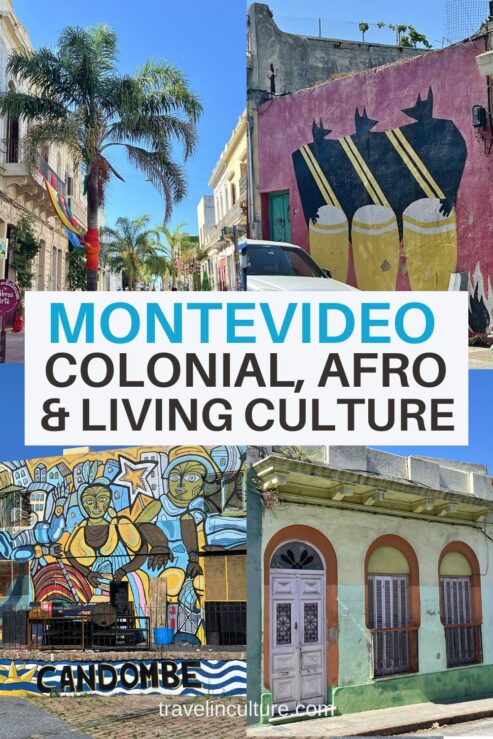




Walking Montevideo: Colonial Stones, Afro-Uruguayan Rhythms, and Living Culture
By ANL | UPDATED:
Montevideo is a city shaped by culture, history, and distinctive neighbourhoods. If you are looking for things to do in Montevideo, this cultural walking tour leads you through colonial streets, Afro-Uruguayan roots, and along the city’s broad waterfront.
For travellers keen to explore Montevideo in depth, walking remains the most revealing way to understand how the city’s history, culture, and everyday life intertwine. Long before arriving in Uruguay, we had already decided to approach the city with a more reflective approach to cultural travel, allowing observation and context to guide the experience. Those wishing to venture beyond the capital may also wish to join one of these organised tours:
We arrive by the harbour, stepping off the ship and straight into the city. There is no dramatic gateway, no grand reveal. It is morning, and the city is not quite awake yet. Montevideo opens quietly, almost modestly, inviting us to read it by walking. The air smells of salt and sea, and before long, we notice people passing with thermos flasks tucked under their arms. Mate is everywhere. Before we even begin, it is clear that this city moves to its own cultural rhythm.
1. The Harbour and a Global War on the Río de la Plata
We start at the water’s edge, where Montevideo looks outwards to the world. Right by the port stands the Graf Spee telemeter, a somewhat anonymous object many visitors walk past without noticing. It is a modest structure, but its story reaches far beyond Uruguay. Used during the Battle of the River Plate in 1939, it links Montevideo to one of the first naval confrontations of the Second World War.
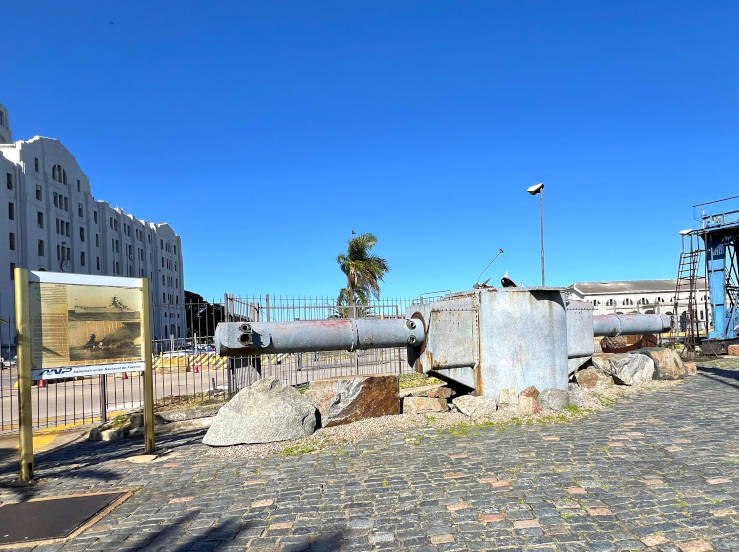
One of Montevideo’s historic sights to explore on foot: the Graf Spee
Standing here, it is striking how global history almost imperceptibly seeps into the city. Uruguay remained neutral during the war, while Montevideo played an important role in international diplomacy and maritime strategy. Warehouses, docks, and the working port remind us that this city has long been shaped by trade, movement, and immigration from elsewhere. From this point alone, it is possible to trace nearly three centuries of Montevideo’s history unfolding inland.
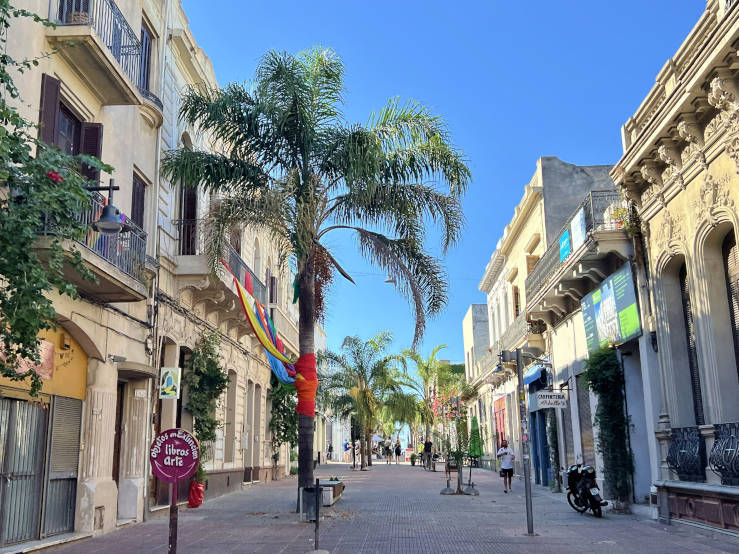
The Mondevideo walking tour highlights include the colonial architecture.
2. Walking the Rambla: Maritime Heritage and Mate Culture
From the harbour we turn south, walking along the Rambla in Montevideo, the long street that traces the edge of the city. The Antiguo Respirador de Colector stands nearby, a relic of early 20th-century urban engineering designed to ventilate the city’s sewage system, quietly symbolising Montevideo’s drive towards modernisation and public health. Along this stretch we pass several historic sights of Montevideo that tell the city’s maritime and urban story.
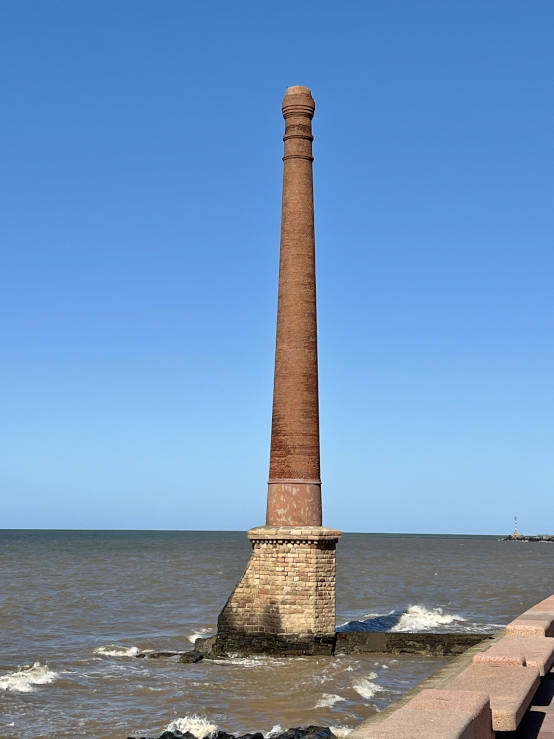
Our morning walking tour of Montevideo passes the Antiguo Respirador.
A little further along lies the Cubo del Sur, one of the few surviving guard posts from the old historic fort that once protected Montevideo’s coastline. Across the Rambla, Dique Mauá, built in 1872 to defend the harbour, remains one of the city’s most important historic maritime structures and a reminder of Montevideo’s long connection to the sea.
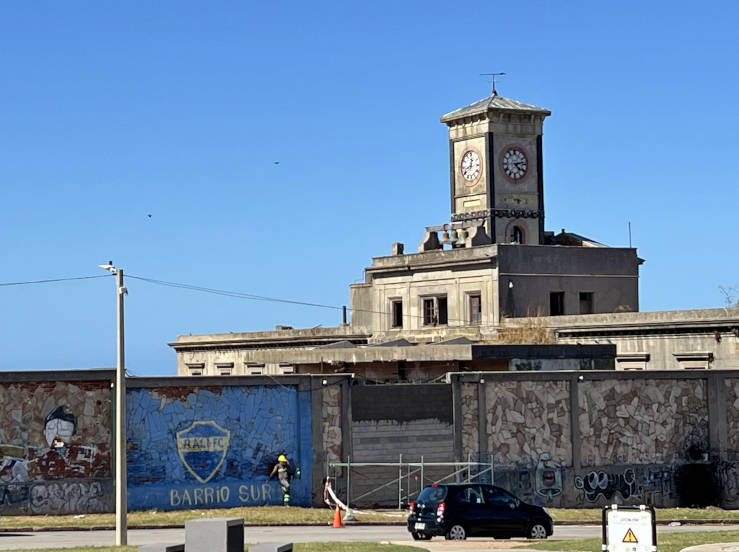
Dique Mauá, built in 1872 to defend the harbour – historic building in Barrio Sur.
Walking this coastal promenade is one of the most relaxed ways to experience a walking tour of Montevideo on foot, observing the city’s rhythms, its people, and the quiet, enduring ritual of mate. People stroll or cycle by, sitting by the water with a gourd and thermos, a glimpse into Montevideo’s mate culture, where the ritual is slow, deliberate, and social. At well-chosen spots, fishermen cast their lines and exchange quiet greetings. Mate weaves a subtle thread through daily life, underscoring Uruguay’s enduring cultural heritage.
3. Barrio Sur and the Afro-Uruguayan Roots of Montevideo
Top things to do in Barrio Sur on a cultural walking tour include exploring the colonial architecture and discovering Afro-Uruguayan culture and music.
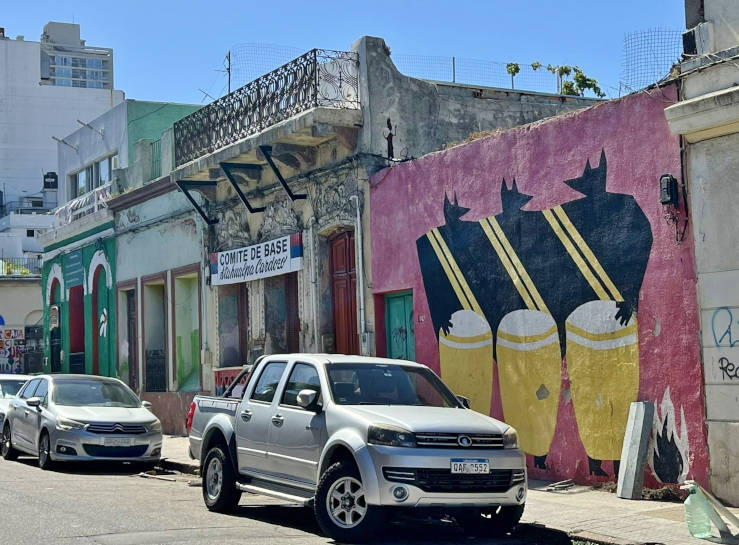
Afro-Uruguayan drumming alongside colonial buildings.
Leaving the Rambla, we turn inland into Barrio Sur. The change is barely noticeable at first. Streets narrow, buildings are lower, and colours shift unmistakably. This neighbourhood is one of the historical hearts of Afro-Uruguayan life, shaped by the descendants of enslaved Africans who settled here after release from slavery in the nineteenth century. They brought with them traditions, rhythms, and community practices that remain alive today, from candombe drumming to shared domestic life in the conventillos.
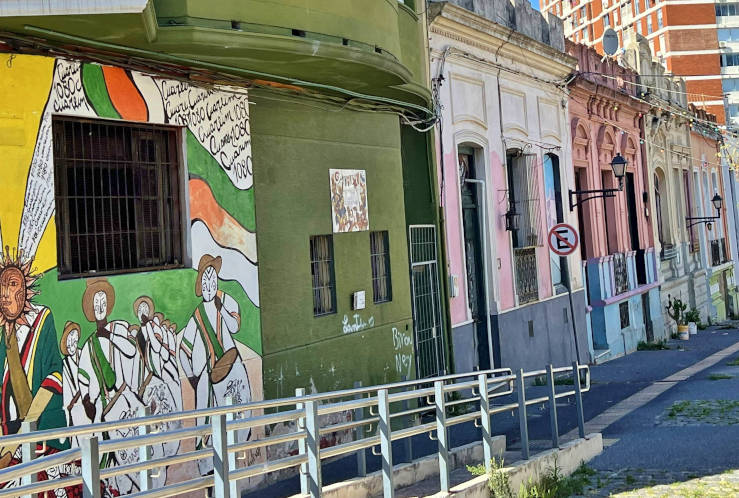
Afro-Uruguayan culture meets Montevideo’s colonial streets in the Cubo area.
We walk without rushing, letting the area reveal itself. This is not a museum district. It is residential, working, and alive. Afro-Uruguayan culture is not framed or labelled here. It exists in the everyday: in doorways, in conversations, in sound. People work on the streets, tending pavements and digging necessary holes to repair pipes. The neighbourhood feels more worn than the central streets we have just passed, with some roads lined with battered cars that nonetheless continue to serve their owners. Physical work under the sun, in temperatures above 25 degrees, looks demanding, yet it is clearly the rhythm of daily life here.
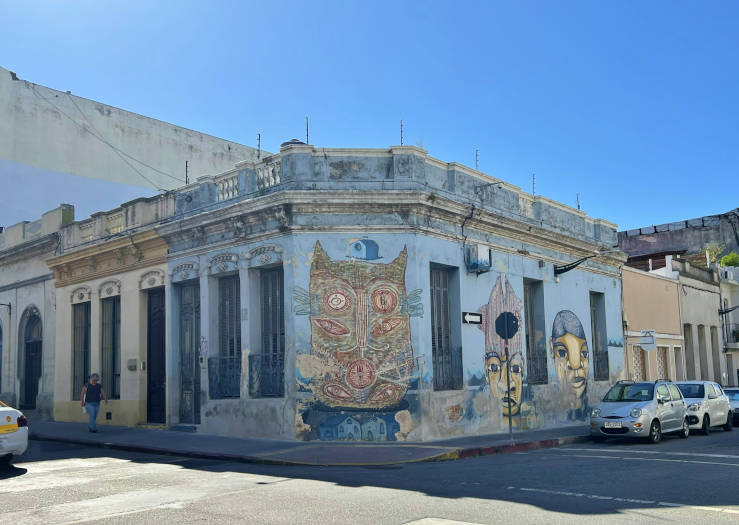
Street murals appear throughout the city.
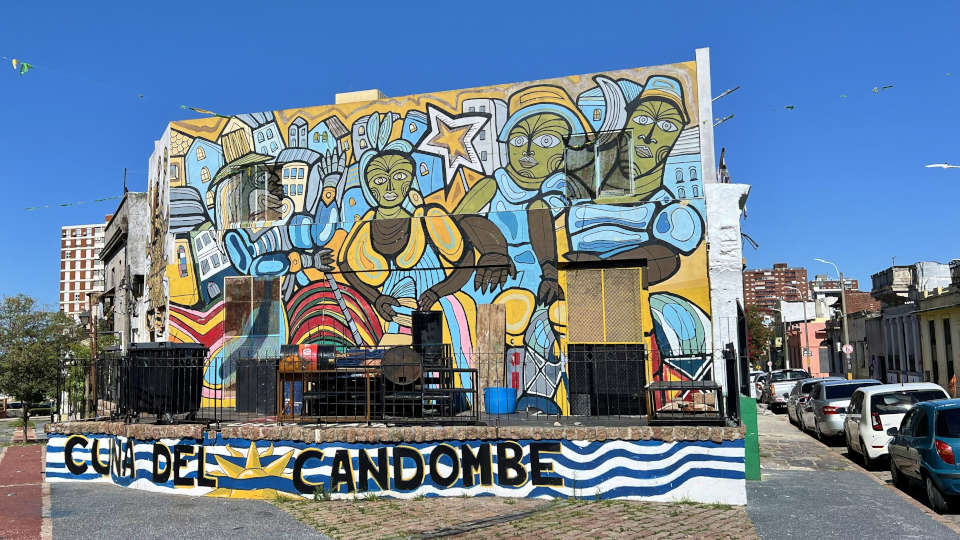
Barrio Sur carries a history of exclusion and resilience, but also of creativity and collective life. Colourful murals brighten several façades, signalling the area’s artistic energy. This is also where candombe, Uruguay’s most distinctive musical tradition, was born.
4. Cuareim and Isla de Flores: Where the Drums Still Sound
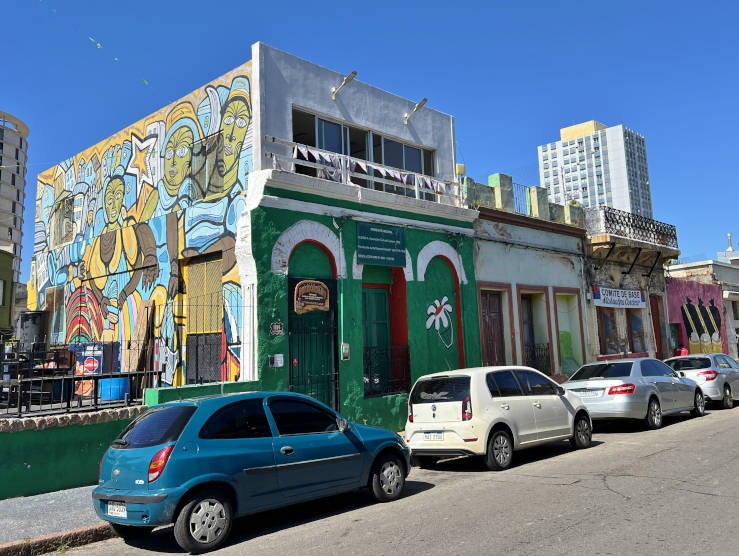
Candombe rhythms echo past colonial façades in the Cubo area of Barrio Sur.
As part of a cultural walking tour of Montevideo, we move deeper into the Cubo area, where streets like Cuareim, Isla de Flores, and Carlos Gardel begin to shape the experience. Cuareim is the cultural name for the area, though the official name of the street has changed, and locals still refer to it by its historic identity. Isla de Flores marks the route of Las Llamadas, the great candombe procession during carnival, but even on an ordinary day, the street feels charged with history. Carlos Gardel, the legendary tango singer born in the region, gives his name to one of the streets, a reminder of the area’s deep connection to music and popular culture.
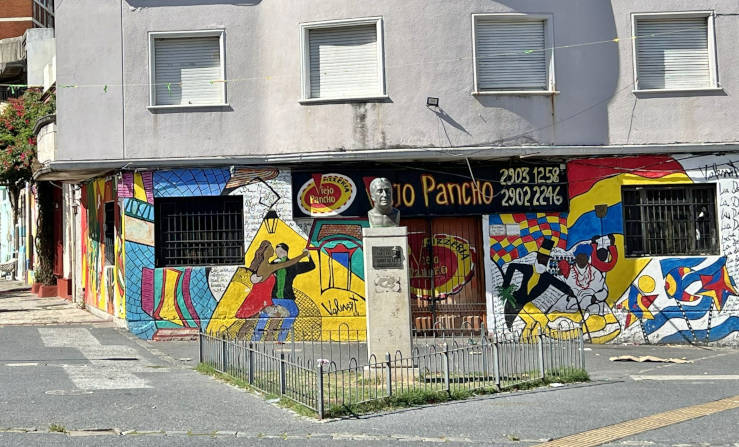
Barrio Sur honours Carlos Gardel, the iconic tango singer.
Through narrow streets and open windows, we hear drumming, and the rhythm draws our attention as a living link between past and present, work and celebration, history and culture. Somewhere above us, a window is open, and someone is practising alone. The sound is informal, unfinished, and echoing. We stop without speaking.
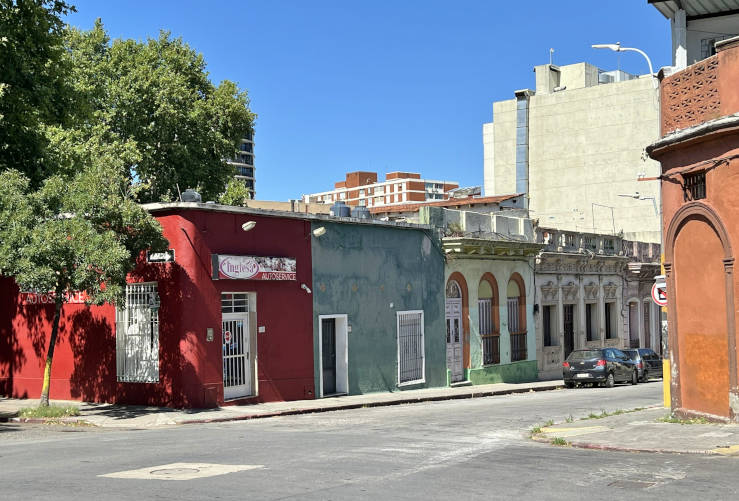
Colourful colonial-style buildings lining the streets of Montevideo.
This is the heart of Afro-Uruguayan Montevideo. Culture here is not staged for visitors. It announces itself if you listen.
This cultural walking tour of Montevideo takes you from the colonial streets of Ciudad Vieja to the Afro-Uruguayan heart of Barrio Sur. If you plan to spend a few days in Montevideo, staying in these centrally located hotels places you within easy walking distance of many of the city’s key sights.
5. Colonial Streets Beneath the Rhythms
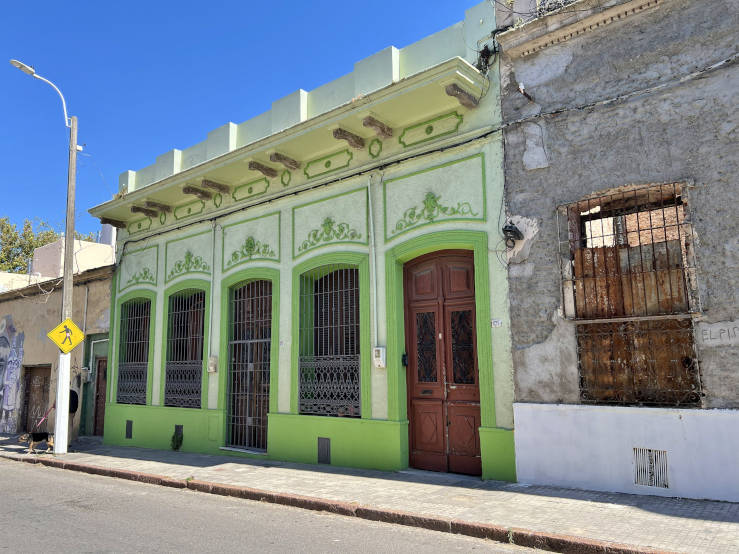
Historic colonial buildings remain throughout the old city.
As we continue walking, another layer of the city becomes visible. Beneath the music and colour lies the colonial city. The street layout, the architectural style of the houses, the thick walls, and the simple balconies and roofs all speak of Montevideo’s origins as a fortified Spanish outpost, founded in 1724.
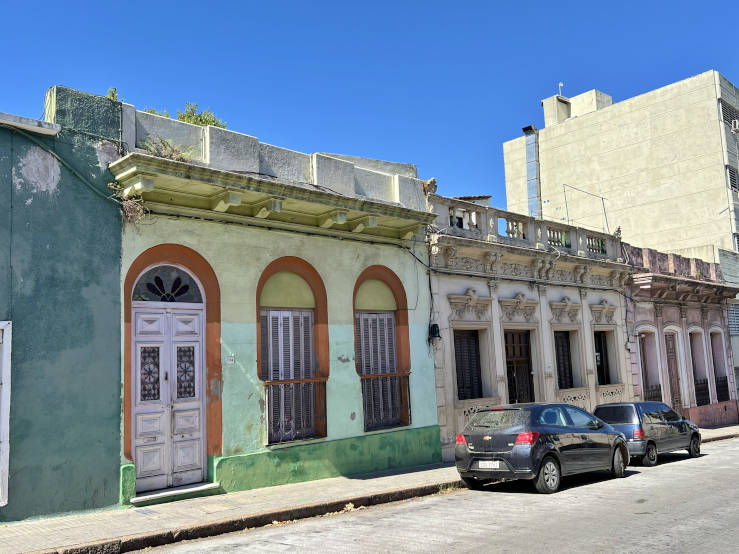
Many buildings date back to Montevideo’s colonial period.
What fascinates us most are the buildings that are not fully restored. Paint peels, stone is worn, and repairs are uneven. In the side streets, these buildings feel honest and lived-in. The colonial past is not frozen but absorbed into daily life over the centuries, shaped by African heritage, migration, and the passage of time. It is this blend, rather than careful preservation alone, that gives the city its character.
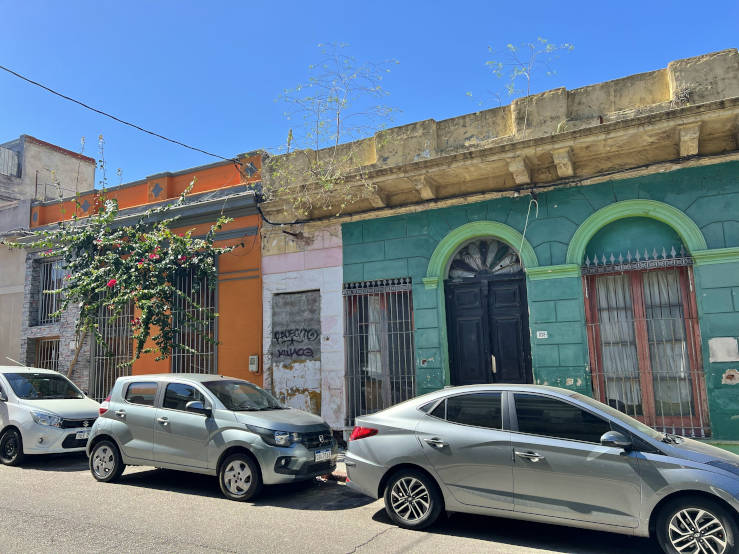
Buildings from Montevideo’s colonial era still line the streets.
Every time we turn down a new street, fresh and strikingly colourful colonial-style structures appear. It is like wandering through a vast outdoor museum, where the craftsmanship and imagination of past centuries still speak, quietly alive in the present.
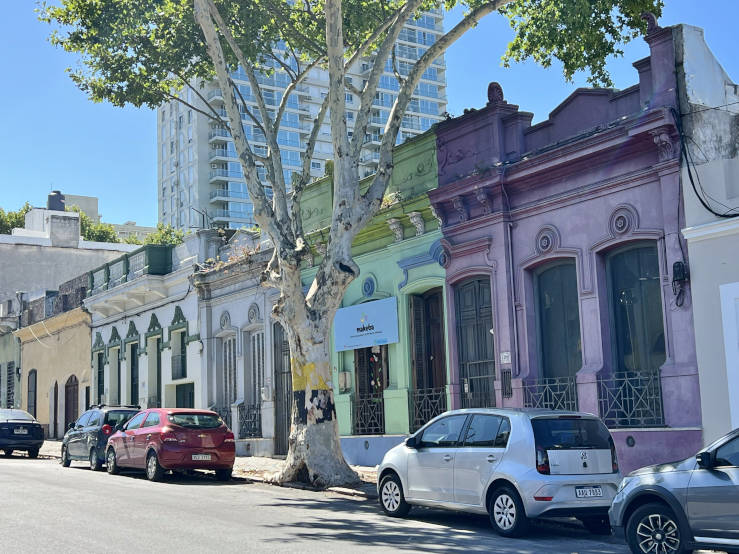
Colonial-style buildings line many streets of Montevideo’s old city, quietly shaping the atmosphere of daily life.
6. From Ciudad Vieja to Plaza Independencia: Building a Nation
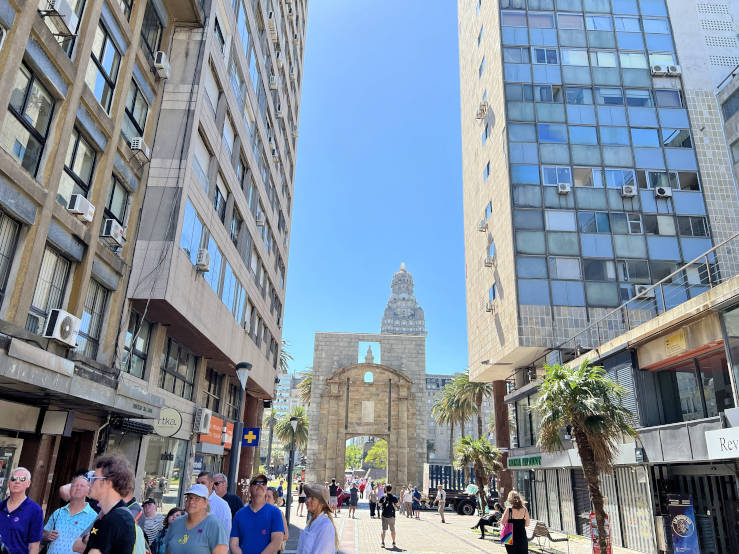
Puerta de la Ciudadela, the last remaining city gate of Montevideo, built in 1740.
Gradually, Barrio Sur gives way to Ciudad Vieja, and the city opens up again. We pass through the Puerta de la Ciudadela, built in 1740, the last remaining gate of the old, fortified wall. It marks a transition, both physical and symbolic, from colonial town to independent nation.
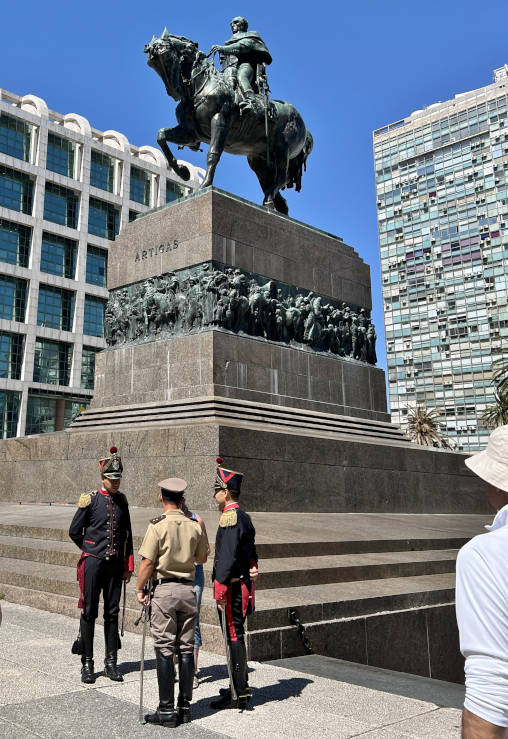
Equestrian statue of José Gervasio Artigas at Plaza Independencia.
Plaza Independencia spreads out before us. At its centre stands José Gervasio Artigas, the national hero, his mausoleum lying quietly underground. A couple of guards pose willingly for questions and photographs.
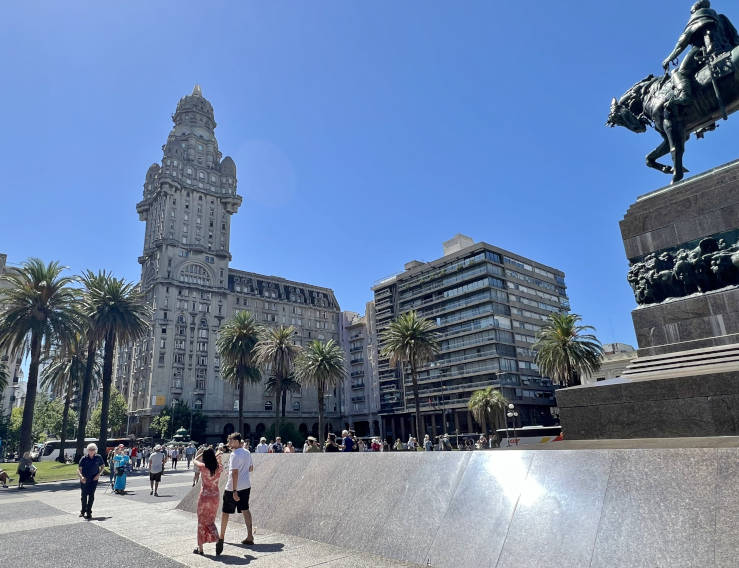
Palacio Salvo overlooking Plaza Independencia.
Around the square rise buildings from different eras, but Palacio Salvo dominates the skyline, an early twentieth-century tower blending Art Deco ambition with local eccentricity. Nearby, Teatro Solís reminds us of Montevideo’s long engagement with European culture, opera, and intellectual life.
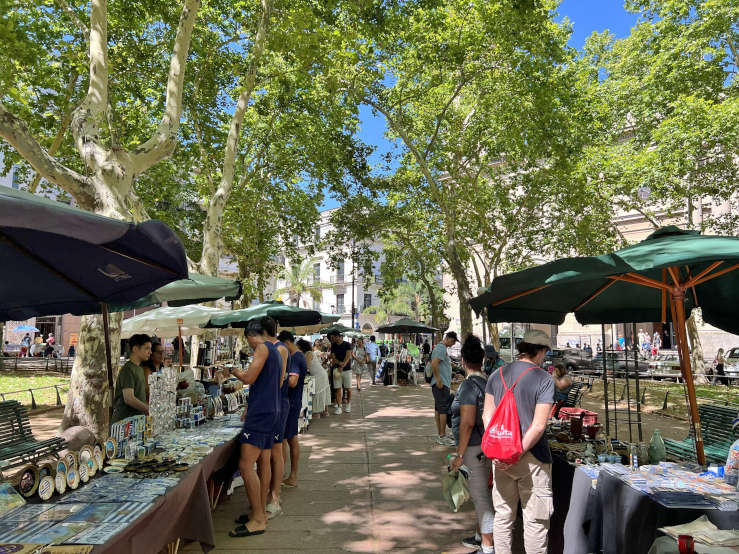
Street market at Plaza Constitución in the heart of Ciudad Vieja, Montevideo.
Constitution Plaza is nearby, bustling with a market and sellers offering souvenirs, local products, and mate. Here, the city presents its official face, confident and monumental, yet still close enough to everyday life that people cross the square carrying mate, just as they do by the sea.
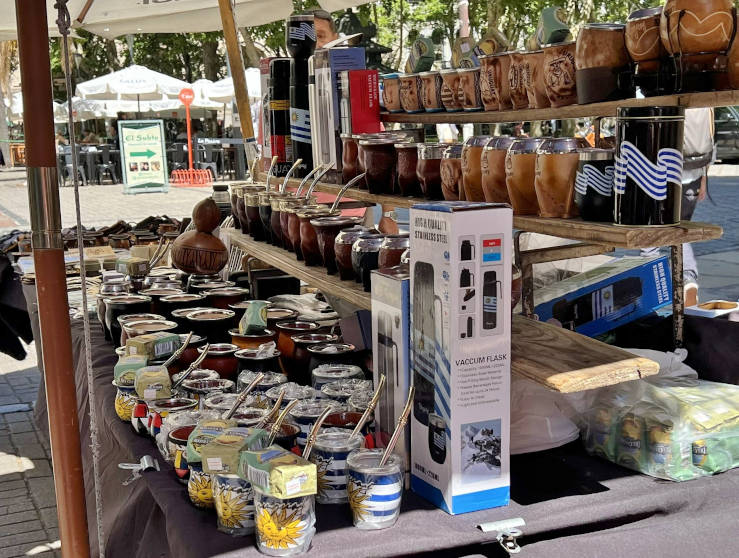
Yerba mate gourds and bombillas.
7. Mercado del Puerto and Outdoor Market Stalls
From the picturesque plaza, we continue our cultural walking tour of Montevideo, heading towards Mercado del Puerto, one of the most iconic things to do in Ciudad Vieja Montevideo. The nineteenth-century iron structure announces the city as a port shaped by labour and trade. Inside, grills line the hall, and asado becomes performance. Fire, meat, smoke, and skill combine into something almost ceremonial.
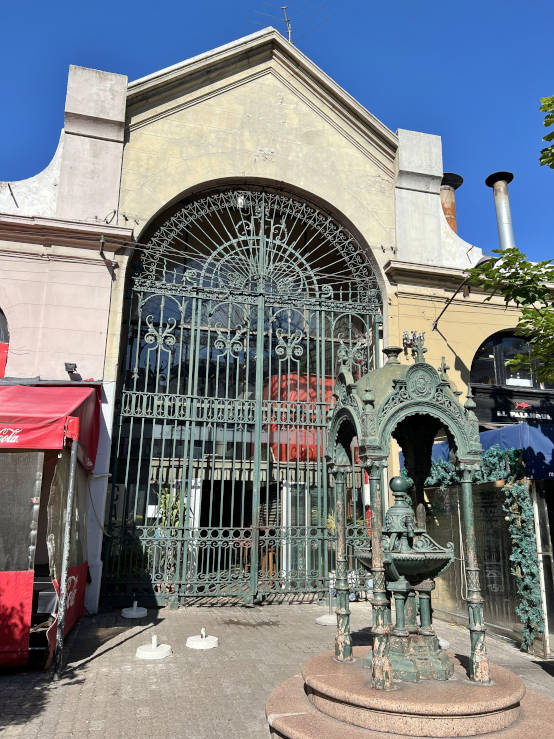
Entrance to the historic Mercado del Puerto.
Office workers, port workers, and tourists share the space, moving between tables and stalls. We have heard that the best asados in Montevideo are found here, but unfortunately, we do not have time to try them today – that will have to wait for another visit.
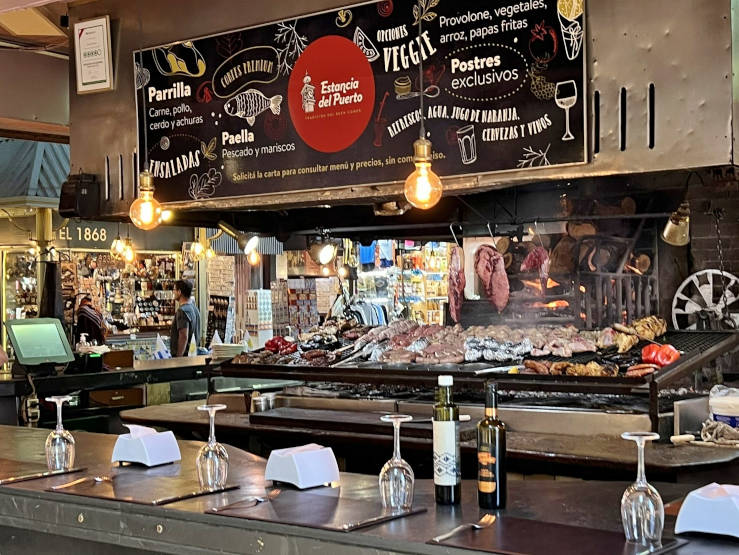
Grilling asados in the historic Mercado del Puerto.
Outside, street vendors display crafts, while nearby shops offer yerba mate, gourds, and bombillas alongside souvenirs, football merchandise, and local delicacies. We decide to pick up some mate for the gourds we bought previously at an outdoor market stall, keen to enjoy this small ritual that threads through the daily life of Montevideo.
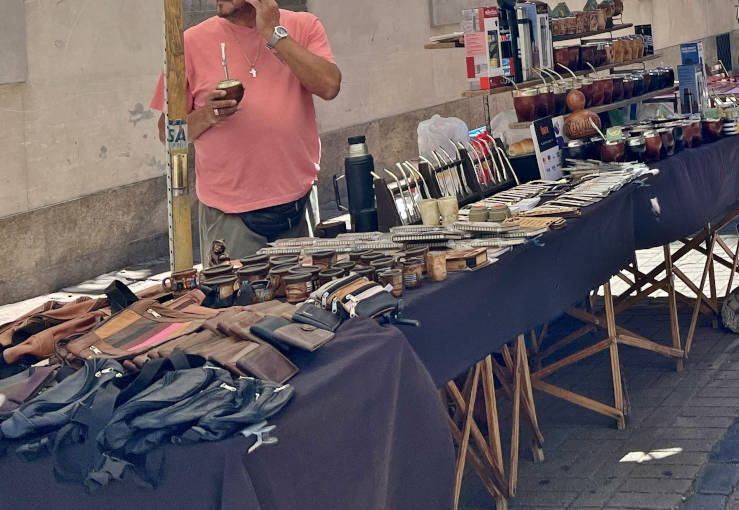
Drinking yerba mate, an everyday tradition in Uruguay.
8. What to See in Montevideo: A Cultural Walking Tour Through Three Centuries of Montevideo
This Montevideo walking tour takes us through the city’s colonial streets, Afro-Uruguayan rhythms, and modern landmarks. By the time we finish the walk, it feels as though we have crossed centuries without effort. Colonial foundations remain visible in stone and street layouts. Afro-Uruguayan culture continues to shape rhythm, sound, and community. Independence and modernisation rise in squares, theatres, and towers. Even global history leaves quiet traces by the harbour, where we end our sightseeing, ready to board the boat to Buenos Aires.
Montevideo offers a unique blend of colonial heritage, Afro-Uruguayan traditions, and modern influences. Whether you are strolling through its historical streets or enjoying a coffee by the sea, every step reveals a different side of the city. Seen through a more intentional heritage-focused way of travelling, the city becomes more than a series of sights — it unfolds as a layered cultural narrative.
How long does this walking tour take? The full route can be walked comfortably in half a day, with time for photos, markets, and cafés. Individual sections can also be explored on their own, and some visitors choose to wander neighbourhoods such as Barrio Sur or Ciudad Vieja at a slower pace over several days.
When is the best time to visit Montevideo?
The best time to visit Montevideo is from October to April, when the weather is warm and outdoor walking is comfortable. Carnival season, typically in February, offers a unique chance to experience candombe and local celebrations.
You may also like to read our Travel Guide to Buenos Aires.
Read next: Discover More in Uruguay – Exploring Colonia del Sacramento on a Day Trip from Buenos Aires
Frequently Asked Questions
What are the best things to do in Montevideo for first-time visitors?
Explore Ciudad Vieja, Plaza Independencia, Mercado del Puerto, and the Rambla. A walking route connecting these landmarks also reveals Montevideo’s Afro-Uruguayan heritage and colonial history.
How long does it take to walk through the main cultural sights of Montevideo?
Most visitors can complete the route comfortably in half a day. Allow extra time if you wish to visit museums, markets, cafés, or historic buildings along the way.
What is Barrio Sur famous for?
Barrio Sur is recognised as the historic centre of Afro-Uruguayan culture. It is closely associated with candombe drumming, colourful street art, and community traditions.
When is the best time to visit Montevideo?
October to April generally offers warm weather and pleasant conditions for walking. February is particularly popular because of Carnival and the famous candombe celebrations.
Is Montevideo easy to explore on foot?
Yes, many of the city’s main attractions are located within walking distance of one another. Wide pavements and the waterfront Rambla make walking a convenient way to explore.
What is mate and why is it important in Uruguay?
Mate is a traditional herbal drink made from yerba mate leaves and is deeply embedded in daily life. Sharing mate is an important social custom throughout Uruguay.
Can visitors watch candombe performances in Montevideo?
Yes, candombe can often be experienced during Carnival season and at cultural events throughout the year. Barrio Sur and nearby neighbourhoods are among the best places to encounter this tradition.
Is Mercado del Puerto worth visiting?
Yes, Mercado del Puerto is one of the most iconic landmarks in Montevideo, known for its historic iron structure and traditional asado restaurants. It is also a good place to browse local crafts and souvenirs.