



Aboriginal Rock Art in Red Hands Cave: Blue Mountains Guide
By ANL | UPDATED:
The Red Hands Cave walking track combines natural scenery with cultural heritage, making it one of the most meaningful short hikes in the Blue Mountains. Visitors can explore sandstone cliffs, bushland trails and preserved Aboriginal cave paintings that reflect spiritual traditions, daily life and connection to Country.
For travellers exploring Sydney and its surroundings in more depth, it can be helpful to understand a wider approach to meaningful travel in Australia through the Cultural Travel Method.
This guide explains how to visit Red Hands Cave, what to expect on the walking track, and the cultural significance of Aboriginal rock art in the Blue Mountains, Australia. It is ideal for travellers planning a day trip from Sydney who want to experience both nature and Indigenous history in one place.
Aboriginal communities have lived in Australia for thousands of years, long before European settlers ever considered colonising the continent. These Indigenous peoples thrived in various regions across Australia, including the Sydney area and the Blue Mountains. However, with the arrival of European settlers, Aboriginal groups were gradually displaced from Sydney, often pushed into more remote areas far from European settlements.
Nevertheless, the indigenous people survived in Australia, and today, you can still find Aboriginal communities living around Sydney, including in the Blue Mountains.
How to take a day trip to the Blue Mountains
From Sydney, it is easy to set out on a day trip to the Blue Mountains, whether by car or train. The train is perhaps the most convenient option. You can catch a direct line from Sydney Central Station to Glenbrook Station, located on the eastern fringe of the Blue Mountains. The journey takes less than an hour. If you are traveling on a Sunday, you can take advantage of the Opal card, paying just a few dollars for the entire trip — it is valid all day in Sydney and beyond, including the Blue Mountains.
This route is often included in broader Sydney-based guides and itineraries such as a Best Things to Do in Sydney in 4 Days: Complete Itinerary for visitors combining city and nature experiences.

Photo: Travel In Culture
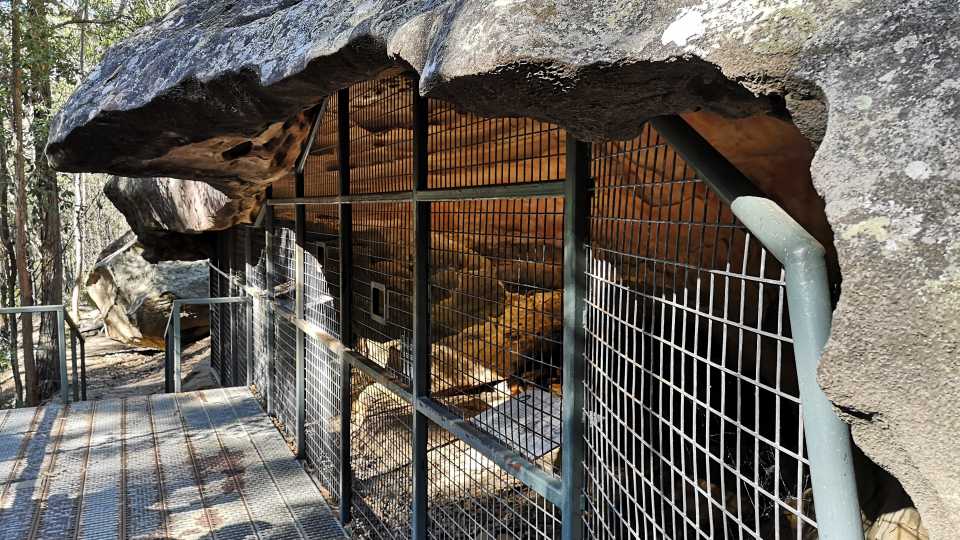
Red Hands Cave in the Blue Mountains, Australia
The Blue Mountains are a blend of soft green hills, dramatic rock formations, stunning valleys, scattered outcrops, and rugged bushland. One of the top activities here is hiking through the scenic landscape — for example, to the Red Hands Cave. This hike offers the perfect combination of beautiful surroundings with exciting Aboriginal history, featuring fascinating Aboriginal cave rock art, unique to Australia.
Traces of ancient Aboriginal culture can still be found within the Blue Mountains National Park, where the Red Hands Cave houses a remarkable example of Aboriginal rock art. Located in the Glenbrook area, the cave is accessible via the 8 km (5 miles) Red Hands Cave walking track — a trail that has likely been used by Aboriginal peoples for thousands of years.
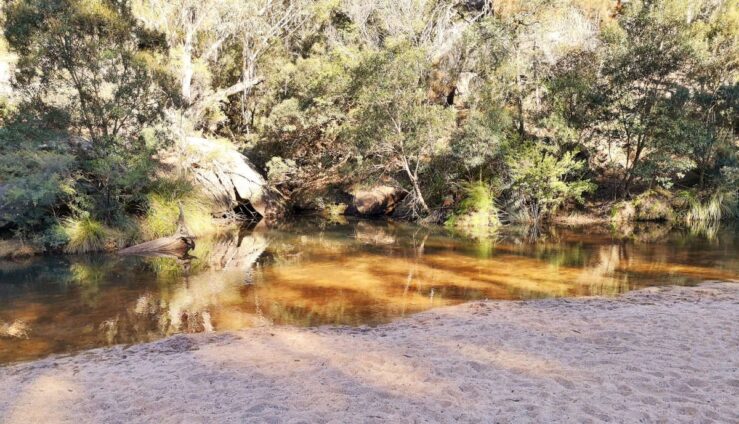
Photo: Travel In Culture
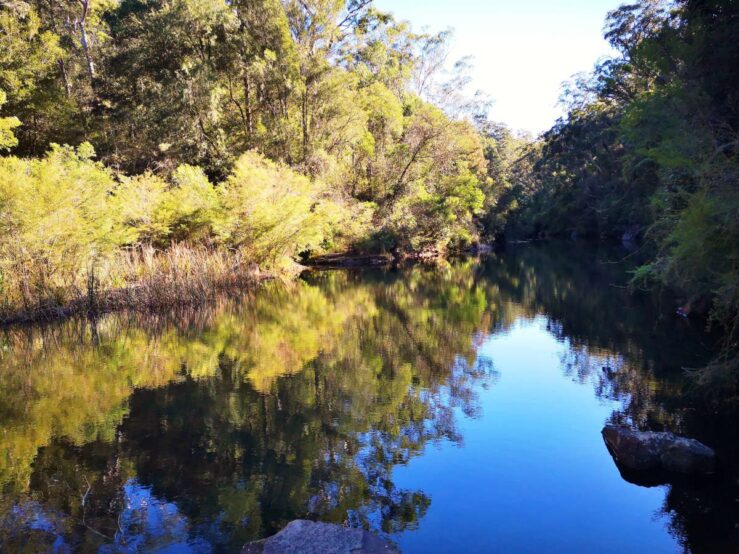
Photo: Travel In Culture
Allow at least 2 hours for this moderate-difficulty track, which is free to access within the National Park. Before heading out, it is a good idea to check the current information about the track. Don not forget to bring a picnic and your swimwear! On warm summer days, you might be tempted to take a refreshing dip in the Blue Pool swimming hole or the child-friendly Jellybean Pool along the route.
From Glenbrook Station, head east along Bruce Road, passing the railway tracks. Cross the bridge over the tracks, and you will soon arrive at the entrance to the Blue Mountains National Park. Here, near the car park, you will find the Red Hands Cave walking track starting point, along with a small information building that provides maps and other helpful details.
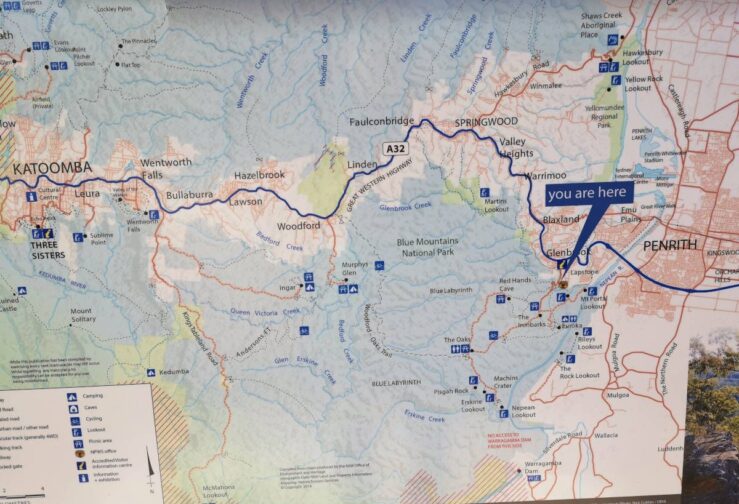
Photo: Travel In Culture
Aboriginal History and Rock Art
The Aboriginal peoples of Australia boast a fascinating history, having lived on the vast continent for over 40,000 years. For a deeper understanding of Indigenous heritage sites in Australia, Red Hands Cave is one of the most accessible examples of Aboriginal culture near Sydney. However, much of their ancient past remains a mystery, with the main window into their world being the rock art they left behind. These incredible depictions often showcase animals, plants, and abstract symbols tied to spiritual beliefs. The Aboriginals used various tools to create their art, including bird feathers, human hair brushes, and a blowing technique.
Around the Sydney area, the Blue Mountains were historically home to three prominent Aboriginal groups: the Gundungurra, Dharug (or Darug), and Burra Burra tribes. Each group had its own distinct traditions, customs, and beliefs, contributing to the rich cultural heritage of the region.
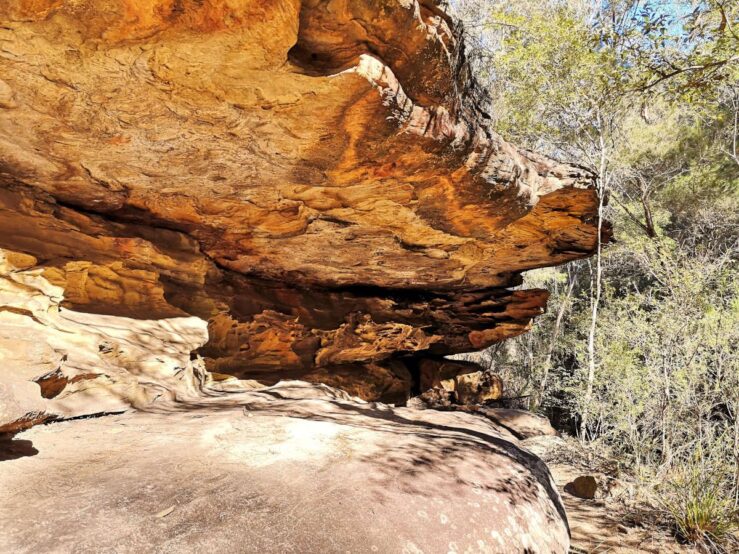
Photo: Travel In Culture
What is Red Hands Cave in the Blue Mountains (Australia)
One of the most captivating sites that preserves traces of the original people is Red Hands Cave. The paintings found inside are believed to have been created between 500 and 1,600 years ago, offering a remarkable glimpse into the ancient culture of the Dharug people. These indigenous clans, who lived in the Blue Mountains region, likely inhabited the area for thousands of years. Each clan probably consisted of 50 to 100 members, with the western inland Dharug people being skilled hunters, hunting large animals like kangaroos and emus.
The Aboriginal people created stunning rock art in the very places where they lived, and today, these artworks continue to be preserved and honored by their descendants. The incredible rock art in the Blue Mountains stands as a living testament to their long-standing presence and serves as an essential part of Australia’s cultural heritage.
Red Hands Cave
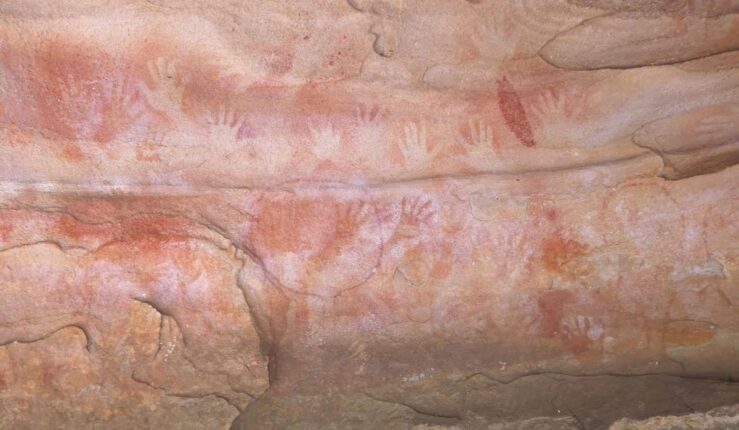
Aboriginal hand painting | Photo: Travel In Culture
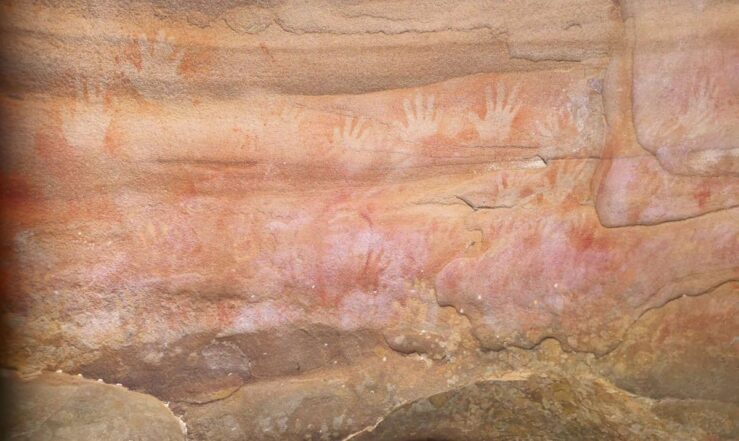
Aboriginal art in the Blue Mountains | Photo: Travel In Culture
Each handprint on the walls of Red Hands Cave represents a unique individual who once lived in the Blue Mountains of Australia. These striking handprints were created using ochre, a natural pigment sourced from bright clay or rocks. The ochre was carefully ground into powder on a stone, then mixed with water to form a paste.
In some cases, animal fat was added to the mixture, creating a more adhesive-like consistency, allowing the color to better stick to the rock surfaces. A theory suggests that one of the techniques used to create these vivid handprints involved filling the mouth with the ochre paste and then blowing it across the hand, which was pressed against the wall. This process would leave a white outline of the hand behind. Some handprints even appear as distinct, red-colored imprints on the rock faces.
Frequently Asked Questions
Where is Red Hands Cave located?
Red Hands Cave is located in Blue Mountains National Park near Glenbrook, around 90 minutes from Sydney. It is accessed via the Red Hands Cave walking track.
How do you get to Red Hands Cave from Sydney?
The easiest way is by train from Sydney Central Station to Glenbrook Station, followed by a walk to the trailhead. The journey is suitable for a day trip.
How long is the Red Hands Cave walking track?
The walking track is approximately 8 kilometres return and takes around 2 hours to complete. It is considered a moderate bushwalk.
What makes Red Hands Cave important?
It contains Aboriginal rock art created by Indigenous groups such as the Dharug people. The hand stencil paintings are hundreds of years old and hold cultural significance.
Can you still see Aboriginal rock art in the Blue Mountains?
Yes, Red Hands Cave is one of the best-preserved and most accessible examples of Aboriginal rock art near Sydney. It is protected within a national park.
Is Red Hands Cave suitable for beginners?
Yes, the walk is suitable for most fitness levels, although it includes uneven bush terrain. It is manageable for most visitors with basic hiking experience.
What should you bring when visiting Red Hands Cave?
Comfortable walking shoes, water, and sun protection are recommended. It is also advisable to bring snacks or a picnic for the hike.
When is the best time to visit Red Hands Cave?
Spring and autumn are ideal due to mild weather and comfortable hiking conditions. Early morning visits offer cooler temperatures and fewer crowds.
Read more about Sydney and Australia: Best Things to Do in Sydney in One Day: Harbour Highlights Itinerary
Read next: 10 Days Itinerary Queensland and The Great Ocean Road.
Hotels in Sydney
Do you need a hotel in Sydney? Check out hotel availability in Sydney here!