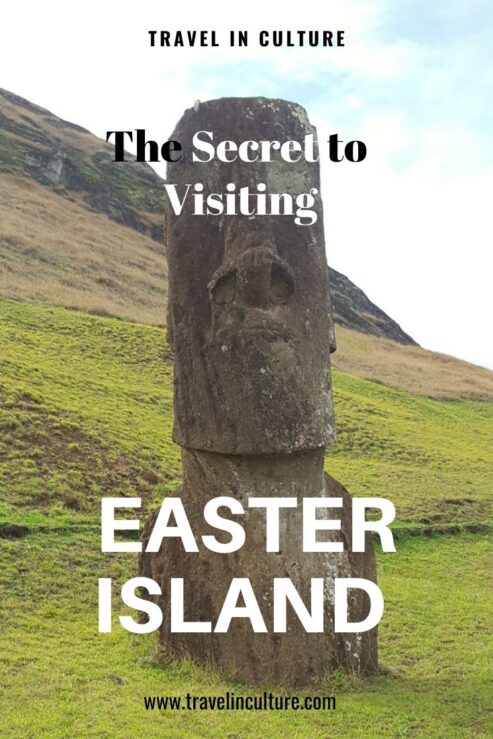




Easter Island: A 3-Day Journey into the Mysteries of Rapa Nui
By ANL | UPDATED:
Easter Island Itinerary & Moai Statues
3-Day Itinerary in Easter Island
Staying with Rapa Nui Hosts
Day 1: Volcanoes & Moai Statues
Day 2: Exploring Hanga Roa
Day 3: Rapa Nui Culture Today
More Things to Do in Easter Island
Easter Island: A 3-Day Journey into the Mysteries of Rapa Nui
Easter Island is one of the most remote inhabited islands on Earth and one of its greatest enigmas. Rising from the South Pacific Ocean, this small Polynesian island is renowned for its monumental Easter Island moai statues and the enduring culture of the Rapa Nui people.
The Polynesians named the island Rapa Nui, while its European name dates back to Easter Sunday in 1722, when it was first sighted by outsiders and became known as Easter Island, or Isla de Pascua in Spanish. Its monumental stone sculptures have fascinated researchers and travellers alike for centuries.
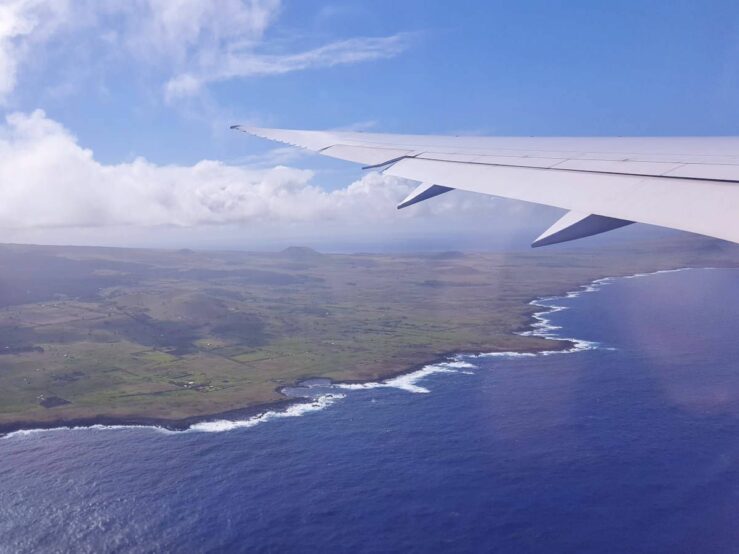
We are flying over Easter Island, watching its rugged coastline | Photo: Travel In Culture
Flying from Santiago de Chile, the five-hour journey over 3,700 kilometres of open Pacific Ocean feels endless until the cabin announces land in ten minutes. From the window, the tiny contours of Easter Island emerge, remote, isolated, yet charged with a mysterious presence.
I first discovered this island and its enigmatic moai statues as a small girl in a Donald Duck comic strip, and since then, I had always dreamt of visiting. Seeing the island finally appear beneath the plane’s wings, that long-held childhood dream suddenly became real.
From that moment, the journey becomes more than sightseeing. It becomes an attempt to understand how landscape, ancestry, and modern identity intersect on one of the world’s most isolated islands, an approach reflected in this travel philosophy.
Staying with a Rapa Nui Family in Hanga Roa
We stay in Cabaña Tongariki, sharing a private house with a Rapa Nui family on the outskirts of Hanga Roa. There is no rental car waiting at the airport on Easter Island, so our hosts’ daughter comes to pick us up herself. At the small airport parking area, we see flower necklaces everywhere. According to the Polynesian tradition, visitors are greeted with Polynesian flower necklaces, a small but vivid reminder of the island’s subtropical climate.
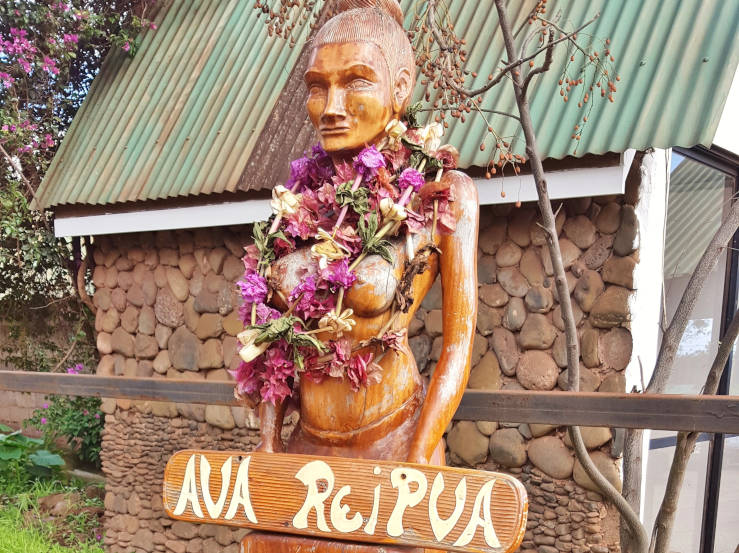
Flower necklaces are a Rapa Nui tradition rooted in Polynesian culture.
On the drive, the daughter gives us a practical introduction to Hanga Roa, pointing out shops and the local grocery store. She reminds us to buy the Rapa Nui National Park ticket, required at most archaeological sites outside Hanga Roa and likely to be checked over the coming days.
She also explains the subtleties of Rapa Nui names, nicknames, and the interplay with Spanish names, giving us a lens into local identity and language. Spanish is used with visitors and mainland Chile, while Rapa Nui remains the language of daily life at home. Finally, she advises us on the best order to visit the moai sites to avoid crowds and catch the light at the right moment.
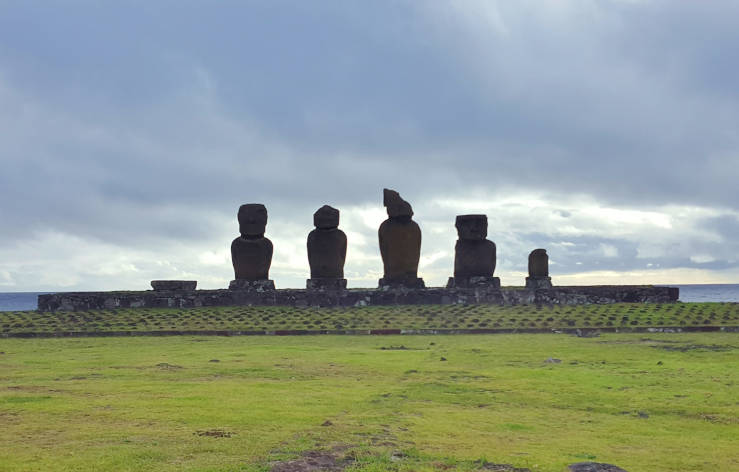
Photo: Travel In Culture
The cabaña, named after the iconic fifteen-moai Ahu Tongariki, sits at the end of a volcanic dirt road past banana palms. The family lives in one end of the house, while we stay in the other. The mother reassures us that they are just on the other side of the wall if we need anything.
The next morning, our host brings us a bag of local guava fruits so that we can squeeze our own juice for breakfast. It is a welcome supplement to the island’s freshwater, which has a noticeable metallic taste from volcanic minerals.
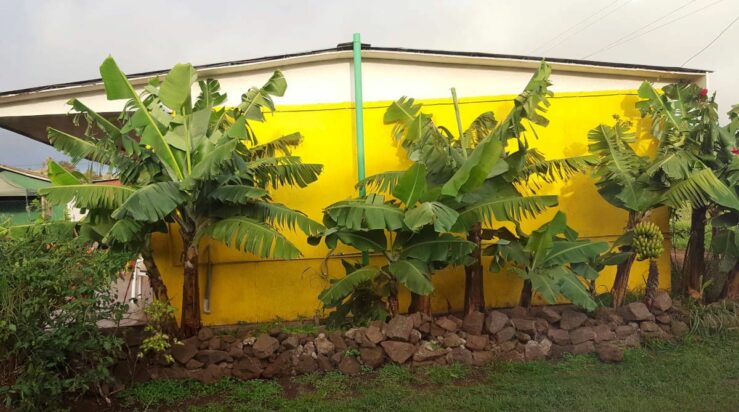
Our cabaña is nestled at the end of a volcanic dirt road, lined with lush banana palms.
The parents speak Spanish and Rapa Nui, not English, and they expand on the different versions of Rapa Nui names, showing how language remains a vital part of identity. They also explain that clan identity still matters today, and that their family belongs to a clan of around a thousand people. Politically active, they fight for the rights of the Rapa Nui population on Easter Island.
Today, roughly 3,500 Rapa Nui people speak their Polynesian language alongside Spanish. This is only a fraction of the estimated 17,500 inhabitants who lived on the island at the peak of Rapa Nui culture, underlining both endurance and vulnerability.
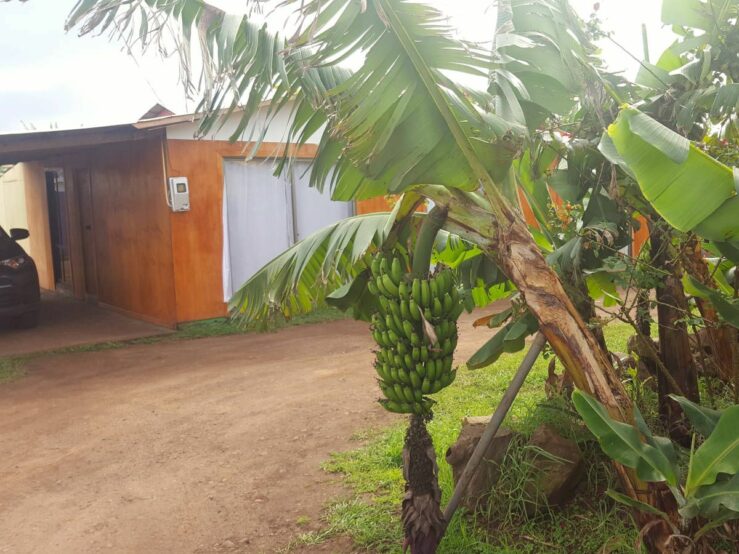
Our Easter Island itinerary departs from our cabaña, where our Rapa Nui hosts kindly let us use their SUV to explore the island’s iconic sites.
Out of hospitality, the family suggests that we use their SUV for the following day’s itinerary around Easter Island. There is no car insurance on Easter Island, so this is entirely based on trust, but with little traffic and only a handful of roads, accidents are rare. Well-known international car rental companies, such as Hertz or Avis, do not operate on Easter Island, but a few local rental services are available.

Hanga Roa | Photo: Travel In Culture
Evenings are magical: after sightseeing, the air fills with traditional music and singing from neighbouring houses. Our hosts also show us souvenirs crafted and sold by family members, a reminder that nearly everyone on the island is connected to tourism.
Staying with a Rapa Nui family adds depth to our visit. It reminds us that Easter Island is not only an archaeological wonder, but a living Polynesian community where ancient traditions and modern life coexist.
For a local setting and an authentic atmosphere, consider staying at one of these accommodation options in Hanga Roa, all well located for experiencing the island’s everyday life and culture.
Easter Island Itinerary: 3 Days Exploring Rapa Nui
With only three days on the island, careful planning is essential. This itinerary focuses on the best things to do in Easter Island while balancing archaeology, landscape, and living culture. As an alternative to renting a car, an organised island tour offers a convenient way to cover the key Day 1 sights.
Day 1: Volcanoes, Moai Statues and Sacred Ceremonial Sites in Easter Island
We begin early, setting off from Hanga Roa to explore the island by car, allowing us to see all major sites while only needing a vehicle for a single day. Our first stop is Rano Kau, a dramatic extinct volcano at the southern edge of the island, one of three volcanoes that formed Easter Island through eruptions dating back around three million years.
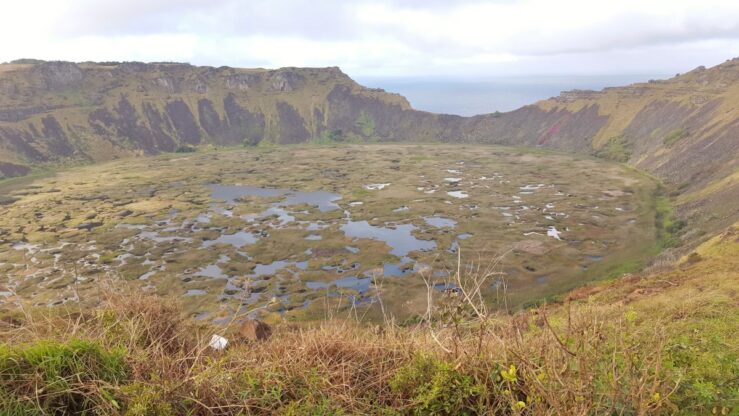
The huge crater lake at Rano Kau | Photo: Travel In Culture
Standing at the rim, the island’s isolation becomes palpable. Rapa Nui lies at the southeastern corner of the Polynesian Triangle, with Hawaii and New Zealand forming the other vertices. Inside its vast crater lies a freshwater lake covered with totora reeds, forming small floating islands – similar to the floating reed islands on the Lake Titicaca in Peru! This crater has sustained water supply and supported early agriculture for centuries, with bananas, figs, avocados, and guavas cultivated along its fertile rim.
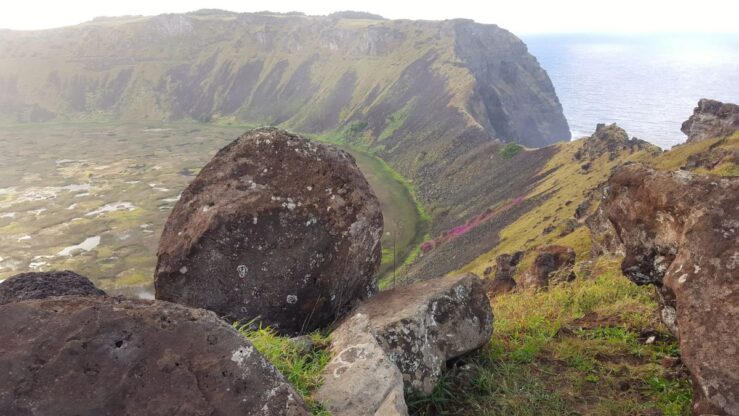
Orongo is the Birdman Cult village at the top of Rano Kau.
At the crater rim stands Orongo, the ceremonial village of the Birdman Cult, which succeeded the moai era towards the end of the 1500s. Stone houses cling to the narrow ridge, with sheer cliffs dropping to the ocean on one side and the crater basin on the other. Petroglyphs carved into the rock depict birdmen, sea creatures, and the god Make Make.
A basalt moai found within one house symbolically links the moai era with the Birdman Cult. The annual Birdman competition held here once determined the islands leader. Competitors descended the cliffs, swam to the offshore islet Moto Nui to retrieve a manutara bird egg, and returned – many losing their lives in the daring attempt. The last known competition took place in 1888.
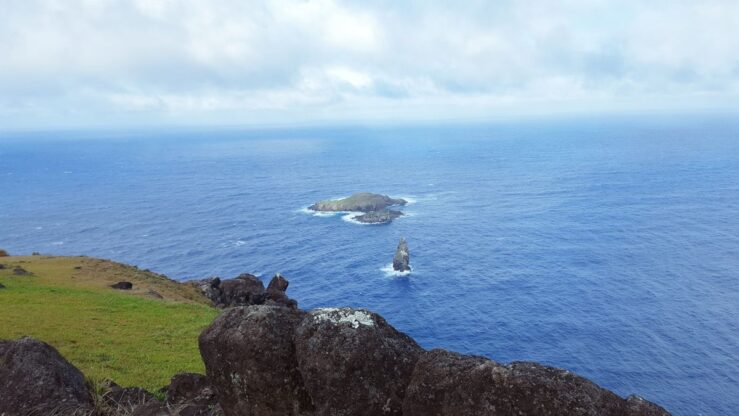
View towards the small island central to the Birdman Cult era | Photo: Travel In Culture
From Rano Kau, we drive the short distance to the Rano Raraku quarry, where almost all Easter Island moai statues were carved from volcanic rock using obsidian tools, probably all dating from between 1000 to 1600. The short drive feels like travelling backwards in time, from the Birdman Cult to the height of the moai carving era. In total, 887 moai in varying states and conditions have been found around the island.
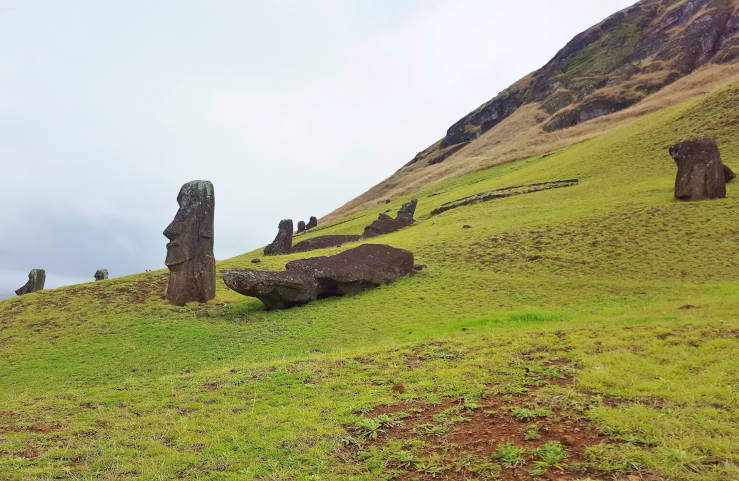
Photo: Travel In Culture
Dozens of colossal figures lie scattered across the slopes, frozen in the creation process. We see an example still attached to the rock, its front carved first, the back chiselled later to release it. Only statues that reached their final destination received coral eyes, added last to symbolise spiritual power. The scale is overwhelming.
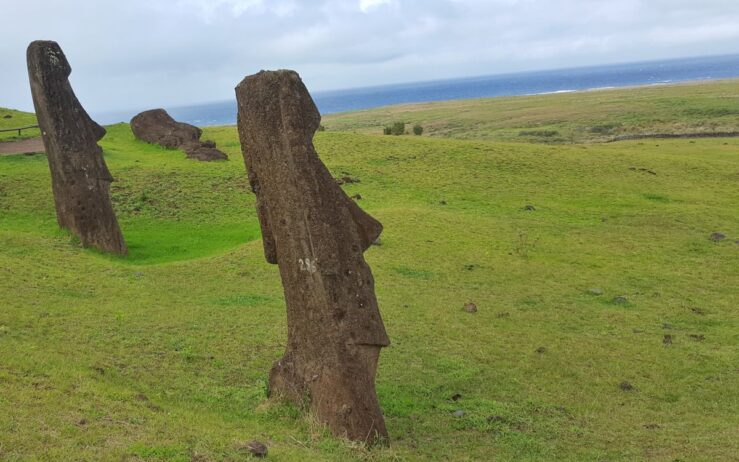
The Rano Raraku itinerary circles the quarry, revealing Easter Island moai statues scattered across the volcanic slopes.
Unexpectedly, we almost bump into our hosts’ daughter again. She is clearly working as a tour guide, leading a group through the quarry, which suddenly explains how she could give us such precise advice the day before.
The volcanic faces represent the spirits of ancestors. During the moai era, the style of the torsos and faces changed gradually. The statues grew increasingly tall, while their facial features became more stylised.
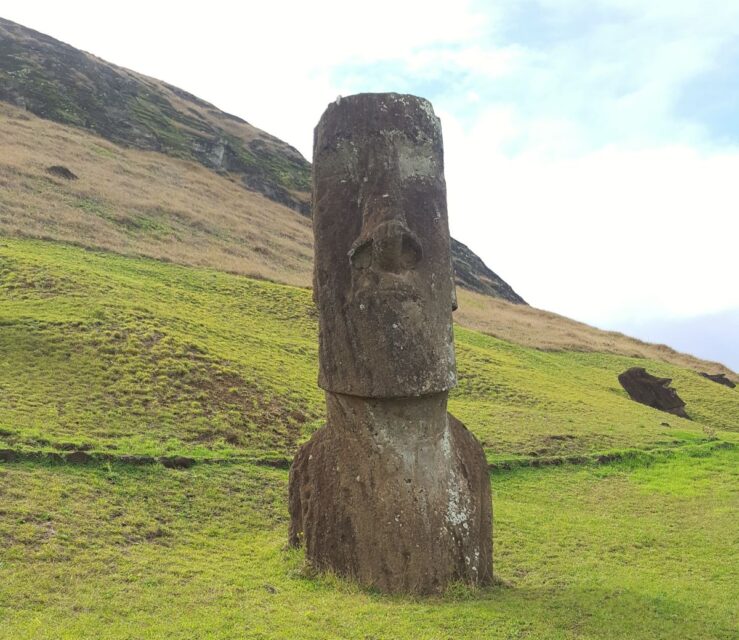
Exploring the stylised stone faces at Rano Raraku, a sacred Rapa Nui site, is one of the top things to do in Easter Island.
Over the years, many theories have attempted to explain how these massive stone figures were transported across the island. According to Rapa Nui legend, the moai WALKED. For a long time, this idea was dismissed by outsiders, but it may have been closer to the truth than anyone believed.
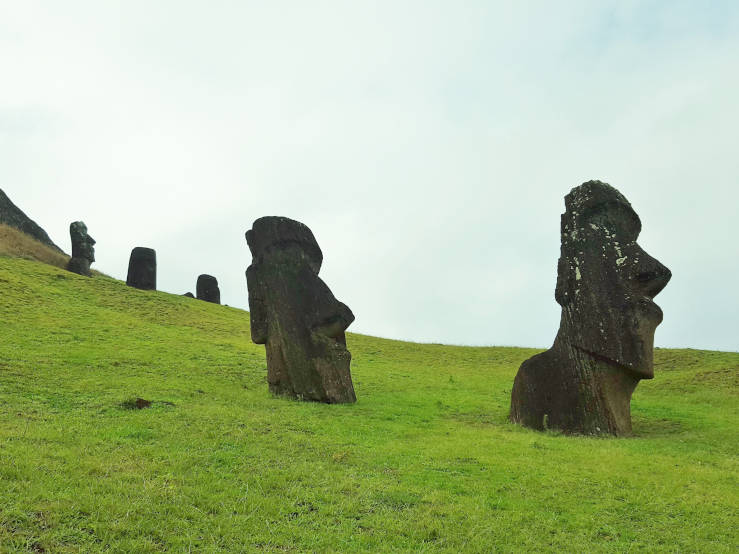
Photo: Travel In Culture
The Norwegian anthropologist Thor Heyerdahl helped clarify how the moai were moved during expeditions in 1955–56 and 1986–88. By uncovering buried torsos and experimenting with ropes, logs, and teamwork, he showed the statues could be transported upright. In this way, the legendary ‘walking’ moai became plausible.
Continuing along the eastern coast, we reach Ahu Tongariki, the largest ceremonial platform on the island and the most significant structure in Polynesia. Fifteen monumental moai stand in a row, one crowned with a red topknot carved at Puna Pau. Each statue shows individual characteristics, indicating that they were created at different periods.
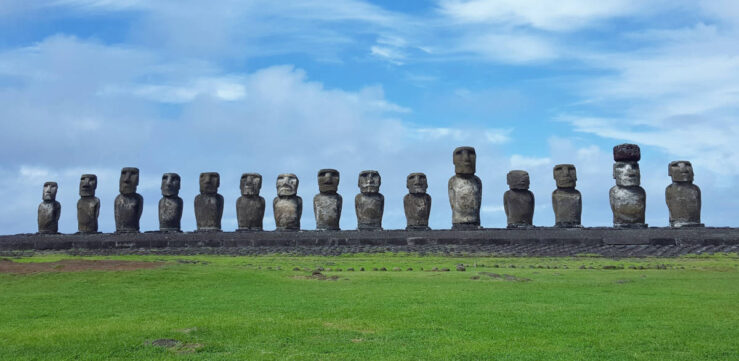
Ahu Tongariki, Rapa Nui | Photo: Travel In Culture
Scholars suggest several causes for the collapse of Rapa Nui culture. Overuse of scarce resources, combined with Polynesian rats that destroyed the palm forests, weakened the ecosystem. In 1862, Peruvian slave raids removed up to 2,000 islanders, and only 110 survived. Returning survivors brought disease.
In 1960, a massive Chilean earthquake triggered a tsunami that swept across the eastern coast. At Ahu Tongariki, moai weighing up to 70 tons were carried hundreds of metres inland, and restoration took years.

Ahu Tongariki on the eastern coast | Photo: Travel In Culture
Between Ahu Tongariki and Anakena Beach, we stop at Papa Vaka to see the island’s largest petroglyph. A twelve-metre-long double canoe is carved into the rock, possibly representing the vessel used by the first settlers. Other carvings depict tuna, octopuses, crabs, birdmen, and sea turtles.
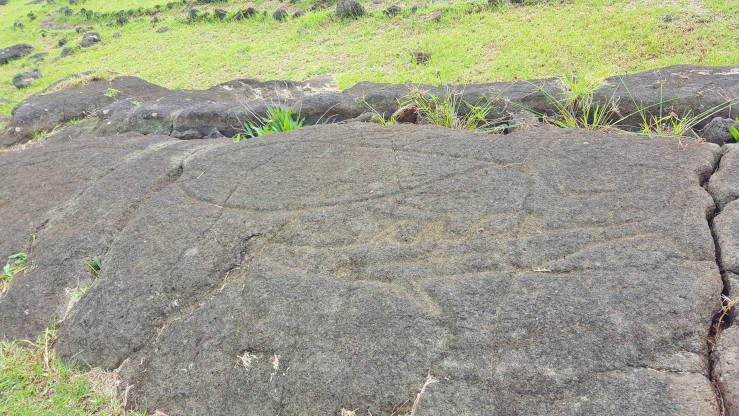
Petroglyphs, Papa Vaka.
We end the day at Anakena Beach, the largest sandy beach in Easter Island and a historic landing place for seafarers and explorers over the centuries. White coral sand, turquoise water, and coconut palms contrast sharply with the island’s rugged coastline. Behind the beach rises Ahu Nau Nau, with five restored moai. Tiny fragments of plastic in the sand quietly remind us that even this remote place is touched by modern life. Wild horses wander between the palms, adding to the surreal atmosphere.

A visit to picturesque Anakena Beach is one of the must-do things to do in Easter Island.
If you prefer to leave the logistics to someone else, an organised tour offers a relaxed and insightful way to explore the island.
Day 2: Hanga Roa and Rapa Nui Heritage
The next day, we stay in Hanga Roa, the island’s only town and cultural heart. More village than city, it consists of scattered houses, green spaces, and dirt roads. In Hanga Roa we notice tsunami evacuation signs, quiet markers of the island’s vulnerability to the Pacific. The airport building and its parking area are on higher ground, so locals gather there during tsunamis, as in 2015 and 2020.
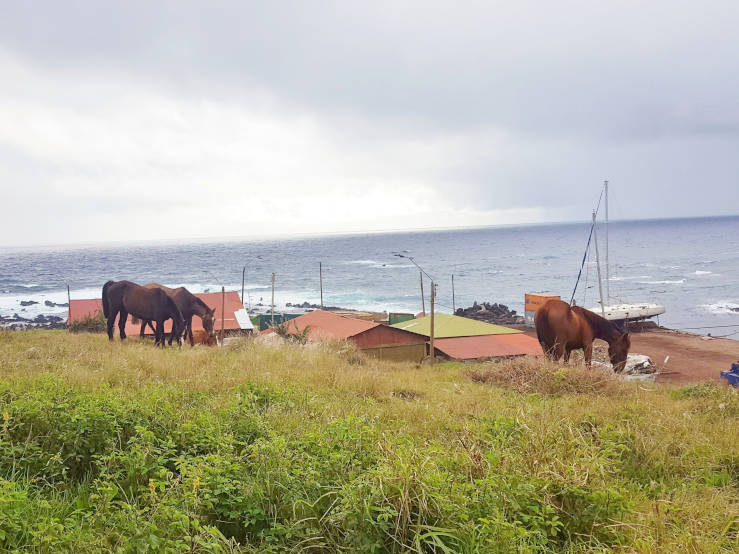
Wild horses are a common sight across the island, wandering freely through fields and along the coast.
A visit to the local grocery store reveals that imported food is expensive, reflecting the islands isolation. Most food is flown in from mainland Chile, and prices are high. Many travellers bring groceries from Santiago, something we now regret not doing. Local empanadas, however, remain affordable and welcome.
On Sunday morning, we attend mass at the Catholic church of the Holy Cross in Hanga Roa, Iglesia de la Santa Cruz, which uniquely combines elements of the Moai era, the Birdman Cult, and Christianity. The service blends Christian symbols with Rapa Nui traditions, featuring catchy Polynesian melodies and priests in feathered headdresses. After the service, the street fills with oil drum barbecues as families share food in a festive atmosphere.
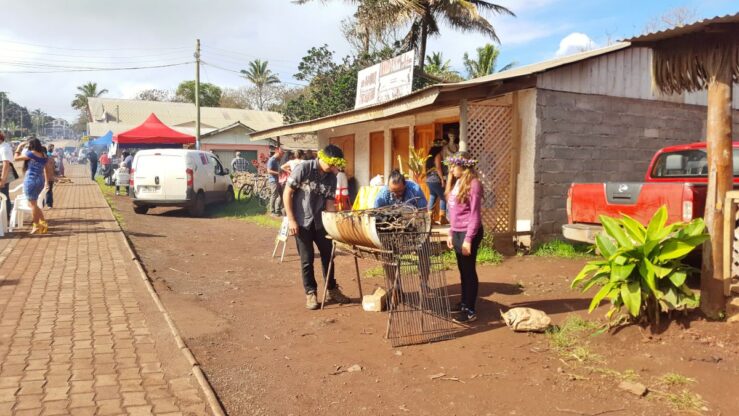
On Sundays, oil drum barbecues fill Hanga Roa’s main street, offering an authentic glimpse into everyday Rapa Nui life.
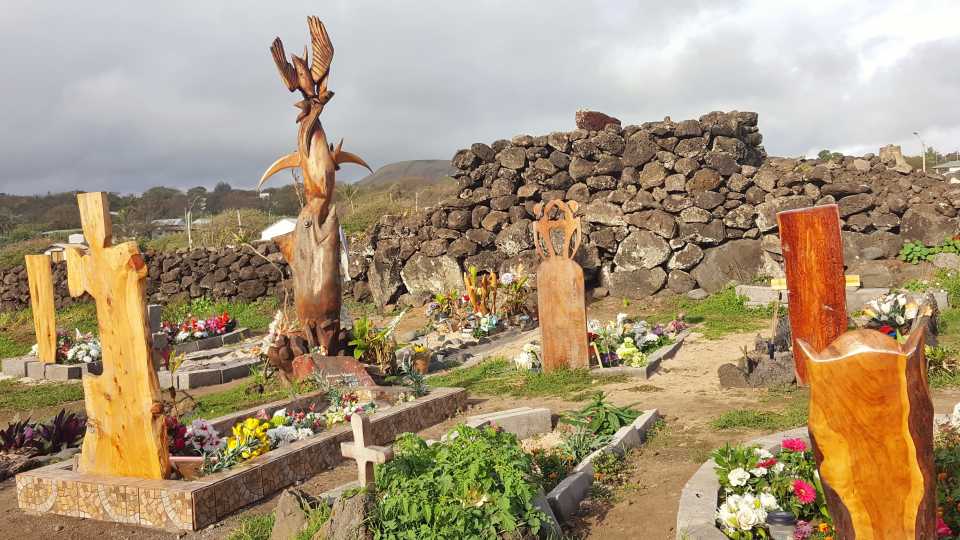
Later, we visit the seaside cemetery, where tombstones combine Christian symbols with Rapa Nui mythology. Nearby, the Hanga Roa Anthropological Museum provides insightful context on the islands history, moai statues, petroglyphs, and Rongorongo tablets.
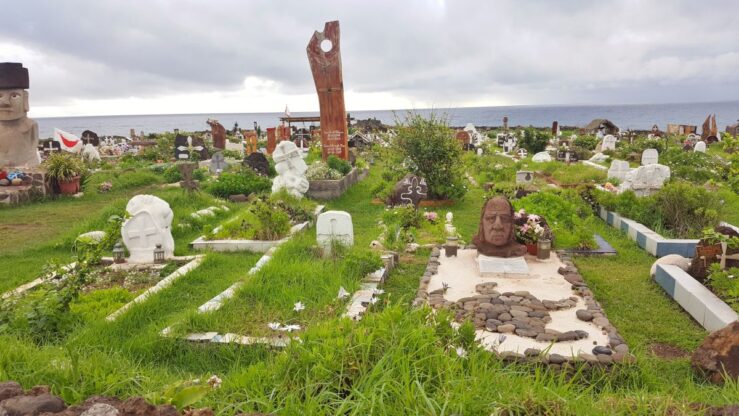
Photo: Travel In Culture
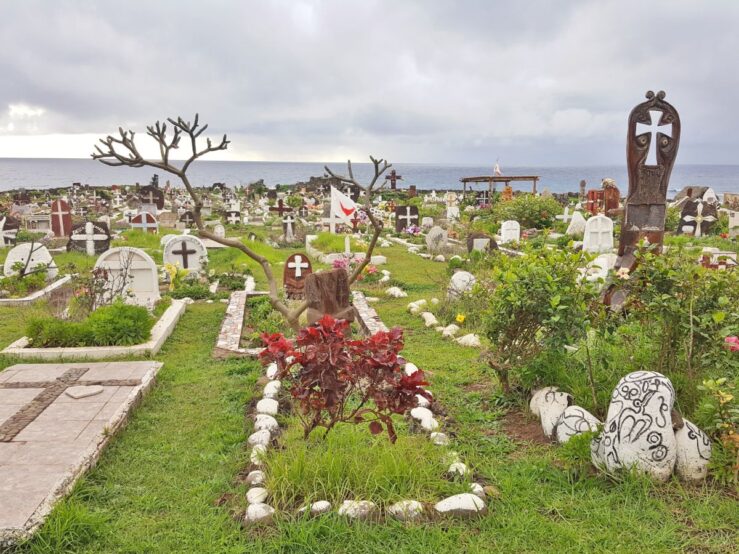
The Rapa Nui cemetery in Hanga Roa | Photo: Travel In Culture
We walk to the Tahai ceremonial complex. Three ahus stand against the ocean backdrop, including Ahu Ko Te Riko, the only moai with restored coral eyes and one of the few remaining wearing a red topknot. As the sun sets, the sense of distance and improbability returns. For Europeans, this is one of the furthest places we could possibly reach, and moments like this feel unmistakably once in a lifetime.
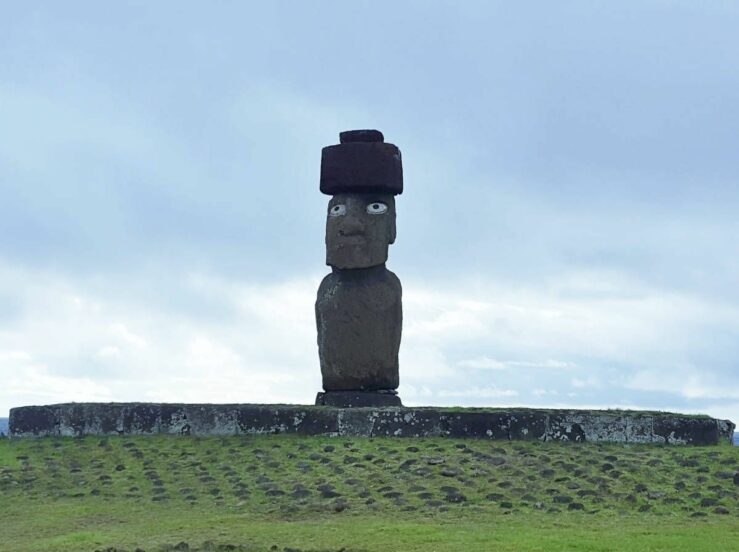
Tahai ceremonial complex, Ahu Ko Te Riko moai | Photo: Travel In Culture
Back at the cabaña, our host shows us souvenirs her niece sells, from fridge magnets and small moai to tools decorated with petroglyphs and copies of rongorongo tablets. She explains that nearly everyone on Easter Island works in tourism – in hotels, restaurants, as guides, or renting their homes, just as she does. The whole island thrives on daily visitors flying in from Santiago de Chile. Nevertheless, traditional culture remains very much alive.
Saturday night, tired after sightseeing, we are drawn from bed by music and singing from a neighbouring house. Not Western tunes, but traditional rhythms and melodies – they really know how to celebrate!

Photo: Travel In Culture
Day 3: Rapa Nui Culture Today
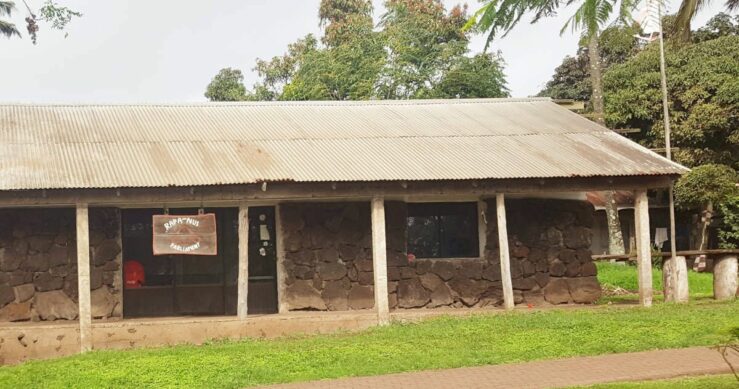
The Rapa Nui Parliament in Hanga Roa | Photo: Travel In Culture
Our final day is unhurried. Walking through Hanga Roa, we come across the Rapa Nui Parliament, a modest rural building with a tin roof that reflects the island’s small scale and strong community ties. The island was annexed by Chile in 1888 and is now governed as an integral part of the country, yet keeps its own local government, preserving Rapa Nui voices and traditions.
Rapa Nui is not very large. From the air, we could see the runway stretch across the southern part of the island. NASA extended it as an emergency landing field for space shuttle missions.
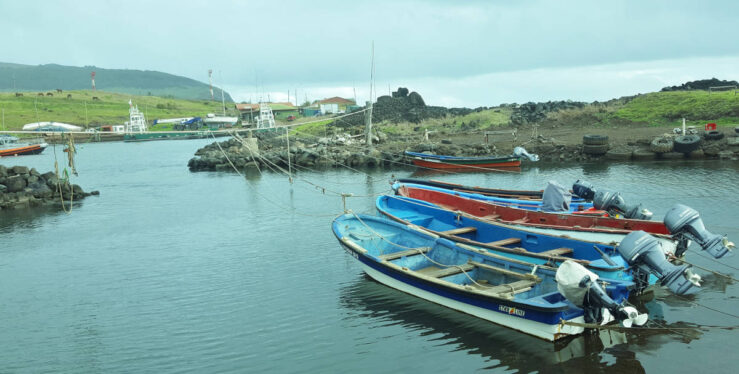
Photo: Travel In Culture
At Hanga Roa Harbour, we watch snorkellers and divers prepare to explore the clear Pacific waters. Visibility can reach sixty metres, and around 160 marine species live here, many endemic. For the more adventurous, snorkelling and exploring the clear waters is among the best things to do in Easter Island, even without extensive coral reefs, offering visitors a unique underwater experience.
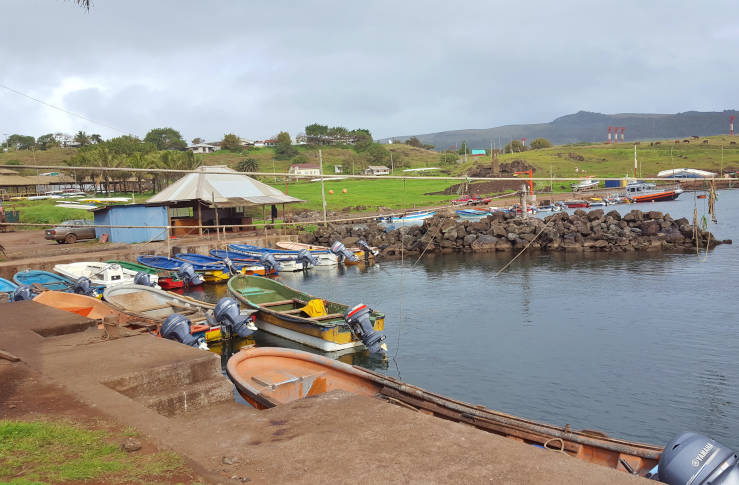
Hanga Roa.
In the evening, a favoured option is a cultural dance show. Powerful rhythms, elaborate costumes, and expressive movements bring Rapa Nui traditions to life. As night falls, traditional music drifts once more through the air, and we are in awe of the blend of past and present island culture.
Best Things to Do in Easter Island Beyond the Main Sites – More Information
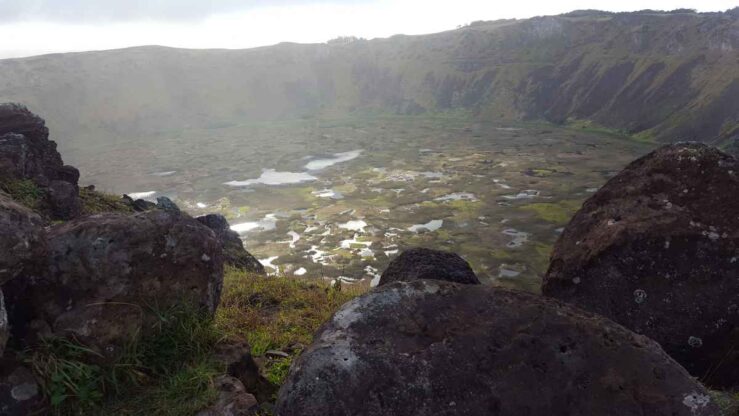
One of the highlights of our Easter Island itinerary is exploring the breathtaking Rano Kau Crater, a must-see for visitors.
With more time, Easter Island offers even more to discover. Cycling around the island reveals lesser-known ahus and coastal views. Beaches such as Ovahe or Playa Pea provide quieter alternatives to Anakena. Volcanoes like Maunga Terevaka and Poike offer panoramic vistas, while Puna Pau shows where the moai topknots were carved. Stargazing, coastal walks, and traditional food experiences can further enrich the trip.
Yet beyond the sites themselves, Easter Island invites a slower way of travelling, one rooted in listening, observing, and recognising the living culture behind the monuments. Approaching Rapa Nui in this way reflects the principles of our Cultural Travel Method, where meaning is found not only in landmarks, but in the stories and communities that surround them.
For more inspiration on Chile, you may want to read our travel guide: Santiago Itinerary & City Guide
Read next: Cusco to La Paz Itinerary: An Andean Adventure Across Peru and Bolivia
Frequently Asked Questions
How many days do you need in Easter Island?
Three days are enough to see the main moai sites, volcanic landscapes, and Hanga Roa. This allows time to visit Rano Raraku, Ahu Tongariki, Rano Kau, Orongo, and Anakena Beach at a relaxed pace.
What is the best time to visit Easter Island?
Easter Island can be visited year round due to its mild subtropical climate. The shoulder seasons from April to June and October to December generally offer fewer visitors and more comfortable conditions.
How do you get to Easter Island?
The only regular flights to Easter Island depart from Santiago de Chile. The journey takes around five hours across the Pacific Ocean and lands at Mataveri International Airport in Hanga Roa.
Do you need a car to explore Easter Island?
A car is not essential, but it makes it easier to reach remote archaeological sites in one day. Guided tours and scooter rentals are also popular alternatives for exploring the island.
Do you need a ticket for archaeological sites on Easter Island?
Yes, a Rapa Nui National Park ticket is required for most archaeological sites outside Hanga Roa. This includes key locations such as Rano Raraku, Orongo, and Ahu Tongariki.
Is Easter Island safe for travellers?
Easter Island is generally considered safe for travellers with a low crime rate. Standard precautions are still recommended, especially when travelling at night or in less populated areas.
What should you know about food and supplies on Easter Island?
Most goods are imported from mainland Chile, which makes prices higher than usual. It is useful to bring some essentials from Santiago and plan for limited supermarket choice.
What cultural etiquette should you respect on Easter Island?
Visitors should respect all sacred archaeological sites and avoid climbing or touching the moai statues. It is also important to follow park rules and show respect for the local Rapa Nui community.