


Lake Titicaca Floating Islands: Meet the Uros People
By ANL | UPDATED:
1. Travelling Through the Night to Lake Titicaca
We have travelled all night by bus from Cusco to Puno. Little by little, we have climbed the Andean heights to reach the Lake Titicaca floating islands and the indigenous reed community. The ride has been surprisingly comfortable, with reclining seats and blankets. Due to safe and steady driving on the winding roads, we have, against expectations, managed to get 4–5 hours of brilliant sleep.
A blast of icy air awaits us when we leave the bus. Temperatures drop below freezing at night at this time of year, only about 6–7 degrees colder than the chilly nights during the Andean summer.
Even before arriving at the lake, we prepared to arrive with a mindset aligned with a more thoughtful approach to cultural travel.

Lake Titicaca sits at an elevation of 3,812 metres | Photo: Travel In Culture
Walking out along the pier to board the boat to the floating community, our footsteps break the fine layer of ice on the ramp. With a bit of luck, temperatures will rise another ten degrees during the next few hours. Thanks to the altitude and the sunny sky, it may even feel warm later in the day.
We are prepared for what is likely the coldest morning of our South American trip. The day before, we bought colourful knitted hats and gloves for the occasion. Now, we are finally off to experience the most fascinating indigenous culture — only a short distance from the shore.
Explore more of Peru with the convenience of guided tours:
2. Where is Lake Titicaca Located?
Lake Titicaca lies high in the Andes on the border between southern Peru and western Bolivia. Stretching across both countries, it is the highest navigable lake in the world and a place of great cultural significance for Andean civilisations, both past and present.
3. Who Are the Uros People?

Photo: Travel In Culture
The Uros people, living on the floating reed islands in the western part of Lake Titicaca, are one of the region’s indigenous groups. Centuries ago, the Incas pushed them out onto the lake, where they first lived on large reed boats. Over time, they developed a unique tradition of constructing artificial islands made entirely of totora reeds.

Photo: Travel In Culture
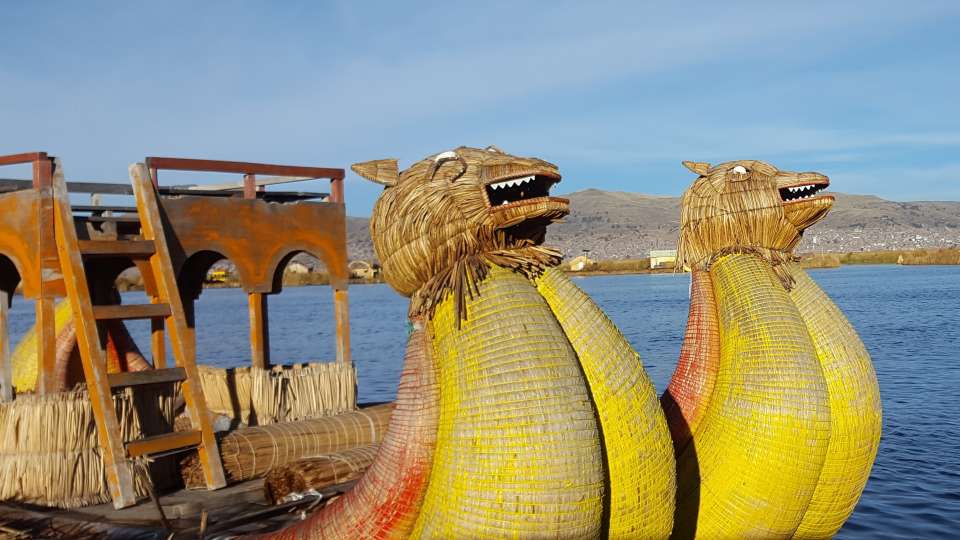
Traditionally, everything is made of the plentiful totora reeds growing in the lake — homes, furniture, boats with animal heads, and even parts of the islands themselves. It is a community with deep roots in an ancient native culture. Although modern influences are present today, such as solar panels, plastic materials and motorboats, the Uros continue many aspects of their long-established lifestyle.
Photo: Travel In Culture
The islets, the houses, and the boats must constantly be renewed with freshly harvested reeds, as the material naturally decays. In earlier times, the floating villages were located further out on the lake, but a devastating storm forced the residents to relocate their mobile community closer to the shore. Today, several families – sometimes up to ten – live together on each island.

Several families live together on each reed island.
4. How to Visit the Lake Titicaca Floating Islands?
A convenient way to visit the Uros is to travel with Peru Hop on a one-way journey from Cusco to La Paz, stopping in Puno on the Peruvian side and in Copacabana in Bolivia.

Lake Titicaca lies at an altitude of 3,812 metres above sea level | Photo: Travel In Culture
The bus leaves Cusco in the evening, and the trip lasts at least 24 hours. Upon arriving in Puno at dawn, you can take a two-hour boat tour to the Uros islands while the bus waits for you. If you wish to spend more time in Puno or on the islands, you can simply stay overnight and take the next day’s bus. Likewise in Copacabana, Bolivia Hop gives you 4–5 hours to explore the town or visit the legendary Isla del Sol before continuing to La Paz.
Explore More of Peru
Compare Peru with your own country:
Crime Rate in Peru
McMeal Price in Peru
Road Safety in Peru
5. Exploring the Floating Uros Islands on Lake Titicaca
When we set foot on the capital island, we immediately notice the sensation: our shoes sink slightly into the soft, spongy, and humid reed floor, which moves ever so gently. The chief Uro of the enclave tells us that the core of the island is about 3 metres (10 feet) deep. It is secured to the lakebed with ten sturdy anchors, which keep it in place relative to the neighbouring islands. He demonstrates how they work with the totora reeds and shows where they have recently added fresh green layers to maintain the surface.

Photo: Travel In Culture
Nearby, older women sit working on colourful handicrafts, which they display to visiting tourists. Fishing and hunting are still part of daily life here, and to impress us, the spokesman fetches an enormous rifle used for hunting ducks on the lake.
The capital island even features a small restaurant and a shop where we can get our passports stamped with the official Uros floating islands stamp. The shopkeeper is curious about where we come from and asks whether we have participated in the FIFA World Cup. He proudly tells us that one of the other islands has its own radio station.

Photo: Travel In Culture
Being among the first visitors of the morning, we enjoy the remarkable silence. We watch as a few islanders prepare their boats, some heading towards other islets or to Puno to trade. Others are already returning with fresh totora reeds for repairs. It is a calm and fascinating glimpse of life before the day begins for most visitors.
6. Daily Life on the Uros Islands Today

Photo: Travel In Culture
To a large extent, the Uros live off what they can catch, harvest, and gather on the lake. Tourism plays a growing role, too, offering both income and challenges. The residents use modern conveniences such as motorboats, solar panels, and recycled plastic bottles incorporated into construction.
Although the islands remain a functioning community with daily routines and local trade, anthropologists believe that this may be the last generation living traditionally on Lake Titicaca. The younger generation increasingly seeks better education and more opportunities on the mainland, and tourism sometimes displaces the time needed for essential island maintenance.

Lake Titicaca floating reed islands and the indigenous Uros population | Photo: Travel In Culture
The morning rhythm includes harvesting totora, transporting bundles back for essential maintenance, and carrying out small household chores that keep the floating community functioning.

Photo: Travel In Culture
Our early arrival also reveals some of the everyday routines on the islands. We see families getting ready for the day, including one with children who eagerly jump onto a boat bound for another island, where they attend school. Beyond primary school, however, children must continue their education on the mainland.

Lago Titicaca | Photo: Travel In Culture
7. Tourism
Many visitors describe the Uros experience as extremely touristy, with demonstrations and activities arranged specifically for tourists. This is also true – we are also shown handicrafts for sale and offered rides on traditional reed boats for an additional fee.

Photo: Travel In Culture
However, arriving so early also allows us to see a side of the islands that is not shaped for visitors. We catch brief glimpses of the quiet morning rhythm as people set out for errands, prepare their boats or tend to small tasks before the first tour groups appear. In these moments the islands feel unmistakably lived in, a reminder that the Uros community still functions beyond tourism.

Photo: Travel In Culture
8. Returning to Puno
As we head back to Puno, the lake feels far more alive than it did at dawn. Boats travel back and forth on the water, some carrying goods, others transporting people between the islands and the mainland. It becomes clear that Lake Titicaca is not only the Uros’ home but also their main route of connection to the wider world. It is easy to imagine how the younger generation, with access to new opportunities and education on the mainland, may eventually choose a different path.
Reflecting on our visit, we appreciate how much more rewarding travel becomes when embracing a heritage‑focused approach, engaging with local communities along the way.
More Information About Peru
Do you need a travel guide to Peru? Then you may find inspiration in this 10-day Peru itinerary.
Where to Stay in La Paz or Cusco?
Discover the ideal base for your visit to La Paz. The hotels below are all excellently located to experience La Paz’s local culture, with spectacular views of the Andean city or close to vibrant markets and authentic cultural sites.
Find the perfect place to stay for exploring the old Inca capital of Cusco. Do you prefer being in the heart of the city or close to significant Inca heritage?
Read next: Discover the Mythic Inca Culture at Machu Picchu and Exploring the Sacred Valley in Peru
Frequently Asked Questions
How high is Lake Titicaca above sea level?
Lake Titicaca sits at 3,812 metres above sea level on the border of Peru and Bolivia, making it the highest navigable lake in the world.
How do you get to the Uros floating islands from Puno?
Visitors usually take a boat tour from Puno, with most excursions lasting between two and three hours and including visits to one or more reed islands.
What are the Uros floating islands made from?
The islands are constructed from layers of totora reeds harvested from the lake. Fresh reeds are regularly added to replace older layers that naturally decompose.
Can people still live on the Uros islands today?
Yes, several families continue to live on the floating islands, maintaining traditional practices while also using modern conveniences such as solar panels and motorboats.
What is the best time of year to visit Lake Titicaca?
The dry season from May to October generally offers sunny weather, clear skies, and calmer conditions for boat trips on the lake.
Is visiting the Uros islands suitable for children?
Yes, the islands are accessible to families, although parents should supervise young children because the reed surfaces can be uneven and boats are required to reach the islands.
Can you take photographs on the Uros floating islands?
Photography is generally permitted, but it is polite to ask permission before taking close-up photographs of residents or their homes.
How much time should you allow for a visit to the Uros islands?
A half-day excursion is sufficient for most visitors, while longer tours can include additional islands on Lake Titicaca for a deeper cultural experience.
