



Historic Highlights: Top Things to Do in Santiago Chile on Foot
By ANL | UPDATED:
Things to Do in the Historic Centre of Santiago Chile
1. Barrio Yungay: A Base in Santiago’s Historic Centre
2. Plaza de Armas: Santiago’s Historic Heart
3. Mercado Central: Santiago’s Vibrant Seafood Market
4. Parque Forestal: A Green Escape
5. More Things to Do in Santiago
Santiago, Chile, cradled between the Pacific Ocean and the towering Andes, offers a treasure trove of historic highlights and things to do on foot. Exploring these attractions is a fascinating way to experience the city’s rich culture, vibrant urban life, and iconic sites, from Plaza de Armas and Mercado Central to Parque Forestal and the charming streets of Barrio Yungay.
Once in Santiago, you are ready to start sightseeing with stunning views of the snowcapped Andes. This Santiago de Chile city guide highlights the most rewarding things to do in the historic centre, perfect for travellers who enjoy exploring the city on foot. This slower, attentive way of discovering a city reflects a broader philosophy of travelling with curiosity and cultural awareness, an approach explored further in our approach to meaningful travel.
1. Barrio Yungay: A Characterful Base for Things to Do in Santiago
We have chosen to stay in Barrio Yungay, one of Santiago’s most characterful neighbourhoods, with houses dating from the 19th century. It became a prominent and fashionable residential quarter for the Santiago upper class.
What makes Barrio Yungay stand out today is the remarkable state of preservation of its houses. It is a historic neighbourhood where the buildings, to a certain extent, have remained intact or undergone renovation. Due to these comprehensive renovations in recent years, it feels like an attractive and increasingly popular part of the city with locals and visitors alike, without losing its authentic atmosphere.
The hotels in Barrio Yungay attract visitors from across the world.
Barrio Yungay features both the Museum of Natural History, the Museum of Contemporary Art, and the Museum of Memory and Human Rights. The latter opened in Santiago City in 2010 with the aim of drawing attention to human rights violations committed in Chile by the state under the dictatorship of General Pinochet between 1973 and 1990. The first two museums are inside the vast Quinta Normal Park.
When you feel ready to explore more in or beyond Santiago de Chile, consider joining an organised tour.
2. Exploring Santiago’s Historical Centre – Plaza de Armas
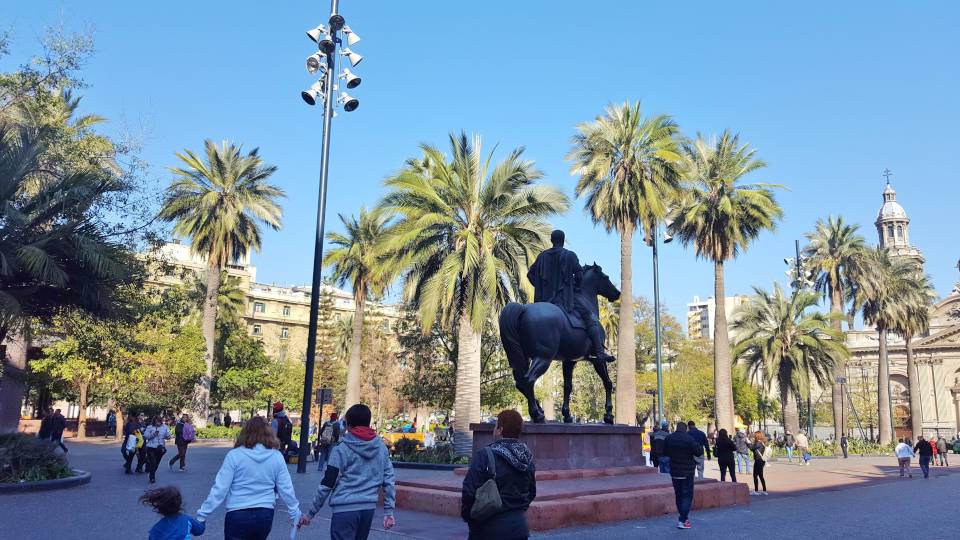
We begin our exploration on foot in the heart of Santiago, at Plaza de Armas, the city’s historic square and the traditional starting point for discovering the capital. Like many other colonial cities across South America, Plaza de Armas is originally the ‘armed’ square, surrounded by governmental buildings and cathedrals, where the population could gather and be protected. Excavations beneath the plaza reveal traces of an Inca village, and in the 1500s, it becomes a garrison town with a market square and several administrative buildings. The Pedro de Valdivia monument honours Santiago’s founder, the Spanish conquistador, standing proudly in the centre.
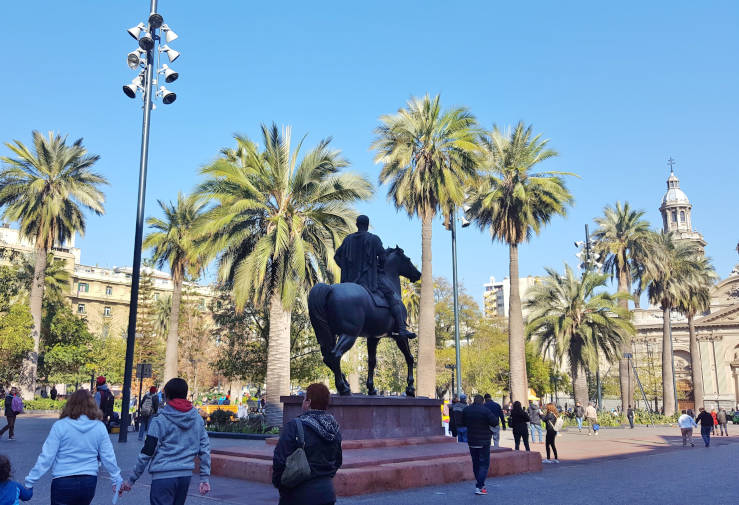
Plaza de Armas with the monument of Pedro de Valdivia, Santiago’s founder.
Since the 1860s, Plaza de Armas gradually develops into a city garden, with trees, flowers, and palm trees creating a park-like atmosphere. A recently added esplanade hosts cultural activities, and locals often play chess or watch the Chilean Cueca dance. Walking through the square, we slow down to observe a mixture of elegantly dressed business people on their way to work, elderly residents socialising, and tourists like us absorbing the rhythm of the city. Even a few homeless people occupy benches while chatting with patrolling police officers, harmoniously blending with the crowd. On a sunny day, there is no need for jackets, not even during the coldest winter month, making the plaza a welcoming space for everyone. Street music, the sound of conversation, and the shade of palm trees make the plaza feel lively yet relaxed.
Flanking the square is the Santiago Metropolitan Cathedral, a neoclassical building designed by the Italian architect Gioacchino Toesca. Construction begins around 1600 under Pedro de Valdivia’s plans. Over the centuries, earthquakes frequently damage the cathedral, prompting restorations in the styles popular at the time, and the two towers are added much later. Stepping away from the bustling square, we enjoy a few minutes of tranquillity, admiring the sumptuous baroque details, intricate columns, and monumental structure.
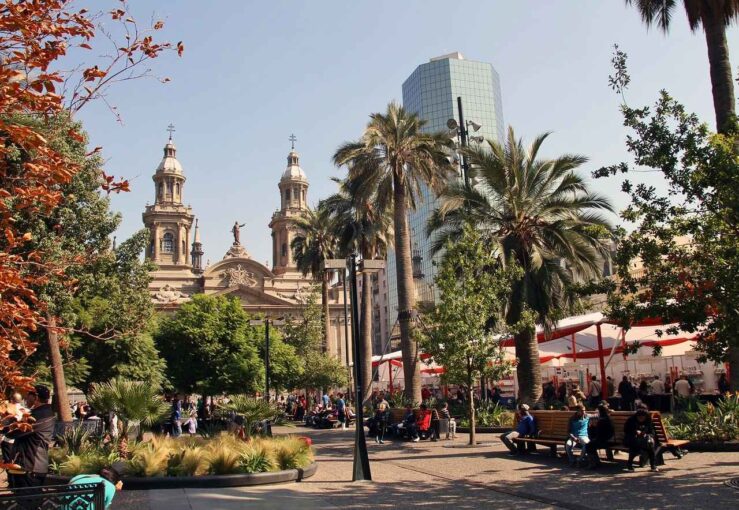
Plaza de Armas, Santiago Metropolitan Cathedral | Photo: Monica Volpini
Just a short walk from the plaza lies the Museo Chileno de Arte Precolombino, housed in the early 1800s Palacio de la Real Aduana. The museum exhibits around 3,000 pre-Columbian artworks from Mesoamerica, the Andean region, the Intermediate/Isthmo-Colombian cultures, Amazonia, and the Pan-Caribbean. This is the place to discover intricate pottery, ceremonial objects, and textiles, revealing the authentic artistry of ancient Latin American civilisations. Founded in 1981 by Chilean architect Sergio Larraín García-Moreno, the museum provides a rich, educational, and inspiring experience, connecting visitors directly to centuries of pre-Columbian culture.
Other historic buildings surround the plaza, including the Central Post Office, City Hall, Court Houses, Museo Histórico Nacional, and Museo de Arte Sagrado. Walking around, we feel immersed in Santiago’s layered history, from colonial foundations to contemporary urban life. The combination of grand architecture, vibrant public spaces, and rich cultural institutions makes the historical centre an essential part of experiencing Santiago de Chile.
3. Mercado Central – Santiago’s Vibrant Seafood Market
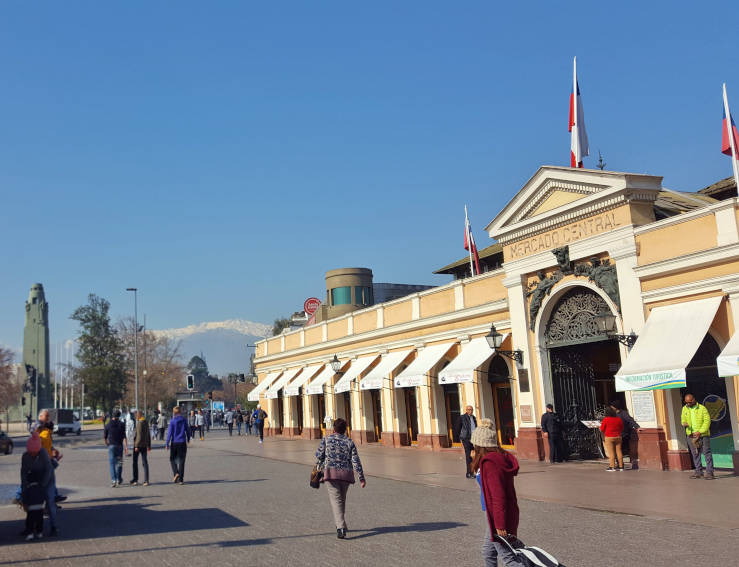
Mercado Central.
Continuing north from the historic centre, we arrive at Mercado Central, a large indoor market primarily dedicated to fish and seafood. We are immediately struck by the sheer scale and liveliness of the market, a genuine surprise in the very centre of Santiago, and it quickly feels like one of the top seafood markets in the world.
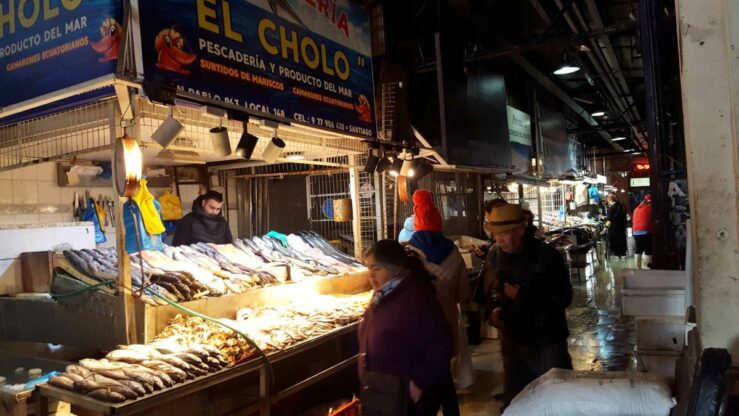
The Mercado Central in Santiago, Chile | Photo: Travel In Culture
The historic Mercado Central opens in 1872 and features a distinctive cast-iron roof with a central pyramidal structure, replacing the former Plaza del Abasto that was destroyed in a fire in 1864. Walking inside, we are captivated by the abundance of fish and shellfish, their colours vivid against crushed ice, while the fresh seaside aroma fills the vast hall beneath the iron roof.
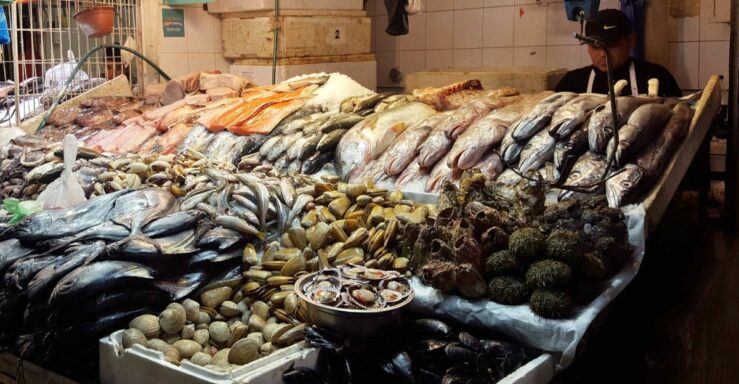
An impressive variety of Chilean fish and shellfish fills the market stalls | Photo: Travel In Culture
We are fascinated by the variety of seafood, lingering at the stalls, from reineta, a Chilean endemic queenfish, to the unusual piure, whose deep-red interior contrasts dramatically with its rough exterior. There is tollo, a type of velvet catfish, robalo, Falkland mullet, as well as more familiar species like swordfish, hake, salmon, octopus, clams, and sea urchins. Every corner of the market reveals something new and exciting.
-
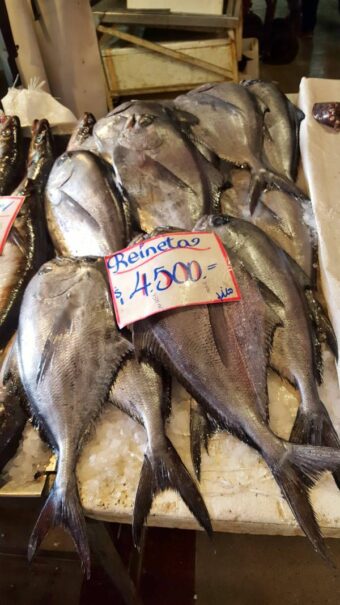
- The endemic reineta can be seen everywhere at the Mercado Central.
-

- We are extremely fascinated by the octopuses or ‘pulpos’!
Several restaurants inside the hall serve freshly prepared seafood, making it easy to enjoy the bounty immediately. It is difficult to resist tasting the octopus, or ‘pulpo’, which is tender, flavourful, and perfectly cooked, served just moments after leaving the counter. A few suppliers of Andean knitwear and woven textiles also add a splash of colour among the seafood stalls, making the market feel vibrant and authentically Santiago.
We are genuinely surprised by how world-class Mercado Central is. Even if you are not a fish enthusiast, the atmosphere, the colours, and the energy make it an unforgettable experience, giving you a taste of Santiago’s daily life and culinary culture.
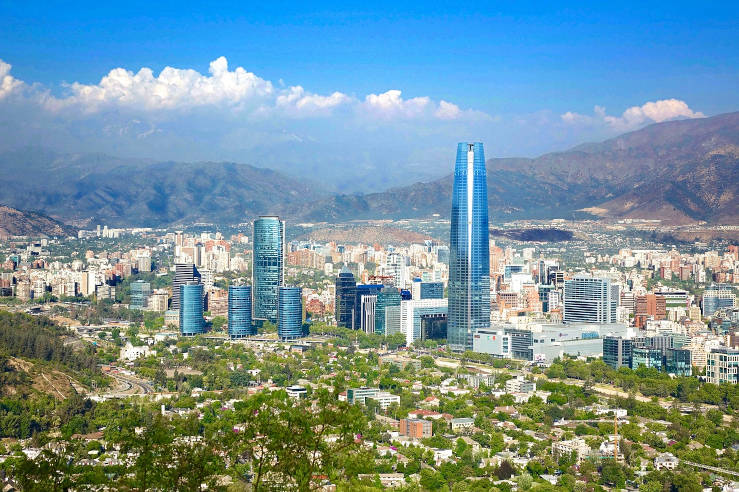
Sky Costanera | Photo: Horst Engelmann
4. Parque Forestal – A Green Escape in the City
Strolling through Parque Forestal feels like a breath of fresh air after the intensity of the historic centre, and even in winter the park feels spring-like. We enjoy wandering along the Mapocho River, taking in the greenery and the sound of flowing water. We pass joggers, families, and couples sitting on benches, enjoying the green space as part of their daily routine. The park stretches eastward into Parque Balmaceda, offering a long, narrow ribbon of green perfect for a leisurely walk.
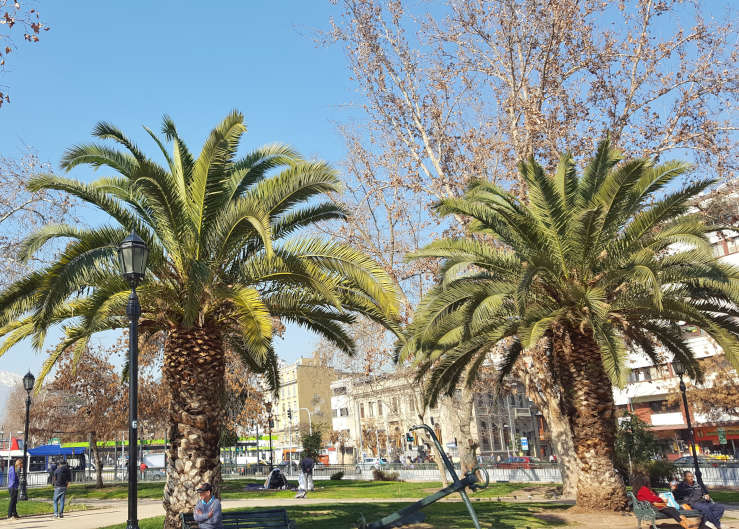
Photo: Travel In Culture
Inside the park, we discover the Museo Nacional de Bellas Artes, which showcases Chilean and South American art from the 19th century to the present. Entry is free, allowing visitors to admire both classic and contemporary works without distraction. Among the notable artists are pieces by José Gil de Castro, a Peruvian painter who becomes a Chilean citizen, and the distinguished Chilean expressionist Israel Roa.
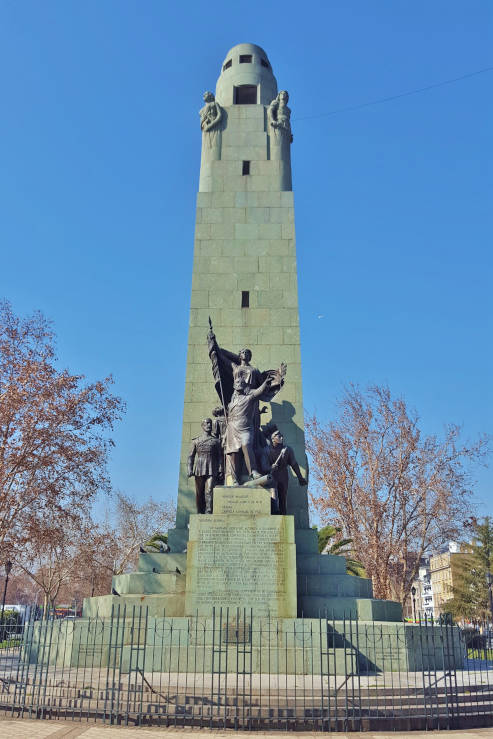
Obelisk near the former Public Market, commemorating the heroes of the 1879 Battle of Iquique during the War of the Pacific.
Walking through Parque Forestal, we feel a welcome sense of calm compared with the bustling streets nearby. Locals jog, walk their dogs, or sit on benches reading, and we happily follow suit, pausing to enjoy the views of the Andes Mountains towering in the distance, a constant reminder of Santiago’s dramatic natural setting. It is the perfect place to relax, soak up the atmosphere of Santiago, and experience a leisurely, leafy side of the city.
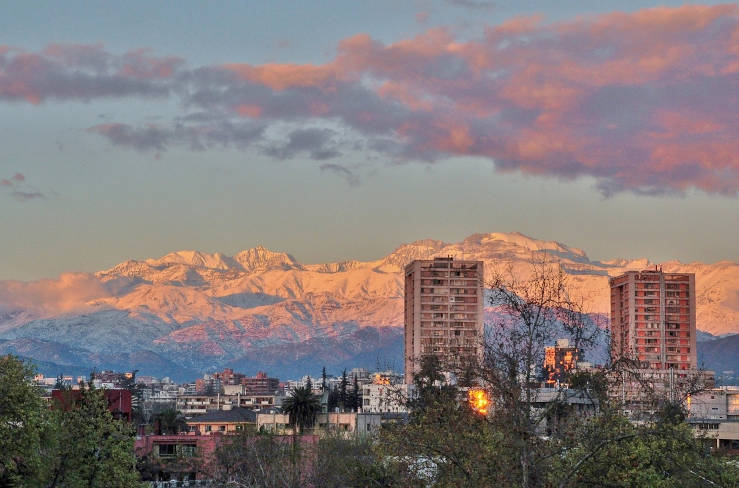
Photo: Sergom
The historic heritage has become the perfect frame for cultural activities, theatres, and other initiatives. With its charming architecture and lush green parks, the neighbourhood really appeals to citizens. Walking these streets, we notice cafés, small cultural venues, and residents going about daily life, giving Barrio Yungay a lived-in, welcoming feel.
Staying in a hotel in Barrio Yungay offers a peaceful stay and provides an ideal base for exploring the area and the historic centre of Santiago.
5. More Things to Do in Santiago, Chile
After exploring the historic centre on foot, there are several other attractions worth visiting to round out a stay in Santiago. Palacio de la Moneda, the presidential palace, stands as a key historical landmark. Cerro San Cristóbal offers sweeping views of the city and the Andes, while Sky Costanera, the tallest observation deck in South America, provides a 360-degree perspective over Santiago.
These sights complement the experiences in the historic capital, offering a fuller sense of Santiago’s history, culture, and landscape. Exploring Santiago in this way highlights how slowing down and engaging with local history, architecture, and daily life can transform a simple city break into a richer cultural experience, a perspective at the heart of our Cultural Travel Method.
Read next: A 3-Day Journey into the Mysteries of Easter Island
Frequently Asked Questions
What are the best things to do in Santiago Chile on foot?
The best things to do on foot include exploring Plaza de Armas, visiting the Santiago Metropolitan Cathedral, walking through Mercado Central, and relaxing in Parque Forestal. These sites are all within the historic centre and easy to reach without transport.
Is the historic centre of Santiago walkable for visitors?
Yes, the historic centre is highly walkable with most major attractions located within short distances. Streets are generally safe during the day and ideal for self-guided sightseeing.
How much time do you need to explore Santiago’s historic centre?
One to two full days is enough to explore the main highlights at a relaxed pace. This allows time for museums, markets, and green spaces without rushing between sites.
What can you see at Plaza de Armas in Santiago?
Plaza de Armas features the Santiago Metropolitan Cathedral, the National History Museum, the Central Post Office, and the monument to Pedro de Valdivia. It is also a lively public space with street performers and local daily life.
Is Mercado Central worth visiting in Santiago?
Yes, Mercado Central is one of the city’s most iconic food markets, known for its seafood and historic iron architecture. It offers a lively atmosphere and a strong introduction to Chilean cuisine.
What is the best area to stay in Santiago for sightseeing?
Barrio Yungay is a good base for exploring the historic centre due to its preserved architecture and cultural attractions. It provides easy access to central landmarks while offering a quieter neighbourhood atmosphere.
What museums should you visit in Santiago’s centre?
Key museums include the Museo Chileno de Arte Precolombino, the Museo de Bellas Artes, and the Museum of Memory and Human Rights. These offer insight into Chile’s ancient cultures, art, and modern history.
Is Santiago safe for tourists walking around the centre?
The historic centre is generally safe during the day, especially around major attractions and busy streets. Visitors should still stay aware of their surroundings and avoid displaying valuables in crowded areas.