



9 Urban & Cultural Highlights in Aarhus
By ANL | UPDATED:
1. Aarhus Concert Hall
2. The Cathedral
3. Aarhus Theatre
4. The City Hall
5. Botanical Garden
6. Latin Quarter
7. Salling ROOFTOP
8. Godsbanen
9. Aarhus Street Food
Aarhus is best experienced as a walkable urban landscape shaped by neighbourhoods, streets, public spaces, and everyday city life. This Aarhus city guide focuses on how to move through the city as a connected urban environment, where architecture, food culture, and cultural districts form a continuous walking experience rather than isolated attractions.
For a deeper approach to exploring cities through culture and place, see our cultural travel method, which explains how to experience destinations beyond the main attractions.
What to experience in Aarhus? Perhaps it is not your first time in central Jutland (Jylland) and Aarhus, or you are just seeking something different from the ‘usual’ museums and tourist attractions – although you still want to include a few top sights. For a structured overview of Aarhus museums and landmark institutions, see our dedicated guide to cultural highlights in the city.
Unlike attraction-based guides, this article focuses on how Aarhus feels as a connected urban space experienced on foot. Individual landmarks are included to support orientation within the city, but the focus remains on spatial experience, movement, and neighbourhood connections.
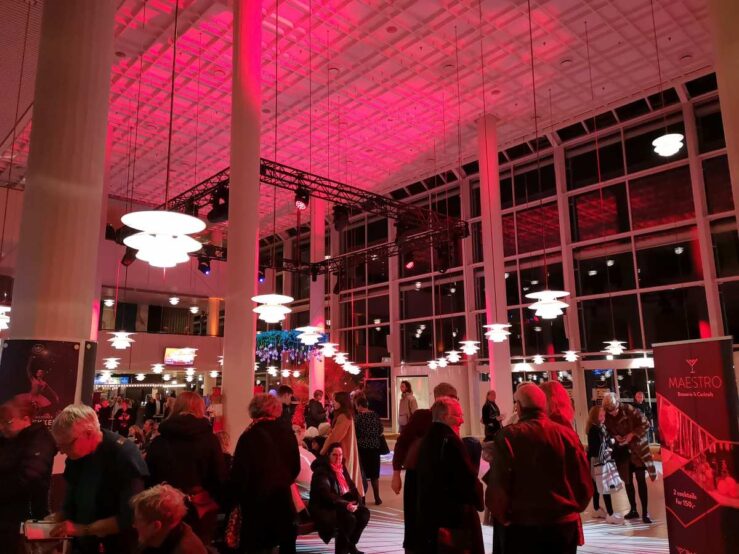
Aarhus Concert Hall.
Aarhus Concert Hall, or Musikhuset, located next to ARoS, is a venue for music performances in Jutland, designed by Kjær & Richter and built in the years 1979-1982 – and today a central venue in Aarhus’ cultural and performing arts scene.
It is the largest concert hall in Scandinavia, with seating of more than 3,600 people. Musical performances take place in one of the six concert halls, including the Large Hall, the Rhythmic Hall, the Symphonic Hall and the Chamber Music Hall, or in the spectacular foyer with glass façades on three sides! The Concert Hall provides the perfect setting and stage for any kind of concert, opera, ballet, musical, show, exhibition or business arrangement.
The Concert Hall is also home to Den Jyske Opera and Aarhus Symfoniorkester.
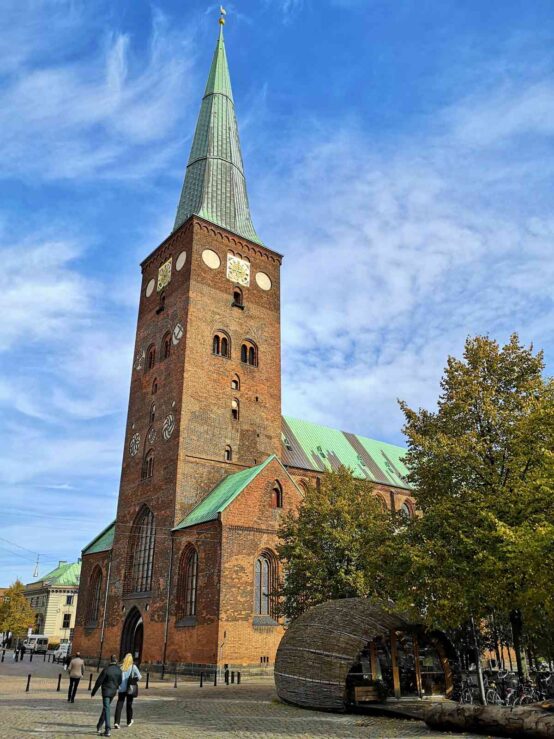
Aarhus Cathedral, Denmark | Photo: Travel In Culture
Aarhus Cathedral is one of the most important historic buildings in the city centre and forms part of the medieval street structure of Aarhus.
Construction of the Cathedral began in the 1190s, initiated by bishop Peter Vognsen, and in the years of construction, a cathedral school, Aarhus Katedralskole, was also begun. The Romanesque church building was completed in 1300, dedicated to St Clement, the patron saint of sailors. A few years later, in 1330, the Cathedral unfortunately burned down. It remained in ruins until 1449 when it was rebuilt and enlarged in the new Gothic style.
A wrought-iron “Golden Door” separates the nave from the choir. Other noteworthy parts are the copper baptismal font, the carved altarpiece with movable sections and the Baroque-façade pipe organ.
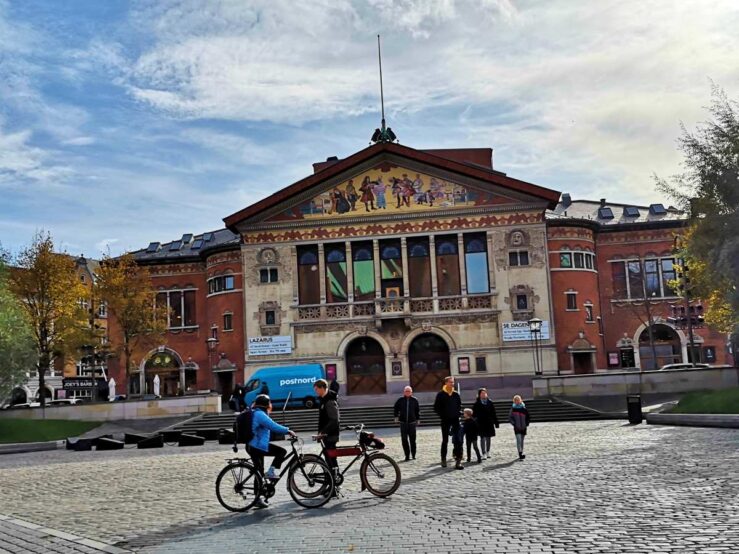
Aarhus Theatre, Denmark | Photo: Travel In Culture
Aarhus Theatre sits within the compact city centre and contributes to the dense cultural layer of the walking route through central Aarhus. It was designed by Hack Kampmann in the Art Nouveau style, popular at the time, and inaugurated in 1900. The Holberg characters appearing on the façade fresco are attributed to professor Hans Tegner. The construction of Aarhus Theatre was initiated by a group of eager citizens and replaced the old theatre, known as ‘Svedekassen’.
The theatre features four stages and has around 100,000 visitors annually. A varied repertoire is played during the season of September-June. Both own productions and guest performances are part of the broad repertoire.
Today it remains a key cultural institution in Aarhus with a strong focus on theatre and performing arts.
For readers interested in Aarhus museums and landmark institutions, our cultural attractions guide provides a structured overview of the city’s key sites.
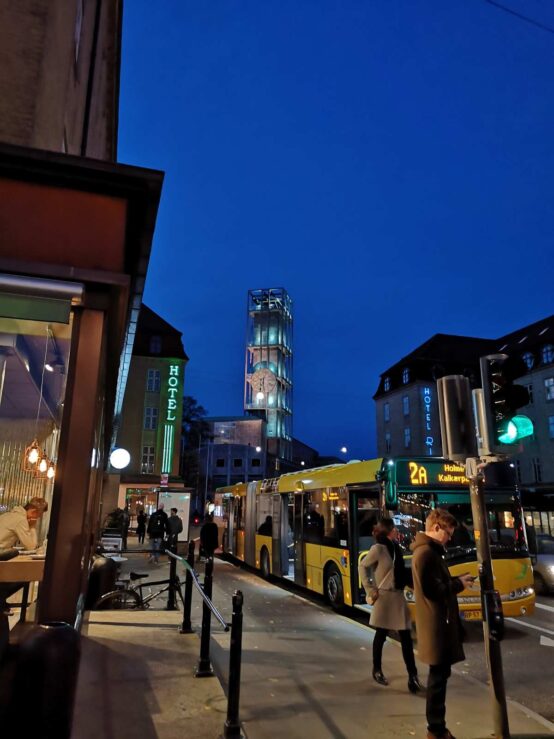
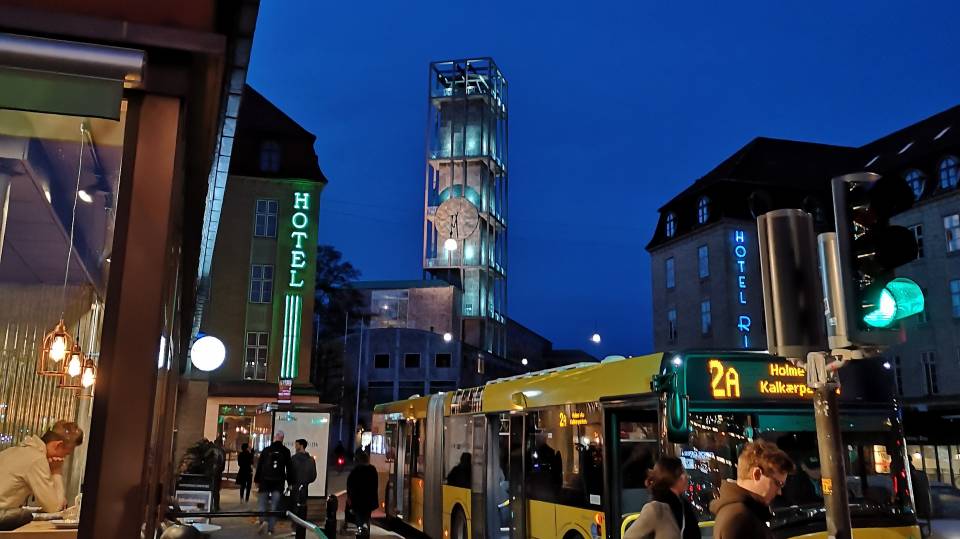
Aarhus City Hall, Denmark | id=”theatre”
Built after the design by Arne Jacobsen, Aarhus City Hall, or Aarhus Rådhus, is, with its unique architectural style, an important example of Danish functionalist architecture in the city centre. Arne Jacobsen and Erik Møller won a design competition in 1937 to design the new City Hall. At first, the project did not include a tower.
Today, the City Hall stands as a functionalistic building, housing Aarhus Municipality. In addition to being an administration building, it hosts a wide range of events and guests throughout the year.
The Botanical Garden offers a green urban space within Aarhus city centre, used by both locals and visitors for recreation and seasonal walks. The lovely park is frequented by tourists, students, families, and other citizens who use the green spaces for a picnic or other leisurely activities.
One of the more recent approaches is the establishment of a new Tropical House section, Væksthusene, of the Botanical Garden. It boasts some spectacular greenhouses with tropical and subtropical plants from the rainforest. Inside the greenhouses, there is vegetation from all four different climate zones. Explore the stunning flowers and fascinating plants here and learn about their functions in their natural habitats.
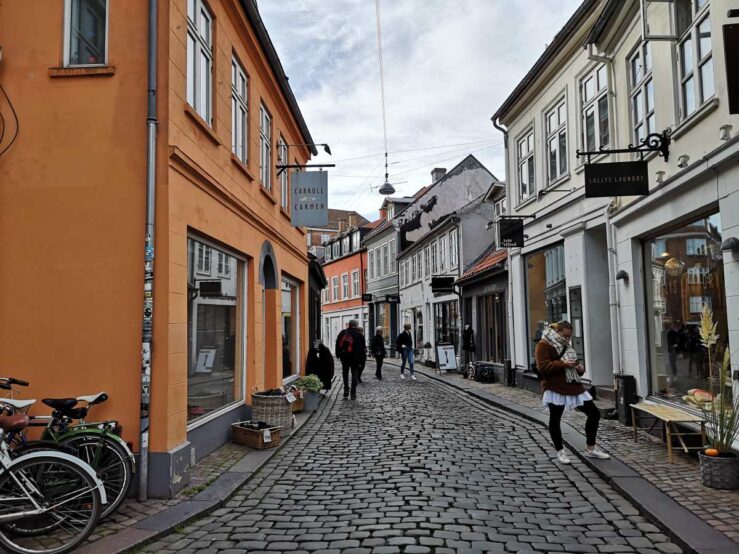
Latin Quarter.
The cobblestone picture-postcard Latin Quarter represents one of the most walkable and characterful neighbourhoods in Aarhus city centre, known for small streets, cafés, and local shops. It arose in the 14th century as one of the first new parts of Aarhus after the Viking Age. Meandering around, you will notice the still-existing, old street names such as Klostergade, Guldsmedgade, Mejlgade and Graven.
Aarhus Latin Quarter features a pronounced cultural life with live music, studios and galleries for everyone to visit. Its name can be attributed to the comparable, although much more significant, neighbourhood in Paris, the Quartier Latin – the Paris Latin Quarter.
For visitors interested in Aarhus as part of a wider cultural landscape in Denmark, the city connects strongly with regional heritage sites such as Moesgaard Museum, which focuses specifically on Viking history and archaeology.
It provides panoramic views over Aarhus city centre and the surrounding urban landscape. Due to its location above the city roofs, it offers the rare opportunity to get a 360-degree panoramic experience over the city of Aarhus.
At the same time, it is a popular open-air bar and café, particularly on sunny days, where you can enjoy a meal, a drink or a cup of coffee. You may listen to the DJ’s music if you are here on the right day or evening.
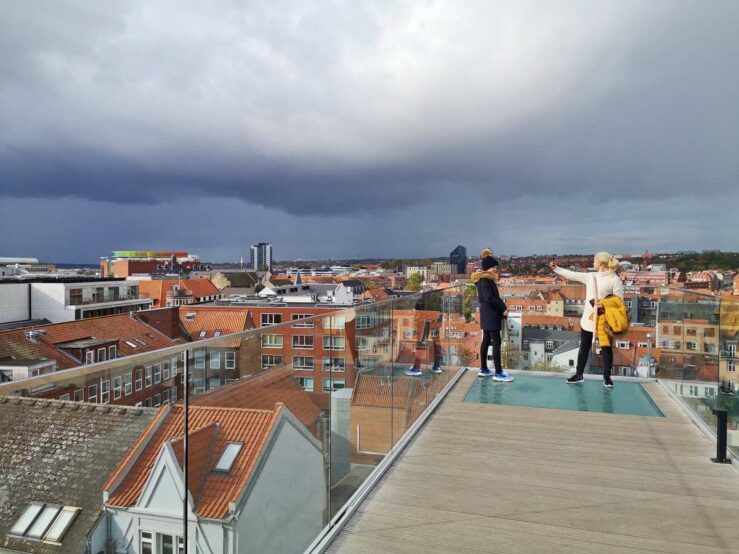
Salling ROOFTOP.
Step out from the building on a glass platform and enjoy the views of the pedestrian street from above. That may well be a transboundary experience!
Godsbanen (meaning ‘goods station’) is one of the newer projects and creative spaces in Aarhus. It is a centre for cultural productions and artistic disciplines such as theatre, dance, and photography.
The site is the old goods station in Aarhus from 1923, which for many years handled all the freight trains transporting goods to and from other places in Denmark along the rail lines. It was built on the swamp-like grounds outside the city after filling the area up with appropriate material. Hack Kampmann was one of the influential people behind the project.
After the close-down, the buildings were transformed into the current cultural production centre, and it is today a popular site for creative purposes – a cultural production space that reflects Aarhus’ contemporary creative industries. At Godsbanen, you will find studios, project rooms, stages, dance halls, and auditoria beside an unpretentious café and restaurant.
Aarhus Street Food opened in 2016 in an abandoned bus garage near the Central Station. In an authentic setting, a wide range of the world’s cuisines are sold here under the same roof. It is a blend of international, simple quality food served between the concrete walls in the spacious building.
Aarhus Street Food functions as a central meeting point in the city’s everyday food culture. It is an affordable and fast experience to have a bite here, together with students, families, tourists and whoever finds their way to the new gastronomic market in Aarhus.
It ranks high and is an enticing food option to squeeze in between other activities in Aarhus.
Frequently Asked Questions about Aarhus City
What is included in an Aarhus city guide?
An Aarhus city guide typically includes key cultural attractions, architecture, museums, neighbourhoods, food spots, and walking routes across the city centre.
What are the best things to do in Aarhus city centre?
Key experiences include walking through the Latin Quarter, exploring the harbour districts, and experiencing cultural venues along the city centre loop.
Is Aarhus a walkable city for sightseeing?
Yes, most major attractions are within walking distance in the city centre, making Aarhus ideal for a self-guided walking tour.
How much time do you need in Aarhus?
One to two days is enough for main highlights, while three days allows a deeper cultural and architectural exploration.
What is Aarhus best known for culturally?
Aarhus is known for its mix of modern architecture, Viking history, creative districts, museums, and a strong café and food culture.
What is the best area to stay in Aarhus?
The city centre and Latin Quarter are the most convenient areas for sightseeing, dining, and easy access to major attractions.
Is Aarhus suitable for a weekend city break?
Yes, Aarhus is ideal for a weekend break with compact attractions, a lively cultural scene, and easy transport connections.
What is the best time to visit Aarhus?
Late spring to early autumn offers the best weather for walking tours, outdoor cafés, and harbour area experiences.
Read more about interesting places to visit in Aarhus: 9 Cultural Places in Aarhus
Read next: Visit Ribe in Denmark and Hike the Towpath Pramdragerstien in Jutland