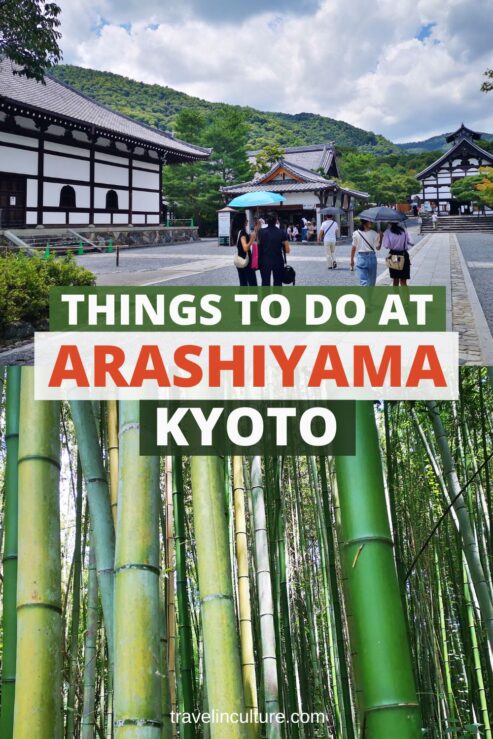





Arashiyama Bamboo Grove, Monkey Park & Tenryuji Temple in Kyoto
By ANL | UPDATED:
All photographs in this article were taken by Travel In Culture.
- 🌿 Arashiyama Bamboo Grove (Sagano Bamboo Forest)
- 🐒 Iwatayama Monkey Park with free-ranging Japanese macaques
- 🎋 Kimono Forest at Randen Arashiyama Station
- 🏯 Tenryuji Temple (UNESCO World Heritage Site)
- 📍 Scenic day trip area in western Kyoto

Temple area near Arashiyama Bamboo Grove in Kyoto, surrounded by traditional architecture, trees, and peaceful natural scenery.
Arashiyama in western Kyoto is one of the city’s most popular day trip areas, known for its iconic Bamboo Grove, the scenic Katsura River, and nearby cultural landmarks. The area combines natural beauty with historic temples and unique attractions, making it one of the best places to experience both nature and tradition in Kyoto.
The famous bamboo grove lies in the historic Sagano area, close to Tenryuji Temple. Beyond the bamboo, Arashiyama offers a riverside landscape, a historic Zen temple, a mountain monkey park, and the colourful Kimono Forest at Randen Arashiyama Station.
Arashiyama is ideal for a half-day or full-day Kyoto itinerary, combining nature, temples, and cultural attractions in one easily walkable area.
You can explore more about travelling in Japan in our Japan travel hub. If you are interested in travelling more meaningfully, our cultural travel method explains how to experience destinations beyond surface-level sightseeing.
For more Kyoto inspiration, you can also explore Kinkakuji Temple (Golden Pavilion), another of Kyoto’s most iconic landmarks.
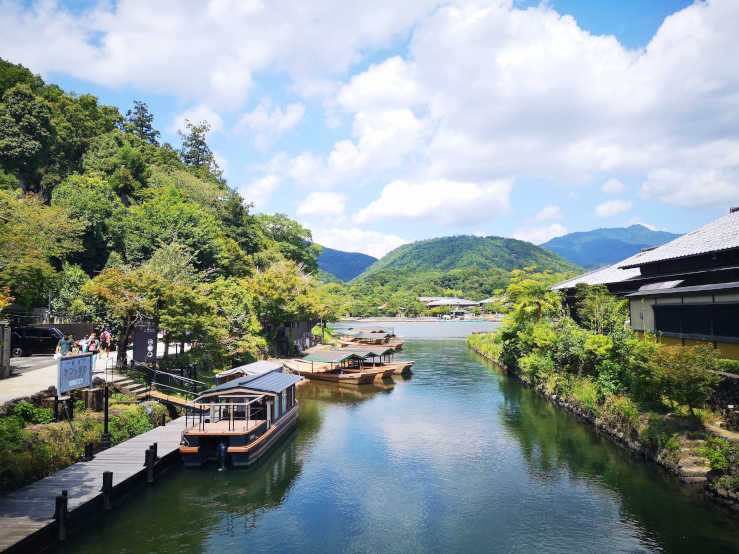
Katsura River area in Arashiyama, Kyoto, a scenic riverside landscape surrounded by mountains, traditional boats, and seasonal scenery.
Can you see Arashiyama Bamboo Grove on a day trip?
On a day trip from Kyoto Station, it is easy to combine the famous bamboo grove with several nearby attractions, including Iwatayama Monkey Park, Togetsukyo Bridge, the Kimono Forest at Randen Arashiyama Station, and Tenryuji Temple. All sights are within easy reach of the three main railway stations serving the area: Randen Arashiyama, Hankyu Arashiyama, and JR Saga-Arashiyama.
If you are planning to travel more extensively by train across Japan, beyond local journeys such as getting to Arashiyama and other Kyoto attractions, a Japan Rail Pass can be a convenient and cost-effective way to explore the country.

From Kyoto Station, the most straightforward option is the JR Sagano Line to Saga-Arashiyama Station. The journey takes about 11 minutes on a rapid service, followed by a walk to the main Arashiyama attractions. Alternatively, the Hankyu Line serves Arashiyama Station, while the Randen Arashiyama Line serves Randen Arashiyama Station.
Arashiyama is best visited early in the morning or late afternoon to avoid crowds, and many travellers combine it with central Kyoto or other western Kyoto temples for a full-day itinerary. For a comfortable stay in Kyoto, choosing a well-located hotel near transport hubs or cultural districts makes it much easier to explore attractions like Arashiyama and the rest of the city.
Where to Stay in Kyoto
1. Kimono Forest at Randen Arashiyama Station
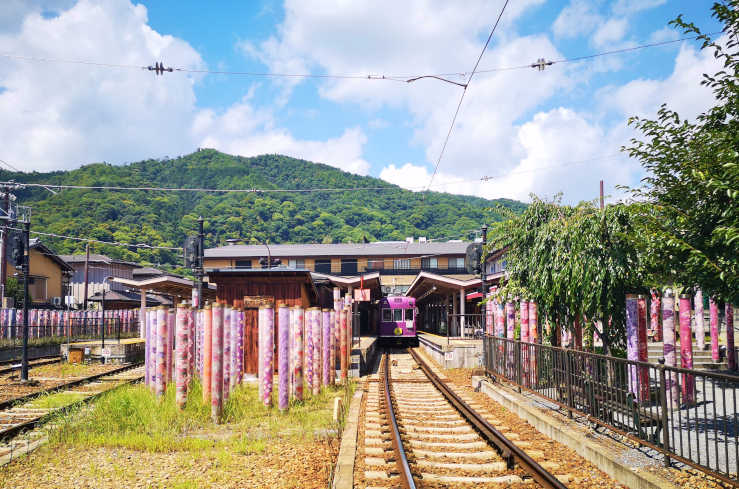
The Kimono Forest at Randen Arashiyama Station | Photo: Travel In Culture
The Kimono Forest in Arashiyama is a unique art installation located at Randen Arashiyama Station in western Kyoto. This striking attraction features hundreds of illuminated textile pillars, making it one of the most distinctive modern landmarks in the area. It is often visited together with the nearby Arashiyama Bamboo Grove Kyoto, as both attractions are within walking distance.
Created in 2013 by designer Yasumichi Morita, the Kimono Forest consists of around 600 colourful cylindrical pillars displaying traditional Kyo-yuzen kimono fabric patterns. These handcrafted designs represent different styles of Japanese textiles and create a visually immersive experience that blends contemporary art with traditional culture.
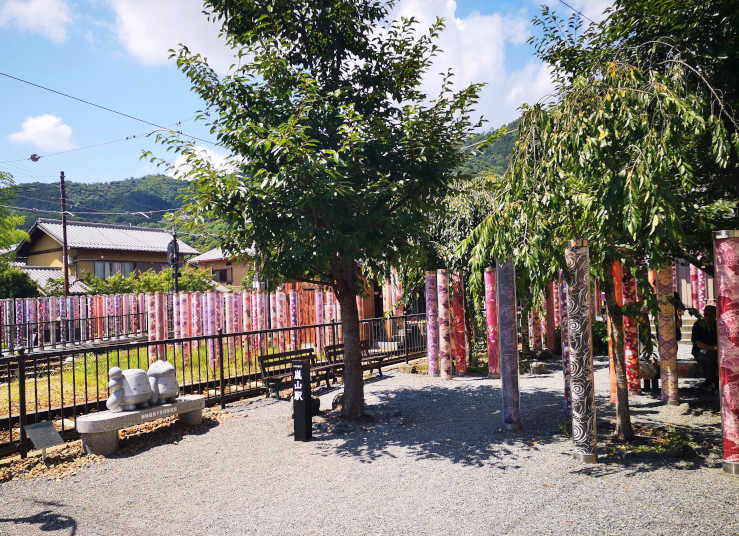
Kimono Forest with its decorative columns | Photo: Travel In Culture
The installation is especially popular in the evening when the pillars are softly illuminated, creating a glowing forest effect. At the end of the walkway, visitors will also find the peaceful Dragon Pond (Atago-ike), adding to the calm atmosphere of this Arashiyama attraction.
Randen Arashiyama Station itself is part of the experience, offering shops, restaurants, and even a foot bath beside the railway tracks, making it one of the most unusual and enjoyable station areas in Kyoto.
2. Iwatayama Monkey Park in Arashiyama
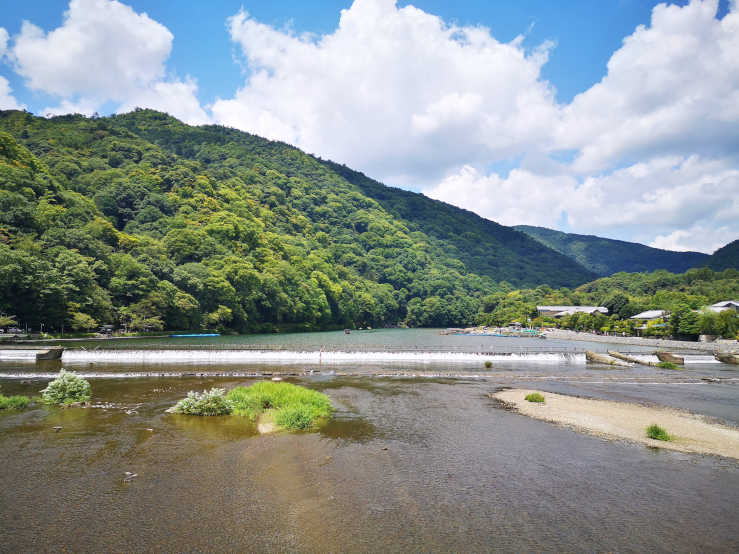
The Katsura River in Arashiyama, Kyoto, flowing through a scenic valley surrounded by mountains and seasonal greenery.
Are there monkeys in Arashiyama?
Before entering the spectacular Arashiyama bamboo grove, a hike up the mountain on the other side of the Katsura River will take you to Iwatayama Monkey Park, where Japanese macaques roam freely on the mountainside. Cross the river by the famed wooden Togetsukyo Bridge, providing panoramic views of the river and mountainous landscape. On the other side, you will find the park entrance and a long staircase leading up to the monkeys.
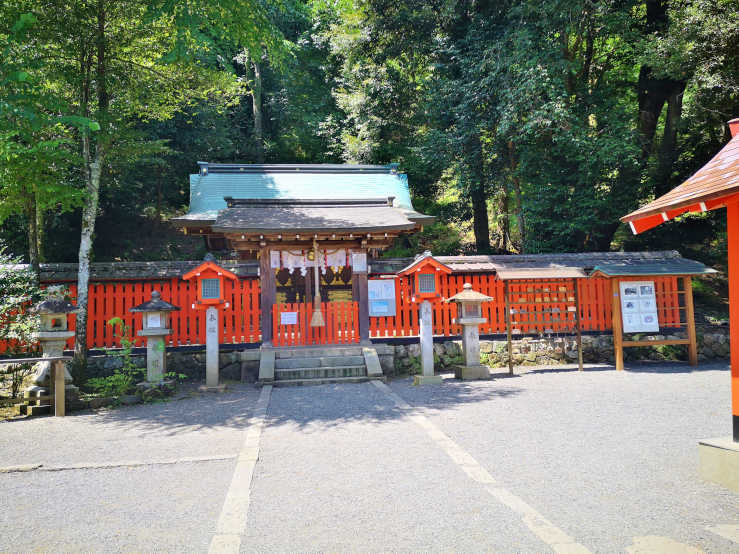
Entrance to Iwatayama Monkey Park in Arashiyama, Kyoto, marked by a traditional vermillion gate and fencing leading into the forested hillside | Photo: Travel In Culture
Mount Iwatayama has, for many years, been a natural habitat for Japanese macaques, also known as snow monkeys. The macaques live freely on the mountainside, while visitors can observe them from designated areas at the park. More than 130 Japanese macaques live on the mountain.
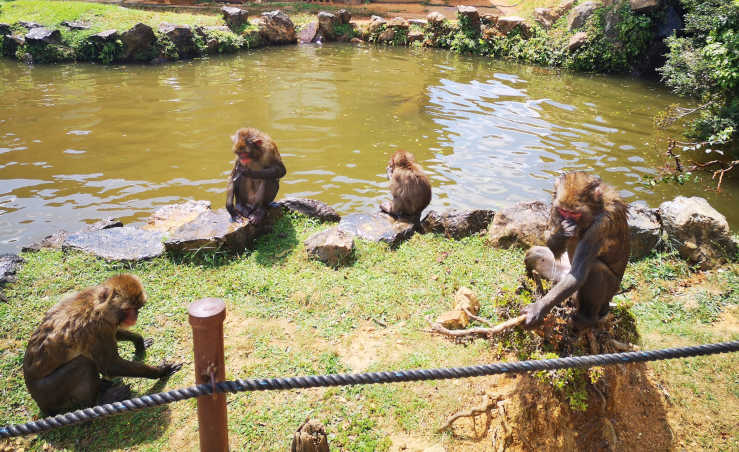
The monkeys in Iwatayama Monkey Park, Kyoto.
From the monkey park, visitors can enjoy scenic views of Kyoto and the surrounding mountains.
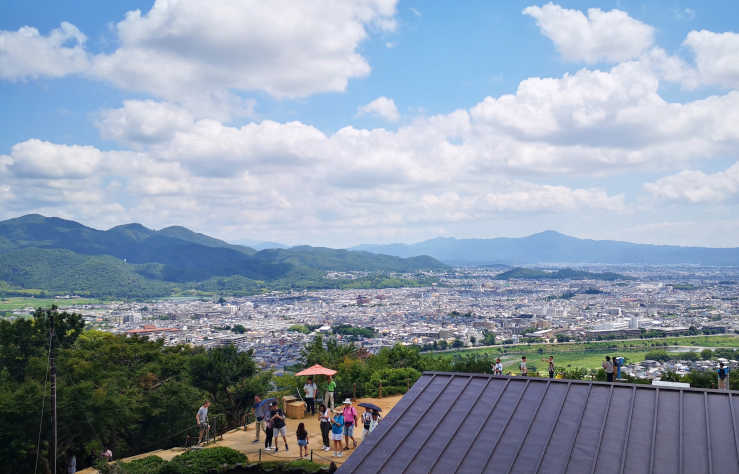
Panoramic views from Iwatayama Monkey Park in Arashiyama, Kyoto, overlooking the city and surrounding mountains.
3. Arashiyama Bamboo Grove Kyoto (Sagano Bamboo Forest)
From the Monkey Park area, return towards the centre of Arashiyama and continue to the Bamboo Grove in Sagano. The towering bamboo rises on both sides of the path, creating one of Kyoto’s most recognisable landscapes. In spring, pink cherry blossom trees add to the area’s beauty.
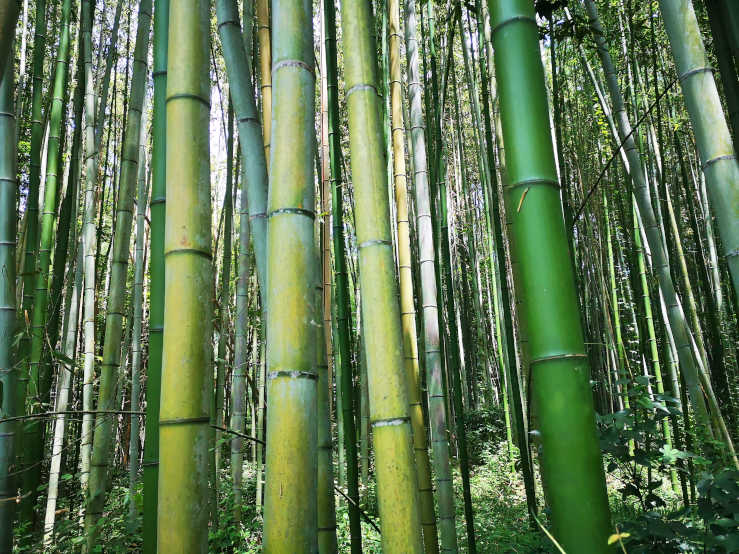
Arashiyama Bamboo Forest | Photo: Travel In Culture
Arashiyama is one of Kyoto’s most visited districts and is best known for its bamboo forest, temples, and riverside scenery. It is especially popular with first-time visitors who want to experience both natural landscapes and traditional Japanese culture in a single area. The combination of walking paths, historic sites, and mountain views makes it one of the most rewarding day trips in Kyoto.
The main path through the Bamboo Grove can become very crowded, particularly from late morning onwards. Arriving early gives you a better chance of experiencing the bamboo with fewer people around. Nevertheless, Arashiyama is a part of Kyoto where you can get a bit of respite from the bustling city and enjoy centuries of history by visiting the historic tea houses, temples, and shrines. The area has been inhabited since the early 700s.

Photo: Travel In Culture
4. Tenryuji Temple and Its UNESCO World Heritage Status
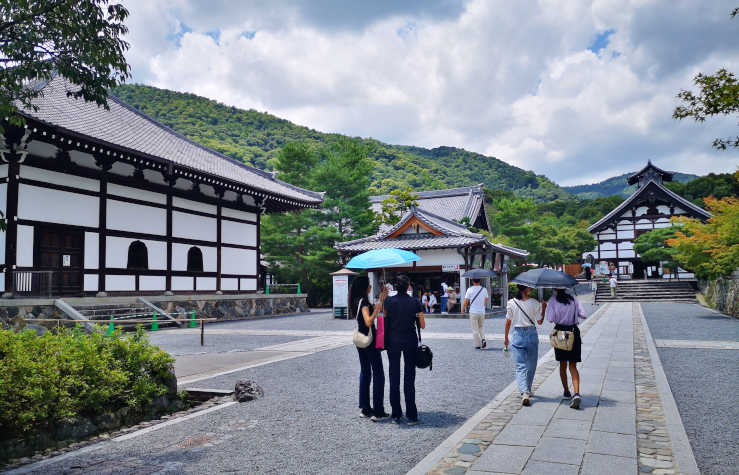
Exterior of Tenryuji Temple in Arashiyama, Kyoto, a UNESCO World Heritage Zen temple surrounded by traditional Japanese gardens.
Just a few minutes’ walk from the Bamboo Grove, Tenryuji Temple is one of Arashiyama’s most important historic landmarks. Tenryuji is the head temple of the Tenryuji branch of Rinzai Zen Buddhism and forms part of the UNESCO World Heritage property Historic Monuments of Ancient Kyoto. It was historically ranked first among Kyoto’s Five Mountains, the city’s principal Zen temples. It was historically designated first among Kyoto’s Five Mountains, the city’s five major Zen temples.

Interior view of Tenryuji Temple in Arashiyama, Kyoto, showcasing traditional Zen Buddhist architecture and serene temple atmosphere.
The Zen Buddhist temple was established in 1339 by the shogun Ashikaga Takauji in memory of Emperor Go-Daigo, with the Zen master Muso Soseki appointed as its founding abbot. It was officially consecrated in 1345. Over the years, many of the temple buildings were lost in wars and fires, the latest occurring in 1864. The surviving buildings were largely reconstructed during the Meiji period (1868–1912).
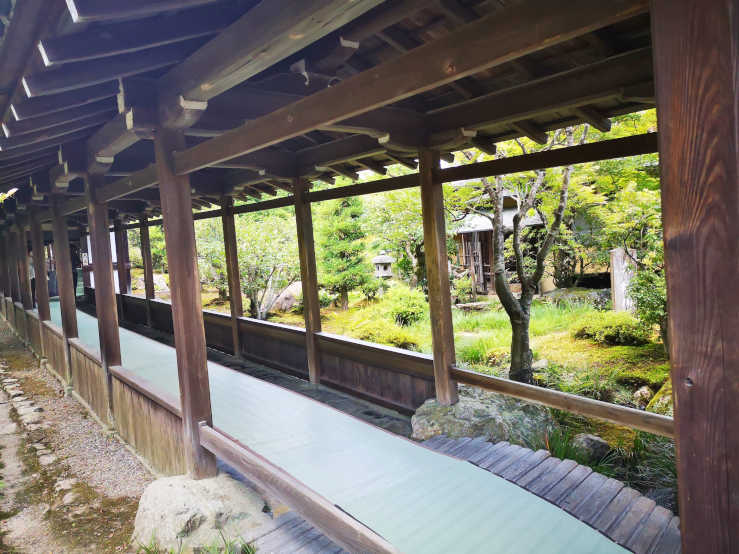
Tenryuji Temple garden in Kyoto | Photo: Travel In Culture
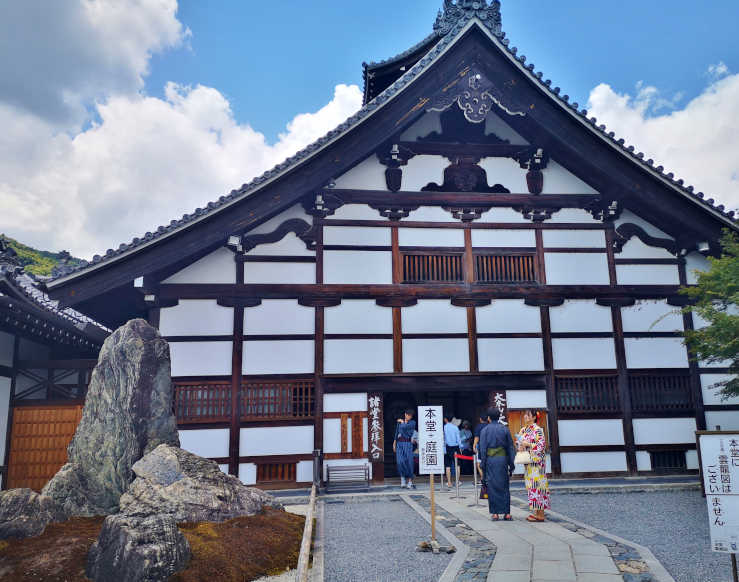
Tenryuji Temple exterior in Arashiyama, Kyoto, one of Japan’s most important Zen Buddhist temples and a UNESCO World Heritage Site.
Tenryuji Temple has a beautiful Zen garden, a historic Zen garden in Kyoto, varying in colour palette depending on the season. Unlike many of the temple buildings, the Sogenchi Garden retains much of its historic appearance and is attributed to the Zen master Muso Soseki. Its pond garden incorporates the surrounding mountains as a backdrop.
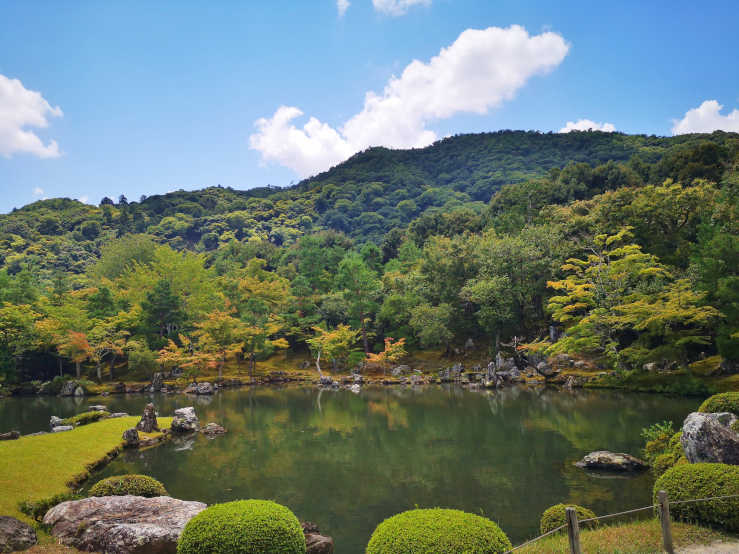
Tenryuji Temple garden lake in Arashiyama, Kyoto, with traditional Zen landscape design reflecting seasonal scenery.
If you are planning more temple visits, see our guide to Kyoto’s temples and shrines.
5. Togetsukyo Bridge
Togetsukyo Bridge is one of the most recognisable landmarks in Arashiyama. The wooden-style bridge spans the Katsura River at the foot of the mountains and provides a scenic viewpoint over the river and surrounding landscape.
The bridge dates back centuries, although the present structure has been rebuilt and renovated over time. The present structure was completed in 1934. Its distinctive wooden-style appearance and setting beneath the Arashiyama mountains have made it one of the area’s best-known landmarks. The name Togetsukyo means ‘Moon Crossing Bridge’ and is traditionally associated with the sight of the moon appearing to cross the sky above the bridge.
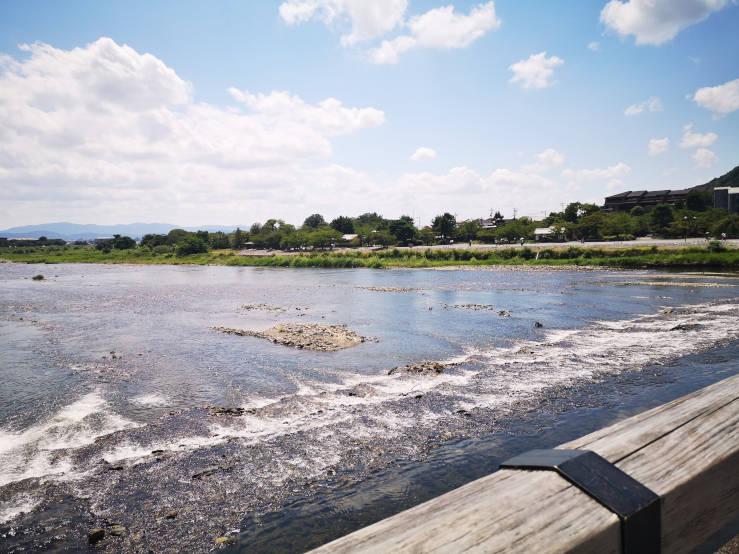
View of the Katsura River and surrounding mountains from Togetsukyo Bridge, Arashiyama, Kyoto | Photo: Travel In Culture
Crossing Togetsukyo Bridge is also a natural part of exploring Arashiyama. From here, you can continue towards Iwatayama Monkey Park, while the opposite bank offers views back towards the bridge, river, and mountains.
The scenery changes considerably with the seasons. Cherry blossom colours the riverbanks in spring, while autumn brings vibrant foliage to the surrounding mountains. In summer, the area is lush and green, and winter can offer particularly atmospheric views when the mountains are quieter.
The riverside around Togetsukyo Bridge is also a pleasant place to pause during an Arashiyama itinerary, with cafés, restaurants, traditional boats, and walking paths nearby.
FAQs about Arashiyama
Is Arashiyama Bamboo Grove worth visiting?
Yes, Arashiyama Bamboo Grove is one of Kyoto’s most iconic natural attractions and is widely considered a must-see due to its unique atmosphere and scenic walking paths.
How much time do you need in Arashiyama?
Allow at least half a day for Arashiyama, or a full day if you want to combine the Bamboo Grove, Tenryuji Temple, Iwatayama Monkey Park, the riverfront, and additional temples or gardens.
What is the best time of day to visit Arashiyama Bamboo Grove?
Early morning is ideal to avoid crowds and enjoy peaceful photos, especially during cherry blossom season in spring or autumn foliage.
How do you get to Arashiyama from Kyoto Station?
You can take the JR San-In Line to Saga-Arashiyama Station or the Hankyu Line to Arashiyama Station. Both options provide convenient access to the main attractions.
Is Arashiyama Bamboo Grove suitable for families with children?
Yes, the area is family-friendly. The Bamboo Grove and riverside areas are relatively easy to explore, while Iwatayama Monkey Park involves an uphill walk and steps.
Are there entrance fees for the Bamboo Grove or Tenryuji Temple?
The Bamboo Grove is free to enter. Tenryuji charges admission for its garden, with an additional fee if you also visit the temple buildings.
Can I see monkeys in Arashiyama?
Yes, at Iwatayama Monkey Park, over 100 Japanese macaques roam freely. Visitors can observe them from a safe distance.
What else can I do in Arashiyama besides the bamboo grove?
Other highlights include the scenic Katsura River, Kimono Forest at Randen Arashiyama Station, traditional tea houses, and historic temples like Tenryuji.
Explore more of Kyoto in our Kyoto 3-Day Itinerary.
Read next: A Day Trip to Hiroshima and Miyajima Island and Sensoji Temple, Ueno Park, and Yanaka Ginza in Tokyo