




Ueno, Sensoji & Yanaka: Tokyo’s Traditional Districts and Cultural Landmarks
By ANL | UPDATED:
→ Explore the full guide to Ueno, Senso-ji, and Yanaka and how to experience traditional Tokyo
All photographs in this article were taken by Travel In Culture.
See our Japan travel guide for further travel planning across Japan and our Tokyo cultural guide for cultural context. See how Ueno, Senso-ji, and Yanaka fit into our Tokyo districts guide.
Selected for Boutique Design → Nohga Hotel Ueno Tokyo
Selected for Asakusa Location → The Gate Hotel Asakusa Kaminarimon by Hulic
Selected for Ryokan-Style Experience → Prostyle Ryokan Tokyo Asakusa
1. Ueno, Senso-ji & Yanaka Overview
Ueno, Asakusa and Yanaka sit within Tokyo’s Taitō ward and form one of the few areas where the city’s historical structure remains clearly visible. Unlike districts shaped primarily by redevelopment, this part of Tokyo evolves through continuity, where temple grounds, traditional streets and public spaces have been adapted over time rather than replaced. Together, these three districts create a continuous walking corridor through Tokyo’s historical east: from Ueno’s cultural institutions, through the temple axis of Asakusa centred on Senso-ji Temple (sometimes written as Sensoji), and onward to Yanaka’s residential Edo-era atmosphere.
The spatial experience follows a clear rhythm. From Ueno’s museums and open parkland, the city gradually narrows into the dense temple streets of Asakusa, before opening again into the quieter residential fabric of Yanaka. Across this route, the environment shifts from cultural openness to structured intensity and finally to calm neighbourhood streets, while remaining fully walkable as a single continuous journey.
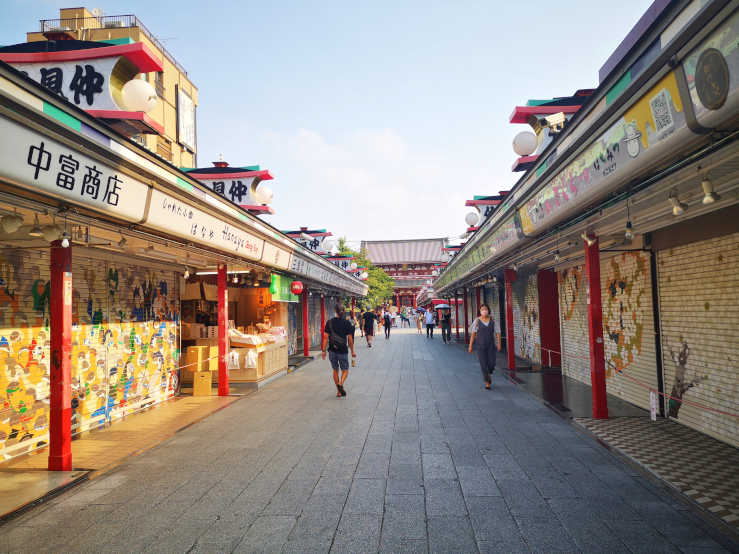
Nakamise Street connects the entrance gate to Senso-ji Temple, lined with traditional shops.
This part of Taito feels less like a collection of attractions and more like a continuous urban landscape shaped by historical continuity rather than modern planning.
Notably, parts of Taito’s historic fabric survived the Second World War, leaving pockets of the old city intact. As a result, this area retains a rare continuity with Edo-period Tokyo (1603–1867), where temples, streets, and residential blocks still follow older spatial patterns. These districts are often referred to as part of Tokyo’s shitamachi, meaning the traditional “low city” where merchants, artisans and everyday culture developed during the Edo period. Today, areas like Ueno, Asakusa and Yanaka remain some of the clearest examples of this older urban structure. For a broader view of how Tokyo is structured, see our complete Tokyo Travel Guide. For cultural context, explore our Tokyo Culture Guide.
How to experience Ueno, Senso-ji & Yanaka:
- 🌳 Walk through Ueno Park and its museums and cultural spaces
- ⛩️ Enter Senso-ji Temple through Nakamise Street in Asakusa
- 🛍️ Explore traditional shops and street food in temple surroundings
- 🏘️ Continue to Yanaka for a quieter, residential Edo-era atmosphere
- 🎎 Discover artisan crafts in nearby Asakusabashi
Several guided tours and walking routes cover this same corridor, connecting the main highlights into a single experience.
While areas like Ueno, Asakusa and Yanaka preserve Tokyo’s historical urban structure, other parts of the city, such as Shibuya Crossing, Meiji Jingu, or Odaiba, reflect a more modern and contrasting side of Tokyo.
Ueno, Asakusa & Yanaka 1-Day Itinerary
This walking route connects Ueno, Asakusa and Yanaka into a single day, moving through some of Tokyo’s most important traditional areas.
- Morning – Ueno Park: Start with museums, shrines and seasonal cherry blossoms
- Midday – Asakusa and Senso-ji Temple: Walk through Nakamise Street and explore the temple grounds
- Afternoon – Yanaka: Continue to Yanaka Ginza and surrounding residential streets
- Optional extension – Asakusabashi: Explore traditional craft and wholesale shops
For a multiple-day itinerary, see our 2- and 3-day Tokyo itineraries.
Practical tips for visiting:
- Nearest stations: Ueno Station, Asakusa Station, Nippori Station
- Best time: Morning for temples and Yanaka, midday for Ueno Park
- Walking route: Ueno → Asakusa → Yanaka (or reverse)
- Walking time: 20–30 minutes between main areas
- Combine with: Sumida River walk or nearby museums
For information on getting around Tokyo, see our Tokyo transport guide.
Ueno, Asakusa and Yanaka are often presented as separate areas, but their real structure becomes clear when experienced as a single movement through the city. Rather than individual attractions, the value of this route lies in how the density, rhythm and atmosphere gradually shift as you move south, from cultural openness to spatial compression to residential quiet.
Top Things to Do in Ueno, Asakusa & Yanaka
- Explore Ueno Park Tokyo: Visit museums, temples and enjoy cherry blossoms in one of Tokyo’s main cultural districts
- Visit Senso-ji Temple: Walk through Kaminarimon Gate and Nakamise Street to Tokyo’s oldest Buddhist temple
- Walk along Yanaka Ginza shopping street: Discover traditional shops, street food and a preserved old Tokyo atmosphere
- See Nezu Shrine: Walk through the torii tunnels and seasonal shrine gardens near Yanaka
- Explore Kappabashi Kitchen Town: Browse traditional crafts, Japanese knives and restaurant supply shops
2. Ueno Park Tokyo and Cultural Institutions
Ueno forms the northern anchor of this district, opening the experience with space, greenery, and cultural depth. In contrast to the dense streets that follow in Asakusa, Ueno begins with breadth: wide paths, open plazas, and one of Tokyo’s most important public parks.
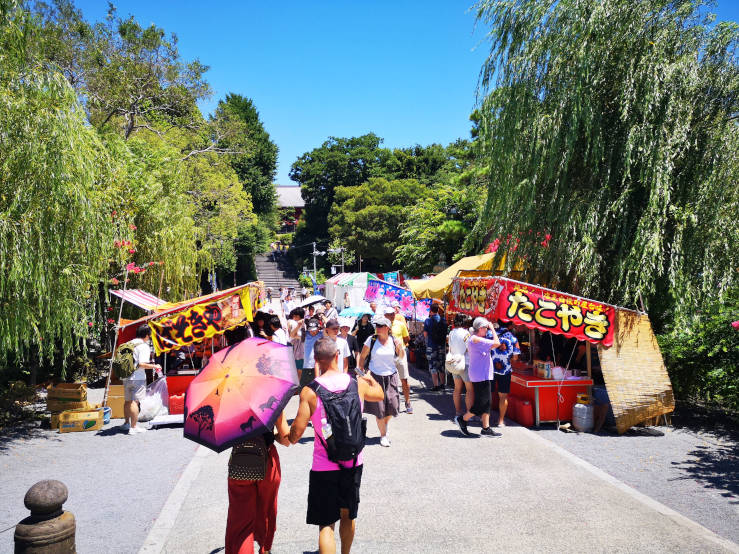
Festival stalls in Ueno Park bring a more informal, local atmosphere to one of Tokyo’s most established cultural spaces.
At the centre lies Ueno Park, originally part of the grounds of Kaneiji Temple. This historical foundation is still reflected in the park’s layout and shrine structures. Today, Ueno Park is one of Tokyo’s most important cherry blossom viewing spots in spring, when wide paths fill with hanami gatherings beneath the seasonal sakura. The landscape shifts between cultural institutions, open green space, and water, especially around Shinobazu Pond, where slower walking routes contrast with the busier museum areas.
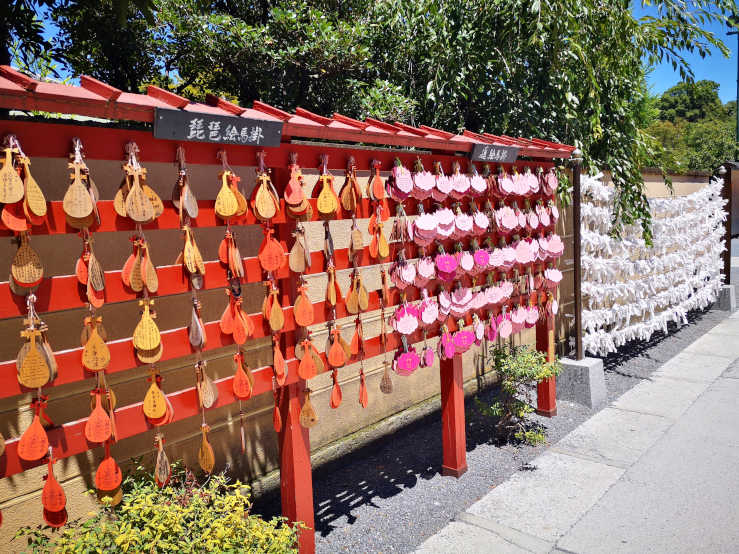
Paper wishes left by visitors at a shrine in Ueno Park reflect personal prayers and traditions in everyday use.
Alongside Toshogu Shrine and other historic sites, the park contains major cultural institutions such as the Tokyo National Museum and the Shitamachi Museum, offering perspectives on Japan’s artistic and everyday history. It is also home to Ueno Zoo, as well as seasonal performances and cultural events that activate the park throughout the year. Altogether, it functions as a layered cultural landscape where museums, shrines, and seasonal gatherings coexist within a single walkable space.
Rather than a single attraction, Ueno is defined by concentration. Major institutions sit side by side, allowing visitors to move between art, history, and nature without leaving the park. This creates a slower rhythm compared to the intensity of other Tokyo districts, making it a natural starting point before continuing south.
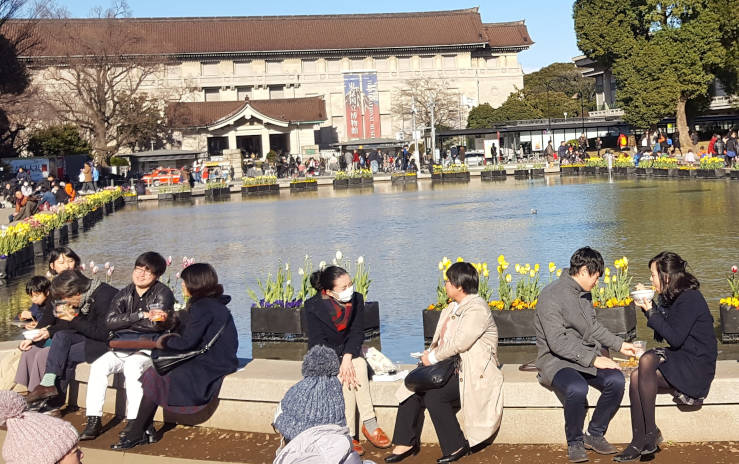
A small pond in Ueno Park with people relaxing along the edges and the Tokyo National Museum in the background, showing how everyday life and cultural space overlap.
The atmosphere shifts throughout the day. Mornings feel structured and calm, while midday brings a mix of local visitors, families, and travellers moving between museum entrances and shaded paths. During spring, the park transforms again as cherry blossoms draw large crowds for hanami gatherings.
What defines Ueno within the district:
- Cultural concentration: Multiple major museums and institutions within a single park
- Historical foundation: Former temple grounds shaping today’s layout
- Seasonal space: One of Tokyo’s most important cherry blossom viewing areas
- Transition point: A spatial shift from open parkland into denser historic streets
As the journey continues toward Asakusa, the city gradually compresses. The open park gives way to more defined streets, leading towards Asakusa and the temple-centred structure around Senso-ji Temple. Starting here shapes how the rest of the district unfolds, from open cultural space into increasingly dense historical streets.
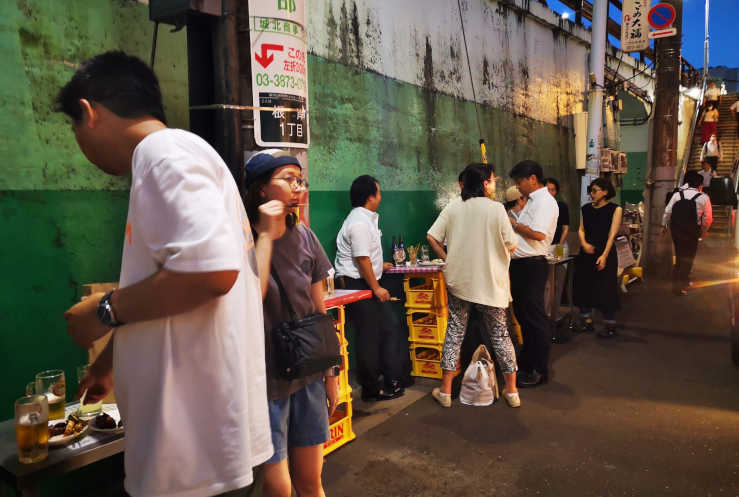
Informal street food spots near Uguisudani Station capture a more local side of Tokyo, where pop-up seating and simple meals create a relaxed, everyday atmosphere | Photo: Travel In Culture
3. Asakusa and Senso-ji Temple
Moving south from Ueno, the openness of the park gradually gives way to a denser urban structure. Streets narrow, movement becomes more directed, and the district begins to centre itself around a single focal point: Senso-ji Temple.
Senso-ji Temple remains the central landmark of Asakusa and is explored in more detail in a dedicated guide.
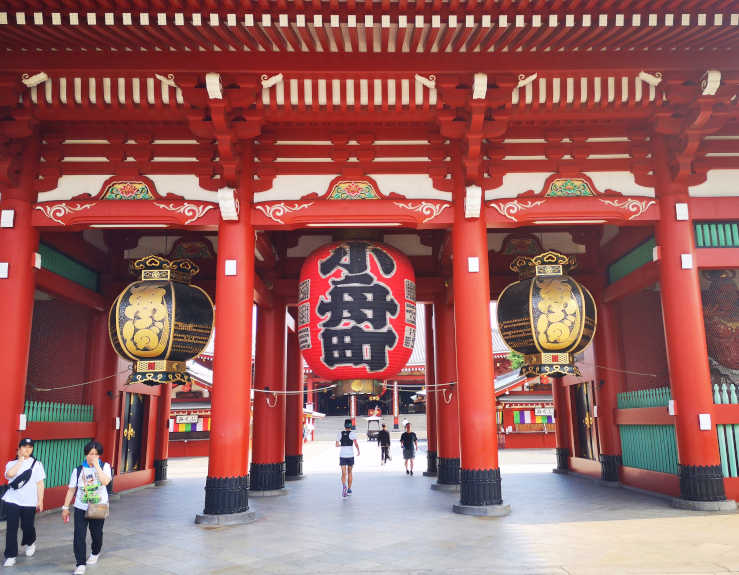
Senso-ji Temple is one of Tokyo’s most important Buddhist sites, forming the historic centre of Asakusa.
Senso-ji Temple dates back to the 7th century and is dedicated to Bodhisattva Kannon. Today also known as Asakusa Kannon, it remains the spiritual and spatial centre of the district. The temple complex includes a main hall and a five-storey pagoda, while the iconic Kaminarimon Gate with its giant red lantern marks the formal entrance into the temple area. Within the district structure, Senso-ji Temple functions as a point of convergence where movement, commerce, and religious practice all intersect in a single continuous space.
Senso-ji Temple Tokyo: What to See and How to Visit
The approach defines the experience. Entering through Kaminarimon Gate, visitors pass beneath the iconic lantern before moving into Nakamise Street, an Edo-style pedestrian avenue lined with traditional shops selling souvenirs, snacks, and crafts. The narrow corridor compresses movement and gradually builds anticipation before opening into the wider temple grounds.
Here, long-established souvenir shops continue a commercial tradition linked to the temple approach, where crafts, food, and everyday objects are designed for passing visitors rather than display.
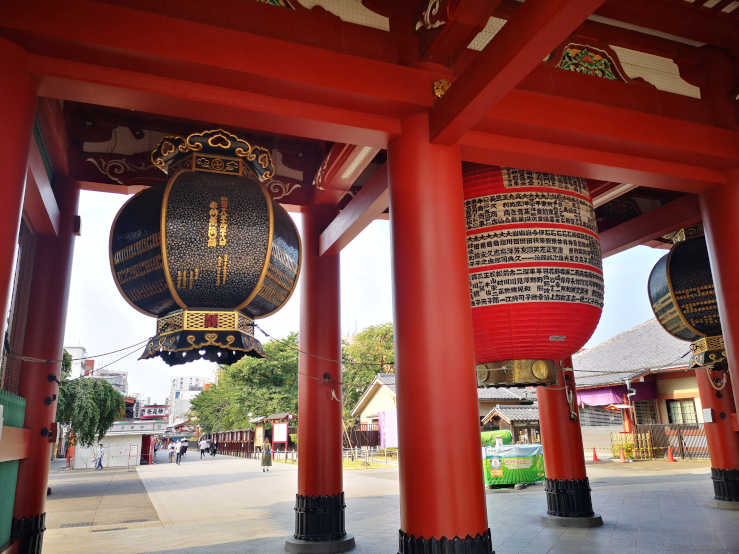
A closer view of Senso-ji Temple reveals the architectural detail and calm atmosphere beyond Nakamise.
Around the temple, Asakusa retains a structure that reflects the older city. Small streets extend outward from the central axis, filled with local shops, food stalls, and traces of Edo-era layout. The atmosphere is more active than in Ueno, yet still rooted in tradition.
Artisans still operate in the surrounding streets, continuing long-established craft traditions through small shops and everyday trade, which keeps the area grounded in lived urban activity rather than purely preserved heritage.
What defines Senso-ji and Asakusa within the district:
- Central focal point: A temple structure that organises the surrounding district
- Processional movement: A defined route from gate to main hall through Nakamise Street
- Layered activity: Religious space, commerce, and street life overlapping in one area
- Urban continuity: One of the clearest remnants of Edo-era city structure in Tokyo
Compared to Ueno’s open landscape, Asakusa feels concentrated and directional. From here, the district shifts again, moving away from the central temple space into the quieter, residential streets of Yanaka. Rather than standing apart as a landmark, Senso-ji Temple is experienced as part of a continuous movement through the district. To see how this area fits within the wider city, see all Tokyo districts.
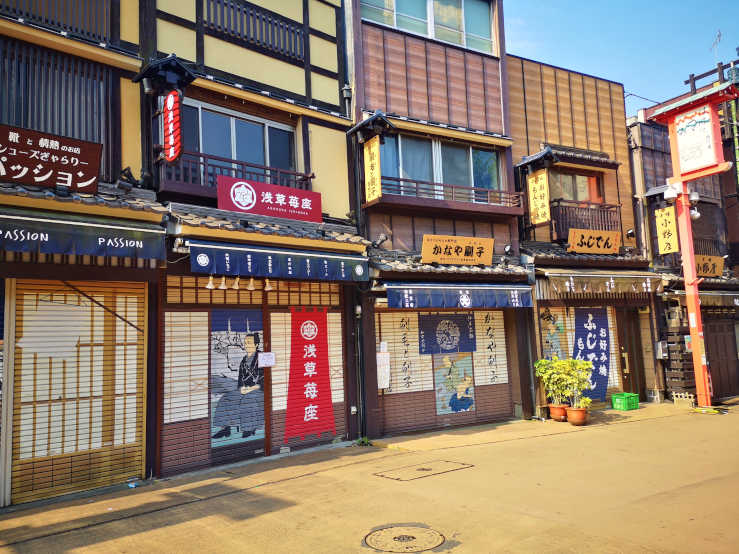
Quiet side streets near Senso-ji Temple reveal a more local Asakusa, where small shops and residential buildings sit just behind the busy temple area.
A stone’s throw from Asakusa, Kappabashi Kitchen Town is a unique historical shopping street known for its specialised cookware market. It is particularly famous for Japanese knives and realistic plastic food samples, which are used in restaurant displays across Japan.
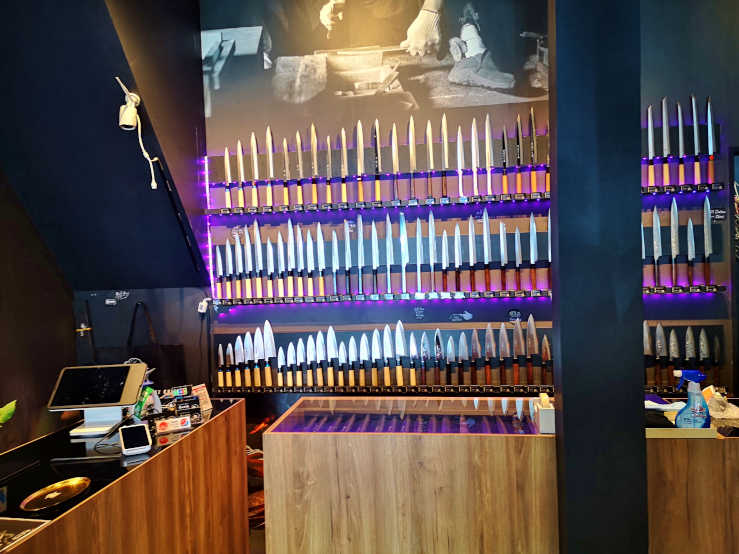
Kappabashi Kitchen Town is known for its specialised knife shops, reflecting Tokyo’s long-standing culinary craftsmanship and restaurant supply culture.
4. Yanaka and Yanaka Ginza Shopping Street
Beyond Asakusa, the district begins to loosen. Streets become less structured, movement slows, and the density of visitors fades. This is where Yanaka introduces a different version of Tokyo, less defined by landmarks, and more by continuity of everyday life.
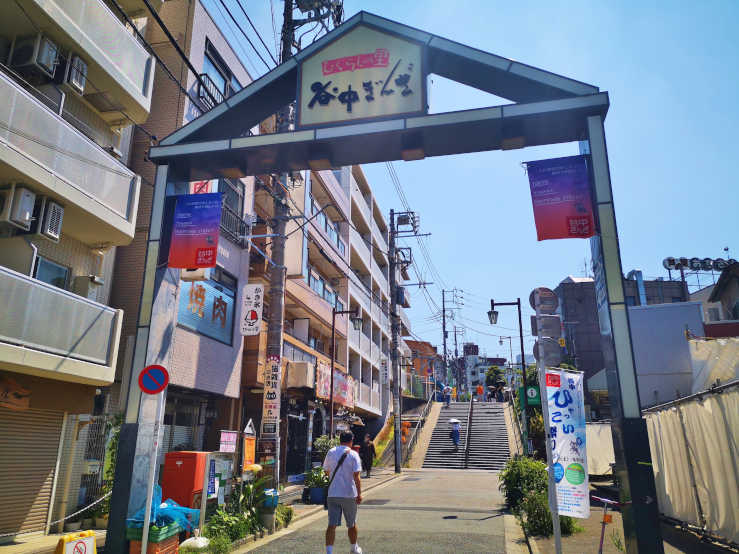
Descending from Nippori Station into Yanaka, the streets gradually shift towards Yanaka Ginza and the quieter atmosphere of old Tokyo.
Yanaka is still defined by small everyday details: potted plants at entrances, narrow lanes softened by greenery, and the presence of bamboo and wooden façades that give the neighbourhood a quieter visual rhythm.
Yanaka Ginza Tokyo: Traditional Shopping Street Experience
Yanaka is often described as one of the few areas where a pre-war Tokyo atmosphere still remains visible. Rather than a preserved district, it feels more like a residential neighbourhood where older street patterns, small-scale buildings, and everyday routines have continued without interruption. At its centre, Yanaka Ginza acts as the local commercial spine, where small shops and food stalls still serve the surrounding community. The street brings together daily life and older forms of commerce, from traditional food vendors to small craft stores selling ceramics and household items. Instead of a curated shopping experience, it unfolds as a lived-in street where tradition and routine overlap naturally.
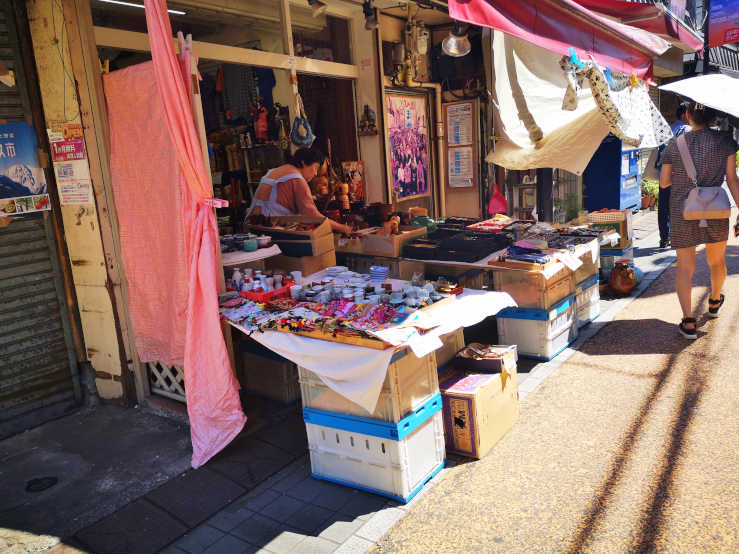
Yanaka Ginza’s small local shops reflect the district’s preserved Edo-era atmosphere, with everyday commerce still shaping the character of the street.
Small workshops and traditional shops still operate alongside residential streets, continuing everyday craft and local commerce.
Side alleys branching off Yanaka Ginza reveal smaller local spots, including Yomise Street, where a small confectionery shop with a simple bench creates a quieter, everyday rhythm just behind the main street.
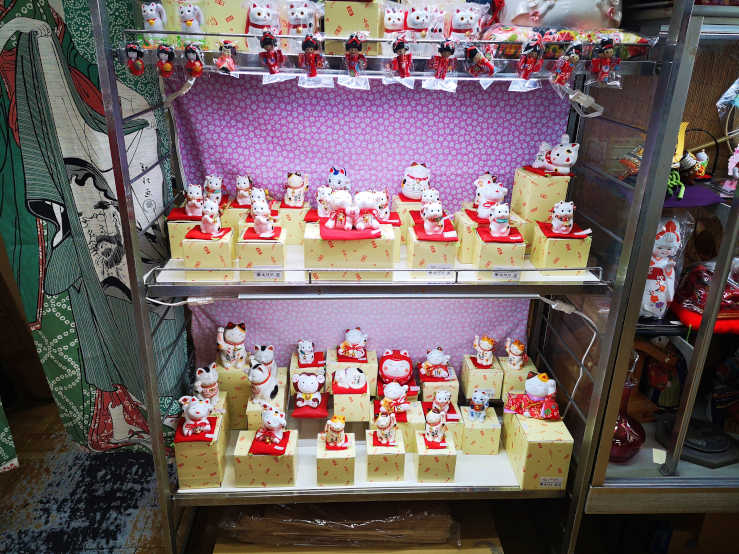
Cat-themed items in Yanaka reflect the district’s local identity as “cat town”, a subtle detail found throughout Yanaka Ginza’s small shops.
Yanaka’s quieter residential atmosphere connects naturally with nearby historic shrine spaces that remain part of the same broader Taito landscape. Nearby, Yanaka Cemetery extends the area’s historical landscape as a park-like, tree-lined space where traditional Buddhist memorial practices such as sotoba wooden markers remain visible along the pathways. Several historical figures are buried here, including Tokugawa Yoshinobu (1837–1913), the last shogun of Japan. The cemetery is defined by long stone paths and seasonal greenery, with cherry blossoms adding a softer layer in spring to this otherwise subdued landscape.
Small streets extend without a strict grid, temples appear between houses, and local shops are integrated into the rhythm of daily movement rather than set apart from it.
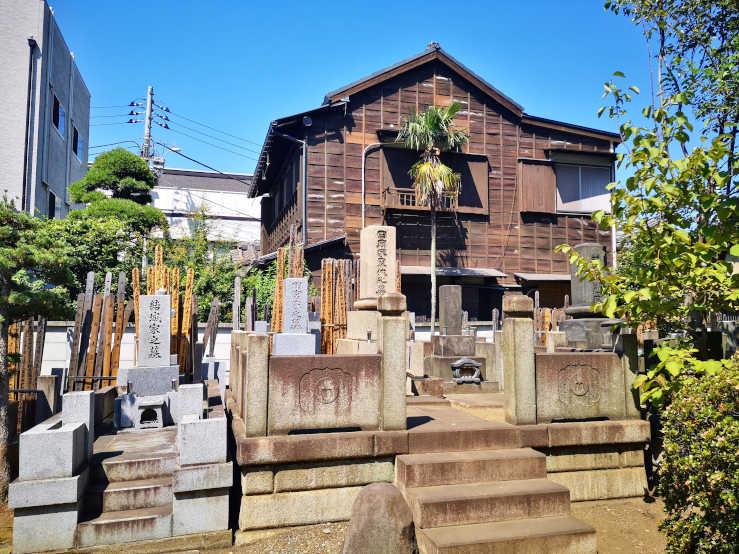
A traditional wooden house in Yanaka, reflecting the area’s Edo-era atmosphere, with sotoba wooden memorial sticks linked to nearby cemetery customs that preserve Japan’s Buddhist traditions.
At the edge of Yanaka, Nezu Shrine introduces a more enclosed and atmospheric space. Walking through its torii-lined paths, the city recedes into a quieter, more introspective environment that contrasts with the openness of surrounding streets.
Walking through Yanaka changes the pace of the entire route. After the structured intensity of Senso-ji Temple, the environment opens into something quieter and more fragmented. This is where Tokyo feels closest to a neighbourhood rather than a city system. If you want to be away from the bustling city, Yanaka may be one of the best neighbourhoods to stay in Tokyo.
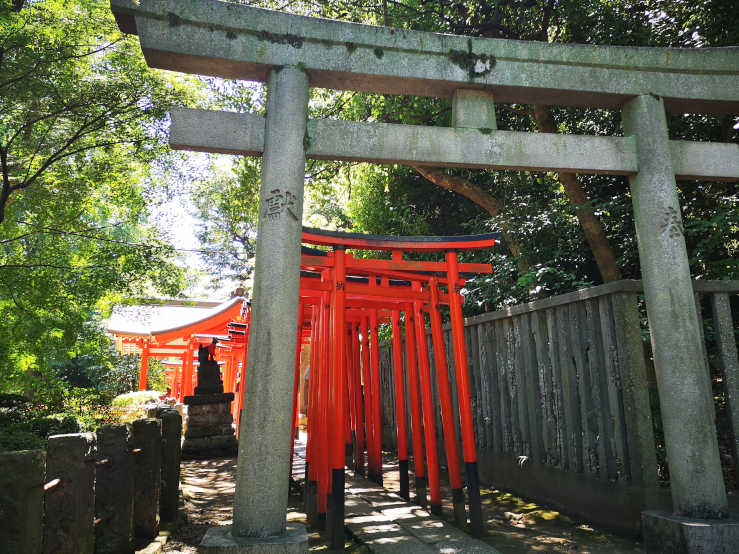
The torii-lined path at Nezu Shrine creates a calm, shaded approach that reflects the quiet, reflective side of Tokyo’s older shrine landscapes.
What defines Yanaka within the district:
- Residential continuity: A lived-in neighbourhood structure rather than a preserved site
- Low-density rhythm: Slower movement and smaller-scale streets
- Temple integration: Religious spaces embedded within everyday residential areas
- Atmospheric contrast: A noticeable reduction in intensity after Asakusa
Just beyond Yanaka, the district no longer moves toward major landmarks. Instead, it dissolves into smaller streets and specialised craft areas such as Asakusabashi, where traditional production and wholesale culture quietly continue.
5. Asakusabashi and Traditional Crafts
As the route moves further south, the density of historical landmarks begins to dissolve. The structured flow of Asakusa and the residential rhythm of Yanaka gradually give way to a quieter, more specialised urban environment in Asakusabashi. The name Asakusabashi refers to a historic bridge that once functioned as an important toll point in Tokyo.
This area is less defined by visitor movement and more by production and trade. Historically known as a wholesale district, Asakusabashi developed around craft industries rather than religious or cultural landmarks. Even today, its identity is shaped by continuity in small-scale manufacturing and specialised retail.
The area is particularly known for traditional doll shops and specialised craft retailers, reflecting its long history as a centre of manufacturing and wholesale trade.
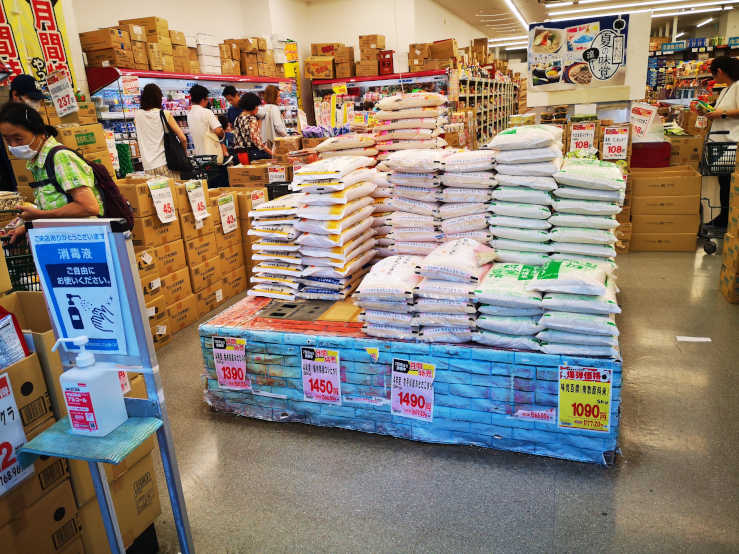
A small supermarket in Asakusabashi reflects the everyday life of Tokyo’s less tourist-focused districts, where local residents shape the atmosphere of the neighbourhood.
Unlike the preceding districts, Asakusabashi does not present itself as a destination. It functions more as a working layer of the city, where traditional goods are still produced, distributed, and sold within a compact urban fabric. The atmosphere is subdued, with fewer visitors and a stronger sense of everyday function.
Within the broader structure of this route, Asakusabashi acts as a quiet endpoint. After the cultural density of Ueno, the spatial compression of Asakusa, and the residential continuity of Yanaka, the district gradually transitions into ordinary city life again.
What defines Asakusabashi within the district:
- Specialised function: A district shaped by wholesale and craft industries
- Low visitor presence: Primarily local rather than touristic activity
- Continuity of tradition: Ongoing production of traditional goods and crafts
- Spatial transition: A gradual return from historic districts to modern urban fabric
Rather than ending with a landmark, the district concludes through reduction, leaving behind structured cultural space and returning to the everyday rhythm of Tokyo beyond its historical core.
This transition into more everyday neighbourhoods is also reflected in where to stay, with accommodation in Ueno and Asakusa offering two different ways of experiencing the same historic corridor. Throughout the year, Senso-ji also hosts major events and festivals, including Sanja Matsuri with its portable shrines and floats. Nearby Sumida Park becomes a key viewing point for seasonal fireworks over the river, and one of the area’s most popular spots during the cherry blossom season in Tokyo.
Where to Stay in Ueno & Asakusa
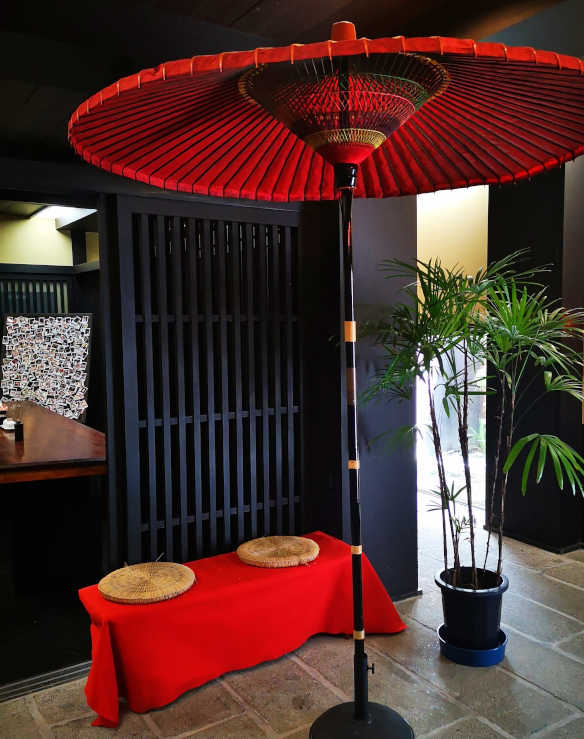
A quiet ryokan entrance detail, where simple objects and restrained design reflect the understated style of traditional accommodation in Tokyo.
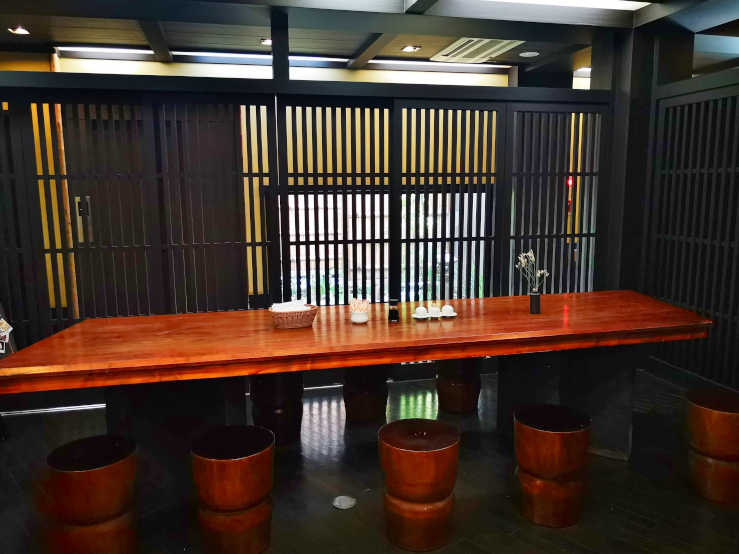
A communal dining space inside a ryokan, designed with a focus on simplicity and natural materials, reflecting the understated interior style of traditional accommodation.
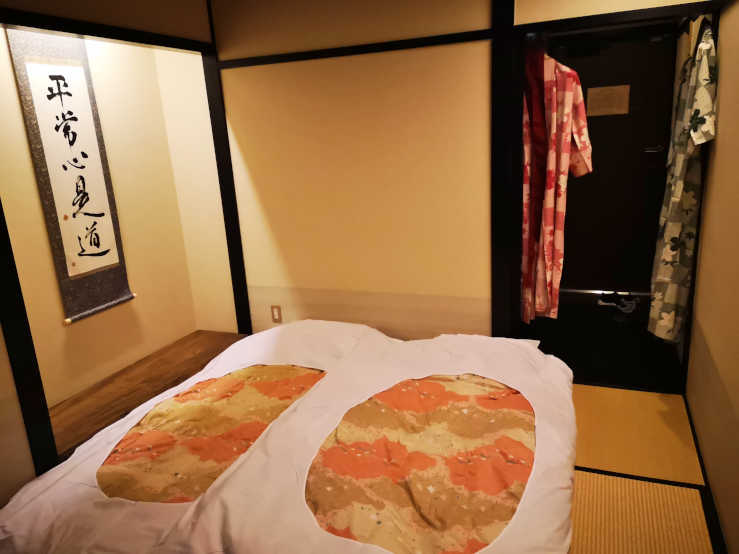
A tatami room prepared with futon bedding, showing the nightly transformation of space typical in traditional Japanese-style accommodation | Photo: Travel In Culture
Staying in this part of Tokyo reinforces the structure of the wider district itself. Ueno offers a sense of openness and cultural density, while Asakusa concentrates daily movement around the temple streets. Together they form a continuous experience of Tokyo’s historical core, where travel and neighbourhood life overlap rather than separate.
What are Tokyo’s traditional districts?
Tokyo’s traditional districts are areas where elements of the Edo-period city structure remain visible. Neighbourhoods such as Ueno, Asakusa, and Yanaka preserve historic temples, older street layouts and local shopping streets, offering insight into old Tokyo beyond modern redevelopment.
What is Asakusa in Tokyo known for?
Asakusa is one of Tokyo’s most historic districts, centred around Senso-ji Temple. It is known for its traditional streets, Nakamise shopping street, and its role as a major cultural and religious centre since the Edo period.
Frequently Asked Questions about Ueno, Senso-ji & Yanaka
Is it possible to visit Ueno, Senso-ji and Yanaka in one day?
Yes, it is possible to visit Ueno, Senso-ji and Yanaka in one day. The areas are close together in Taito City and can be explored as a single walking route.
How long should you spend in Ueno, Asakusa and Yanaka?
Most visitors spend 4 to 6 hours in the area. A full day allows time for Ueno Park museums, Senso-ji Temple, and walking through Yanaka’s residential streets.
What is the best order to visit Ueno, Senso-ji and Yanaka?
The most common route is Ueno to Asakusa to Yanaka. This follows a natural progression from cultural spaces to temple streets and quieter neighbourhoods.
Is Yanaka worth visiting compared to more famous areas in Tokyo?
Yes, Yanaka is worth visiting. It offers a quieter, traditional atmosphere with preserved streets, small shops and a strong sense of old Tokyo.
What is Ueno Park best known for?
Ueno Park is best known for its museums, open green spaces and cherry blossoms in spring. It is one of Tokyo’s main cultural hubs.
What is Senso-ji Temple in Asakusa famous for?
Senso-ji Temple is Tokyo’s oldest Buddhist temple. It is famous for Kaminarimon Gate, Nakamise Street and its historical Edo-period atmosphere.
Is it easy to walk between Ueno, Asakusa and Yanaka?
Yes, it is easy to walk between the areas. They are connected within Taito City and can be explored on foot in a few hours.