




Kanazawa, Japan: Best Things to Do, Samurai Districts & Where to Stay
By ANL | UPDATED:
moe
All photographs in this article were taken by Travel In Culture.
🏯 One of Japan’s best-preserved historical cities
🎎 Authentic geisha and samurai districts with preserved traditional architecture
🌟 Famous for gold leaf craftsmanship (Kanazawa produces most of Japan’s gold leaf)
🍣 Exceptional seafood and Omicho Market food culture
🎨 Home to top museums like the 21st Century Museum of Contemporary Art
🌿 Easy to reach from Tokyo via Hokuriku Shinkansen
Kanazawa is part of our Japan travel hub covering Tokyo, Kyoto, Osaka and the Japanese Alps.
This guide is based on on-the-ground experience and detailed travel itineraries across Japan.
Kanazawa, Japan, is an excellent place to experience traditional Japanese culture, from samurai districts and historic chaya streets to gold-leaf craftsmanship and Japanese landscape gardens. Located on Japan’s northern coast, the compact city combines history, culture, food, and contemporary art, making it well suited to a one- or two-day visit.
The highlights include exploring Nagamachi and Higashi Chaya, visiting Kanazawa Castle and Kenroku-en, sampling seafood at Omicho Market, and discovering the city’s contemporary art scene.
Kanazawa in 1 Day or 2 Days: Suggested Itineraries
Kanazawa is compact enough to see the main highlights in one full day, but two days allow more time for the historic districts, museums, gardens, and local food. The following itineraries group the sights by location to make the most of your time.
🌅 Morning: Start at Omicho Market for fresh seafood and local specialities, then walk towards Kanazawa Castle and continue to Kenroku-en Garden.
🏮 Afternoon: Explore Higashi Chaya District and its traditional chaya architecture, then visit the Kanazawa Yasue Gold Leaf Museum to learn about the city’s famous gold-leaf craft.
🌙 Evening: Return towards Kanazawa Station, see the illuminated Tsuzumi-mon Gate, and finish the day with dinner featuring local seafood or Kanazawa cuisine.
This is a full sightseeing day, so start early and expect to walk between several of the main sights.
🏯 Day 1: Visit Omicho Market, Kanazawa Castle, Kenroku-en Garden, and Oyama Shrine. Allow time to explore the castle and garden area rather than rushing between the sights.
🎎 Day 2: Explore Higashi Chaya District and nearby Kazue-machi, then continue to the Nagamachi Samurai District. Add the 21st Century Museum of Contemporary Art or another museum or craft experience according to your interests.
Travel tip: If you have only one day in Kanazawa, focus on the castle, Kenroku-en, Omicho Market, and one of the historic districts rather than trying to see every attraction. With two days, you can explore the samurai and geisha districts at a more relaxed pace and add one or two museums.
Kanazawa fits easily into a wider Japan itinerary, particularly for travellers combining Tokyo, Kyoto, and the Japanese Alps. The city brings together preserved Edo-period neighbourhoods, samurai residences, chaya districts, traditional crafts, gardens, and a strong regional food culture within a relatively compact area.
Highlights include Kenroku-en Garden, Kanazawa Castle, Nagamachi, Higashi Chaya, and Omicho Market, while gold-leaf craftsmanship and contemporary art add further depth to the city’s cultural attractions.
Getting around Kanazawa
Kanazawa’s main sights are relatively compact, but most visitors will combine walking with the city’s buses. The historic districts, Kanazawa Castle, Kenroku-en, Omicho Market, and major museums can be linked into convenient walking routes, while buses are useful when moving between the station and the outer parts of the sightseeing area.
🏮 Explore Higashi Chaya District for traditional chaya architecture and Kanazawa’s geisha culture
🏯 Walk through Nagamachi to see samurai residences and earthen-walled streets
🌿 Visit Kenroku-en Garden beside Kanazawa Castle
🏰 Explore Kanazawa Castle Park and its reconstructed buildings
🍣 Eat seafood at Omicho Market
✨ Learn about gold leaf at the Kanazawa Yasue Gold Leaf Museum
🎨 Visit the 21st Century Museum of Contemporary Art
🚉 See the Tsuzumi-mon Gate at Kanazawa Station
1. Things to do in Kanazawa: Overview
Gold leaf production, samurai houses and chayas (geisha houses) are some of the highlights in Kanazawa, a city on the northern coast of Japan. Kanazawa is located just a few hours from Tokyo by the Hokuriku Shinkansen and is easy to include in a larger journey through Japan.

The city of Kanazawa is very well preserved since it escaped destruction during WWII, and therefore, Kanazawa has an important cultural heritage today. You can explore the city on your own or choose an organised tour.
In addition, Kanazawa offers so much more: fascinating traditional and contemporary art and philosophy, including the distinctive Tsuzumi-mon Gate, the DT Suzuki Museum, and the 21st Century Museum of Contemporary Art. Culinary experiences in the form of exquisite seafood served in izakayas and other establishments await, and so do the famous Omicho Market, the picturesque castle gardens, and stunning temples and shrines.
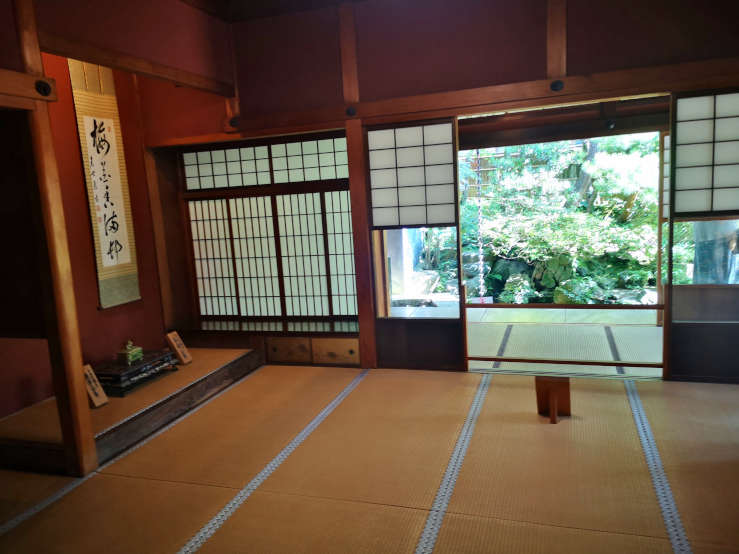
Traditional Japanese paper doors opening onto a peaceful garden in Nagamachi Samurai District Nomura, Kanazawa, Japan | Photo: Travel In Culture
Where to stay in Kanazawa – samurai or geisha district? Whatever you choose, you will not be far from significant places that will let the past come alive and take you back to Kanazawa’s heyday. Whether you prefer staying near Omicho Market, close to the Higashi Chaya geisha district or within walking distance of Kanazawa Castle and Kenroku-en Garden, Kanazawa offers excellent hotels and traditional ryokans for every travel style.
Where to Stay in Kanazawa: Best Areas
Choosing where to stay in Kanazawa depends largely on how you want to experience the city. The central areas are close to the main sights, while staying near the historic districts gives you a more atmospheric setting.
🍣 Omicho Market: Best for food and central sightseeing. You are close to the market, Kanazawa Castle, Oyama Shrine, and the main shopping streets.
🚉 Kanazawa Station: Best for transport and day trips. This is the most convenient area if you are arriving by Hokuriku Shinkansen or planning trips to places such as Shirakawa-go and Takayama.
🏮 Higashi Chaya District: Best for atmosphere and traditional streets. Stay nearby if you want easy access to historic chaya houses, cafés, and traditional architecture.
🏯 Nagamachi: Best for a quieter historic setting. The area around the former samurai district offers traditional streets and a more residential atmosphere.
🍽️ Korinbo: Best for restaurants, shopping, and evenings out. This central district has a wide choice of dining, shops, and hotels and is within walking distance of several major sights.
For a first visit, staying around Omicho Market or Korinbo gives you a particularly convenient base for sightseeing, while Higashi Chaya and Nagamachi suit travellers who prioritise historic surroundings. If you are using Kanazawa as a base for exploring the wider Hokuriku region, staying near Kanazawa Station can make your onward journeys easier.
Below are some hotels in convenient areas of Kanazawa, particularly selected for their character and location.
As part of a broader Japan itinerary, Kanazawa works well as a 1–2 night stop between Tokyo, Kyoto, and the Japanese Alps.
Compare more hotels, ryokans and guesthouses in different areas of Kanazawa below.
If you continue onwards through Japan, also read our guides to Takayama, Osaka and Tokyo to Kyoto by train.
🏯 Kanazawa: more compact, with major historic sights concentrated around the central area
🎎 Kyoto: arger, with a much greater concentration of temples, shrines, and historic sites
🌿 Kanazawa: strong focus on crafts, samurai history and seafood culture
🏮 Kyoto: more temples, shrines and classic Japan landmarks
🚆 Both are well connected to other major Japanese cities, although Kanazawa and Kyoto require a transfer via Tsuruga
Kanazawa as part of a Japan travel itinerary (Tokyo, Kyoto & the Japanese Alps)
- Shinkansen connections: Easily combined with Tokyo by Hokuriku Shinkansen, while Kyoto is reached via Tsuruga with a transfer
- Japanese Alps route: Often paired with Takayama and Shirakawa-go for a scenic mountain circuit
- Central Japan itinerary: Fits naturally into a cultural route through central Japan
- Food stop: Ideal stop between Tokyo and Osaka for seafood, markets and heritage dining
- Recommended stay: Works best as a 1–2 night stop in longer Japan itineraries
2. Kanazawa’s History & Cultural Foundations
The name Kanazawa literally means “marsh of gold”. According to local legend, a farmer named Imohori Togoro discovered gold dust while digging in a marsh, giving rise to the city’s evocative name.
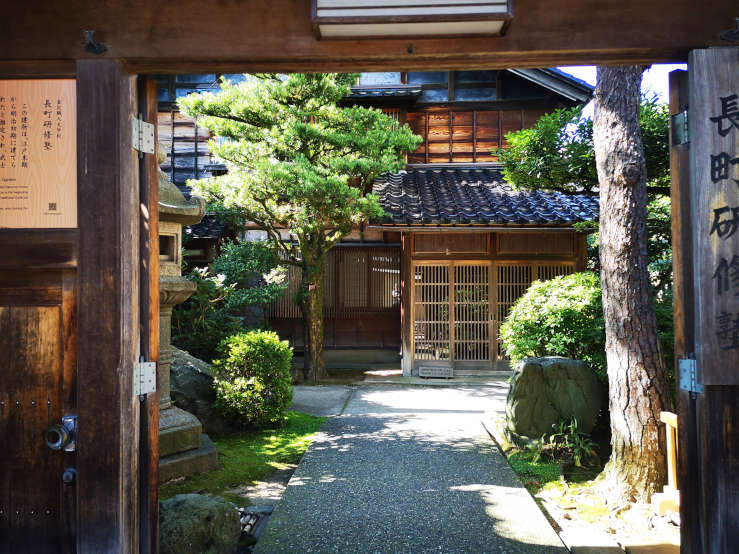
Traditional Japanese house in Kanazawa, Japan.
During the Edo period (1603 – 1868), Kanazawa was home to the Maeda Clan. Mighty samurai warrior families resided along the canals in the city near Kanazawa Castle. Many of their homes have been restored over the years and are still very well preserved.
Kanazawa also has a significant cultural heritage in the form of its geisha districts with historical teahouses and outstanding two-storey wood-panelled buildings. Since the bombings during World War II spared the city, Kanazawa’s traditional geisha districts are today an excellent and much less touristy alternative to visiting the famous geisha districts in Kyoto, often included on classic Tokyo to Kyoto itineraries.
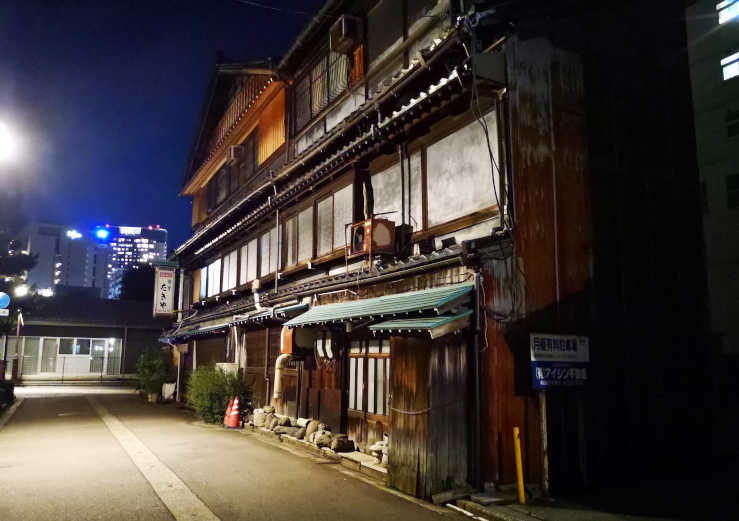
Old wooden house in central Kanazawa, Japan | Photo: Travel In Culture
Since the Edo period, Kanazawa has flourished with gold leaf craft and the gold leaf production is today part of the cultural heritage of Kanazawa. Gold leaf was used for decoration purposes in ancient Japan. One of the best-known examples of gold-leaf decoration in Japan is Kinkaku-ji, Kyoto’s famous Golden Pavilion, which has been extensively covered in gold leaf. The gold leaf production still thrives in the city. Kanazawa produces around 99% of Japan’s domestic gold leaf, and the city specialises in providing gold leaf for the restoration of historic properties. Kanazawa is one of Japan’s best-preserved historical cities and an ideal destination for travellers interested in cultural travel experiences.
3. Gold Leaf in Kanazawa: Museum & Craft Tradition
The Kanazawa Yasue Gold Leaf Museum is near one of the geisha districts, the Higashi Chaya District, which, since the Edo period, has also been the home of local gold leaf craftsmen.
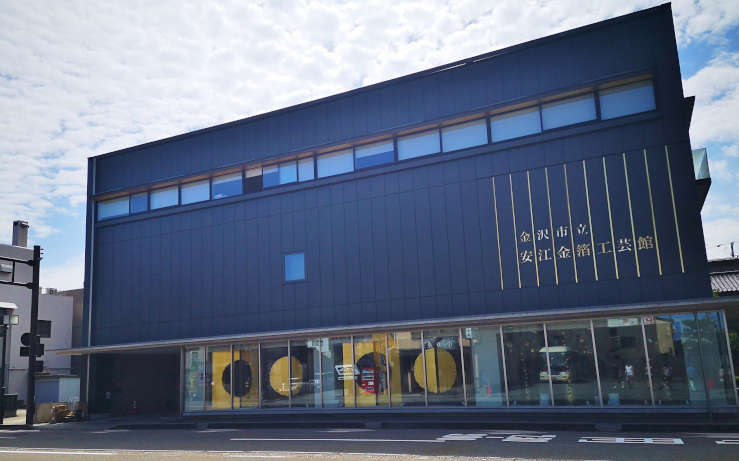
Kanazawa Yasue Gold Leaf Museum in Kanazawa, Japan.
The museum presents the process of creating gold leaf through an exhibition, explanatory videos, and exhibits of various gold-plated items of cultural importance. The history of gold leaf is described, including the use of gold leaf in temples, shrines, paintings, religious statues, Buddhist instruments, and other traditional Japanese objects covered in gold leaf.
Besides the hundreds of gold-leaf pieces on display, the museum also features Japanese folding screens and various handicrafts created using ancient techniques for lacquerware and ceramics.
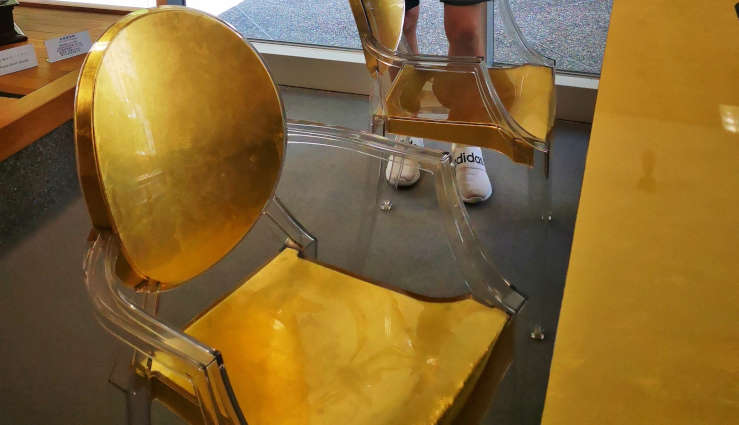
Golden chair at the Kanazawa Yasue Gold Leaf Museum | Photo: Travel In Culture
The exhibition illustrates the melting process, after which the gold (with minuscule traces of copper and silver) is poured into moulds, and the subsequent beating process using traditional tools to produce ultra-thin golden layers. It is a thorough process where beating out and stretching the delicate foil is the key to the result. The finished gold leaf can be as thin as 1/10,000 of a millimetre. The leaves are moved around using a pair of bamboo tweezers, cut on a bamboo frame, and moved to a sheet of handmade paper. Just a tiny bit of static electricity can tear them apart!
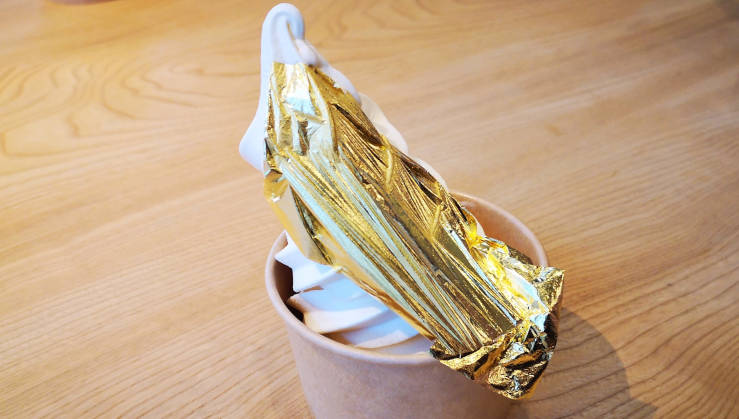
Gold-leaf wrapped soft ice cream | Photo: Travel In Culture
Nevertheless, today, the application of the fragile gold leaves is not limited to traditional art and restoration purposes. It also contributes to the gastronomy in Kanazawa, e.g., as the golden topping on ice creams in several places in the city. A sheet of gold leaf wraps the soft ice cream and lets you taste the precious metal. Since ancient times, it has been known to promote longevity and is popular in an edible form as a food decoration. Other speciality stores and workshops in the area sell golden cosmetics or let you apply the golden leaves to selected items, e.g., chopsticks, which will leave you with a unique souvenir of Kanazawa!
4. Geisha Districts in Kanazawa (Higashi Chaya & Kazue-machi)
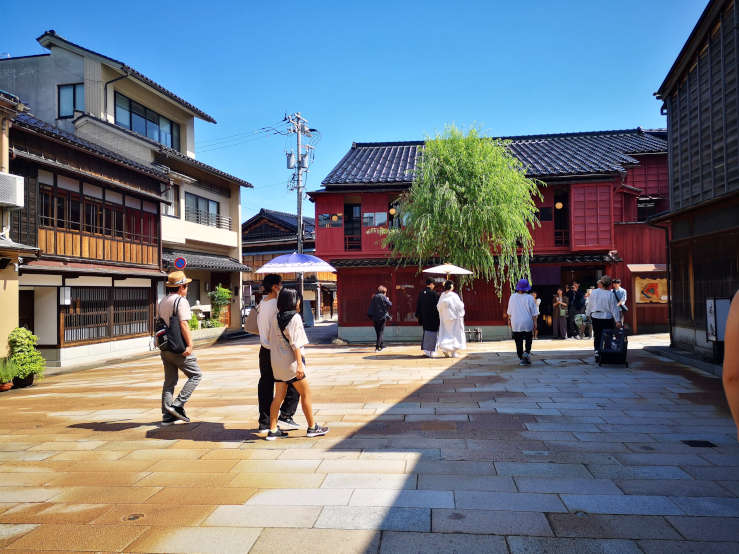
Higashi Chaya | Photo: Travel In Culture
There are several geisha districts in the city, and they are a significant part of Kanazawa’s cultural heritage. The chaya were traditional entertainment establishments where geigi, Kanazawa’s geisha performers, entertained guests through music, dance, conversation, and other traditional arts. Today, the historic districts preserve the distinctive architecture and atmosphere of this part of Kanazawa’s cultural heritage. Moreover, Kanazawa’s chayas undeniably are intertwined with the gold leaf history and craft in the city, and they date back to the Edo period. The Kanazawa Yasue Gold Leaf Museum can be found just a stone’s throw from the historical houses.
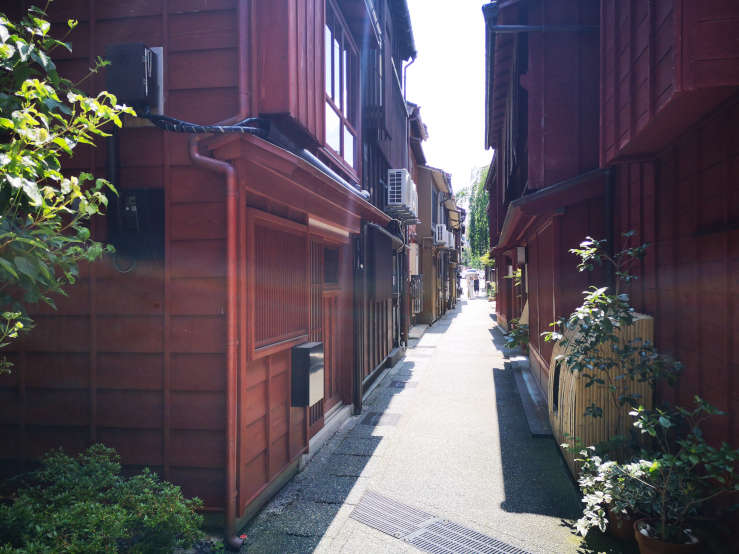
Kazue-machi Chaya | Photo: Travel In Culture
The most famous and largest district is Higashi Chaya, north of the Asano River. The distinctive two-storey wooden townhouses still stand as they did hundreds of years ago. Already in the past, they were eye-catching since two-storey houses were generally not allowed in Kanazawa at the time. Today, some geisha houses and teahouses have been transformed into popular souvenir shops, cafés, and restaurants, still preserving the exterior appearance. You can attend a geisha performance in Higashi Chaya.
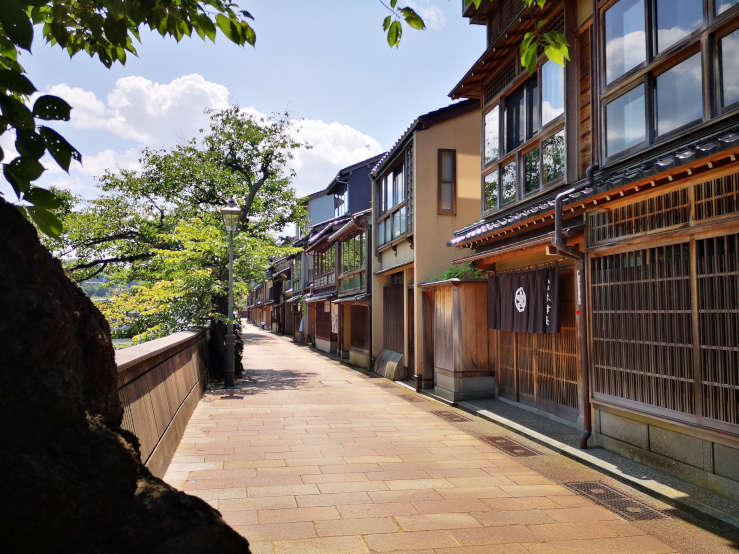
Kazue-machi Chaya | Photo: Travel In Culture
The Kazue-machi Chaya is another gem. The chaya is scenically situated along the river with a row of historical geisha houses between the Asanogawa Bridge and the Naka Bridge. The setting is beautiful, and the chaya is less crowded than the Higashi Chaya – the perfect photo spot!
The smallest of Kanazawa’s three major chaya districts is Nishi Chaya, in the city’s Katamachi area, south-west of Kanazawa Castle.
5. Nagamachi Samurai District: Walking Through Edo History
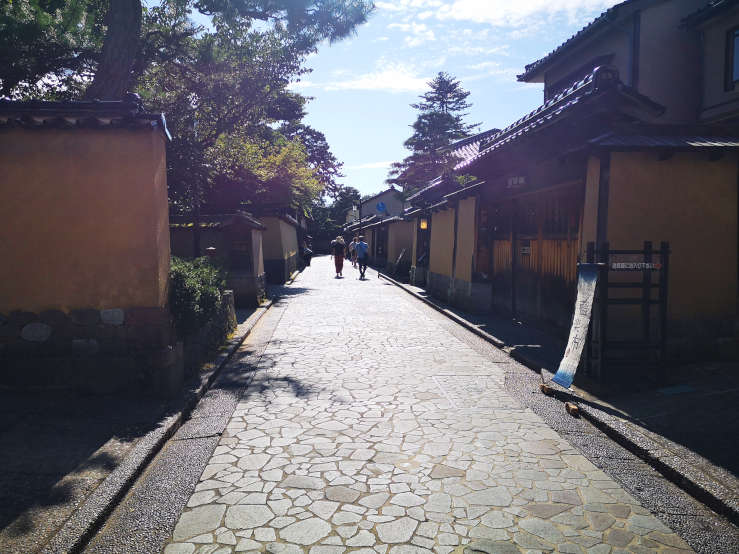
Kanazawa samurai district | Photo: Travel In Culture
Another historic district is the Nagamachi Samurai District, brimming with exciting samurai history. It is a well-preserved neighbourhood in the vicinity of Kanazawa Castle, with cobblestone streets and canals dating back to the Edo period. The district and its samurai domains were home to the prosperous samurai families in Kanazawa.
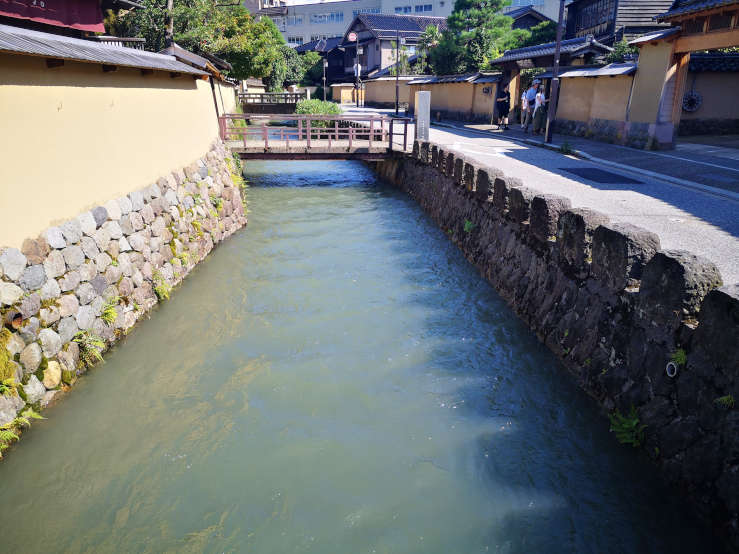
Samurai district Kanazawa | Photo: Travel In Culture
The estates remained the property of the samurai class right until 1869 when the emperor took over all the domains. Samurai possessions thus came to an end in the district.
Today, the original Edo-era streets of the Nagamachi Samurai District exist side by side with present-day Kanazawa.
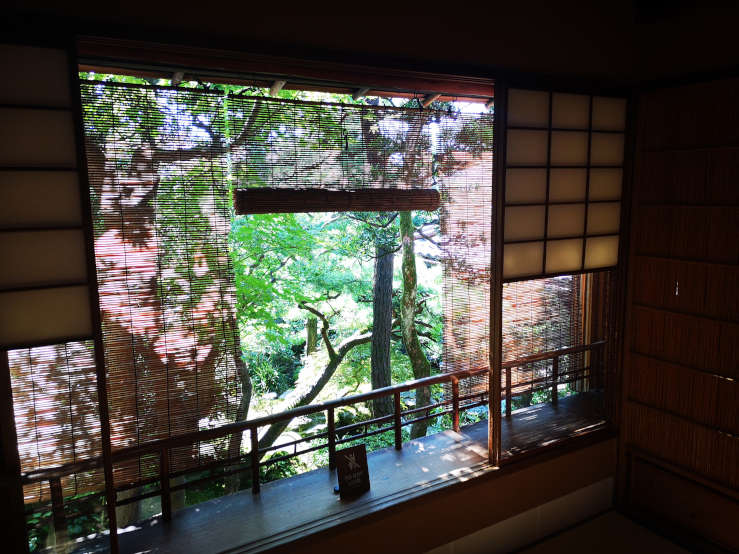
The Nomura Residence | Photo: Travel In Culture
A few of the former restored samurai residences are open to visitors, e.g., the Nomura Residence, originally belonging to the Maeda Clan. Inside, you will see original samurai armour and get an impression of how the warrior family lived. They had tranquil rooms and a picturesque inner garden with traditional stone lanterns, ponds, and streams. Afterwards, in the adjacent teahouse, you have the opportunity to taste one of Kanazawa’s gold-leaf soft ice creams!
6. Kanazawa Castle & Castle Park
From 1583, Kanazawa Castle was the home of the Maeda Clan. The Castle Park preserves and reconstructs important elements of the former castle complex. It is a lovely park and encompasses several park areas, e.g., the Gyokuseninmaru Garden with an ornamental pond and walking paths. The Gyokuseninmaru Garden was reconstructed in 2015.
Over the centuries, the castle suffered several major fires, and many of its buildings were subsequently reconstructed. Particularly noteworthy are the Ishikawa-mon Gate from 1788, the Hishi Yagura and Tsuzuki Yagura turrets, together with the Gojukken Nagaya storehouse. In recent years, several other gates have been reconstructed, among others the Hashizume-mon Gate.
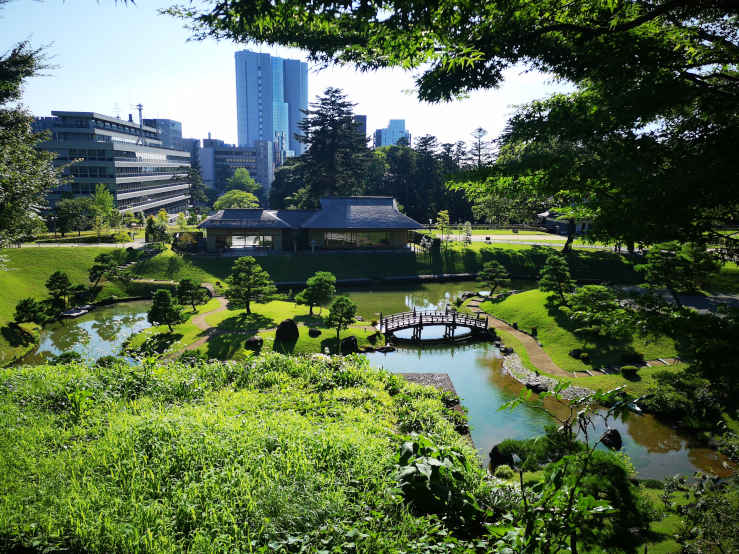
Photo: Travel In Culture
Oyama Shrine: A Cultural Stop Near Kanazawa Castle
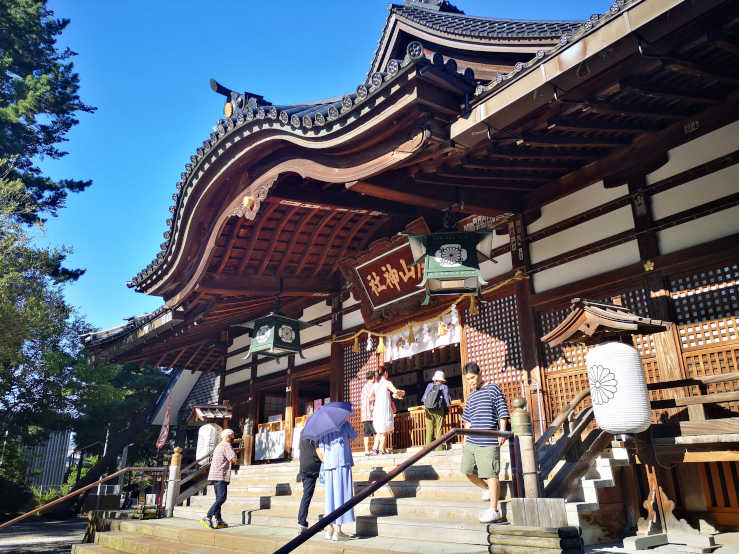
Photo: Travel In Culture
Photo: Travel In Culture
Oyama Shrine was established in 1599 and moved to its present location in 1873, is also closely linked to the Maeda family. It was dedicated to the clan lord, Maeda Toshiie, who lived at Kanazawa Castle, a stone’s throw away.
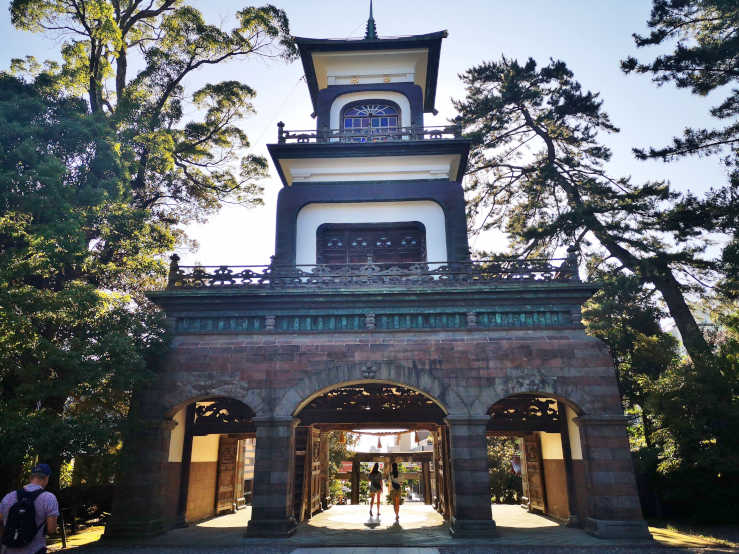
Photo: Travel In Culture
The distinctive gate dates from 1875 and combines Japanese, Chinese, and European architectural elements, including Dutch-style stained glass. The upper part formerly served as a lighthouse and has a beautiful Dutch-style stained glass window.
The shrine grounds include a garden with a walking path across the pond as well as a statue of Lord Toshiie.
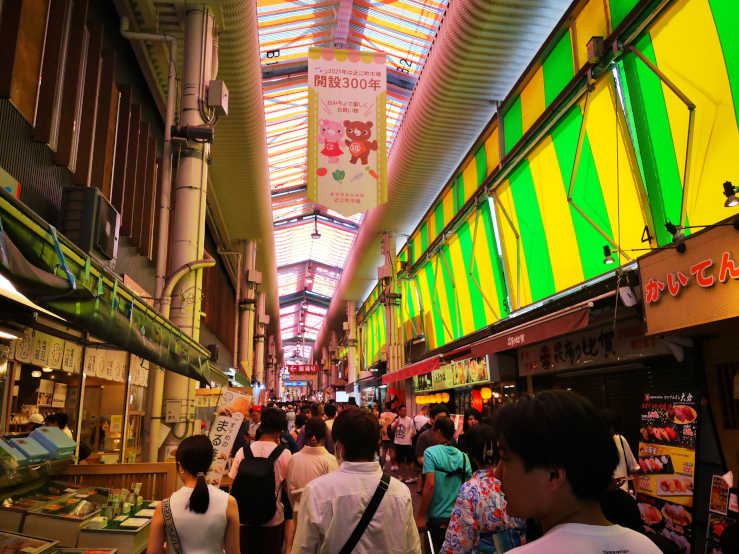
Omicho Market in Kanazawa, Japan | Photo: Travel In Culture
7. Kenroku-en Garden: One of Japan’s Top Landscapes
Kenroku-en is one of Japan’s three famous gardens and is one of Kanazawa’s defining attractions. It used to be the outer gardens of Kanazawa Castle and belonged to the Maeda family. Inside the lush garden, you will find streams, small bridges, and historic teahouses.
The concepts behind the garden are the six sublimities: spaciousness, antiquity, artificiality, seclusion, water, and views, which together characterise a perfect garden according to traditional landscape principles. It was not until 1871 that Kenroku-en Garden was opened to the public.
8. Omicho Market & Food Experiences in Kanazawa
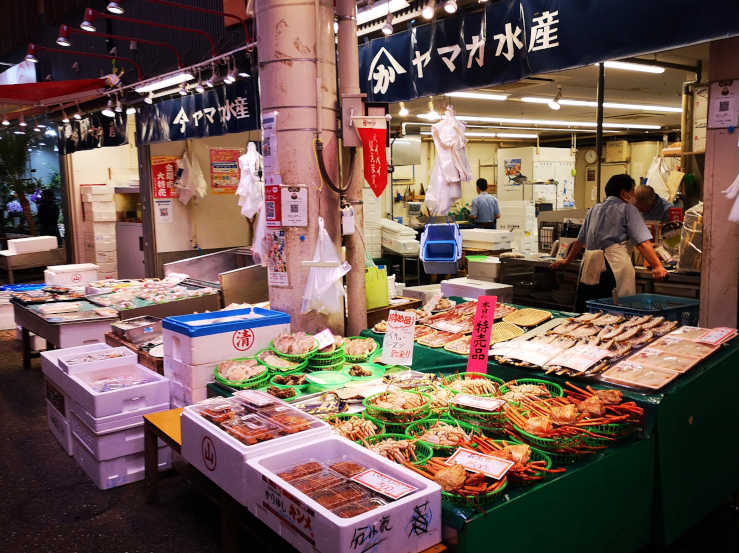
Photo: Travel In Culture
At Kanazawa’s fresh-food market, Omicho Market, you can get an authentic culinary experience. The local fish and shellfish catch is enticingly presented in a multitude of stalls and shops. People come here to have sushi or sashimi for breakfast or lunch – it is attractive, and you may have to wait in line at the restaurants.
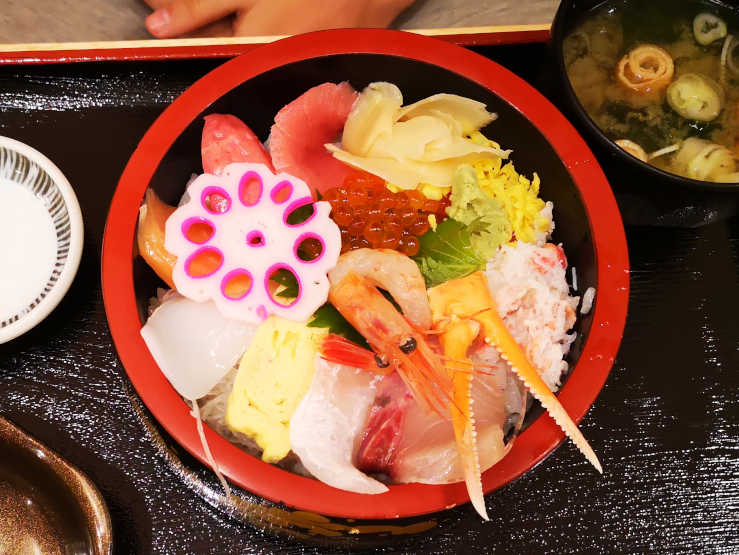
Kaisendon | Photo: Travel In Culture
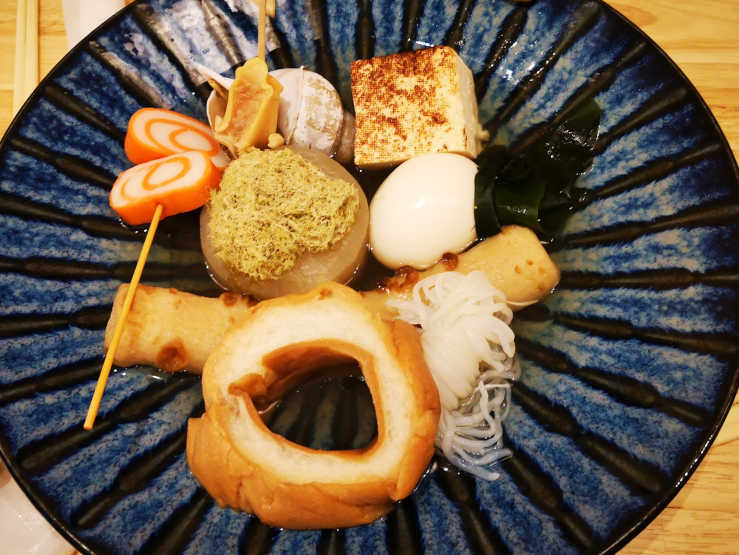
Kanazawa is particularly known for enjoying oden throughout the year, including during summer | Photo: Travel In Culture
The old Edo market has existed since the 1700s and consists of around 170 stalls that, together with the restaurants, offer an abundance of the freshest fish and shellfish. It is an impressive and colourful market, and you cannot avoid being tempted to try some of the delicacies. Raw seafood over a bowl of rice, kaisendon, as well as the broth of vegetable and seafood, oden, are some of the specialities. Oden is first and foremost eaten in winter in the rest of Japan, but in Kanazawa, it is popular during all seasons. As a curiosity, the high-quality seafood is often served in ceramic bowls here.
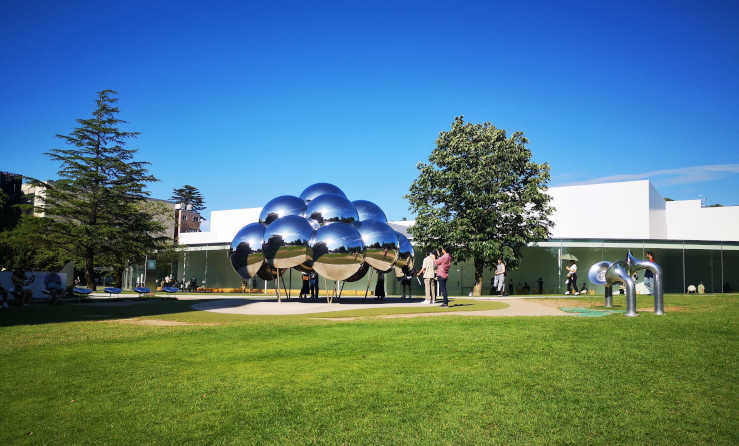
Photo: Travel In Culture
9. Kanazawa Station & Tsuzumi-mon Gate
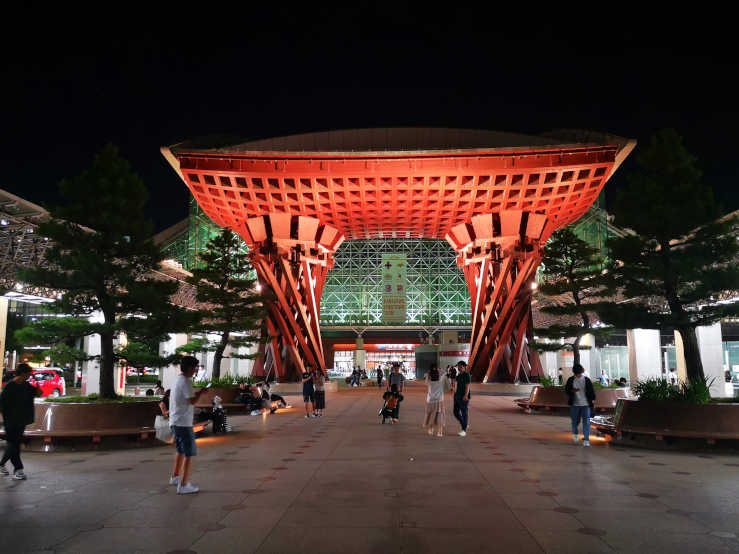
Photo: Travel In Culture
Kanazawa Station boasts an extraordinary wooden gate, the Tsuzumi-mon Gate. The massive gate has become an iconic landmark of Kanazawa and constantly amazes first-time visitors from both sides. Between the station and the Tsuzumi-mon Gate, a huge glass dome rises and adds to the architectural ingenuity.
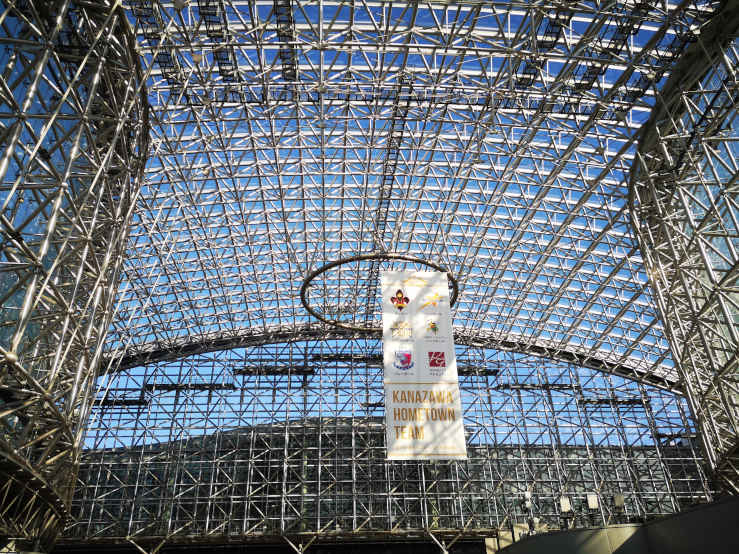
Photo: Travel In Culture
The station combines contemporary architecture with elements inspired by Kanazawa’s traditional culture. The Tsuzumi-mon Gate is built in the shape of a traditional Japanese torii gate, which usually marks the entrance to a sacred shrine. In fact, inside the contemporary station building, there is a whole row of smaller ‘toriis’ constructed as pillars supporting the roof of the building – just like the series of toriis often seen at Japanese Shinto shrines. They are decorated with Japanese artwork and lead the passengers to the large gate at the front of the station. Also, Japanese Noh culture is represented here, as the two wooden columns are each shaped like a typical drum used in Noh theatre, a tsuzumi, hence the name of the gate.
The gate is a favoured spot for photography, and you will, at any time of the day, see visitors taking photographs of this striking symbol of Kanazawa. At night, the gate is illuminated in different colours.
10. 21st Century Museum of Contemporary Art in Kanazawa
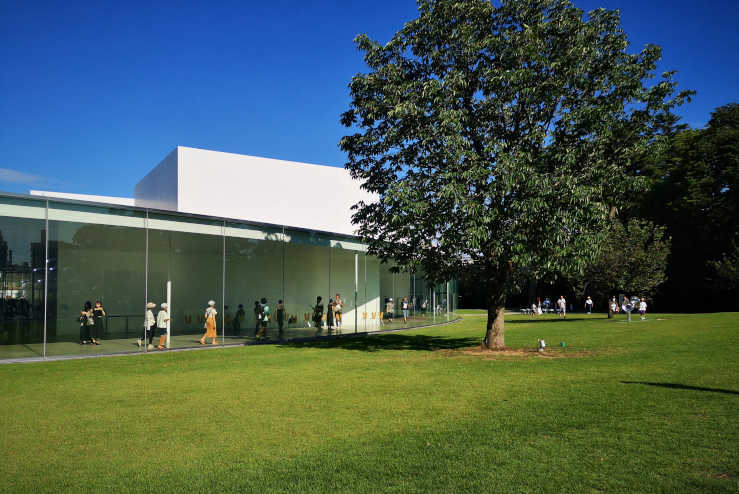
Photo: Travel In Culture
The circular, futuristic-style museum building from 2004 is spectacular. There is no main entrance, thus inviting visitors to walk around it. The museum hosts temporary exhibits in addition to more permanent installations and includes, besides the adjoining green spaces with installations, a public library and several lecture halls.
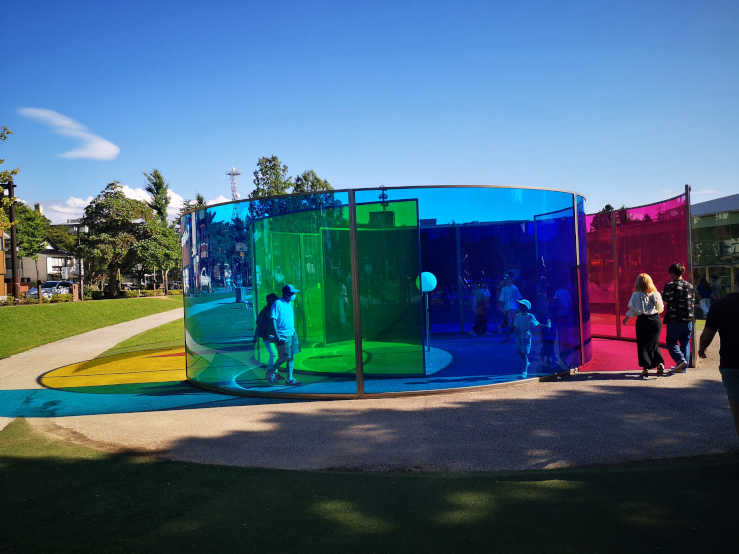
Photo: Travel In Culture
The museum’s best-known permanent work is Leandro Erlich’s The Swimming Pool, created in 2004. Viewed from above, the installation appears to have swimmers beneath the water, while visitors can view from below. The museum is full of inspiring artworks, often making use of light effects, sound, and multimedia displays.
Final Thoughts on Things to Do in Kanazawa
Kanazawa is an unusually compact introduction to several strands of traditional Japanese culture, bringing together samurai history, chaya districts, craftsmanship, gardens, contemporary art, and regional cuisine. Its compact size makes it easy to explore in one or two days while still offering a deep cultural experience.
Whether you are walking through the Nagamachi Samurai District, visiting Kenroku-en Garden, or exploring the Higashi Chaya geisha streets, Kanazawa offers a balanced mix of history, culture, and local life that makes it one of Japan’s most memorable destinations.
Things to Do in Kanazawa: Frequently Asked Questions
Is Kanazawa worth visiting?
Kanazawa is particularly worthwhile for travellers interested in traditional crafts, historic neighbourhoods, Japanese gardens, regional food, and samurai and chaya culture. Its main attractions are concentrated within a relatively compact area, making it practical for a one- or two-day visit.
How many days do you need in Kanazawa?
One full day is enough to see Kanazawa’s main highlights, but two days gives you time to explore the historic districts, museums, gardens, and food scene without rushing. If you are including Kanazawa as part of a wider Hokuriku itinerary, two nights is a particularly comfortable option.
What is Kanazawa famous for?
Kanazawa is famous for gold leaf production, Kenroku-en Garden, Higashi Chaya geisha district, Nagamachi Samurai District and fresh seafood from Omicho Market.
Is Kanazawa better than Kyoto?
Kanazawa and Kyoto offer different experiences. Kyoto has a much larger concentration of major temples, shrines, and historic sites, while Kanazawa is more compact and particularly strong in samurai history, chaya districts, traditional crafts, gardens, and Hokuriku cuisine.
How do you get to Kanazawa from Tokyo?
The fastest way is by Hokuriku Shinkansen, which takes around 2.5–3 hours from Tokyo Station to Kanazawa Station.
What is the best area to stay in Kanazawa?
The best areas are near Omicho Market for convenience, Higashi Chaya District for atmosphere, Nagamachi Samurai District for tradition, and Kanazawa Station for transport connections.
From Kanazawa, it is easy to go on a day trip to Shirakawa-go or the traditional mountain town Takayama in the Japanese Alps.
Read next: Where to Stay in Osaka and A Day Trip to the Famous Fuji Five Lakes