



Where to Stay in Osaka: Best Areas, Hotels & Attractions
By ANL | UPDATED:
All photographs in this article were taken by Travel In Culture.
Where should you stay in Osaka? The answer depends on what you want from your trip. Kita is particularly convenient for first-time visitors and rail connections, Minami puts you in the heart of Osaka nightlife and food culture, Tennoji combines historic temples with modern attractions, while the Osaka Bay Area is convenient for Universal Studios Japan and family attractions.
The Japanese festivals are unique | Photo: Travel In Culture
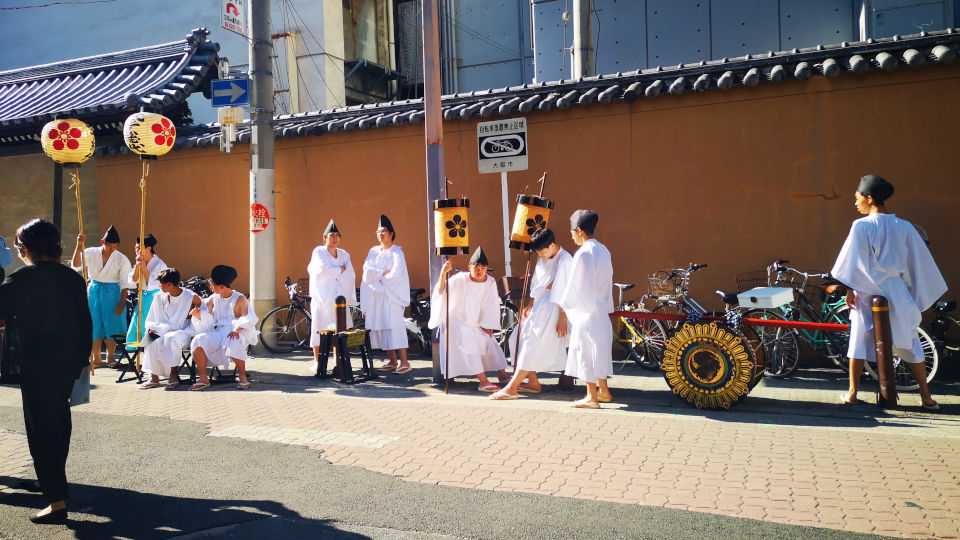
Matsuri are deeply rooted in Japanese cultural traditions, and Osaka has a particularly strong festival culture. Tenjin Matsuri, centred on Osaka Tenmangu Shrine and the Okawa River, is one of Japan’s three major festivals. Its main celebrations take place on 24 and 25 July, when processions, boats, traditional performances, and fireworks fill the city.
The Tenjin Matsuri festival in Osaka | Photo: Travel In Culture
Below are four areas to consider when choosing where to stay in Osaka, each offering a distinct atmosphere, attractions, and transport connections.
Osaka also makes a useful base for exploring other parts of the Kansai region, particularly Kyoto, Nara, and Kobe. Our cultural travel method shows how to get the most out of festivals, temples, and historic sites while planning your trip. You can also explore more destinations across Japan in our Japan travel guide.
To help you choose the best area, here is a quick comparison of Osaka’s main neighbourhoods based on atmosphere, attractions, and travel convenience for culture, nightlife, and festival experiences.
| Area | Best suited to | What it feels like | Key attractions | Transport |
|---|---|---|---|---|
| Kita (Umeda) | First-time visitors, rail connections, shopping | Modern + traditional mix | Umeda Sky Building, Osaka Station, Tenjin Matsuri access | Excellent (Shinkansen, JR, subway) |
| Minami (Namba / Dotonbori) | Food, nightlife, shopping | Vibrant, neon-lit, busy | Dotonbori, Shinsaibashi, Amerikamura | Excellent (central subway hub) |
| Tennoji | Temples, culture, skyline views | Mixed old and new Japan | Shitenno-ji, Shinsekai, Abeno Harukas | Very good (JR + subway connections) |
| Osaka Bay Area | Families, Universal Studios, aquarium | Resort-like, spacious | USJ, Osaka Aquarium, Tempozan Ferris Wheel | Moderate (30–40 min to centre) |
1. Kita
Why Stay in Kita
Kita Ward in Osaka is a mix of old and new, and it is the focal point of one of the city’s biggest festivals. Kita is a particularly convenient choice if you want easy rail connections and a mix of modern attractions and traditional neighbourhoods. The modern top attractions include the Umeda Sky Building, a characteristic landmark in the cityscape, and the Ferris wheel atop the Hep Five building, a commercial complex.
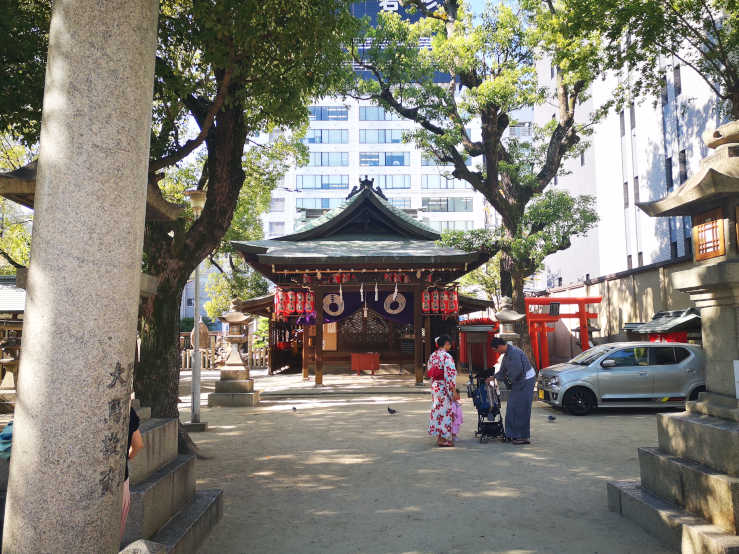
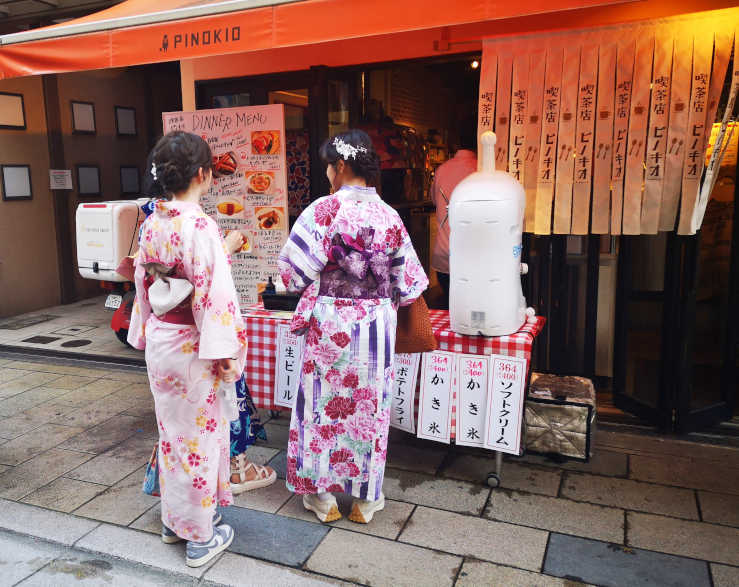
A Japanese couple dressed in traditional attire, with the woman wearing a kimono, during one of the Japanese festivals | Photo: Travel In Culture
Nevertheless, Kita also has atmospheric traditional streets and smaller neighbourhoods with shops, bars, restaurants, temples, and shrines – a glimpse of an older Osaka. Also, there are historic temples and shrines, both telling the history of Osaka and still being used as part of the Tenjin Matsuri and other festivals and long-established Japanese rituals. Do not miss the festival if you are in Osaka towards the end of July – it is one of Osaka’s major annual festivals.
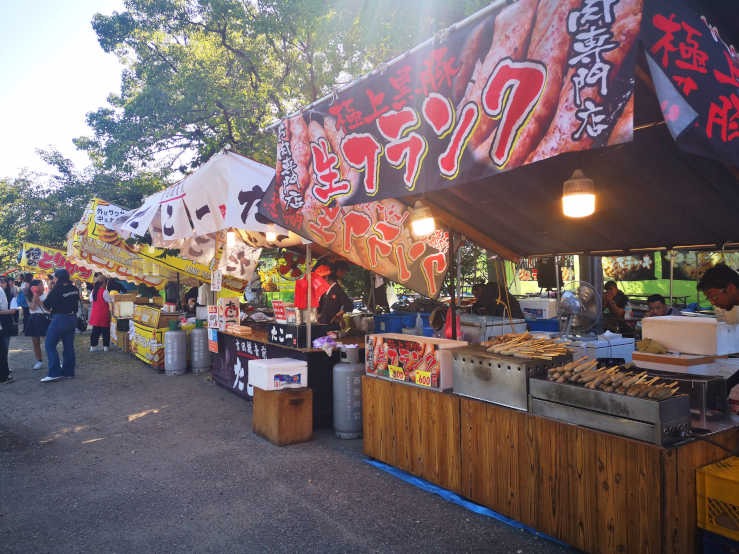
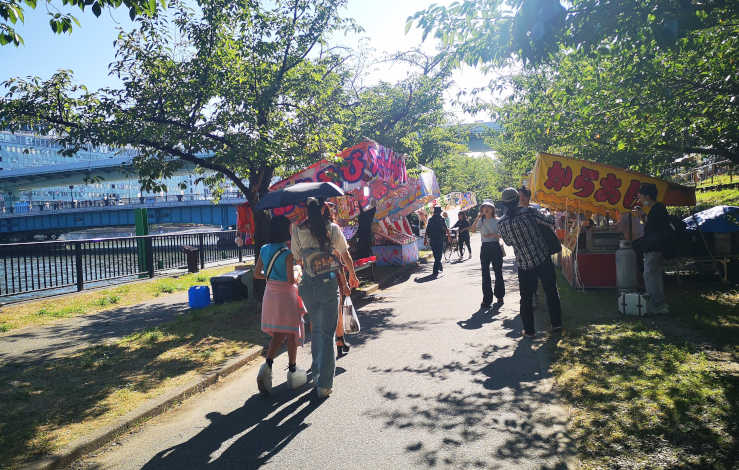
Market stalls at one of the Japanese festivals in Osaka | Photo: Travel In Culture
If you intend to travel to other cities in Japan, you may find it perfect to stay in Kita around Umeda and Osaka Station, where you will have excellent rail connections for travelling around Osaka and beyond. Shinkansen services depart from Shin-Osaka Station, which is separate from Osaka Station but easily accessible from the Kita area.
If you are planning a multi-city Japan itinerary, you can also read our guides on where to stay in Tokyo and visiting Arashiyama Bamboo Grove and Tenryuji Temple in Kyoto.

Explore Kita
Kita is full of attractions. Do not miss the Umeda Sky Building and its twin 40-storey towers with its rooftop observation deck and retro-style Takimi Koji dining area. The cutting-edge structure was designed by Hiroshi Hara and completed in 1993.
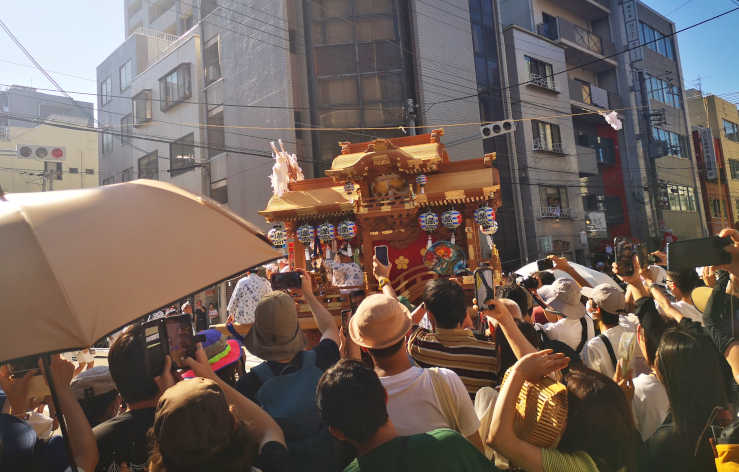
Procession at one of the traditional Japanese festivals in Osaka | Photo: Travel In Culture
Walking around the business district with its futuristic skyscrapers, modern architecture, fashionable hotels, and large shopping complexes is a unique experience. Moreover, Kita also seethes with a traditional atmosphere, especially around the temples and shrines. In particular, the past is brought to life with the annual festivals in the summer. Osaka Tenmangu Shrine, founded in the 10th century, is a contemplative space in the city. Over time, ravaging fires have burnt it down several times, and the current buildings are much more recent (some of the shrine buildings date from the 1800s). As one of the famous shrines in Osaka, it is a focal point of the Tenjin Matsuri festival, taking place here on 24 and 25 July.
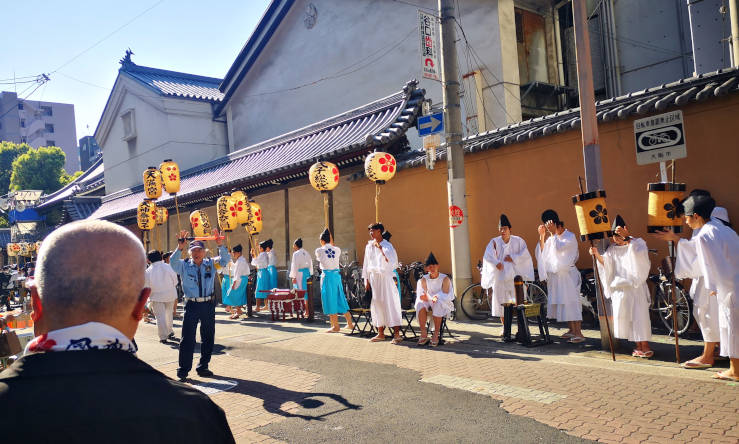
Tenjin Matsuri – one of the famous Japanese festivals.
Tenjin Matsuri, one of Japan’s three major festivals, is comparable to Kyoto’s Gion Matsuri and Tokyo’s Kanda Matsuri. The celebrations centre on Osaka Tenmangu and extend through the surrounding streets and along the Okawa River. The processions occur both through the neighbouring streets and on water, culminating on the night of 25 July! People parade in colourful attire, some dressed as well-known characters and lions/dragons. Portable shrines are carried through the streets and brought onto waiting boats on the river, from where the procession continues, all accompanied by festive fireworks.
Kita is particularly practical if you want a central base with excellent rail connections, major shopping complexes, modern architecture, and easy access to attractions elsewhere in Osaka.
Where to Stay in Kita
2. Minami
Why Stay in Minami
Minami covers the areas around Namba, Dotonbori, Shinsaibashi, and Amerikamura. It is Osaka’s energetic southern city centre, particularly well suited to travellers who want restaurants, street food, shopping, nightlife, and entertainment within easy walking distance.
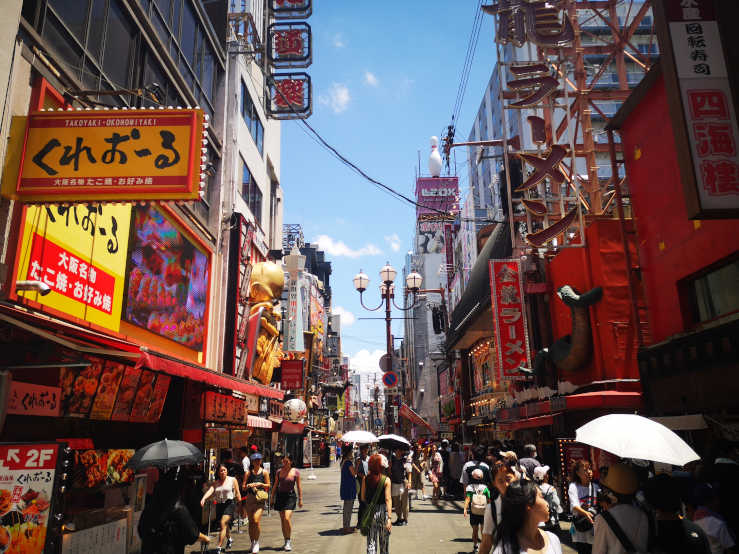
Dotonbori | Photo: Travel In Culture
As a counterpoint to this, Amerikamura is a fascinating district with retro-style and vintage clothing, pop and punk culture, hip-hop phenomena, and more. Other attractions include the atmospheric, covered Kuromon Market, dating back to the Edo period, with some of Osaka’s best local food options and great dining places. In Minami, the area has a distinctly energetic atmosphere. So, when considering where to stay in Osaka, Minami may be the place to choose if you really want to experience one of Osaka’s liveliest neighbourhoods.
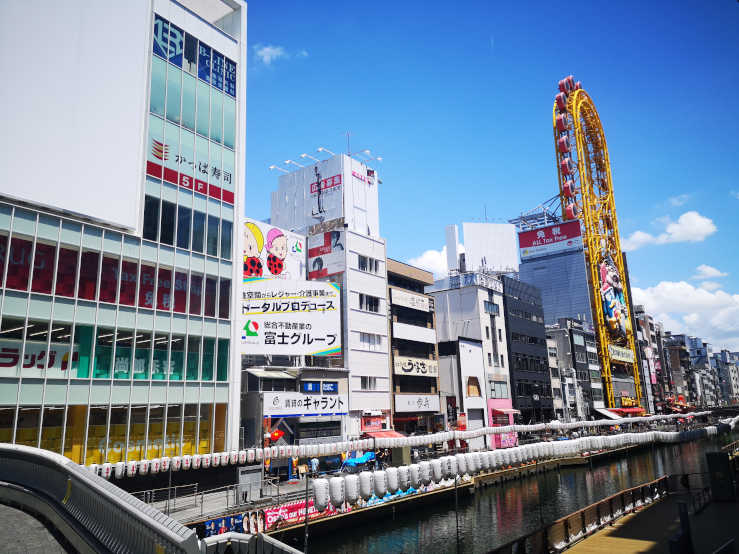
Dotonbori River | Photo: Travel In Culture
Explore Minami
At the southern end of the Shinsaibashi shopping area, Dotonbori is one of Osaka’s best-known entertainment districts, lined with restaurants, bars, giant illuminated signs, and the canal that gives the area its name. A river cruise is one of the options to experience it all!
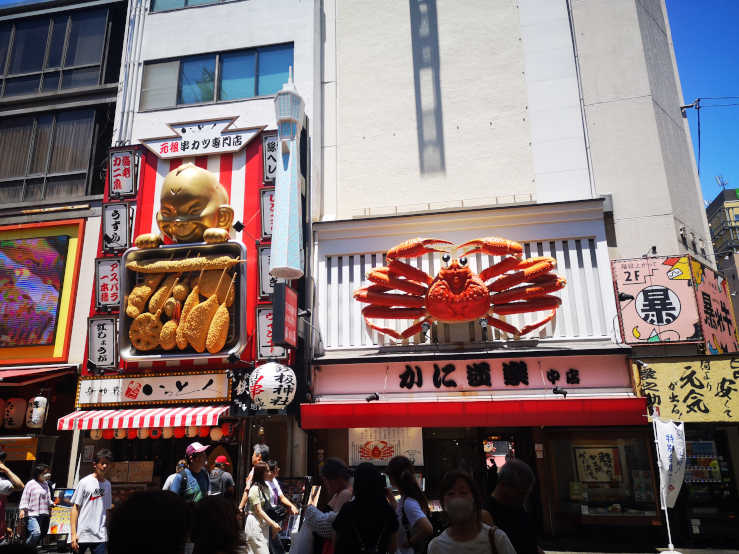
Photo: Travel In Culture
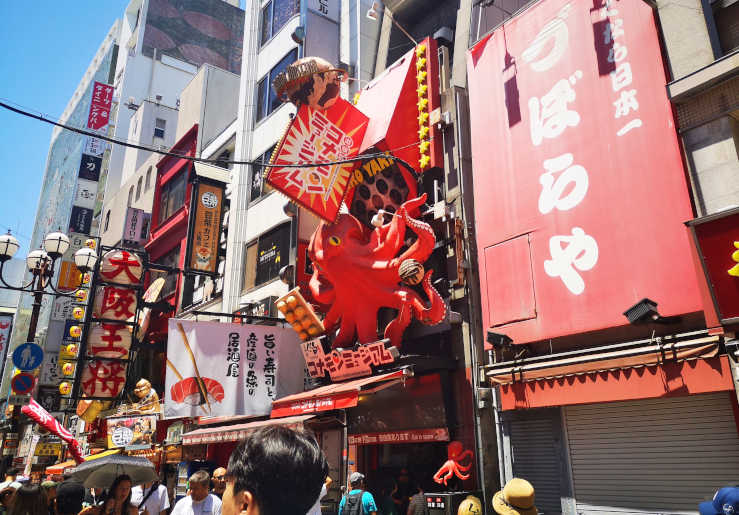
The vibrant and illuminated shop facades of Dotonbori, Osaka’s iconic nightlife and entertainment district.
The Glico Man sign beside Ebisubashi Bridge is one of Dotonbori’s best-known landmarks and a popular photo spot. Another icon is the 3-dimensional moving crab (Kani Doraku) in the pedestrian street, also near Ebisubashi Bridge, which promotes the Kani Doraku restaurant. A third one is the massive 3-dimensional octopus hanging above a takoyaki (octopus dumpling) restaurant.
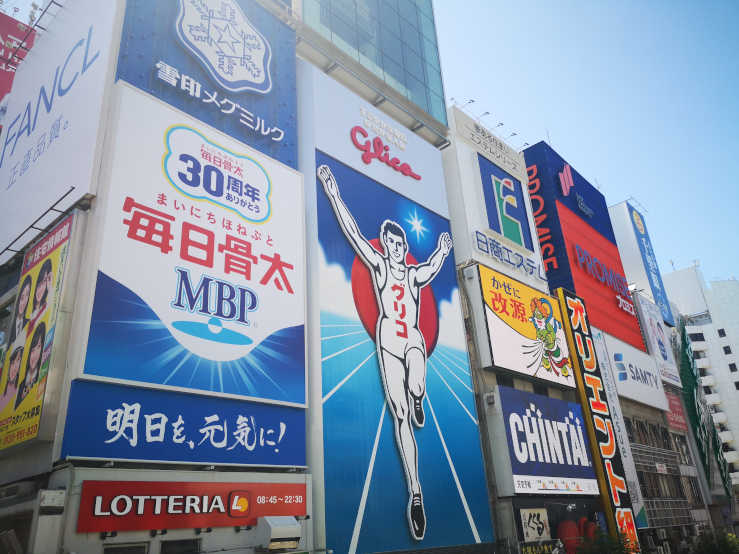
The Glico Man.
Round 1 Stadium is a large entertainment centre with 10+ floors of popular entertainment and activities. Everything from karaoke and pachinko games to bowling, bull riding, archery, claw machines, and other arcade games attracts locals and visitors alike.
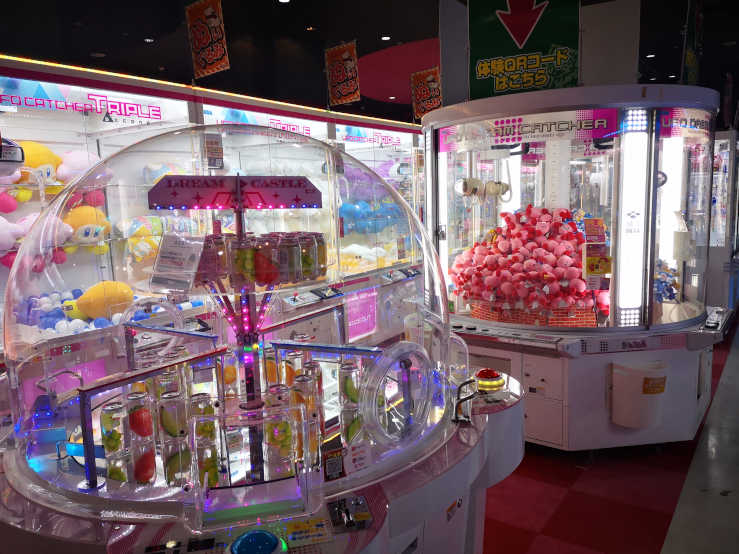
Round 1 Stadium.
Amerikamura is another distinctive area to explore. It is the hip place to explore an alternative Osaka with its America-inspired subculture of quaint art, vintage shopping, and cool nightclubs. Its narrow streets are known for vintage fashion, music, independent shops, and Osaka’s youth culture. Takoyaki is one of the must-try local specialities.
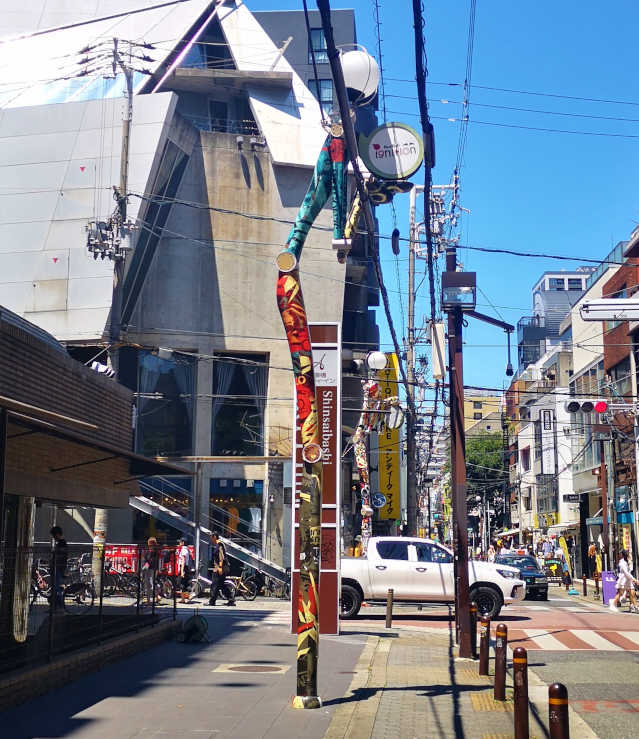
Lamppost in Amerikamura | Photo: Travel In Culture
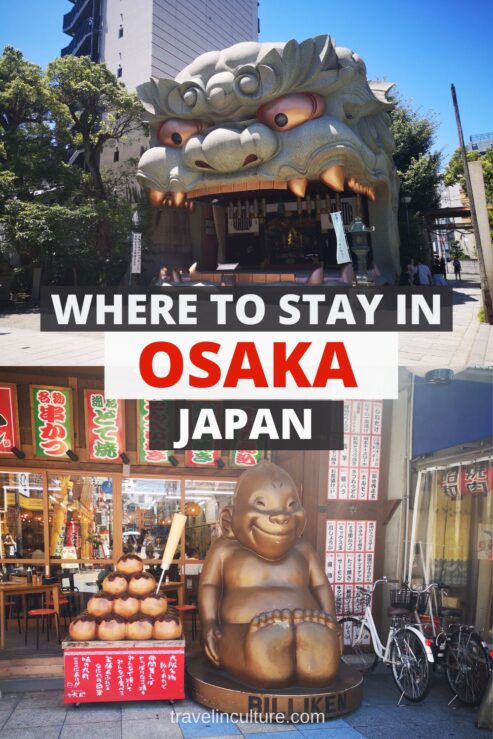
Minami also has a traditional angle, with a few shrines to visit. One is the unusual, retro-style Namba Yasaka Shrine, which takes the shape of a roaring lion’s head with a stage inside. The present shrine buildings date from the post-war period, while the shrine itself has a much older history. Namba Yasaka Shrine is also the site of one of the spectacular annual festivals held in Osaka, taking place in January.
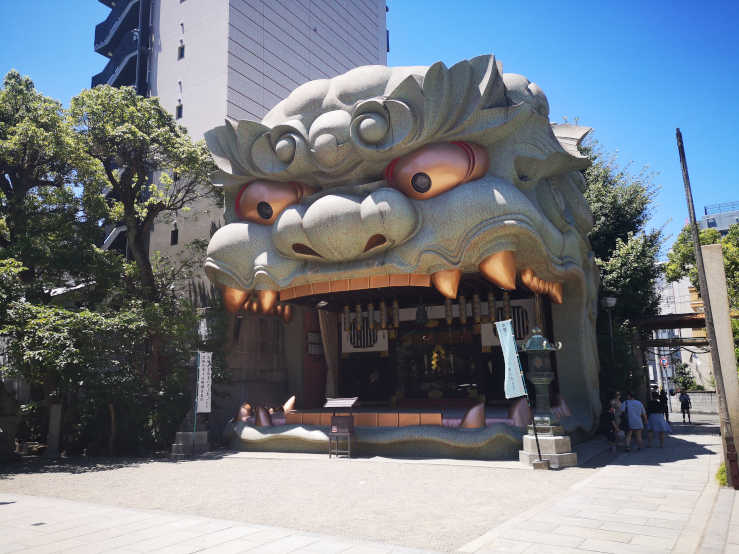
Namba Yasaka Shrine is a lion head | Photo: Travel In Culture
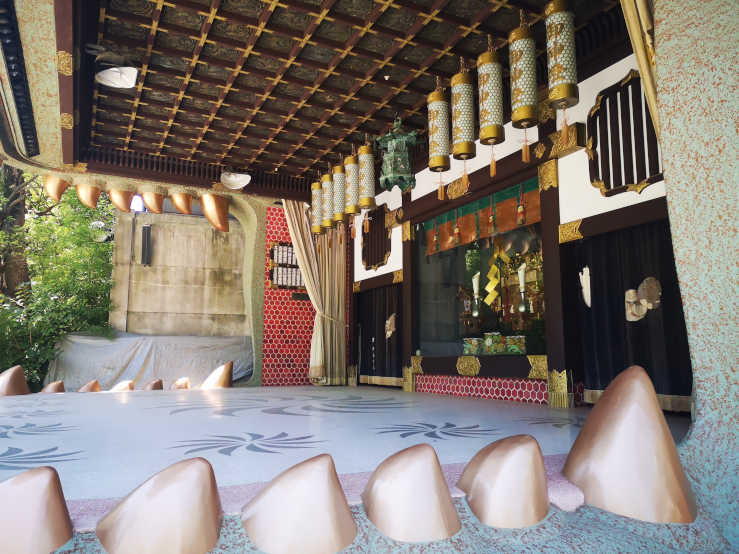
The inside of the lion’s mouth – Namba Yasaka Shrine | Photo: Travel In Culture
Where to Stay in Minami
3. Tennoji
Why Stay in Tennoji
If you want to combine historic temples, retro neighbourhoods, modern architecture, and excellent transport connections, Tennoji is one of the most interesting areas to consider. Tennoji combines historic temples and retro neighbourhoods with modern architecture, shopping, and excellent transport connections. Nearby Shinsekai is known for its inexpensive restaurants, Janjan-Yokocho, and distinctive old-school atmosphere.
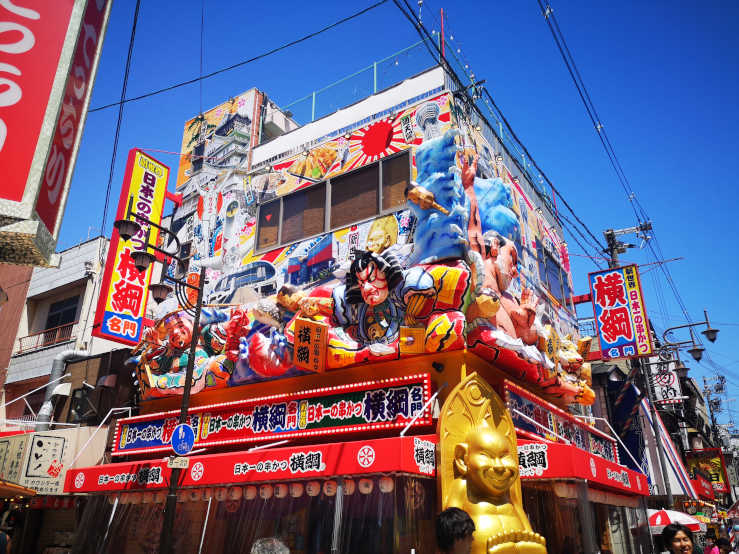
Tennoji.
Tennoji is, in particular, known for its skyline with two dominating ‘towers’, Tsutenkaku Tower and the soaring Abeno Harukas Building, with a rooftop observation deck. Tennoji Station is served by Osaka’s loop line and a couple of subway and other JR lines, making it convenient to stay in Tennoji.
Explore Tennoji
In Tennoji, history blends with modernity. The traditional side of this Osaka neighbourhood includes the Buddhist temples: Shitennoji Koshindo and Shitenno-ji. Shitenno-ji, founded by Prince Shotoku in 593 and regarded as Japan’s first official Buddhist temple, has a five-storey pagoda, temple halls, and seasonal events.
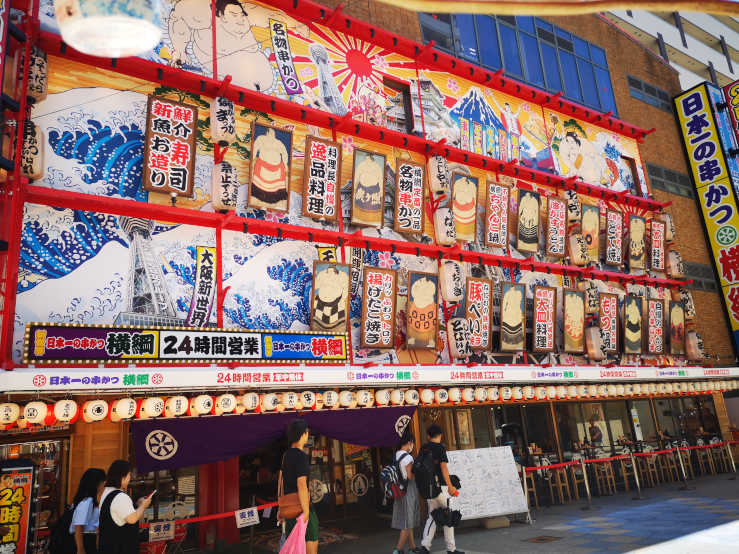
Tennoji | Photo: Travel In Culture
Shinsekai has a distinctive retro atmosphere, with colourful signs, inexpensive restaurants, traditional entertainment, and landmarks such as Tsutenkaku Tower. A giant pufferfish and a large Billiken statue are displayed in front of a restaurant. The Billiken, a good-luck figure associated with Shinsekai, is another recognisable symbol of the area.
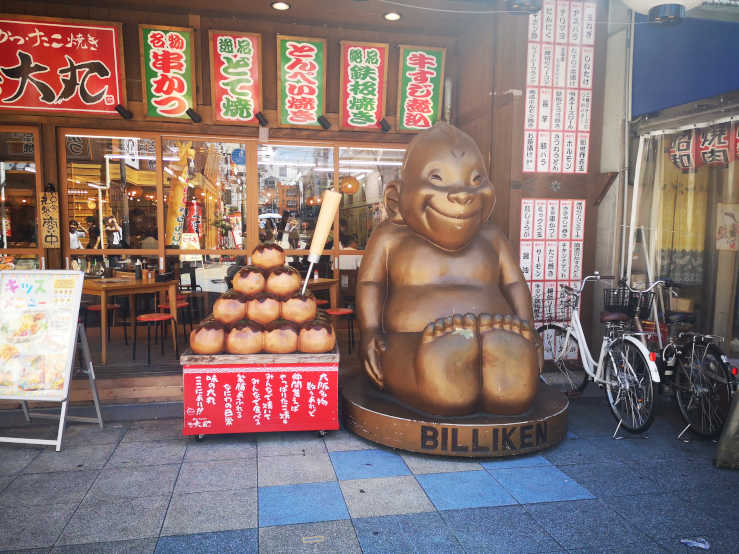
Billiken statue in Tennoji.
Tsutenkaku Tower is one of the top sights in the area, a 103-metre-tall tower that is also a landmark of Osaka. In addition to an observation deck, the construction contains a popular entertainment arcade.
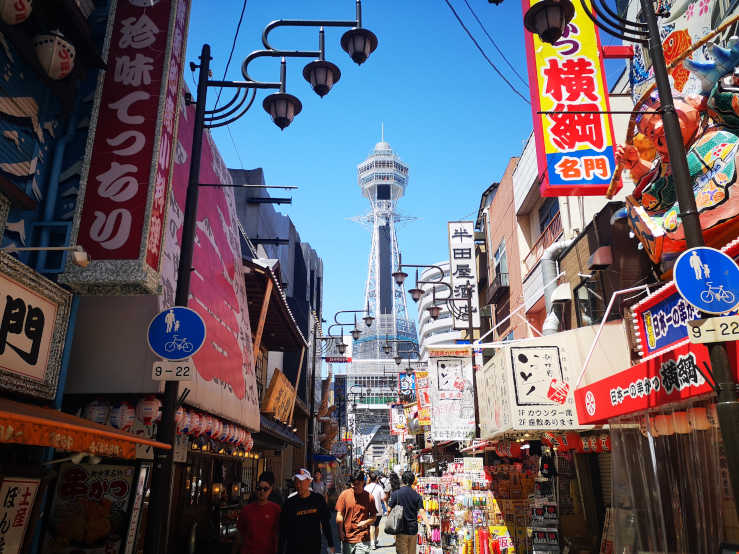
Tsutenkaku Tower.
Abeno Harukas, completed in 2014, dominates the Tennoji skyline at 300 metres. Overlooking Tennoji Park, the skyscraper offers panoramic views across Osaka. Inside, you will find a large department store, a hotel, and the Abeno Harukas Art Museum.
Where to Stay in Tennoji
4. Osaka Bay Area
Why Stay in the Osaka Bay Area
The Osaka Bay Area is worth considering if Universal Studios Japan, Osaka Aquarium Kaiyukan, and family-friendly attractions are central to your itinerary. Staying here can reduce travel time to the Bay Area attractions, although Kita and Minami offer a more central base for exploring Osaka’s wider city centre.
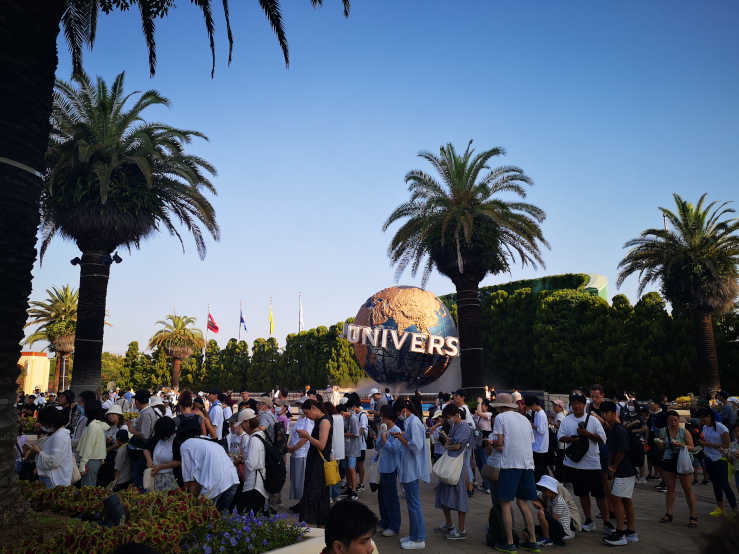
Universal Studios Japan in Osaka.
Osaka’s port area also has ferry connections to destinations elsewhere in Japan, which may be useful if your itinerary continues by sea. The Bay Area can also make sense if your itinerary continues by ferry to another Japanese island or coastal city.
Explore Osaka Bay Area
The Osaka Bay Area includes several artificial islands and waterfront districts, with theme parks, museums, shopping centres, and entertainment attractions.
Travel times from Osaka Station vary considerably depending on which part of the Bay Area you are visiting. Universal Studios Japan opened in Osaka on 31 March 2001 and remains the area’s major attraction. The park combines major film and television-themed areas with attractions such as The Wizarding World of Harry Potter and Super Nintendo World, making it a major draw for families, theme-park enthusiasts, and visitors travelling with children.

Universal CityWalk Osaka at Universal Studios Japan.
Outside the theme park, visitors can enjoy the Universal CityWalk Osaka, an entertainment and shopping complex with restaurants, shops, and attractions, including the Osaka Takoyaki Museum.
Osaka Aquarium Kaiyukan is another major attraction in Tempozan Harbor Village, with its enormous Pacific Ocean tank and whale shark exhibit. A ferry connection links Osaka Aquarium to Universal Studios. Other attractions include the Tempozan Ferris Wheel and the Naniwa Kuishinbo Yokocho food theme park.
Where to Stay in Osaka Bay Area
Which Area of Osaka Should You Stay In?
For first-time visitors: Kita offers excellent transport connections, major shopping areas, and easy access to attractions across Osaka.
For food, nightlife, and entertainment: Minami puts you close to Dotonbori, Namba, Shinsaibashi, and Amerikamura.
For temples and a mix of old and new: Tennoji combines Shitenno-ji and Shinsekai with Abeno Harukas and strong rail connections.
For Universal Studios Japan and family attractions: the Osaka Bay Area is convenient for the theme park, Osaka Aquarium Kaiyukan, and waterfront attractions.
FAQs about Where to Stay in Osaka
Which Osaka neighbourhood is best for first-time visitors?
Kita is particularly convenient for first-time visitors who want a central base with excellent rail connections, shopping, and easy access to attractions elsewhere in Osaka.
Where should I stay if I want nightlife and entertainment?
Minami, around Namba and Dotonbori, is perfect for nightlife, entertainment, and vibrant city culture. Expect neon streets, local food, arcades, and lively nightlife spots.
Which area is family-friendly and close to Universal Studios?
The Osaka Bay Area is particularly convenient for families visiting Universal Studios Japan and Osaka Aquarium Kaiyukan.
Where is convenient for Shinkansen and travel to other Japanese cities?
Kita Ward around Umeda and Osaka Station is convenient for accessing Shinkansen at Shin-Osaka Station. This area makes it easy to travel to Kyoto, Tokyo, or other parts of Japan.
Which Osaka area combines history and modern attractions?
Tennoji offers a balance of history and modernity. You will find ancient Buddhist temples like Shitenno-ji, modern skyscrapers like Abeno Harukas, and retro neighbourhoods such as Shinsekai.
Explore More of Japan
- Japan Travel Guide
- Cultural Travel Methods
- Where to Stay in Tokyo
- Visit Kyoto’s Bamboo Grove
- Day Trip to Lake Kawaguchiko
Explore the various areas of Tokyo and decide where to stay in Tokyo based on your interests.
Read next: Hiroshima and Miyajima Day Trip and Takayama Japan – One-Day Itinerary into the Japanese Alps
Osaka Festivals & Sights / Osaka Japan Festivals & Attractions