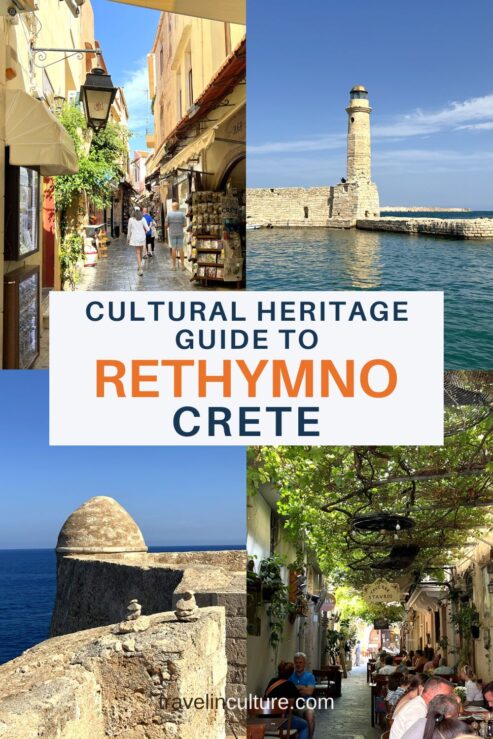




What to See in Rethymno Town, Crete: 7 Historic Highlights
By ANL | UPDATED:
What to See in Rethymno Town – Crete Travel Guide
1. Fortezza Fortress
2. Rethymno Old Town
3. Venetian Harbour and Lighthouse
4. Venetian Architecture – Mansions & Fountains
5. Ottoman Architecture – Wooden Balconies & Mosques
6. Archaeological Museum of Rethymno
7. Petres Coastal Charm
Rethymno Town is one of the most rewarding destinations in Crete for travellers interested in history, architecture, and local atmosphere. Combining Venetian elegance, Ottoman influences, and a relaxed Cretan character, the town offers a fascinating glimpse into several centuries of Mediterranean history.
In this Rethymno travel guide, we explore what to see in Rethymno through seven historic highlights. From the imposing Fortezza Fortress and the picturesque Venetian Harbour to hidden alleyways, mosques, museums, and the nearby coast at Petres, these attractions reveal why Rethymno Old Town is often considered one of the most beautiful and authentic places to visit in Crete.
For a stay close to the historic sights of Rethymno’s Old Town, you might consider the Casa di Gaga Luxury Suites, an excellent choice with a high guest rating, right in the heart of the city. If visiting Heraklion, we found the Kronos Hotel very convenient for exploring the Venetian fortress of Koules at both dawn and sunset – two completely different experiences.
Rethymno vs Chania: Why Rethymno Town Is the Better Choice in Crete – Cultural Travel Guide
While both Rethymno and Chania boast Venetian harbours, charming streets, and rich history, we quickly discover why Rethymno stands out as Crete’s most atmospheric historic town. Its compact, walkable old town is filled with Venetian and Ottoman architecture, beautiful churches, winding alleys, and local Cretan restaurants, making exploring on foot both easy and genuinely enjoyable.
Fortezza Fortress.
Unlike Chania, which can feel more touristy, Rethymno (also historically known as Rethymnon, Retimo during the Venetian era, and Resmo under Ottoman rule) combines historic Venetian and Ottoman architecture with a relaxed, authentic charm and vibrant local character. Its beaches, nearby gorges, and scenic coastline make Rethymno particularly appealing, allowing visitors to enjoy both cultural exploration and seaside or nature experiences.
For travellers who enjoy combining history, architecture, and local traditions, our cultural travel method explains how to uncover the deeper stories behind destinations such as Rethymno.
In this travel guide, we share our personal take on Rethymno, highlighting the Venetian and Ottoman eras that helped shape the city’s character, while recognising that the town has many other historical layers to explore, for instance through its numerous churches.
1. Fortezza Fortress – The Iconic Venetian Citadel
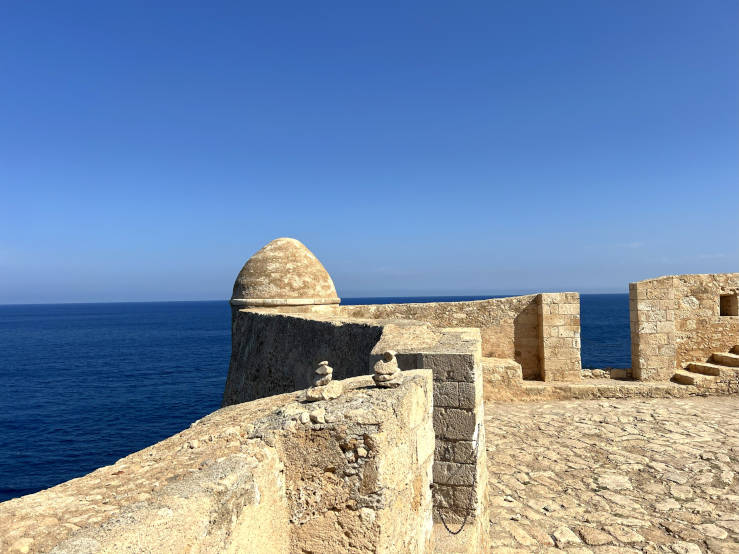
Photo: Travel In Culture
Dominating the skyline above Rethymno town, the 16th-century Fortezza Fortress, with its imposing walls and bastions, is the city’s most recognisable landmark. As we make our way up to the massive citadel, we imagine the Venetians building it on the hill of Paleokastro, a project undertaken between 1573 and 1580. It was constructed to defend the town, then part of the Kingdom of Candia, against pirates and Ottoman attacks. The Venetians had ruled Crete since the early 13th century, but the fortress could not prevent the Ottoman conquest, and Rethymno fell to the Turks in 1646.
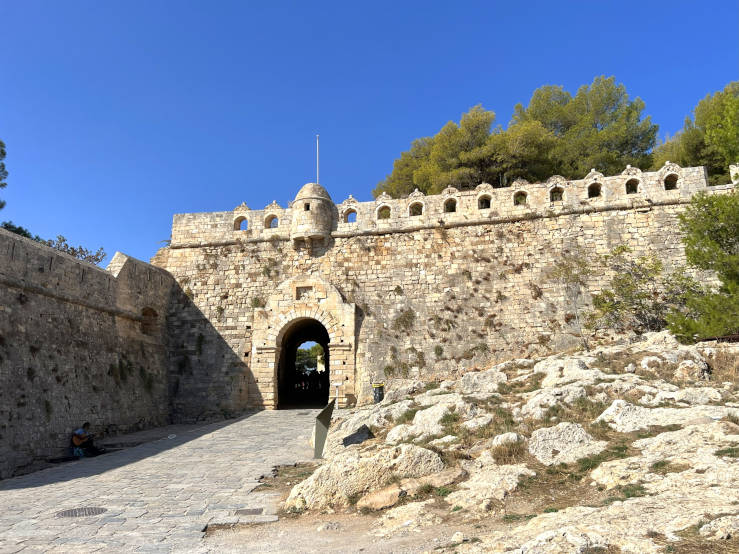
Fortezza Fortress dominates the skyline above Rethymno Town in Crete.
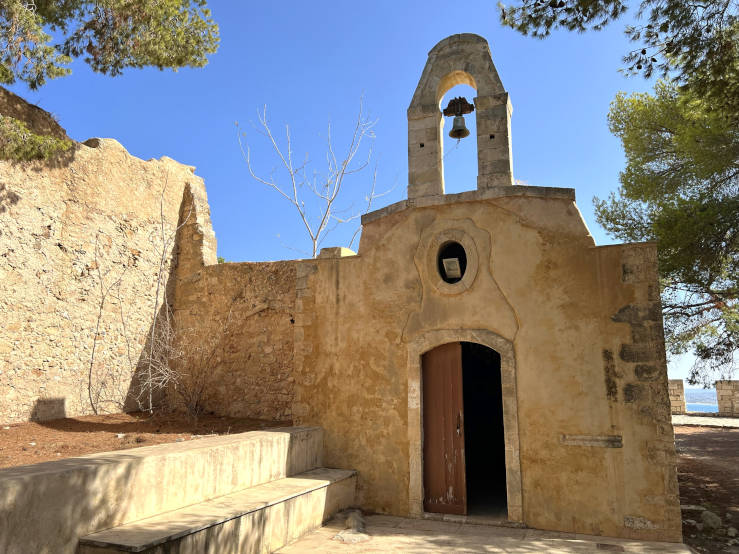
Walking up to the eastern entrance offers panoramic views of the Aegean Sea, while approaching from the town centre is gentler and more straightforward. Inside the fort, wandering along thick stone walls and massive bastions, we pass the remains of storerooms and the commander’s house, imagining the soldiers patrolling here centuries ago, and pausing at the small church that was converted into a mosque under Ottoman rule.
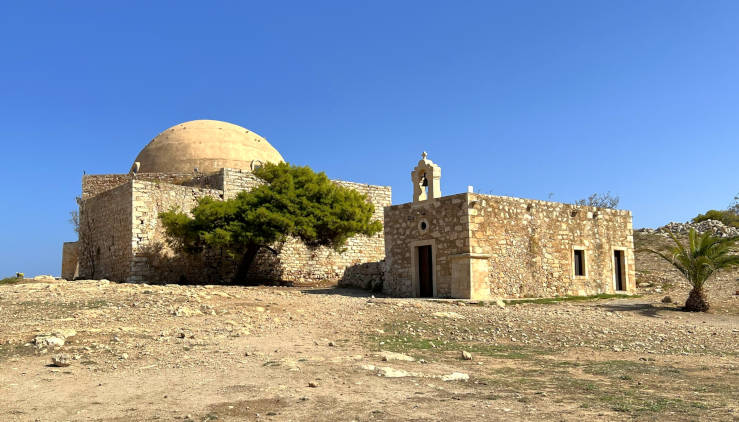
Fortezza Fortress.
Today, the fortress appears picturesque and tranquil, a striking contrast to the battles and sieges that once unfolded within its walls. Exploring the fortress is an excellent way to experience the heart of the historic town of Rethymno and discover an essential part of Crete’s heritage.
2. What to See in Rethymno Town – Old Town Historic Atmosphere
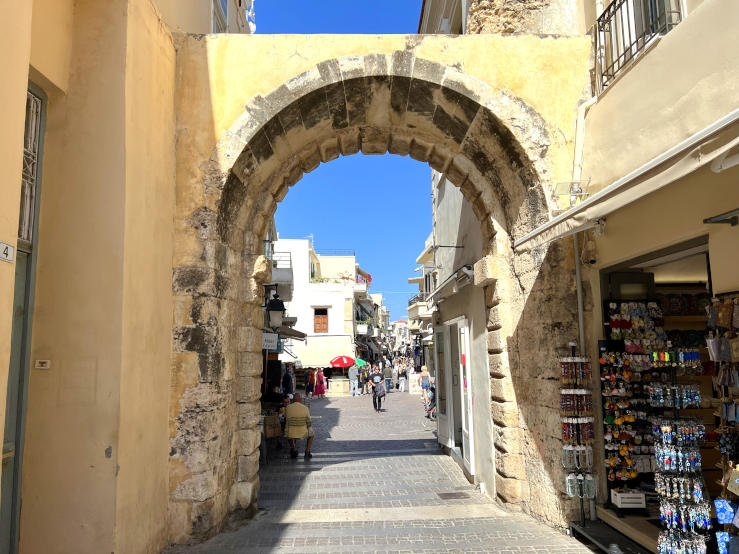
The Guora Gate.
Rethymno’s Guora Gate, the last surviving gate of the 16th-century Venetian walls, serves as the gateway to the Old Town.
Strolling through the narrow streets of Rethymno Old Town, dating mainly from the 13th to 17th centuries, we pass well-preserved Venetian mansions and characteristic Ottoman-era buildings.
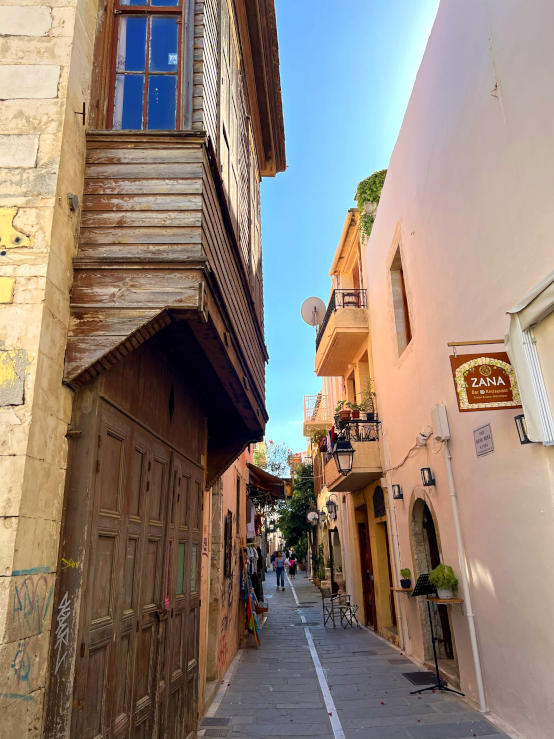
Traces of the Ottoman architectural style in the Old Town.
When we peek into courtyards and at weathered façades, we clearly notice the blend of cultures that shaped this historic town, from the Republic of Venice’s rule (1209–1669) to the Ottoman period (1646–1898).
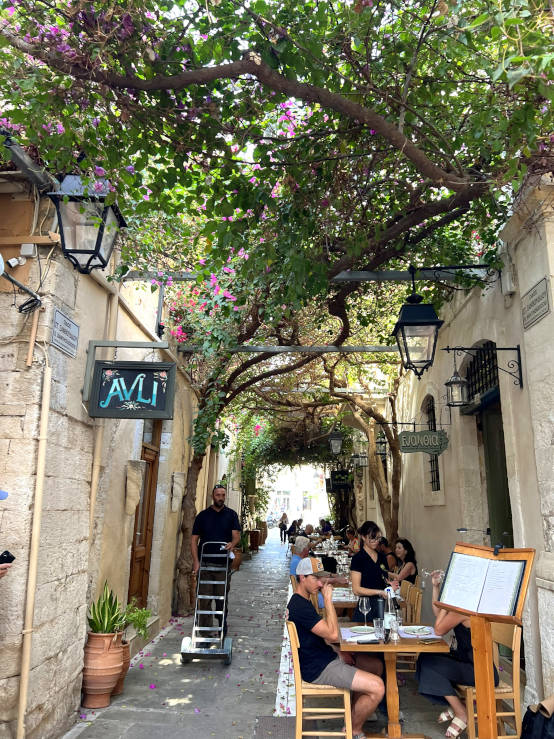
Photo: Travel In Culture
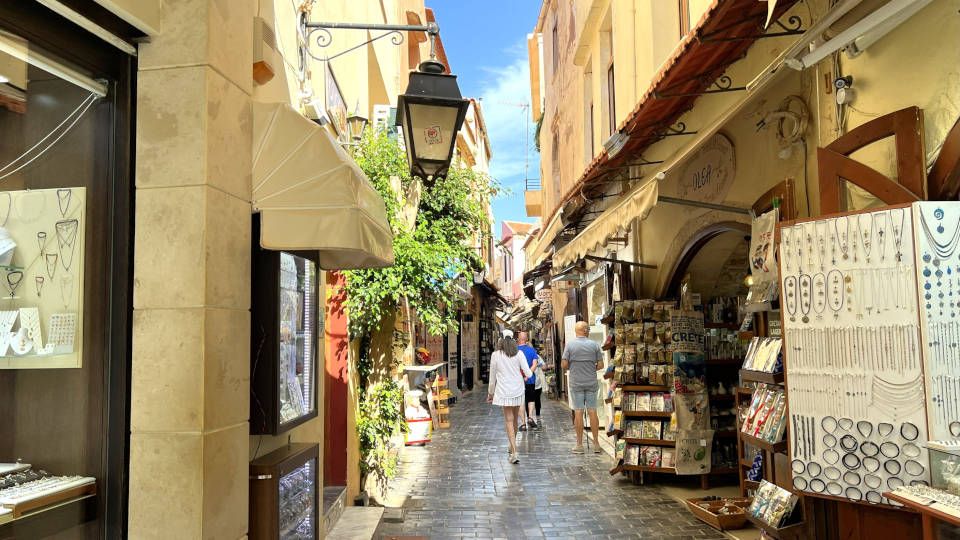
In the labyrinthine lanes of Rethymno’s Old Town, Venetian and Ottoman influences merge in stone and colour. Wooden balconies overlook cobblestone alleys lined with small boutiques, cafés, and art galleries. Turning away from the more crowded streets, we find quieter passages where the architecture catches the eye with original details.
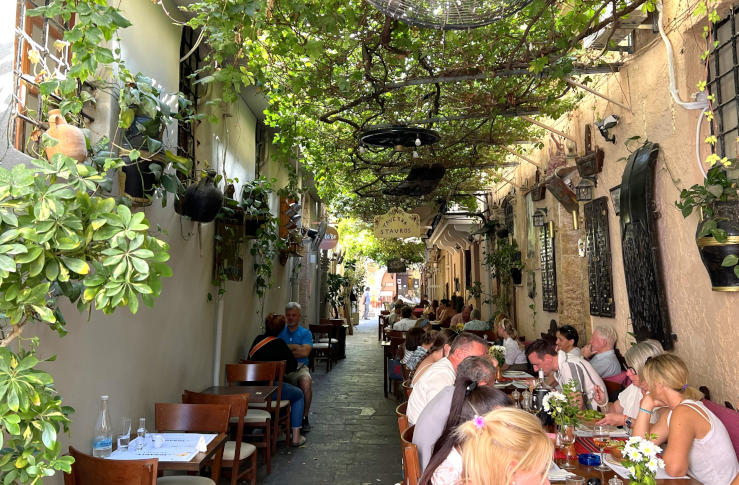
Photo: Travel In Culture
Reaching the point where we are ready to stop for a meal, finding a restaurant with a genuine Rethymno atmosphere is not difficult. Tables spill into the historic lanes, creating a setting that feels unmistakably authentic.
3. Venetian Harbour and Lighthouse – Waterfront Charm
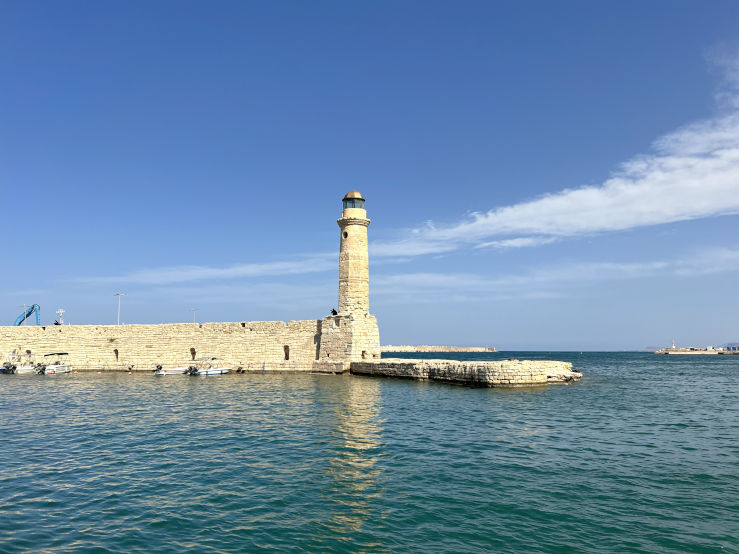
The Venetian Lighthouse stands in the Venetian Harbour of Rethymno.
While walking along Rethymno’s Venetian Harbour, we discover rows of pastel-coloured buildings and lively Cretan tavernas lining the waterfront. At the end of the pier, the lighthouse, rebuilt by the Egyptians in 1830 during their brief rule of Crete, stands sentinel over the harbour. Rising from a stone base built by the Venetians, its slender, graceful shape recalls the design of minarets, reflecting the blend of cultures that shaped Rethymno and Crete. Today, it is an iconic and eye-catching landmark of the city.
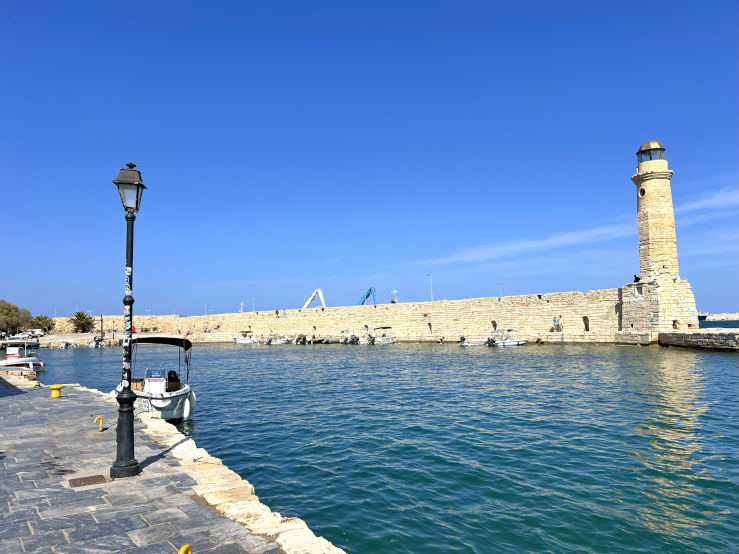
Photo: Travel in Culture
Pausing by the water, we notice the Venetian details in the façades and the wrought-iron balconies with wooden shutters. Whether visiting during the day or as the lights come on in the evening, the harbour of Rethymno town is a charming spot to experience the city’s historic character.
4. Venetian Architecture – Mansions, Fountains, and Decorative Details
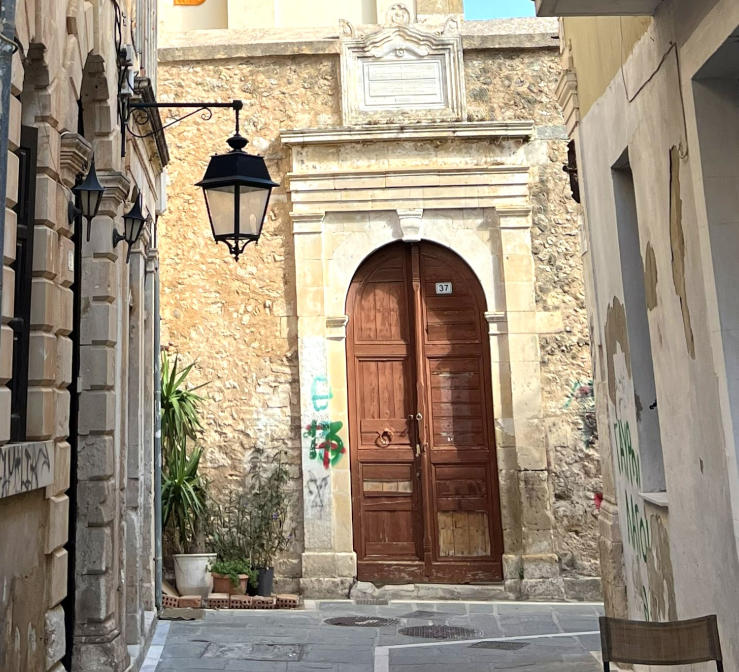
Photo: Travel In Culture
As we explore the winding streets of Rethymno Old Town, we discover Renaissance-inspired façades at every turn. Elegant Venetian houses from the 13th to 17th centuries catch our eye, with arched doorways and stone frames often bearing family crests, symmetrical proportions, and classical details such as columns and pilasters, as well as balconies with wooden shutters and wrought-iron railings. The use of local limestone and soft pastel colours gives the streets a distinct charm, while inner courtyards and arched passageways hint at the lives of wealthy Venetian merchants who once lived here.
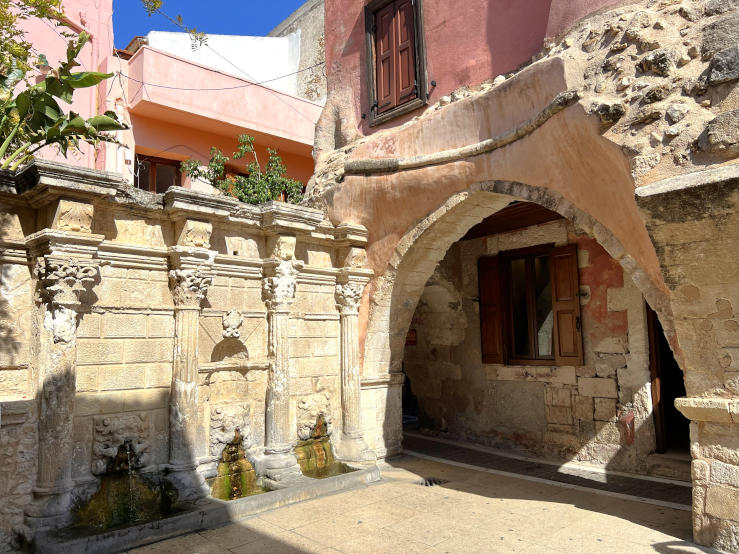
The Rimondi Fountain.
Stopping in the main square, we admire the Rimondi Fountain with detailed carvings, built in 1626, where lion-heads serve as waterspouts, a quiet reminder of Venetian artistry. A short stroll brings us to the Venetian Loggia, an elegant arcade once used for public gatherings, offering a glimpse into Rethymno’s civic life during the Renaissance.
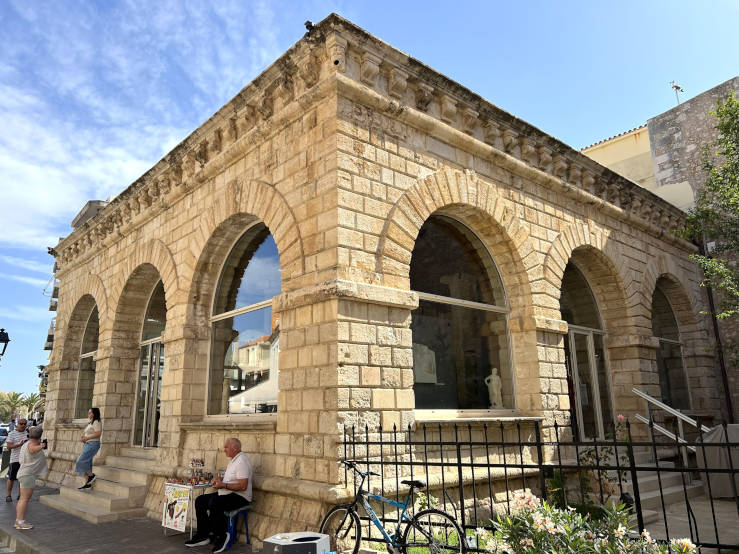
The Venetian Loggia.
The further we wander through the Old Town of Rethymno, the more historic Venetian mansions, arcades, and loggias come into view, reflecting the city’s wealth and unique character under Venetian rule in Crete.
5. Ottoman Architecture – Wooden Balconies, Mosques & Bathhouses
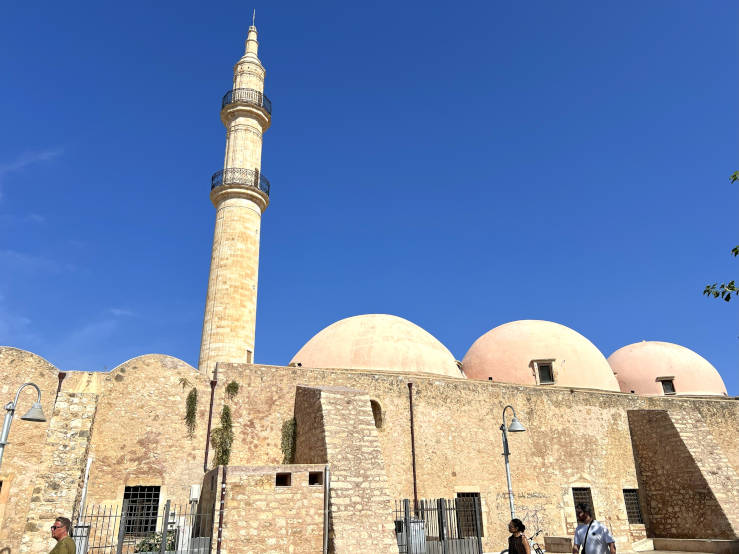
The Neratze Mosque.
Turning a corner, we discover the Neratze Mosque with its striking minaret, one of the finest examples of Rethymno’s traditional Ottoman architecture. Originally built as a Venetian church in the 17th century, it was later converted into a mosque, like many other Venetian churches, when the Ottomans conquered Rethymno town. Its tall minaret and characteristic domes still dominate the skyline, while the former mosque is today part of the city’s cultural scene, serving as a music conservatory and venue for concerts and cultural events. As we pass, delicate tones of music drift out through the small window openings, bringing a living presence to the historic building.
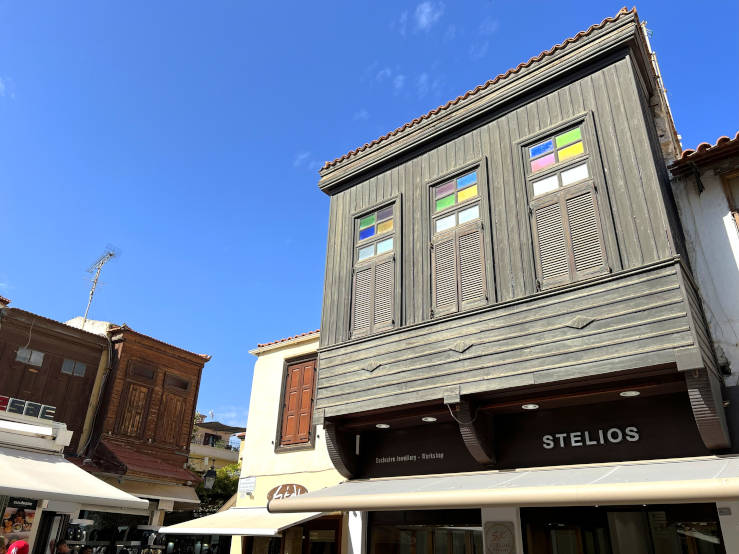
Ottoman wooden balcony added to an existing Venetian house façade.
The Ottoman-era architecture (17th–19th century) introduced new elements to Rethymno’s historic town, distinct from the earlier Venetian style. Wooden extensions and upper floors were added to existing Venetian house façades, creating a fusion of architectural traditions where Ottoman elements merged with Renaissance design. This hybrid character remains surprisingly visible throughout Rethymno today, where the interplay of influences gives the town its distinctive charm and historic atmosphere.
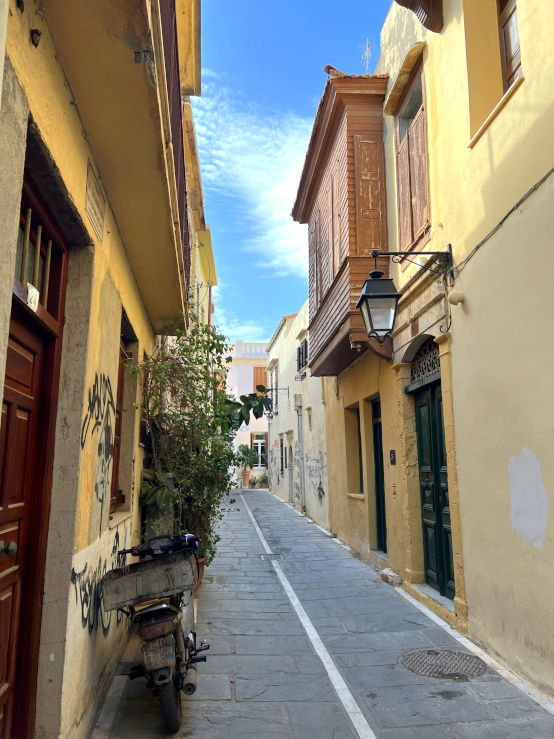
Ottoman architecture.
Wandering the nearby streets, we notice clear traces of the Ottoman era in overhanging wooden balconies and the occasional Turkish bathhouse (hamam), reflecting Ottoman traditions. The latter still provides a unique cultural experience, giving us a sense of stepping back into Ottoman times, when Rethymno’s historic town thrived with everyday life.
6. Archaeological Museum of Rethymno – from Minoan to Roman Times in Crete
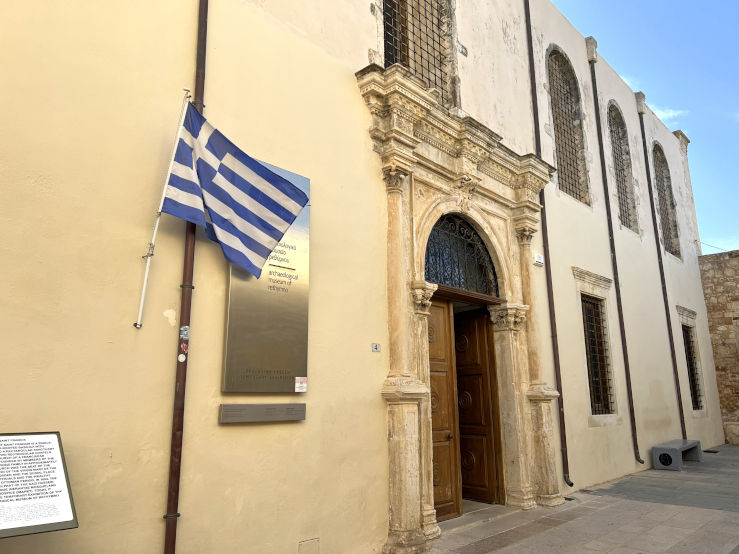
The Archaeological Museum.
Located near the Fortezza, the Archaeological Museum of Rethymno is a captivating stop. In its galleries, you will encounter Minoan pottery (2000–1450 BCE), Classical Greek statues, and Roman artefacts (1st–4th century CE).
Displays of jewellery, coins, and classical sculptures offer a detailed insight into Crete’s deep history. The museum provides historical context for the ancient remains that can be explored in Rethymno and beyond, revealing the secrets of centuries of civilisation in Crete.
To continue exploring Crete’s rich history, consider combining Rethymno with our Crete itinerary featuring Heraklion, Knossos and Archanes, which covers some of the island’s most important Minoan and historical sites.
7. Petres Coastal Charm – Million-Year-Old Rocks and Sea Views
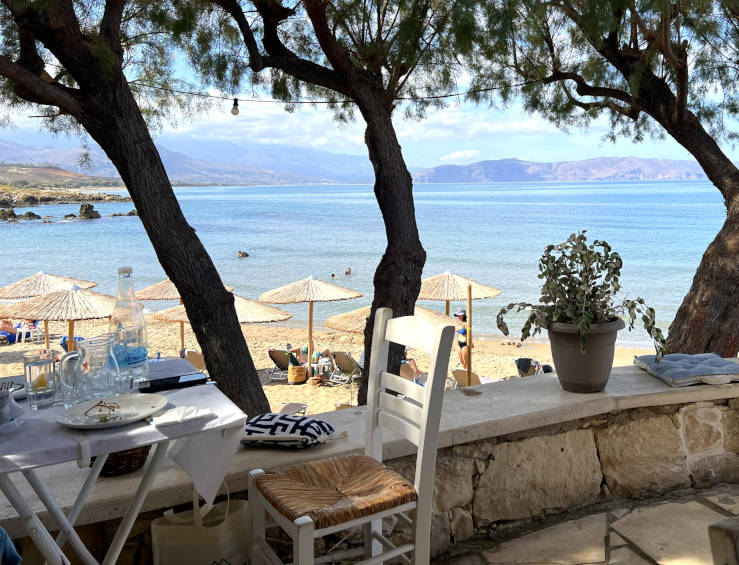
Photo: Travel In Culture
For an out-of-town experience that complements our visit to Rethymno, we take a short trip along the coast just outside the city — a lovely way to round off our stay. It is also a chance to enjoy some of Crete’s charming small beaches, set in a scenic landscape shaped over millions of years.
Photo: Travel In Culture
Just west of Rethymno, Petres Beach offers a refreshing coastal escape from the town’s historic lanes. The rocky shoreline and clear turquoise waters make it a favourite for swimming, snorkelling, or simply soaking in the picture-postcard seascape, with the mountains forming a striking backdrop. The beach also has a few small tavernas and a hip, Route 66–style beach bar serving Cretan specialities in a relaxed, sun-bleached setting.
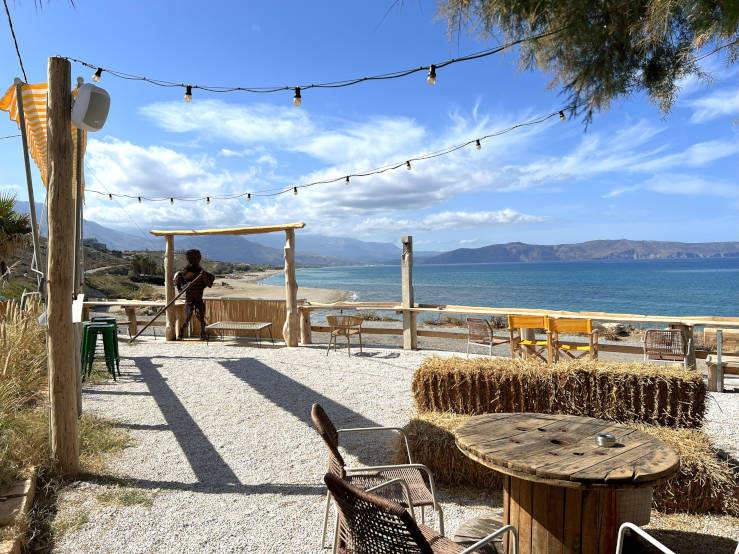
Photo: Travel In Culture
We decide to extend our stay in Crete, booking a seaside apartment here at Petres, just outside Rethymno, for a few days to enjoy the Greek late summer — when the sea still holds its welcoming warmth. To our surprise, the property even has access to its own small, local beach! True to the spirit of Greece, our hosts show us extraordinary hospitality!
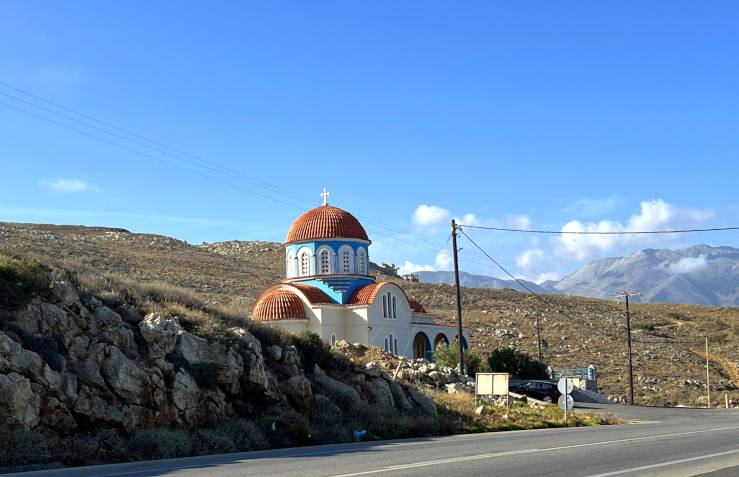
Petres local church.
We also want to explore the landscape behind the coast and have read that a small church marks the start of a trail into the gorge along the river. The gorge is said to be narrow and beautiful, but we only manage to go a short way, as a fence has been put up to keep goats and sheep from wandering onto the road. Instead, we are treated to an unexpected delight at the river mouth, where freshwater turtles paddle in the brackish water.
Frequently Asked Questions
What is Rethymno Town best known for?
Rethymno is best known for its well-preserved Venetian and Ottoman architecture, historic Old Town, Fortezza Fortress, and picturesque harbour.
Is Rethymno worth visiting in Crete?
Yes, Rethymno combines cultural attractions, historic architecture, beaches, and a lively atmosphere, making it one of the most rewarding destinations in Crete.
How much time do you need in Rethymno Town?
One full day covers the main sights, but two to three days allow time to explore the Old Town, museums, beaches, and nearby attractions at a relaxed pace.
Can you walk around Rethymno Old Town?
Yes, the historic centre is compact and pedestrian-friendly, making it easy to explore its narrow streets, monuments, and squares on foot.
What is the Fortezza Fortress in Rethymno?
The Fortezza is a large Venetian fortress built in the 16th century to defend the town from pirate raids and military attacks.
What is the best time to visit Rethymno?
Spring and autumn offer pleasant temperatures and fewer crowds, while summer is ideal for combining sightseeing with beach activities.
Are there beaches near Rethymno Old Town?
Yes, several beaches are located within easy reach of the town, including the long Rethymno Beach and the scenic coastline around Petres.
What cultural influences shaped Rethymno?
The town was influenced by Venetian and Ottoman rule, which is reflected in its architecture, monuments, street layout, and cultural heritage.
Is the Venetian Harbour in Rethymno still active?
Today, the harbour is mainly used by fishing boats and leisure vessels and is one of the town’s most popular waterfront areas.
Can you visit Rethymno as a day trip?
Yes, Rethymno can be visited as a day trip from other parts of Crete, although staying overnight provides a better opportunity to experience its atmosphere.
If ancient Greek history fascinates you, you may also enjoy visiting the Oracle of Delphi, one of the most important religious centres of the ancient Greek world. You might also like to visit The Colossus of Rhodes.
Read next: Where to Stay in Athens Before Your Cruise