




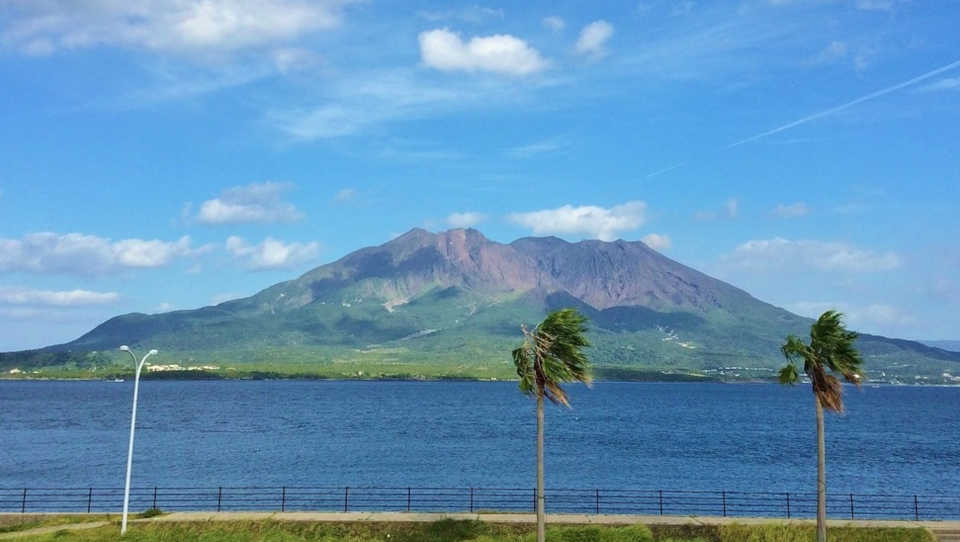
Sakurajima Volcano in Japan: History, Eruptions & Visiting Guide
By ANL | UPDATED:
1. Sakurajima Volcano: History and Formation
Sakurajima is an active stratovolcano located in Kagoshima Bay in southern Japan, just across the water from Kagoshima city. Rising 1,117 metres above sea level, it is one of the most active volcanoes in Japan and has shaped the culture, history, and daily life of the surrounding region for centuries.
The volcano is known for frequent eruptions, dramatic lava landscapes, fertile volcanic soil, and hot springs powered by geothermal activity. Visitors can reach Sakurajima easily by ferry from Kagoshima and explore observation points, lava trails, volcanic museums, and onsen baths while learning how local communities continue to live alongside one of Japan’s most powerful natural forces.
Sakurajima also reflects many of the ideas behind meaningful cultural travel, where geology, local traditions, and everyday life are deeply connected.
Many travellers combine a visit to Sakurajima with exploring the wider cultural attractions in Kagoshima, including samurai history, gardens, museums, and coastal viewpoints.
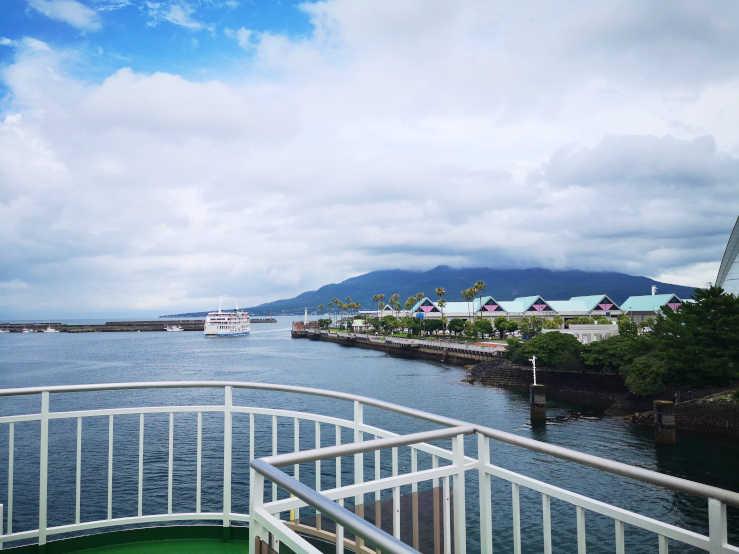
Kagoshima is linked to Sakurajima Volcano by ferries | Photo: Travel In Culture
Sakurajima is a compound active volcano dominated by Kitadake (North Peak) and Minamidake (South Peak). Minamidake is the principal active area today. It has had more or less constant eruptions since 1955.
The name Sakurajima includes the word ‘jima’, meaning island. Until 1914, Sakurajima was truly a volcanic island at Kagoshima on the southern tip of Japan, but in this last major eruption, a connection to the mainland was established by the solidified lava – and Sakurajima became a peninsula.
🌋 One of Japan’s most active volcanoes located beside Kagoshima city
⛴️ Easy ferry access from Kagoshima Port in around 15 minutes
🔥 Famous for the major 1914 eruption that reshaped the landscape
♨️ Experience volcanic foot baths, lava trails, and onsen hot springs
🥾 Popular for observation points, hiking routes, and volcanic scenery
🌱 Fertile volcanic soil supports local farming and giant Sakurajima radishes
🏛️ Learn about eruptions and geology at the Sakurajima Visitor Centre
2. The 1914 Taisho Eruption
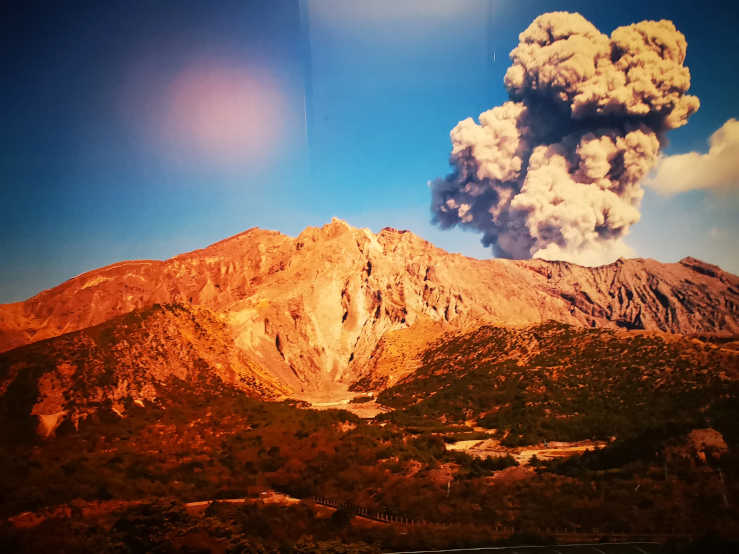
Sakurajima Volcano viewed at the Sakurajima Visitor Center | Photo: Travel In Culture
However, a major, disastrous eruption occurred in January 1914 (the Taisho eruption). The eruption was preceded by strong earthquakes, and residents were evacuated as volcanic activity intensified. The eruption produced enormous quantities of ash, pumice and lava, profoundly changing the landscape of Sakurajima. The Imperial Navy also contributed with ships.
In the course of two days, a fissure opened, and gas, ash and pumice stone were ejected in an ear-splitting explosion. The roar could be heard all across Kyushu.
Within a few days, the ashfall reached most of Japan.
Sakurajima – meaning cherry blossom island.
Yet another earthquake occurred, causing both houses to collapse, even in Kagoshima City, and producing a tsunami. A second, large 7.1 magnitude quake followed, in which lava poured out and buried houses, villages, and large areas of farmland.
The eruption affected communities on both Sakurajima and the surrounding Kagoshima area, while evacuations helped reduce the human impact of the disaster.
The lava flow over the following weeks was so immense that it caused a permanent connection to the mainland. The eruption also caused major changes to the island’s landscape and geology.
3. Living with an Active Volcano
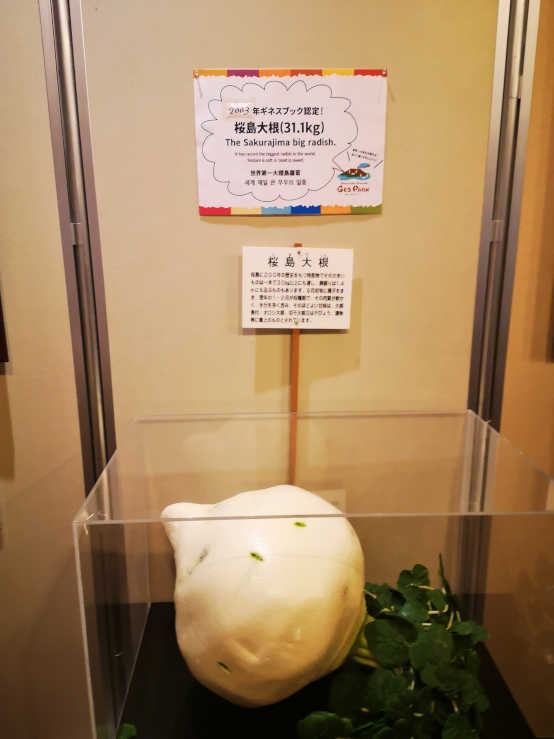
The fertile volcanic soil sometimes produces unbelievable products such as this gigantic radish | Photo: Travel In Culture
The 1914 lava flows connected Sakurajima permanently to the Osumi Peninsula, creating today’s road connection. Communities continue to live and farm in the volcanic landscape while adapting to the risks associated with an active volcano. Volcanic soils support agriculture, while geothermal resources contribute to the area’s hot springs and tourism.
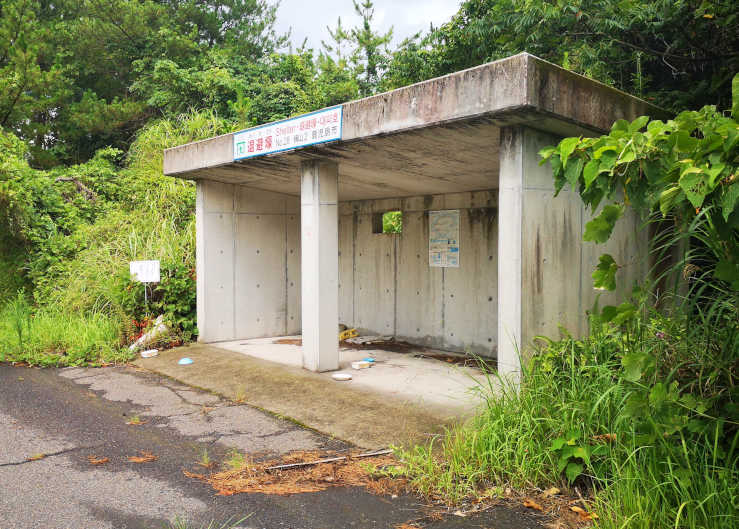
Shelter where the islanders can seek cover from ash and other volcanic material from Sakurajima Volcano in emergencies | Photo: Travel In Culture
So, what is it like living around Sakurajima today – does the volcano and its frequent activity impose restrictions on people? Without a doubt, the level of alertness is high, and the residents take the forecasts of eruptions into account daily and close their windows when there is ash in the air. Also, there are annual evacuation drills to prepare for the next large-scale eruption.
The island children wear helmets (and sometimes face masks) to protect themselves from debris – e.g. when they go to school in the morning and return in the afternoon. The locals regularly clean and sweep their properties and roads and find ways to live as normally as possible. They have adapted their way of life to the temperament of the volcano!
4. Volcanic Landscape and Hot Springs
From the summit and down to sea level, there is a changing vegetation, ending with black pine and bay trees along the coastline. Different lava flows have resulted in different kinds of vegetation.
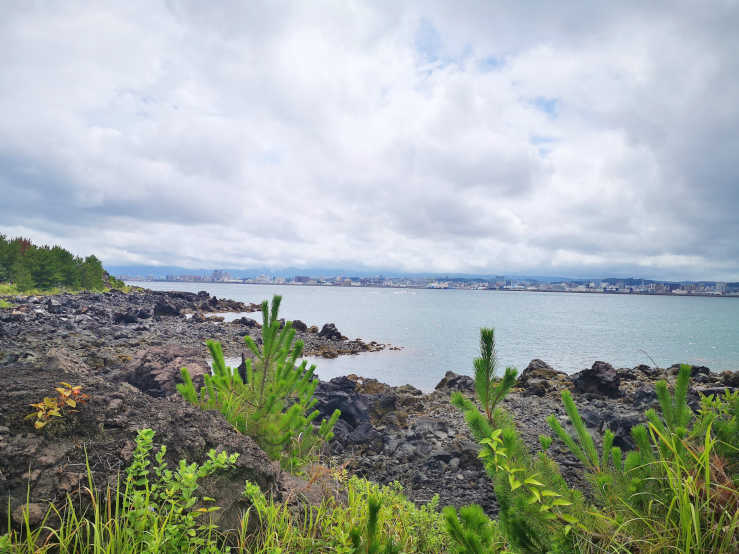
Nagisa Lava Trail.
The settlers at Sakurajima have always benefited from the volcano – the fertile soil for cultivation, the ashes for various kinds of industrial products, the hot springs for relaxation and as an energy source, and in recent years, the volcanic area for tourism.
Despite the risks associated with volcanic activity, communities continue to live and work around Sakurajima, adapting everyday life to the volcano’s presence.
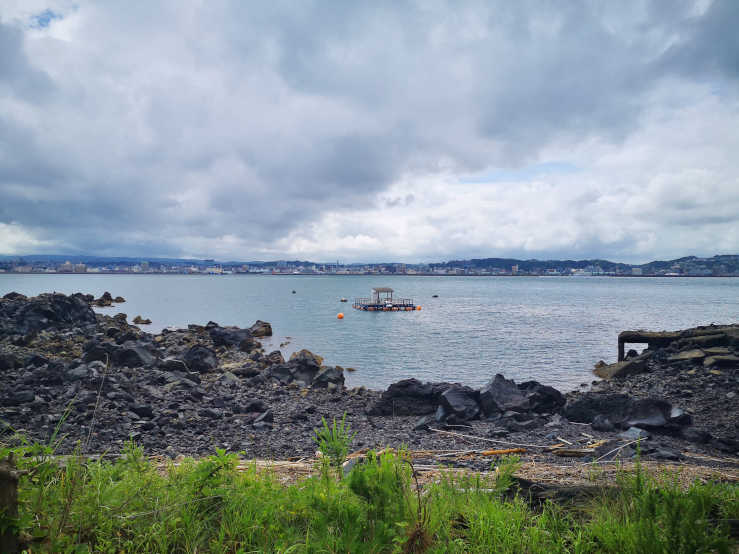
Coastal lava landscape at the volcano peninsula.
Over time, the volcano has become a focal point of exploration and adventures, such as biking, climbing, and hiking along the hillsides. Moreover, geothermal activity also provides natural hot springs, including the 100-metre-long footbath at Yogan Nagisa Park near Sakurajima Port.
Other tourist activities include pottery making, the use of volcanic ash, and cooking classes that use lava rock ovens.
5. Future Eruptions and Monitoring
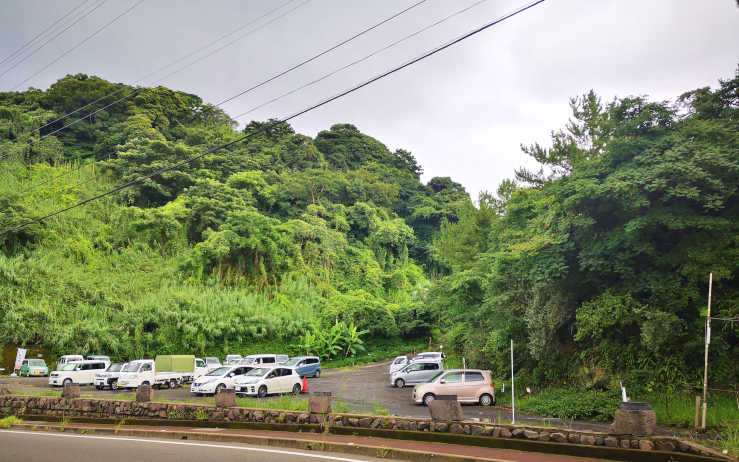
The lush forest at Sakurajima Volcano.
Sakurajima remains under continuous volcanic monitoring, and authorities maintain evacuation plans and other measures because activity can change. The timing and scale of any future major eruption cannot be predicted precisely.
They are digging canals for likely mudslides down the slopes to try to control how the lava will flow when the anticipated eruption occurs.
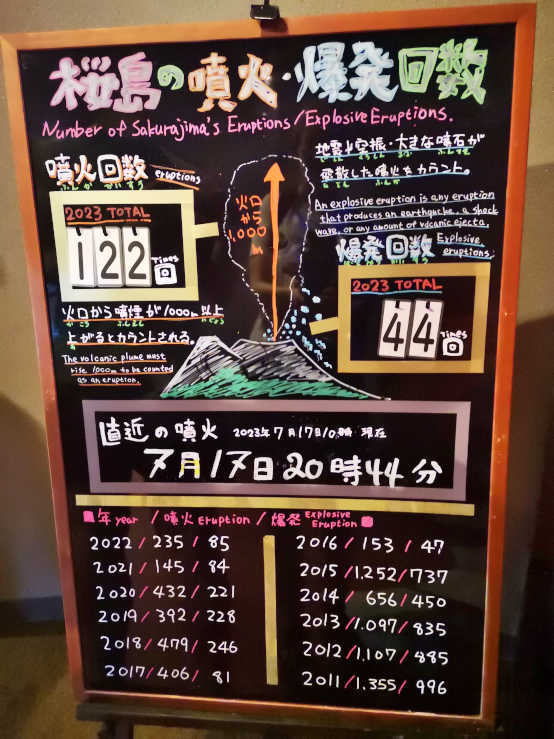
The number of eruptions is thoroughly monitored.
The level of preparation is much higher today than a hundred years ago, with early warning mechanisms in place. Rumblings and other changes in the magma chambers are monitored, and evacuation plans are ready.
All data are thoroughly analysed, and predictions are made. Sakurajima remains under constant scientific monitoring because volcanic activity can intensify with little warning. Volcanic thunderstorms and lightning in the rising ash clouds have been observed several times. Because Sakurajima is an active volcano, volcanic activity can change, and visitors should check current official warnings and access information before travelling.
6. Visiting Sakurajima
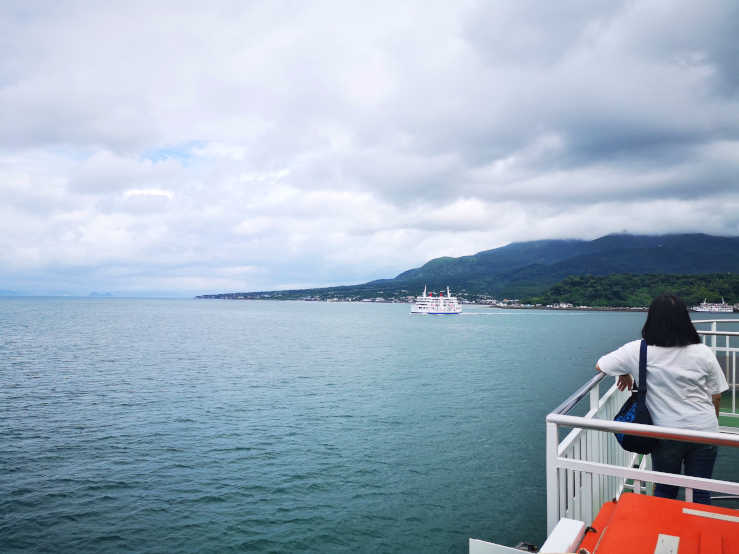
The ferry approaches the volcano island from Kagoshima.
To visit the island (or rather the peninsula), there are frequent ferry connections from Kagoshima – and access by road from the southwestern access point. Many visitors arrive by ferry from Kagoshima since it is both fast and convenient when arriving at Kagoshima by Shinkansen.
Visitors arriving by Shinkansen often continue south from Fukuoka to Kagoshima before taking the short ferry to Sakurajima.
Near Sakurajima Port, several attractions introduce visitors to the volcano’s history and landscape, including the Sakurajima Visitor Center, Nagisa Lava Trail, and Nagisa Park Foot Bath.
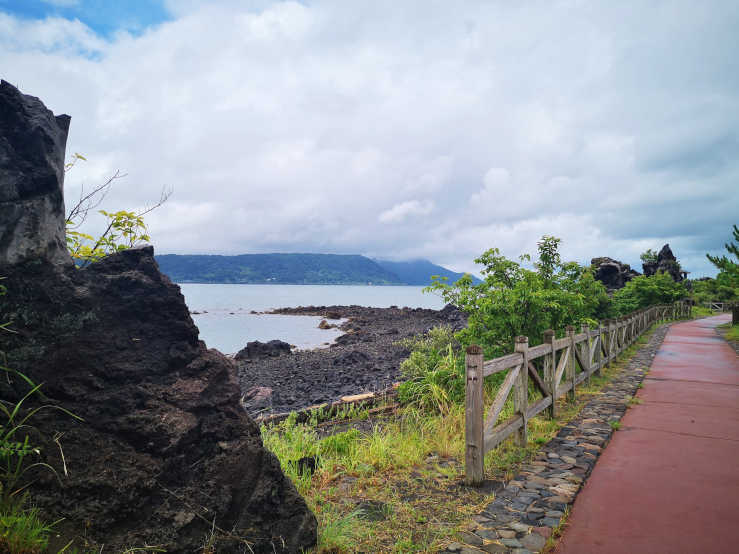
Nagisa Lava Trail.
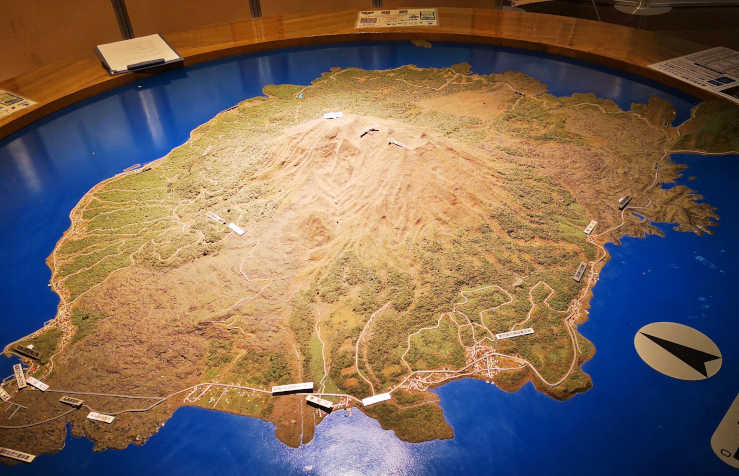
There is the Sakurajima Visitor Centre where the story of the volcano is told. Visiting is an excellent opportunity to get an introduction to the geographical changes and learn about the transformation of the ecosystem, marine biology, and plant life, as well as the geothermal and agricultural benefits the island residents derive from the volcanic soil.
Close to the Visitor Centre, everyone is invited to try the thermal foot baths (Nagisa Park Foot Bath). Also, the adjacent Magma Onsen has hot springs you can try. The Nagisa Lava Trail follows the volcanic coastline and offers an accessible way to see lava landscapes close to the ferry terminal.
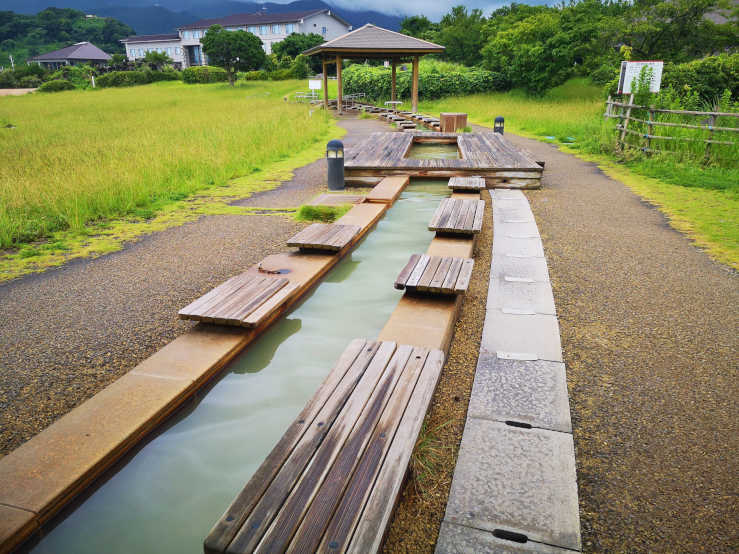
Nagisa Park Foot Bath | Photo: Travel In Culture
Visitors can explore designated trails and observation points on Sakurajima, while access to areas closer to the active crater is restricted. For higher views, the Yunohira Observatory is the highest point on Sakurajima accessible to visitors. You can also take one of the island buses further along the coast to experience more of the peninsula. The Sakurajima Island View Bus is a loop bus to the Yunohira Observation Point and back.
With Sakurajima International Volcanic Sabo Centre as an exhibit facility, visitors and locals will get a chance to learn about the volcanic activity on the island. It also serves as an evacuation facility in case of an emergency situation.
Sakurajima forms part of the wider volcanic and cultural landscape explored in our Japan travel guide, covering destinations across Kyushu and the rest of Japan. If you decide to travel around Japan by train, a Japan Rail Pass may prove valuable.

7. Practical Information for Visiting Sakurajima
Ferries run frequently between Kagoshima Port and Sakurajima Port, with the crossing taking about 15 minutes. Visitors should check volcanic activity updates before travelling since access restrictions can occasionally change depending on eruption levels.
Most attractions around the peninsula are reachable by bus, car, or organised tours. Comfortable walking shoes are recommended because volcanic ash and uneven lava terrain can make some paths slippery.
Frequently Asked Questions About Sakurajima Volcano
Is Sakurajima Volcano active?
Yes. Sakurajima is one of the most active volcanoes in Japan and experiences frequent eruptions and ash emissions.
Where is Sakurajima located?
Sakurajima is located in Kagoshima Bay in southern Kyushu, Japan, across the water from Kagoshima city.
Can you visit Sakurajima Volcano?
Yes. Visitors can reach Sakurajima easily by ferry from Kagoshima and explore observation points, lava trails, museums, and hot springs.
How do you get to Sakurajima?
Frequent ferries connect Kagoshima Port with Sakurajima throughout the day. The crossing takes around 15 minutes.
What happened during the 1914 eruption?
The 1914 Taisho eruption caused massive lava flows, earthquakes, and ashfall that permanently connected Sakurajima to the mainland.
Is Sakurajima safe to visit?
Sakurajima is a visitor destination with monitoring and emergency measures in place, but it remains an active volcano. Conditions and access restrictions can change, so check the latest official volcanic activity and local safety information before visiting.
What can you see on Sakurajima?
Popular attractions include the Nagisa Lava Trail, observation points, volcanic museums, hot springs, lava fields, and coastal scenery.
Why do people live near Sakurajima?
The volcanic soil is highly fertile, and the region benefits from agriculture, geothermal resources, tourism, and hot springs.
What is the best time to visit Sakurajima?
Spring and autumn usually offer the most comfortable weather for sightseeing and outdoor activities.
Other places to explore around Sakurajima include Karasujima Observatory, Arimura Lava Observatory, Koike View Park, Kurokami Buried Shrine Gate and Sakurajima Nature Dinosaur Park. The peninsula also contains historic monuments, lava fields and other traces of its volcanic and cultural history.
Read next: Where to Stay in Fukuoka and Walk Tokyo Rainbow Bridge & Visit the Statue of Liberty

Images courtesy of Travel In Culture. Selected images from Pixabay.