




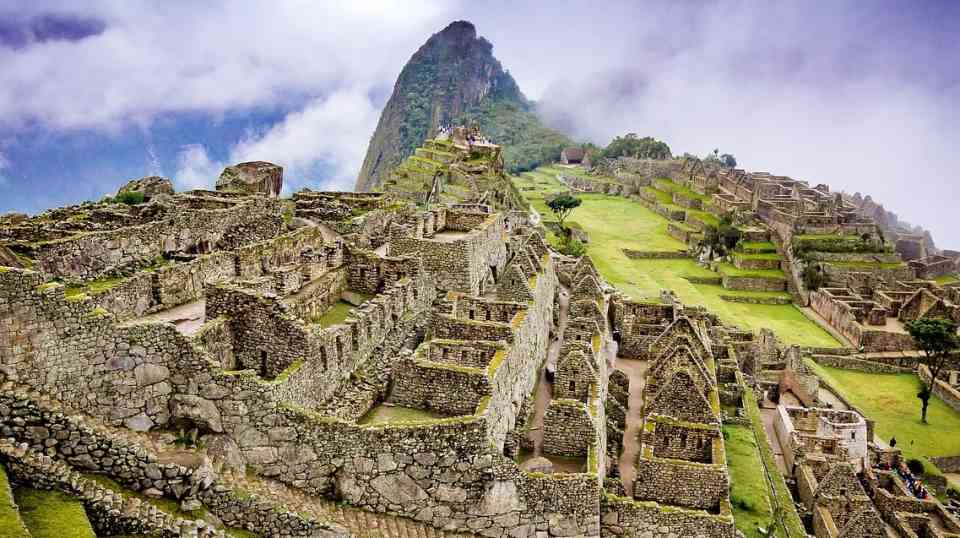
Experience the Mythic Inca Culture on Machu Picchu Mountain
By ANL | UPDATED:
The Mythic Inca Culture on Machu Picchu Mountain
1. Train Trip to Machu Picchu Mountain
2. Aguas Calientes at the Foot of the Mountain
3. Visit Machu Picchu – the Lost Mountain City
4. Inca Design, Spirituality & Legacy
5. Inca Culture Alive in Stone
The first part of our guided two-day tour to Machu Picchu Mountain is covered in our related article: Exploring the Sacred Valley
1. Boarding and Train Journey — Expectation in Motion
After exploring the Inca ruins at Ollantaytambo, our local guide for the two-day Machu Picchu trip, Henry (an anglicised version of his Quechua name), leads us to the train station and we say farewell to our reliable driver. By the end of that first day, after exploring in the Sacred Valley, we begin to sense the first stirrings of ancient heritage. Approaching the journey with attention to context and continuity transforms a visit into a deeper experience, reflecting a more thoughtful approach to cultural travel. We prepare ourselves for our Machu Picchu trip, soon to reach Machu Picchu Mountain.
We appreciate how much of Inca heritage our tour operator managed to include in this two‑day itinerary, while still giving us time to explore each site at our own pace.
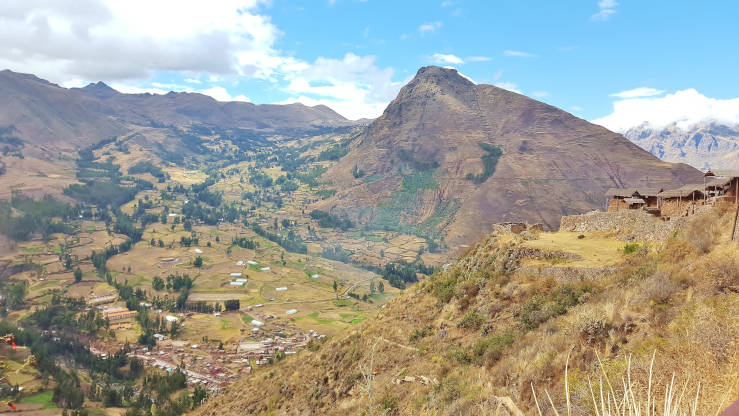
The trip to Machu Picchu passes through the Sacred Valley.
Our guide explains that the only real alternative to the tourist train is a long detour: bus from Cusco to the hydro‑electric station, then a 2–3 hour walk along the tracks to Aguas Calientes. Many backpackers use this Hydroeléctrica route to Machu Picchu because it is far cheaper than the train. Henry warns us, though, that the final leg involves walking beside active railway tracks, which feels uncertain and demands caution (and may not be entirely ‘legal’).
According to Henry, the Peruvian authorities could build a road to Aguas Calientes, which would make access far cheaper and easier. That has not happened so far, possibly because the tourist‑train system generates significant revenue. Whether this is the full explanation or if other factors play a role is hard to know.
We hold tickets for the regular tourist train from Ollantaytambo to Aguas Calientes, the town at the foot of the Machu Picchu mountain. Even though we have not chosen the more luxurious Vistadome or Hiram Bingham options, the fare for this Machu Picchu tour remains substantial. Henry reminds us that only Peruvian nationals have access to a cheaper local‑train route. Foreigners must use the standard tourist service.
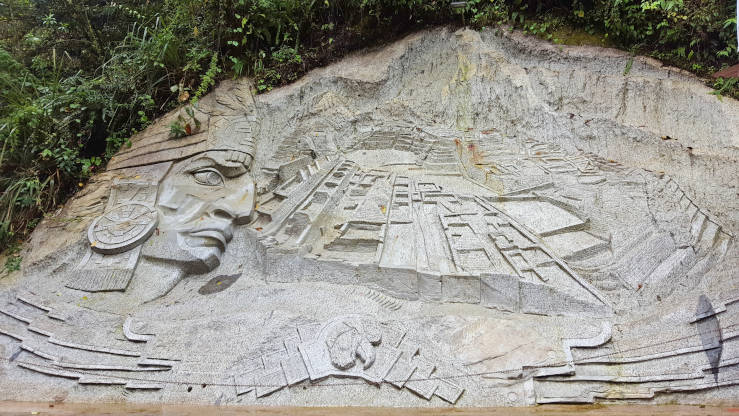
Introduction to Machu Picchu and the Inca culture.
At the station we lift our small backpacks from the van and walk to the platform where the train is scheduled. As Henry advised, we carry only what is strictly necessary for this Machu Picchu visit, leaving the rest behind at our hotel in Cusco.
Boarding is stricter than any other Peruvian train: passport and reservation must match exactly, or you miss the trip to Machu Picchu. We must memorise our seat number since our paper reservation is kept by staff during the ride.
Organised guided experiences to Machu Picchu and the surrounding Inca landscape can be found below, including expertly led tours of the citadel:
2. Aguas Calientes – A Mountain Town at the Foot of the Machu Picchu Ruins
The train winds through the lush Urubamba Valley, tracing the river and slicing through dense jungle as it climbs toward the Andes. Gradually the valley falls away, the air grows humid under thick vegetation, and the engine slows. After a couple of hours the train pulls into the station and we step out into Aguas Calientes, the small mountain town at the foot of Machu Picchu Mountain, officially called Machu Picchu Pueblo. It is a small settlement of just a few thousand inhabitants, clustered along the river and train line, and, as mentioned earlier, reachable only by train or on foot.
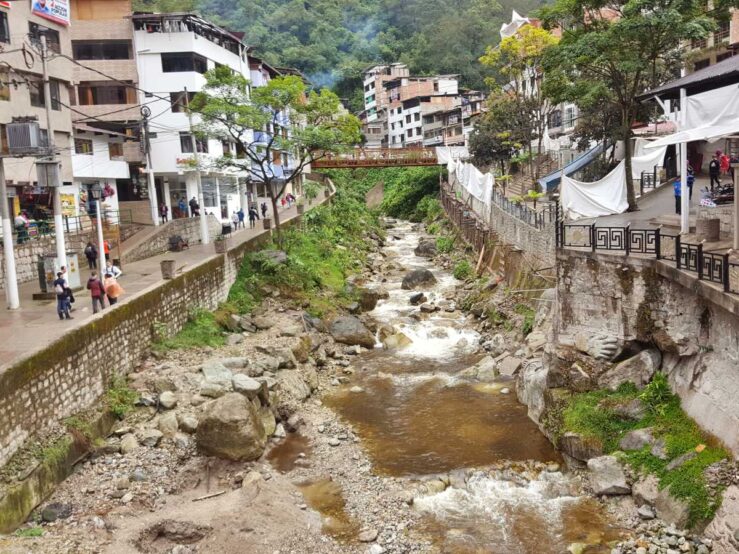
Aguas Calientes River | Photo: Travel In Culture
It is late evening when we arrive. Mist drifts among steep slopes as narrow streets wind past guesthouses, restaurants, shops, and a busy handicraft market near the station. Nearby sulphur hot springs offer a chance for a soothing soak – a welcome reward after a long journey or a demanding hike. Already some bathers weave up a slope toward the hot springs that gave the town its name, drawn by the promise of warm water and rest.
Aguas Calientes feels like a town built entirely around tourism for visitors to Machu Picchu. Inside the village you find the handicraft market, restaurants offering tourist menus, hostels and hotels of every standard, and the thermal baths a short walk from town centre. We are surprised to see the streets bustling at this hour – in such a small isolated place. People everywhere: travellers, guides, vendors. Tourists arrive constantly, though the dry season (May to October) seems to be the busiest.
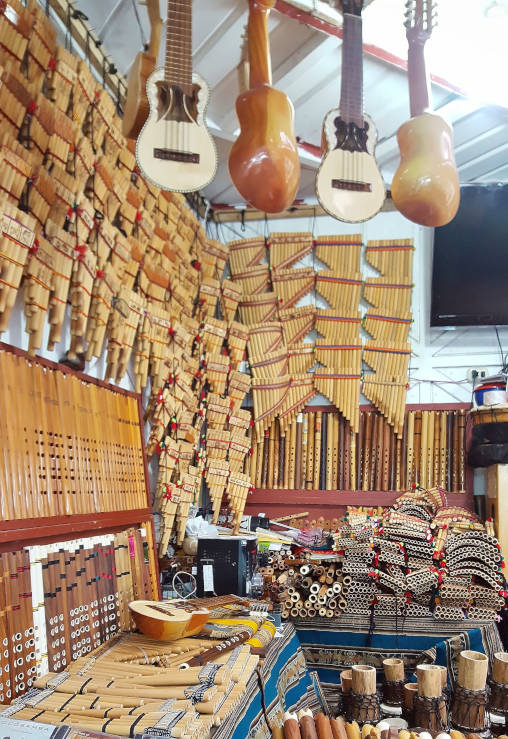
Local Peruvian handicraft market.
After a very long day through the Sacred Valley, we check into our hotel and welcome the simple comfort of hot water in the shower. Despite its modest size and location on steep terrain, Aguas Calientes pulses with energy. Under scattered lights travellers, guides, vendors and locals mingle. The hum of conversation mixes with the soft rush of the nearby river. The contrast feels striking: misty mountains and ancient slopes outside – modest comforts and warmth inside. Tonight Aguas Calientes feels like our doorway from modern travel into the ancient world.
Explore More of Peru?
Compare Peru with your own country:
Crime Rate in Peru
McMeal Price in Peru
3. Visit Machu Picchu — Encounter with the Lost Mountain City
Early morning, we take a shuttle up the steep zig‑zag road. Tickets must be bought in advance. When we spot hikers winding around the hairpin bends, the climb looks painfully demanding and we are glad we did not walk. The ascent gains around 400 metres in altitude, bringing us to the 2,430‑metre elevation of the archaeological site. That is well below the 3,400 metres of Cusco, so altitude sickness is far less likely here than many visitors expect.
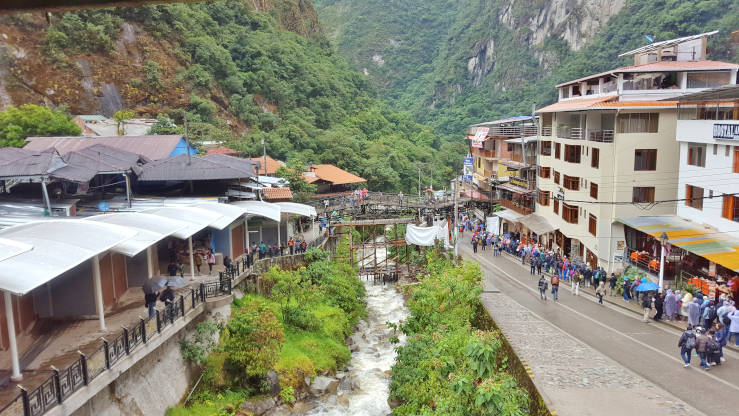
The bus trip for the Machu Picchu Mountain visit leaves from Aguas Calientes.
Climbing from Aguas Calientes, the jungle‑edged slope and winding road feel like a passage into another world. When we finally reach the entrance of the citadel, the early‑morning mist parts – despite the rain – just enough to reveal weathered stone walls, terraces cascading down steep slopes, and mountain ridges plunging into the cloud‑forest below.
The mountain itself rises out of a lush cloud forest where the Andes meet montane cloud forest that merges into lower‑altitude rainforest. As we reach the humid slopes surrounding Machu Picchu, jungle mosses, ferns and dense greenery give way to mountain cloud forest. In this forested sanctuary a variety of birds fill the air, butterflies flutter among orchids, and the landscape feels alive with nature’s subtle pulse.
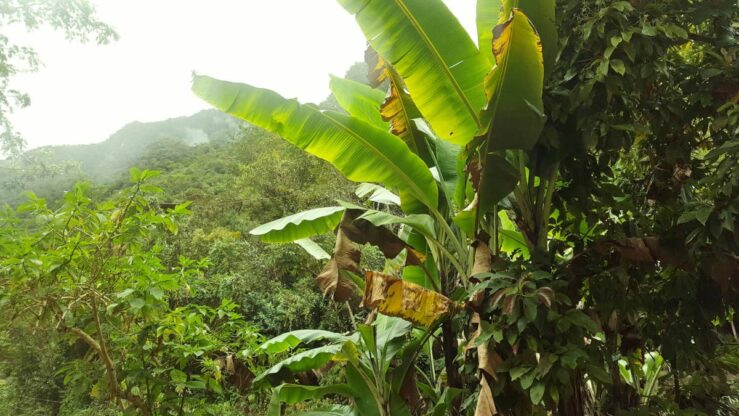
Machu Picchu rainforest visit | Photo: Travel In Culture
Stepping through the ancient gates, the atmosphere strikes us: cool mountain air, silence, and rain. For a moment we forget the weather as the ancient ruins draw us in. We wander among terraces and plazas, noting how the stone blocks fit together so precisely that the walls still stand after centuries.
Away from the main visitor paths, the current residents of Machu Picchu emerge: llamas and alpacas wander among the ruins, their calm presence echoing the timeless spirit of this place.
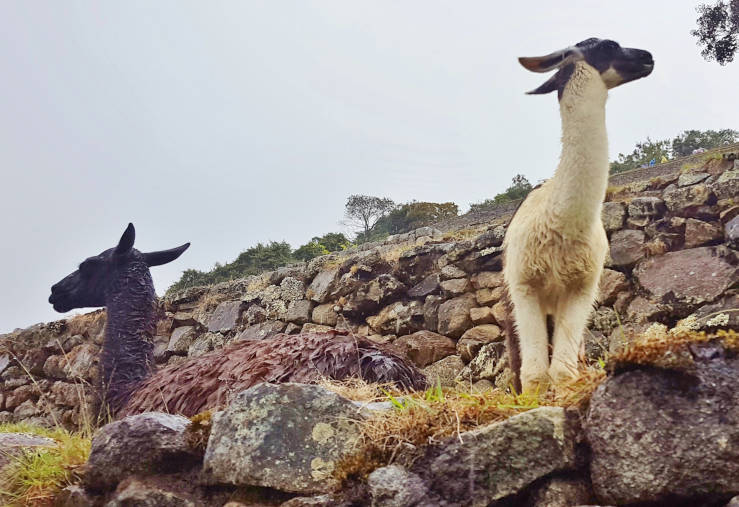
A trip to the Machu Picchu ruins may well include an encounter with llamas or alpacas.
To protect the fragile terraces from rising visitor pressure, Peru now enforces timed tickets and entry limits. Remaining on designated paths helps preserve the citadel for future generations.
To be well placed for exploring the cultural heritage of the Incas, you might consider staying at one of these hotels in Aguas Calientes and Cusco.
4. Inca Design, Spirituality & Legacy
Machu Picchu is more than a magnificent ruin. It stands as a testament to the unique culture of the Inca, where mountain, architecture and spiritual belief merge in harmonious unity. Most of Machu Picchu is believed to have been built in the mid-15th century during the reign of the Inca emperor Pachacuti. As we meander among the terraces and stone structures, a deeper meaning seems ever present. The buildings rise from the mountain using spectacular dry‑stone masonry: granite blocks cut and shaped with extraordinary precision, fitted so tightly together that not even a blade of grass could slip between them. This masterful technique made the walls able to withstand seismic activity and heavy Andean rainfall.
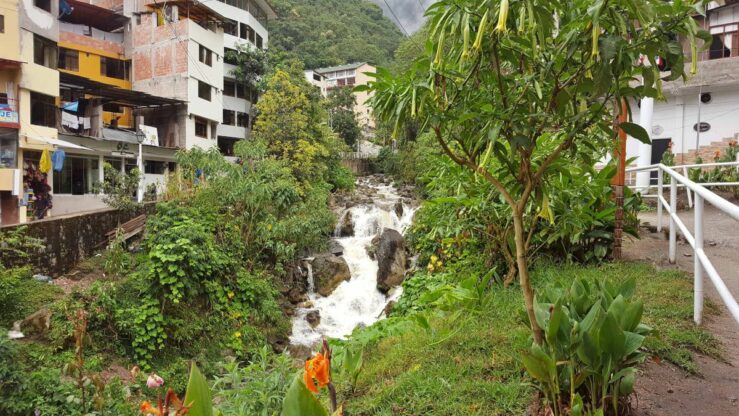
Lush riverside in Aguas Calientes | Photo: Travel In Culture
Terraces on the steep slopes combined agriculture and engineering: they stabilised the mountainside, controlled erosion, and channeled rainfall while providing fertile land.
The same water network that sustained the terraces also supplied households and communal areas. Subterranean drainage channels, combined with careful grading and surface drainage, protected the entire citadel from landslides and flood damage. As a result, the foundations of Machu Picchu have endured intact for centuries.
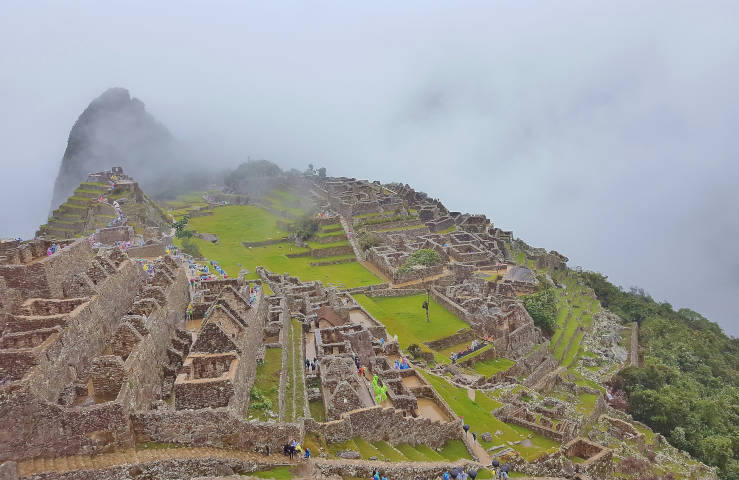
Machu Picchu is one of the top cultural places to visit on a Peru trip.
Moreover, Machu Picchu is more than a settlement – it is a sacred landscape. Its design, orientation and layout reflect a cosmological vision in which earth, sky, and human life are deeply intertwined. Temples such as the Temple of the Sun feature architectural alignments marking solar events, suggesting the site served in part as an astronomical observatory. These alignments likely helped plan agricultural cycles and ceremonial rituals.
This blend of engineering skill, appreciation of the natural environment, and spiritual symbolism contributes to Machu Picchu’s enduring cultural legacy. As we wander among terraces, plazas, and temples and hear Henry explain elements of Inca symbolism, we begin to understand why this place has survived so well. Today it stands as a living monument to Inca ingenuity, awe of nature, and enduring indigenous identity. A visit to Machu Picchu is not simply tourism. It is a journey into a civilisation that wove together skill, belief, and landscape. Experiencing it in this way reflects the principles of our cultural travel method, where understanding context and heritage transforms a destination into a meaningful encounter.
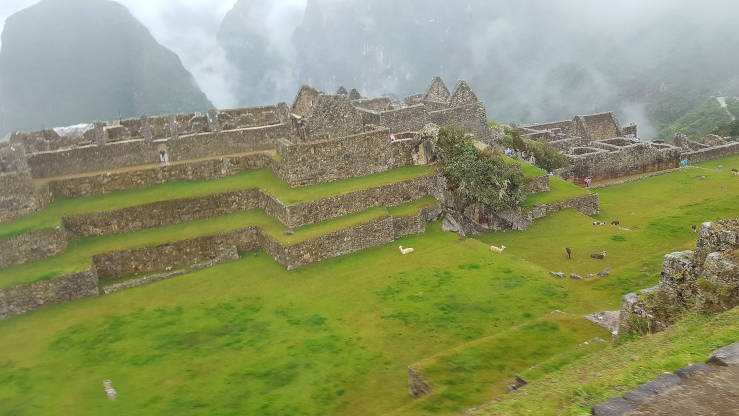
Photo: Travel In Culture
5. Discover Machu Picchu’s History and Inca Culture Alive in Stone
Machu Picchu was unknown to the outside world until 1911, when the American explorer Hiram Bingham publicised the Incas’ lost cities. Local Quechua communities had long been aware of the site, but 1911 marks its introduction to the Western world. In 1983, it was declared a UNESCO World Heritage Site and is today recognised as one of the New Seven Wonders of the World. Its heritage status applies not only to the ruins but also to the surrounding montane cloud forest, terraces, and biodiversity.
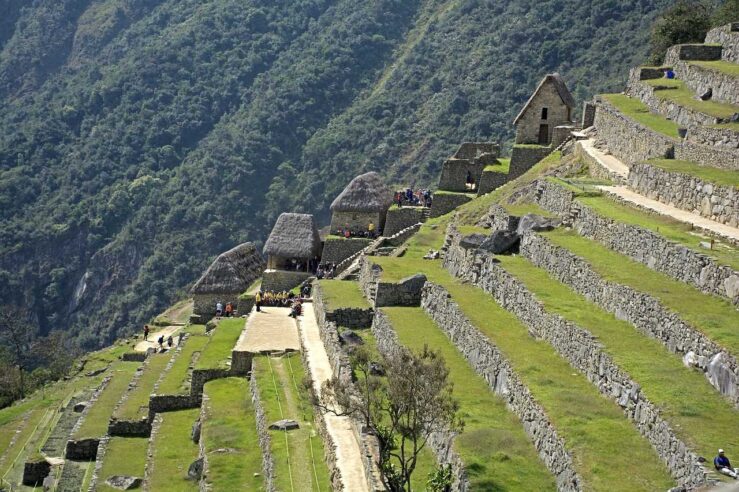
Inca ruins up the Machu Picchu mountain | Photo: Rodrigo Vergara
With roughly 200 structures, the citadel brings together temples, dwellings, storage buildings, terraces, and ceremonial spaces, forming an intricate settlement shaped directly from the mountainside.
One of the ancient entrances is the Sun Gate, Inti Punku. For hikers on the Inca Trail, as well as those taking alternative routes like the Salkantay and Lares treks, arriving at the Sun Gate at sunrise is considered a highlight. As we follow our guide through the well-preserved ruins, he points out details that illuminate daily life and spiritual belief in the Inca world.
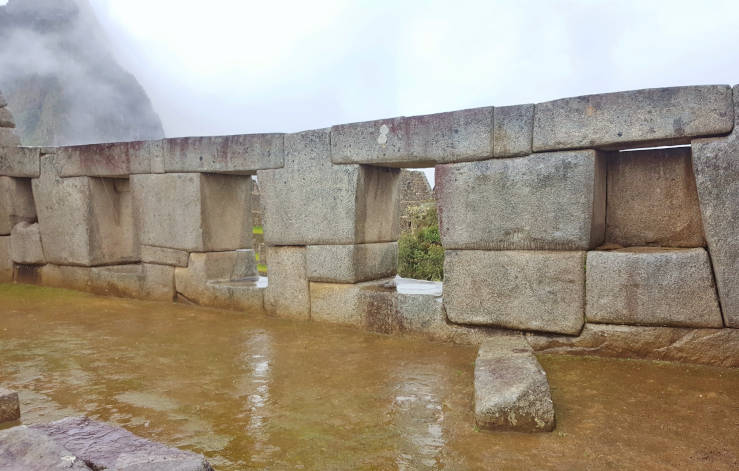
The Temple of the Three Windows.
Machu Picchu also holds significant astronomical features. Several structures align with the sun at the solstices.
One striking example is the Intihuatana Stone, the Inca ‘hitching post of the sun’. Aligned to the cardinal directions, it likely served to mark solstices and the turning of the seasons. During the equinox, its shadow fades to almost nothing, a moment believed to draw the sun back to the earth.
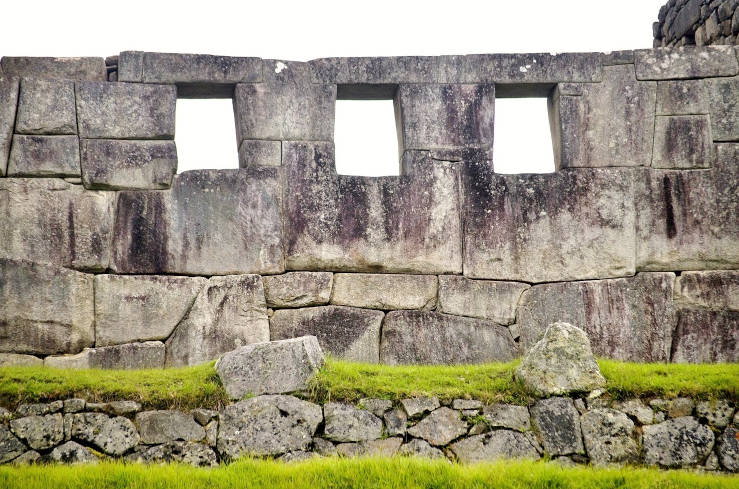
The Inca culture is renowned for its exceptional stone masonry | Photo: Carlos Chirinos
As we wander among the ruins, we imagine daily routines centuries ago: families living in stone dwellings, performing rituals in temples, and tending crops on terraces. Kanchas, clusters of rooms arranged around shared courtyards, and the terraces themselves created communal spaces for work, cooking, and ceremony, embedding the rhythms of Inca life directly into the mountainside.
A window, our guide notes, may mark solstice light, linking stone and sky. Nearby, he shows us carvings depicting the condor, snake, and puma – animals often interpreted as representing the heavens, the earthly world, and the underworld.
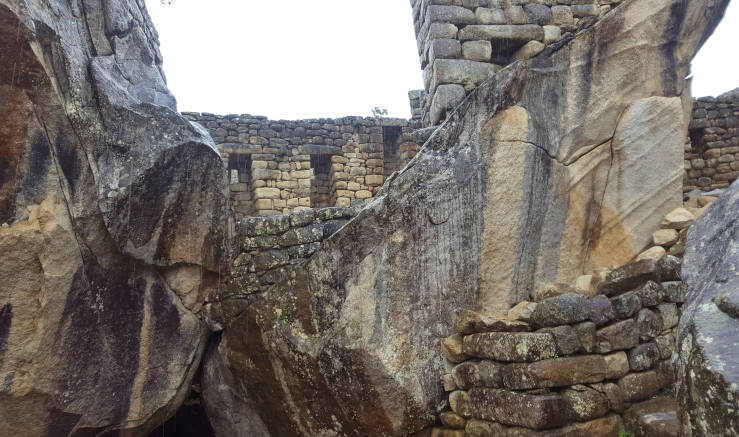
Temple of the Condor.
At the Temple of the Condor, natural rock merges with carved stone to shape the bird’s wings, reflecting the condor’s role as messenger between earth and sky.
These symbols form part of a wider spiritual world shaped by three key deities: Inti the Sun God, Pachamama the Earth Mother, and Viracocha the creator. Across Machu Picchu, carved stones and ritual spaces reflect this harmony of sky, earth, and origin, showing that the site was both sanctuary and royal retreat.
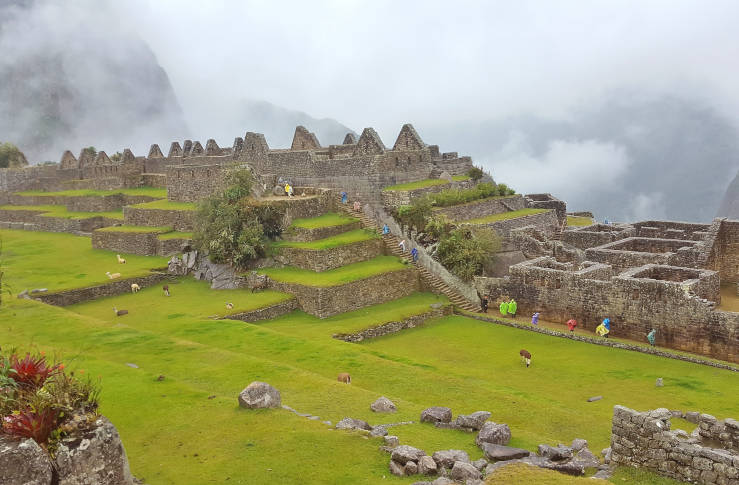
Terraced areas of Machu Picchu with grazing alpacas and llamas.
After exploring the ruins, it is clear why Machu Picchu, steeped in mystical Inca culture, is one of the New Seven Wonders! When we board the train for the two-hour return to Ollantaytambo, we carry with us new insights into the Inca civilisation and their extraordinary refuge in the clouds. And as visitor numbers continue to rise, careful preservation remains essential to safeguarding this remarkable heritage site for generations to come.
Frequently Asked Questions
What is the best way to get to Machu Picchu?
Most visitors travel by train from Ollantaytambo to Aguas Calientes, followed by a shuttle bus up to the site entrance. Alternative options include the Inca Trail or longer trekking routes such as Salkantay.
How high is Machu Picchu and will I feel altitude sickness?
Machu Picchu sits at around 2,430 metres above sea level, which is lower than Cusco. Most visitors experience mild or no altitude symptoms, especially after acclimatising in the region.
What is Aguas Calientes used for?
Aguas Calientes, also known as Machu Picchu Pueblo, is the main gateway town for visiting the citadel. It provides accommodation, restaurants, transport connections and access to the shuttle buses.
How much time do I need to visit Machu Picchu?
Most travellers spend one full day at the site, although guided tours typically last around two to three hours inside the citadel. A two-day itinerary is common when including travel time and Aguas Calientes.
Do I need to book Machu Picchu tickets in advance?
Yes, entry tickets and shuttle bus tickets should be booked in advance due to strict visitor limits. Timed entry slots are enforced to protect the archaeological site.
What is the historical significance of Machu Picchu?
Machu Picchu was built in the 15th century during the reign of Pachacuti and is a key example of Inca engineering and spirituality. It combines ceremonial architecture, terraces and advanced water systems.
What should I wear when visiting Machu Picchu?
Light layers, comfortable walking shoes and rain protection are recommended due to changing mountain weather. Sun protection is also important, as conditions can shift quickly.
Is Machu Picchu suitable for photography?
Yes, photography is allowed and highly popular throughout the site, with designated viewpoints offering panoramic views. Tripods and drones are generally restricted or require special permits.
For a broader overview of Peru’s highlights, you might enjoy our 10-day Peru itinerary, including Machu Picchu and the Sacred Valley.
Read next: Cusco Travel Guide and Discover the Lake Titicaca Floating Islands
Images courtesy of Travel In Culture. Selected images from Pixabay.