


Florence Travel Guide: Renaissance Art, History & Things to Do
By ANL | UPDATED:
All photographs in this article were taken by Travel In Culture.
🏛️ Renaissance capital of Tuscany and Italy’s cultural heart
🎨 Home to the Uffizi, Duomo, and Michelangelo’s David
🌉 Walkable historic centre filled with landmarks and piazzas
🍝 Strong Tuscan food culture and café life
🚆 Ideal base for exploring wider Tuscany
🌍 Part of the wider Italy travel guide
Selected for Budget → Hotel Palazzuolo
Selected for Value → Hotel Bellavista
Selected for Upscale Appeal → AQA Palace
1. Explore Florence Through Art and History
Florence is the cultural heart of Tuscany and one of Europe’s most important Renaissance cities, as well as a key gateway to exploring Siena, Lucca, and the wider Tuscan countryside. Its historic centre is compact and highly walkable, filled with architectural landmarks, world-class museums, and centuries of artistic heritage.
Florence is best experienced on foot, where every street reveals layers of Renaissance history, from quiet courtyards and artisan workshops to open piazzas filled with architectural landmarks. The city’s compact size makes it ideal for slow exploration, allowing visitors to move naturally between museums, churches, viewpoints, and neighbourhoods without needing transport.

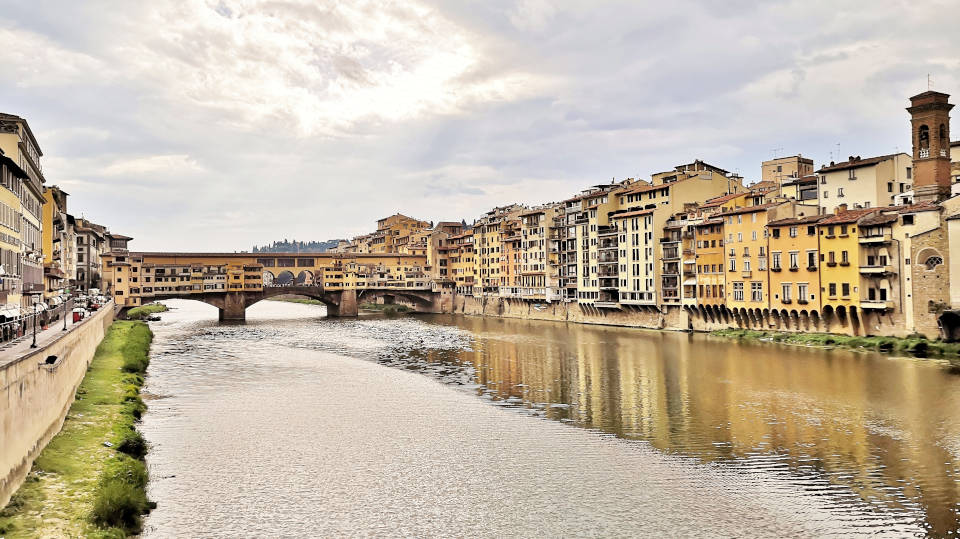
The Arno River flowing through Florence, with the historic Ponte Vecchio bridge connecting the city’s medieval streets | Photo: Travel In Culture
The city played a central role in the development of Renaissance art and architecture, shaping artists such as Michelangelo, Botticelli, and Brunelleschi. Today, Florence remains a living museum where history, culture, and daily life exist side by side.
Visitors come to Florence not only for its famous landmarks, but also for its atmosphere: narrow streets, lively piazzas, and views of historic buildings that have changed little over time. For broader regional context, see Tuscany, or explore the full Italy travel guide for national context.
2. Florence’s Top Landmarks and Attractions
Florence is home to some of Italy’s most recognisable landmarks, many of which are located within walking distance of each other in the historic centre.
🏛️ Duomo (Cathedral) → Iconic dome and city skyline landmark
🌉 Ponte Vecchio → Historic bridge lined with jewellery shops
🏰 Piazza della Signoria → Political and artistic heart of Florence
🖼️ Uffizi Gallery → World-famous Renaissance art collection
🗿 Accademia Gallery → Michelangelo’s David
🌆 Historic Centre → UNESCO-listed Renaissance cityscape (UNESCO World Heritage listing)
Key highlights include the Florence Cathedral (Duomo), Ponte Vecchio, Piazza della Signoria, and the Uffizi Gallery. Each site reflects different aspects of the city’s artistic and political history, from religious architecture to Renaissance civic power.
Walking through Florence is essentially a journey through centuries of art and architecture, where each square and street reveals another layer of history.

Piazza della Signoria is one of Florence’s most important squares, surrounded by Renaissance architecture and historic sculptures including Palazzo Vecchio.
The compact layout makes it easy to explore major attractions in a short time, especially for first-time visitors.
For more regional travel ideas, see the Tuscany travel guide, which covers nearby destinations such as Florence, Lucca, and San Gimignano. You can also explore Siena in more depth through our dedicated Siena travel guide.
3. Museums and Renaissance Heritage
Florence is considered one of the world’s greatest museum cities, particularly for Renaissance art. The Uffizi Gallery houses masterpieces by Botticelli, Leonardo da Vinci, and Michelangelo, while the Accademia Gallery is home to Michelangelo’s David. See also the Uffizi Gallery official website.
Florence’s museums are part of the wider Renaissance heritage found throughout Tuscany.

The courtyard of the Uffizi Gallery in Florence, one of the world’s most important Renaissance art museums, designed by Giorgio Vasari and located in the historic centre of Tuscany.
🎨 Uffizi Gallery → Botticelli, Leonardo da Vinci, Michelangelo
🗿 Accademia Gallery → Michelangelo’s David
⛪ Duomo Museum → Cathedral art and original sculptures
🏛️ Palazzo Pitti → Royal apartments and Renaissance collections
🌿 Bargello Museum → Sculpture masterpieces and medieval art
Beyond the major museums, Florence also offers smaller institutions, historic churches, and palaces that preserve centuries of artistic development.
A replica of Michelangelo’s David stands in Piazza della Signoria, Florence’s historic political square, where it has symbolised civic power and Renaissance heritage for centuries.
Art in Florence is not limited to museums it is integrated into the city itself, from frescoes in churches to sculptures in public squares. This makes Florence one of the most immersive cultural destinations in Europe.
This approach is central to the cultural travel method, which focuses on understanding destinations through history, context, and lived culture rather than checklist sightseeing.
4. Neighbourhoods and City Atmosphere
Florence is best understood through its neighbourhoods, each offering a slightly different atmosphere and experience.
The historic centre is the main hub for landmarks and museums, while areas such as Oltrarno provide a more local and creative environment with artisan workshops and traditional trattorias. Santa Croce and San Lorenzo offer a mix of history, markets, and lively street life.
Many of Florence’s neighbourhoods connect directly to Tuscany’s wider cultural identity, which you can explore in the Tuscany guide.
Crossing the Arno River into Oltrarno reveals a quieter, more residential side of Florence, where everyday life continues alongside small-scale craftsmanship and local culture.
Exploring different neighbourhoods helps visitors experience both the iconic and everyday sides of the city.
5. Culture and Everyday Life in Florence
Florence has a strong cultural identity shaped by centuries of art, religion, and civic tradition. Daily life revolves around cafés, markets, and public squares where locals gather throughout the day.
A traditional Italian cappuccino served in a Florence café, reflecting the city’s café culture where locals gather for slow mornings, espresso breaks, and everyday social life.
This everyday culture reflects broader traditions found across Tuscany, where food, cafés, and social life are central to daily routines.
This way of experiencing the city reflects the cultural travel method, where everyday life, food culture, and local rhythms are as important as landmarks.
Tuscan food culture plays an important role in Florence, with traditional dishes, seasonal ingredients, and a strong emphasis on local produce. Dining is often slow and social, reflecting broader regional customs.
Cultural life extends beyond food and architecture into festivals, exhibitions, and everyday rituals that continue to define the city’s rhythm. Florence remains both a historic centre and a functioning modern city with a strong sense of identity.
6. Planning Your Trip to Florence
Florence is a highly accessible city, making it suitable for both short visits and longer stays. Most major attractions are within walking distance, and the city can be explored comfortably without extensive transport.
🚆 Getting there → High-speed trains from Rome, Milan, Venice
🚶 Getting around → Walkable historic centre, limited driving zone
🏨 Where to stay → Historic centre, Santa Croce, Oltrarno
🌤️ Best time to visit → April–June & September–October
🍝 Food culture → Tuscan cuisine, wine bars, local trattorias
🎟️ Top experiences → Museums, viewpoints, walking tours
One of the most common approaches is to use Florence as a base for exploring Tuscany, including nearby destinations such as Siena, Lucca, and San Gimignano. This allows visitors to combine city experiences with countryside landscapes.
For structured visit ideas, see Florence in 3 Days and Florence in a Single Day.
The best time to visit Florence is generally spring and autumn, when temperatures are mild and the city is more comfortable for walking and sightseeing.
7. Florence Itineraries and Travel Ideas
Florence works well as both a standalone destination and as part of a wider Tuscan itinerary. Short visits often focus on key landmarks and museums, while longer stays allow for deeper exploration of neighbourhoods and cultural experiences.
⏱️ 1 Day → Duomo, Ponte Vecchio, Piazza della Signoria
🏛️ 2–3 Days → Museums + historic centre + viewpoints
🎨 Art Focus → Uffizi + Accademia + churches
🌿 Slow Travel → Oltrarno, cafés, markets, local life
🚆 Tuscany Base → Day trips to Siena, Lucca, San Gimignano
A typical short itinerary includes the Duomo, Uffizi Gallery, Ponte Vecchio, and Piazza della Signoria. With more time, visitors can explore Oltrarno, visit additional museums, and experience local cafés and markets at a slower pace. For detailed itineraries, see our Florence Itineraries Hub.
📍 Florence in One Day
📍 Florence in 3 Days
📍 View All Florence Itineraries
Florence also connects easily to other Tuscan destinations, making it ideal for multi-city travel within the region and day trips from Florence.
For more structured travel ideas, see our Tuscany itineraries, Florence itineraries, and the broader Italy travel guide.
If you are planning a trip to Florence, these are some of the most common questions visitors ask before arriving.
8. Florence Travel FAQs
Is Florence walkable?
Yes. Florence’s historic centre is compact and flat, and most major attractions are within a 10–20 minute walk.
How many days do you need in Florence?
2–3 days is ideal for Florence to see the Duomo, Uffizi Gallery, Ponte Vecchio, and key neighbourhoods.
What is the best area to stay in Florence?
The historic centre is best for first-time visitors. Oltrarno is ideal for a quieter, more local atmosphere.
Is Florence expensive?
Yes, Florence is moderately expensive, especially in the centre, but budget options are available outside the main tourist areas.
Can Florence be used as a base for Tuscany?
Yes. Florence is one of the best bases for Tuscany, with easy train access to Siena, Pisa, Lucca, and other Tuscan towns.
