


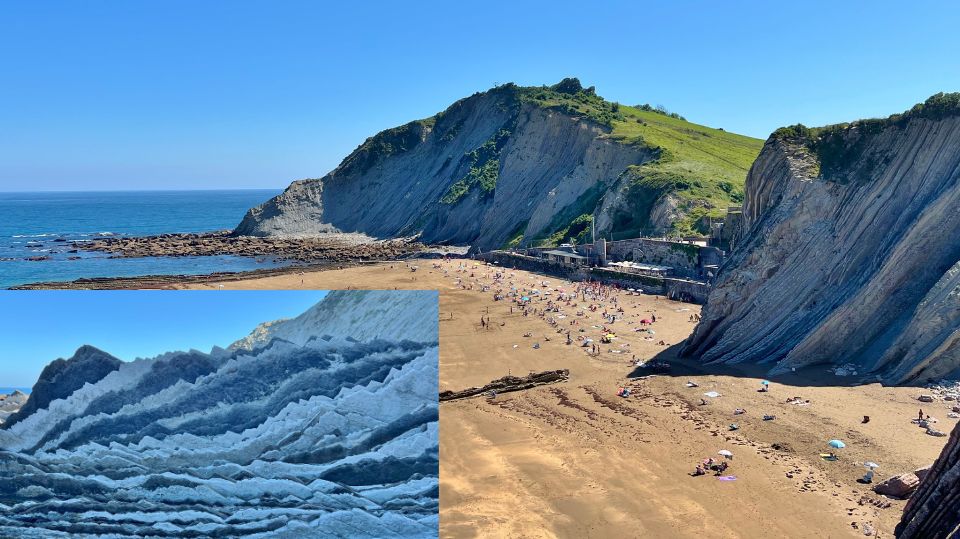
Zumaia Flysch Cliffs, Itzurun Beach and Basque Coast Day Trip Guide
By ANL | UPDATED:
1. Basque Coast Geopark
2. Zumaia – A Charming Little Coastal Town
3. Itzurun Beach
4. Church of San Telmo
5. Camino del Norte
6. Flysch Cliffs
7. Above the Town: The Gothic Legacy of San Pedro
Set between steep cliffs and the Atlantic Ocean, Zumaia combines natural heritage with cultural charm. From the historic old town and Church of San Telmo to sweeping coastal views and film locations used in global productions, this Basque coastal destination offers a unique blend of scenery, science and tradition.
How to Get to Zumaia from San Sebastián (or Bilbao)
Embarking on a scenic journey, we board the Euskotren at Amara Station in San Sebastián, bound for Zumaia on the Basque north coast, a region renowned for its unique and dramatic Flysch geological formations.

Amara Station, San Sebastián.
Zumaia is a stop on the train route towards Bilbao. The journey offers captivating views as we travel through lush hills, striking cliffs, and picturesque landscapes. Zumaia is particularly noted for the vineyards of the Txakoli wine region. After approximately 40 minutes, we arrive in Zumaia, nestled at the mouth of the Urola River.
For travellers interested in slow and immersive journeys, this route reflects a wider approach to experiential travel described in Cultural Travel Method – How to Experience Destinations More Deeply, focusing on landscapes as part of cultural storytelling.
Photo: Travel In Culture
From Bilbao, visiting Zumaia on a day trip is equally feasible with the Euskotren, which departs from Bilbao’s Atxuri Station. Other charming destinations along this stretch of the Basque coast include Zarautz and Getaria. If you are staying in Bilbao, you may find inspiration in our article: Bilbao: Art, Culture & Old Town.
Want to stay near the iconic beach and the historic heart of San Sebastián? These hotels offer prime locations for both.
1. Basque Coast Geopark (Euskal Kostaldeko Geoparkea) & Flysch Formations
Photo: Travel In Culture
Zumaia is part of the Basque Coast Geopark, which boasts unique geological formations. The area is famous for its Flysch cliffs, distinctive layers of alternating shale and sandstone. These Flysch cliffs are most spectacularly displayed within the Basque Coast Geopark, stretching between Zumaia and Deba, a region also recognised as a UNESCO Global Geopark.
This geological landscape is also part of a broader network of Basque coastal heritage destinations, similar to those explored in our guide to San Sebastián Things to See and Do, where coastal geology and urban culture intersect.
We have also noted smaller Flysch formations in San Sebastián – not as dramatic, perhaps, but still fascinating to observe – particularly at Ondarreta Beach and along the rocky coastline of the Igueldo Peninsula, where the layers reveal themselves between the tides.
2. Zumaia – A Charming Little Coastal Town
Zumaia and the Urola River.
Zumaia is not only at the heart of the Flysch formations, but also a charming coastal town set in beautiful Basque countryside at the mouth of the River Urola. The town boasts a rich industrial and maritime heritage and was once renowned for its bustling harbour. Unsurprisingly, this fishing and shipbuilding history continues to shape the town’s character today.
Photo: Travel In Culture
The historic centre features narrow cobbled streets, buildings in traditional Basque architectural style, and lively local markets. Surprised to find that the town itself is both picturesque and rich in cultural buildings, we take note of a couple of quaint streets – there is something about their authentic charm that makes us eager to return and explore them later in the day.
3. Itzurun Beach

Itzurun Beach – Game of Thrones film location.
Beyond its Flysch geology, one of the main attractions in Zumaia is Itzurun Beach, which has served as a film location for productions such as Game of Thrones – notably as the setting for Daenerys’s landing on Dragonstone. We try to imagine how the filming might have taken place as we walk across the fine sand.
Itzurun Beach ‘Two Animals’ statue.
At the entrance to Itzurun Beach, you will encounter the ‘Two Animals’ statue, a limestone sculpture by the Basque sculptor Koldobika Jauregi. It depicts two horses standing as guardians over the descent to the beach.
The beach is also a favourite outing spot for both tourists and locals, including local nurseries and schoolchildren – some of whom arrive just as we do, eager to kick off their shoes and make the most of the vast stretch of sand.
Itzurun Beach.
The surrounding cliffs offer several scenic viewpoints with sweeping views across Itzurun Beach and its rock formations. Gazing out over the beach, the cliffs, and the seascape, one cannot help but reflect on the creation of these geological wonders.
Zumaia’s Santiago Beach is another wide, sandy beach, also particularly popular among locals and visitors alike.
4. Church of San Telmo
Church of San Telmo, Zumaia.
The small white picturesque chapel perched on the edge of the cliffs directly above Itzurun Beach is the Church of San Telmo. Saint Telmo is the patron saint of sailors – hence the chapel’s location by the sea. Written records suggest that an earlier version of the church already stood here as far back as 1540. Standing in front of it feels like stepping centuries back in time, imagining the locals coming here to pray before setting out to sea.
In spring, the San Telmo Festival is held, during which locals gather and walk in procession towards the chapel.
5. Camino del Norte
Photo: Travel In Culture
A fifth reason to visit Zumaia is its location along the Camino del Norte. Around town, one can spot several symbols of the Camino, including the iconic scallop shell of Saint James. All pilgrims following the northern coastal route will pass through Zumaia, a path that beautifully connects nature, culture, and pilgrimage.
Walking this route is also closely connected to the wider philosophy of mindful exploration described in Cultural Travel Method – How to Experience Destinations More Deeply, where walking routes become cultural experiences in themselves.
Photo: Travel In Culture
Over time, places such as Santiago Beach have become a welcome resting point for those on the journey. We see several pilgrims with full backpacks enjoying a break in beautiful Zumaia before continuing. Even for those not walking the full Camino, there are excellent hiking routes in the area, including a well-marked urban walk.
Photo: Travel In Culture
6. Flysch Cliffs
Geologically, Zumaia is exceptionally interesting, making it a top destination for anyone travelling along the Basque coast.

Flysch cliff formations.
The beach and surrounding cliffs consist of distinctive layers of shale and sandstone, the so-called Flysch formations, which rise dramatically through the fine sandy shore, reflecting millions of years of geological history. These layers were deposited under the sea during the formation of the Pyrenees and form a unique geological time archive.

Flysch.
The impressive layered Flysch formations create striking tidal pools and caves that shift with the tide, offering unique opportunities for exploration.
Photo: Travel In Culture
We have heard that it is possible to take a boat tour to explore the Flysch formations from the sea, but we decide instead to hike along the tops of the cliffs and the sandy beaches. We arrive at Itzurun Beach at low tide – perfect for walking among the jagged rock formations.
Flysch.
A little later, standing at the Algorri cliffs, we clearly see the distinctive black layer cutting through the rock, a remarkable testament to the asteroid impact that struck the Yucatán Peninsula 66 million years ago, triggering the fifth mass extinction on Earth. This layer marks the boundary between the Cretaceous and Paleogene periods and contains traces of iridium, an element rare on Earth but common in asteroids. It is fascinating to stand here and witness the remains of a global catastrophe that changed the course of life on Earth, embedded layer by layer in the rocks before us.
In the Flysch cliffs, the black line marks the time of the dinosaurs’ extinction.
Each layer typically represents thousands of years, and Zumaia offers some of the best views of the Flysch formations in the entire Basque Coast Geopark. On the beach, it is even possible to find fossils – including ammonites – much like at the famous fossil site of Lyme Regis in England.
7. Above the Town of Zumaia – The Gothic Legacy of San Pedro
Church of San Pedro, Zumaia.
Sated with the magnificent impressions of a geologically unique place in the world, we return to the town centre to explore the historic buildings.
Cobbled lane leading to the Church of San Pedro, Zumaia.
A rather large church, the Gothic Parish Church of San Pedro is dramatically positioned high above the town and, from the outside, resembles a fortress more than a place of worship. Dedicated to Saint Peter the Apostle, traditionally regarded as the patron saint of fishermen, the church reflects Zumaia’s deep-rooted connection to the sea.
Church of San Pedro.
Over the centuries, it may also have served as Zumaia’s defensive stronghold, protecting the town from potential attacks by sea. Particularly noteworthy is the altarpiece by Juan de Antxieta.
Arroz negro.
We conclude our Zumaia trip with a local meal at Labarra Taverna, savouring arroz negro, the Basque-style squid ink risotto served with grilled baby squid (chipirones), alongside merluza, the Basque specialty tarta de queso, and chocolate mousse. The town’s rich fishing heritage clearly still influences the local cuisine!
Frequently Asked Questions
How do I get to Zumaia from San Sebastián?
Zumaia is easily reached by Euskotren from Amara Station in San Sebastián, with a journey of around 40 minutes. The train also connects Bilbao and other coastal towns.
What are the Zumaia Flysch cliffs?
The Flysch cliffs are layered rock formations made of shale and sandstone, created over millions of years. They form part of the Basque Coast Geopark and record Earth’s geological history.
Is Itzurun Beach worth visiting?
Yes, Itzurun Beach is one of the most scenic beaches in the Basque Country and is famous for its dramatic cliffs and film locations. It is also ideal for coastal walks and photography.
Can you visit Zumaia as a day trip?
Yes, Zumaia is a popular day trip from both San Sebastián and Bilbao. The train connection makes it convenient for exploring the cliffs, beach and town in a single day.
What is the best time to visit Zumaia?
Late spring to early autumn offers the best weather and clearest views of the Flysch cliffs. Low tide is ideal for exploring the rock formations on Itzurun Beach.
Is Zumaia part of the Camino del Norte?
Yes, Zumaia lies along the Camino del Norte pilgrimage route. Many walkers pass through the town and rest at nearby beaches before continuing their journey.
Are guided tours available in Zumaia?
Yes, guided tours and boat excursions are available to explore the Flysch cliffs from both land and sea. These tours explain the geological history in detail.
What else can you see near Zumaia?
Nearby towns include Zarautz and Getaria, both known for beaches and Basque cuisine. The coastal region is ideal for combining hiking, culture and food experiences.
You may also like to explore the culture and history of San Sebastián – find inspiration in this guide: Discover San Sebastián – Explore Belle Époque Attractions and Top Things to See & Do – or in our article: Hiking from San Sebastián to Pasaia.
Ready to explore other historic cities across Europe, such as Flensburg and its seafaring past? Start here: Flensburg’s Maritime Heritage.
Read next: Iconic Glendalough Monastery in the Wicklow Mountains, Ireland and Visit Spectacular Greenland
