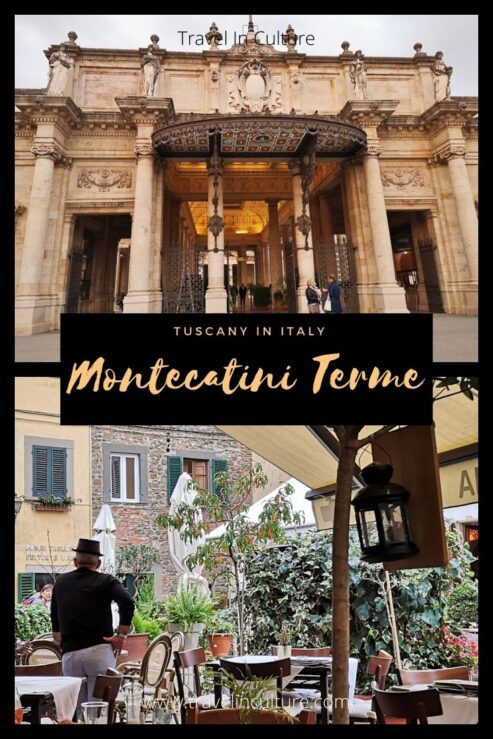




Montecatini Terme Travel Guide: Thermal Baths, UNESCO Heritage & Montecatini Alto
By ANL | UPDATED:
All photographs in this article were taken by Travel In Culture.
Montecatini Terme is not simply a town known for its thermal baths. Set in the Valdinievole between Florence and Lucca, it is a historic European spa destination where thermal springs, grand spa buildings, gardens, cafés, and elegant avenues create a distinctive atmosphere. Its long tradition of thermal tourism has also attracted artists, composers, aristocrats, and travellers from across Europe.
Today, Montecatini combines this rich spa heritage with a lively historic centre and easy access to Montecatini Alto. The town’s thermal quarter includes the celebrated Terme Tettuccio. At the same time, the historic funicular climbs to the hilltop village above, where medieval streets, piazzas, and panoramic Tuscan views offer a contrasting experience. Montecatini is best appreciated through the layers that have shaped it, from thermal traditions and Belle Époque architecture to landscaped parks, local life, and the surrounding Tuscan countryside. This approach to discovering a destination through its history, culture, architecture, and everyday character is at the heart of our cultural travel method. Montecatini Terme is also part of The Great Spa Towns of Europe, a UNESCO World Heritage property inscribed in 2021.
♨️ Why visit: Historic thermal baths, UNESCO heritage, Belle Époque and Liberty architecture, gardens, cafés, and Montecatini Alto
📍 Location: Valdinievole, northern Tuscany, between Florence, Lucca, and Pistoia
⏱️ Time needed: A full day for the main sights. Stay overnight to experience the spa town and Montecatini Alto at a slower pace
🏛️ Best for: Thermal heritage, architecture, history, wellness, Tuscan hill towns, and relaxed travel
🗺️ Combine with: Lucca, Pistoia, Florence, or a wider Tuscany road trip
Selected for Character: Historic Spa Hotel → Grand Hotel Tettuccio
Selected for Central Location → Grand Hotel Plaza & Locanda Maggiore
For a Longer Stay → Hotel Minerva Palace
Staying overnight allows you to experience Montecatini Terme at a slower pace, when the daytime visitors have left and the historic centre, thermal quarter, restaurants, and cafés take on a quieter evening atmosphere.
1. Montecatini Terme’s History and Spa Heritage
Montecatini Terme owes its identity to the mineral springs beneath the town, but its history reaches back much further than the elegant spa establishments seen today. The thermal waters were known in ancient times, and the Romans are thought to have known the area and its mineral springs, with an ancient road passing close to Montecatini. The surrounding marshes were difficult terrain to cross, and Hannibal is traditionally associated with passing through this challenging landscape during his campaign in Italy. In the Middle Ages, an early form of spa developed around the thermal waters, while salt was extracted from the mineral-rich water and used for therapeutic purposes. At the same time, the surrounding wetlands remained difficult and unhealthy territory, with malaria, flooding, and warfare shaping life in the Valdinievole for centuries.
The decisive transformation began in the eighteenth century. Grand Duke Pietro Leopoldo of Tuscany recognised the potential of Montecatini’s thermal waters and ordered the development of a planned spa settlement around the springs. Between 1773 and 1783, new thermal establishments were built, creating the foundations of the modern town. The new spa quarter developed separately from the older hilltop settlement of Montecatini Alto.
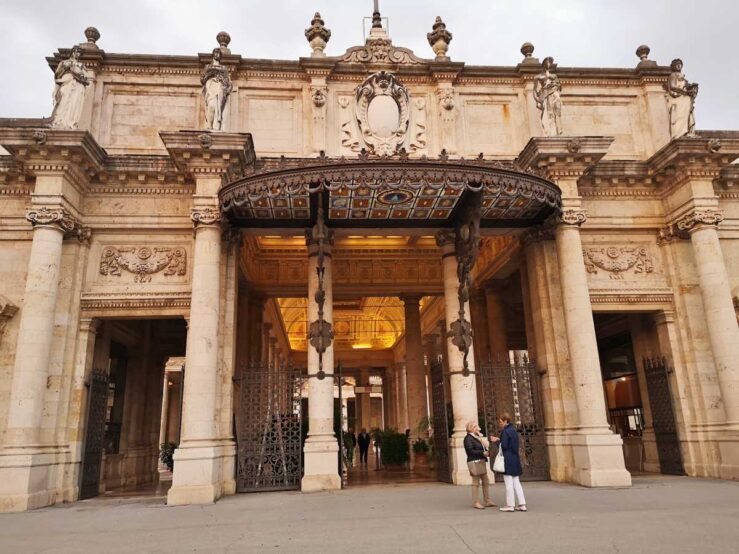
The elegant Art Nouveau entrance to Terme Tettuccio, with its colourful glass canopy, reflects Montecatini Terme’s Belle Époque spa heritage | Photo: Travel In Culture
During the nineteenth century, Montecatini developed into an increasingly fashionable European spa destination. Visitors came to take the waters, while elegant promenades, gardens, hotels, cafés, and other leisure facilities grew around the thermal establishments. The arrival of the railway made the town more accessible, helping to transform what had once been an isolated thermal destination into an international resort.
By the late nineteenth and early twentieth centuries, Montecatini had entered its Belle Époque heyday. Famous composers, artists, writers, and other prominent visitors came to the town, while grand hotels and Liberty-style spa buildings reflected its increasingly cosmopolitan character. The funicular, opened in 1898, connected the spa town with Montecatini Alto, allowing visitors to combine the thermal cure with walks, dining, and panoramic views from the hilltop.
This remarkable transformation is part of what makes Montecatini Terme distinctive today. The town is one of eleven components of The Great Spa Towns of Europe, a transnational UNESCO World Heritage property inscribed in 2021. The designation recognises the European spa culture that developed from the eighteenth century to the 1930s, including the relationship between thermal establishments, gardens, promenades, hotels, leisure facilities, and the surrounding landscape.
2. Montecatini Terme’s Top Landmarks and Things to Do
Montecatini Terme is a town to experience at a leisurely pace. Its appeal lies not in a single spectacular monument, but in the combination of grand spa buildings, tree-lined avenues, gardens, cafés, historic hotels, and lively public spaces. Take a walk through the centre, stop for a coffee, admire the architecture, and let the atmosphere of this former European resort unfold around you.
Beyond the thermal baths and historic spa quarter, Montecatini Terme is a convenient starting point for discovering more of this part of Tuscany. From local experiences to guided visits and excursions to nearby towns, these activities can add another dimension to your stay.
Stroll Along Viale Verdi
Viale Verdi is the elegant backbone of Montecatini Terme. The broad, tree-lined avenue runs through the historic spa quarter, passing grand buildings, gardens, fountains, and some of the town’s most impressive architecture.
This is where Montecatini’s Belle Époque character is particularly apparent. The former Palazzina Regia, the Municipal Palace, historic hotels, and the entrances to the thermal establishments reflect the ambition of a town that was once one of Europe’s fashionable spa destinations.
Viale Verdi is also a place for simply enjoying the atmosphere. Walk beneath the trees, pause at a café, and imagine the composers, artists, aristocrats, and other visitors who once came here to take the waters and spend their leisure time in the town.
Explore Piazza del Popolo and the Historic Centre
At the end of Viale Verdi, Piazza del Popolo brings you into the lively heart of Montecatini. The square is surrounded by cafés, restaurants, shops, and historic buildings, making it a natural place to pause and watch everyday life unfold.
Unlike Tuscany’s medieval hill towns, Montecatini Terme was largely shaped by its later role as a spa resort. Its character therefore comes less from medieval monuments and more from the elegant urban landscape created for visitors arriving to take the waters.
From Piazza del Popolo, wander through the surrounding streets rather than following a fixed route. Montecatini is at its most enjoyable when you leave time for an unplanned café stop, an interesting façade, or a quiet corner away from the main avenue.
Discover the Gardens, Fountains and Public Art
Water and greenery are woven into Montecatini’s identity. The landscaped spa parks, fountains, and tree-lined avenues were designed to make taking the waters a social and leisurely experience, not simply a health treatment.
The town also has an unexpected connection with modern art. MO.C.A. – Montecatini Contemporary Art, located in the Municipal Palace, houses works including pieces by Joan Miró. The collection provides an intriguing contrast to the historic spa architecture outside.
Look out, too, for the town’s fountains and decorative details as you walk between the centre and the thermal quarter. They help reveal the theatrical side of Montecatini, where architecture, water, gardens, and public life were deliberately brought together.
Enjoy the Café Culture and Local Flavours
Montecatini’s spa tradition has always been closely connected with leisure. Cafés, restaurants, hotels, music, and evening strolls were part of the experience for visitors who came not only to take the waters, but also to socialise and be entertained.
Today, that atmosphere remains one of the town’s attractions. Spend some time around the central squares and Viale Verdi, particularly towards the evening, when locals and visitors fill the cafés and restaurants.
For a taste of Montecatini’s local tradition, look for cialde di Montecatini, thin, crisp almond wafers traditionally served with coffee, ice cream, or other desserts. They are a simple reminder that Montecatini’s culture of taking time to enjoy food and company extends beyond its thermal heritage.
3. Thermal Baths, Belle Époque Architecture and UNESCO Heritage
The thermal waters are the reason Montecatini Terme became a destination, but the experience has always been about much more than bathing. Taking the waters developed into a social ritual, with gardens, promenades, music, cafés, hotels, and elegant spa buildings creating a setting in which visitors could spend an entire day. Walking through the thermal quarter today, it is easy to see how closely wellness and leisure were once intertwined.
The architecture is an important part of this experience. Liberty, the Italian interpretation of Art Nouveau, appears throughout the spa quarter, particularly in the historic thermal establishments. Terme Tettuccio is the most impressive example, with its origins reaching back to the thirteenth century and its present architectural character shaped by the Florentine architect Ugo Giovannozzi in the early twentieth century. Its lavish entrance, Liberty canopy, richly decorated interiors, and elaborate ceiling reflect the theatrical elegance of the Belle Époque spa. Terme Tamerici offers another fine example of the period, with its Art Nouveau decoration adding to the distinctive character of the thermal park.
The historic spa area remains the most distinctive part of Montecatini Terme. Even without booking a treatment, strolling beneath the trees, admiring the architecture, and exploring the grounds provides an insight into the town’s former life as one of Europe’s fashionable spa resorts. Rather than viewing the thermal establishments simply as places for treatments, it is more rewarding to see them as part of a larger landscape of leisure, where taking the waters, meeting other visitors, listening to music, walking in the gardens, and spending time in the town were all part of the experience.
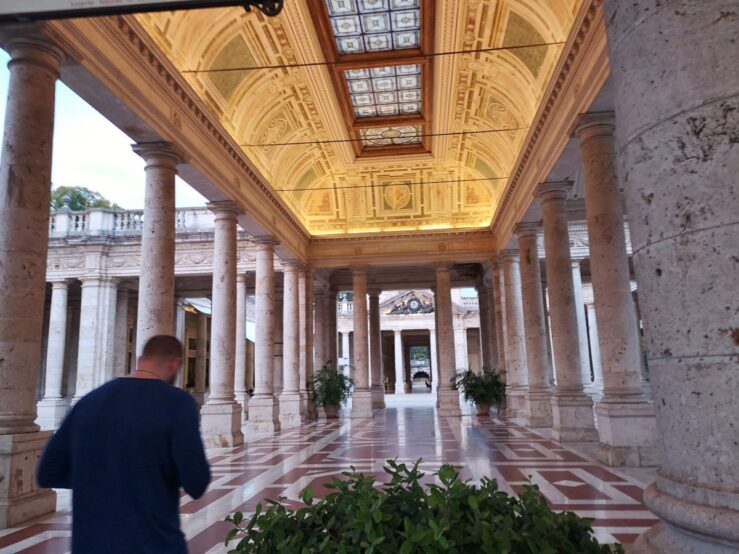
Marble columns and richly decorated interiors at Terme Tettuccio, reflecting the elegance of Montecatini’s historic spa culture.
♨️ Thermal tradition: Mineral springs have shaped Montecatini’s identity for centuries
🏛️ Historic spa quarter: The area around Viale Verdi brings together thermal establishments, gardens, promenades, and grand historic buildings
🌳 Spa landscape: Green spaces, fountains, and shaded avenues were designed as an integral part of the thermal experience
🎼 Cultural life: Music, cafés, hotels, and social activities formed an important part of the historic resort
🏛️ UNESCO heritage: Montecatini Terme is one of the eleven component towns of The Great Spa Towns of Europe
Terme Tettuccio and Montecatini’s Liberty Architecture
Terme Tettuccio is the architectural highlight of Montecatini’s thermal quarter. Set within a leafy park at the upper end of Viale Verdi, it has a distinctly ceremonial character, with colonnades, fountains, decorative details, and richly ornamented spaces creating an atmosphere quite different from that of a modern spa.
The complex has its origins in the thirteenth century, while its present architectural character was shaped during Montecatini’s Belle Époque development. The Florentine architect Ugo Giovannozzi was responsible for the early twentieth-century transformation, creating the lavish entrance, Liberty canopy, decorated interiors, and elaborate spaces that make Tettuccio so distinctive. Terme Tamerici provides another fine example of the Art Nouveau style associated with Montecatini’s fashionable spa period.
Belle Époque Montecatini: Music, Promenades and Social Life
Montecatini reached its international peak around the turn of the twentieth century, when visitors came for thermal treatments as well as entertainment and fashionable company. The spa experience extended into the surrounding streets and gardens, with promenades, cafés, hotels, concerts, and evening gatherings becoming part of everyday life.
Music was woven into this atmosphere. Composers including Giuseppe Verdi, Giacomo Puccini, and Gioachino Rossini were among the prominent figures associated with Montecatini, strengthening the town’s reputation as a place where thermal culture and the arts came together. Verdi is particularly closely associated with the town, while a statue of Puccini recalls Montecatini’s long connection with the world of music.
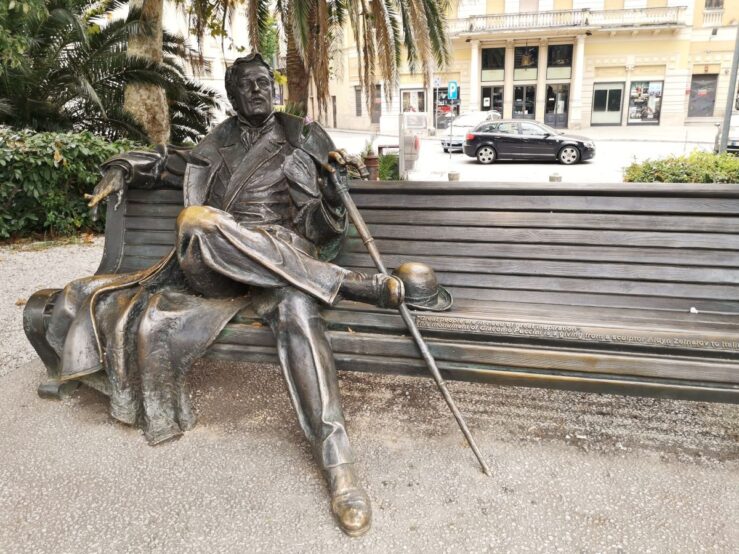
A statue of Giacomo Puccini recalls Montecatini’s long association with music and the cultural life of its historic spa resort | Photo: Travel In Culture
Walking along Viale Verdi today, it is not difficult to imagine the town during its Belle Époque heyday, with visitors moving between hotels, thermal establishments, gardens, and cafés. The combination of architecture, music, greenery, and social life gives Montecatini a character quite different from Tuscany’s medieval hill towns.
♨️ Start around Viale Verdi: Walking along the avenue brings you into the historic heart of the spa quarter.
🌳 Take time in the gardens: The landscaped surroundings are an essential part of understanding the historic spa experience.
🏛️ Look closely at the architecture: Decorative details, fountains, ceramics, and Liberty-style features reveal the elegance of Montecatini’s Belle Époque period.
🎼 Notice the cultural side: Music, cafés, promenades, hotels, and social life were all part of the experience.
☕ Slow down: Stopping for a coffee or aperitivo makes it easier to appreciate Montecatini as a former leisure resort rather than simply a spa town.
Montecatini Terme and UNESCO World Heritage
Montecatini Terme is one of eleven European spa towns included in The Great Spa Towns of Europe, a transnational UNESCO World Heritage property spanning seven countries. The property was inscribed in 2021 and recognises the development of European spa culture from around 1700 to the 1930s.
The designation is interesting because it does not focus on a single thermal building. Instead, it recognises the wider spa landscape created around the mineral springs, including baths, drinking halls, gardens, promenades, hotels, villas, and leisure facilities. In Montecatini, the spaces between the buildings are therefore as important as the buildings themselves.
Walking beneath the trees, following Viale Verdi, looking across the gardens, and noticing the historic hotels and cafés gradually reveals how the town was designed around the idea of taking time out. This combination of thermal culture, architecture, landscape, and leisure gives Montecatini its distinctive place within Tuscany.
4. Montecatini Alto and the Historic Funicular
Leaving the elegant spa quarter of Montecatini Terme and heading uphill, the character of the landscape changes surprisingly quickly. The broad avenues, grand hotels, and thermal parks give way to a small hilltop village of stone buildings, narrow lanes, old towers, and a much quieter rhythm of life.
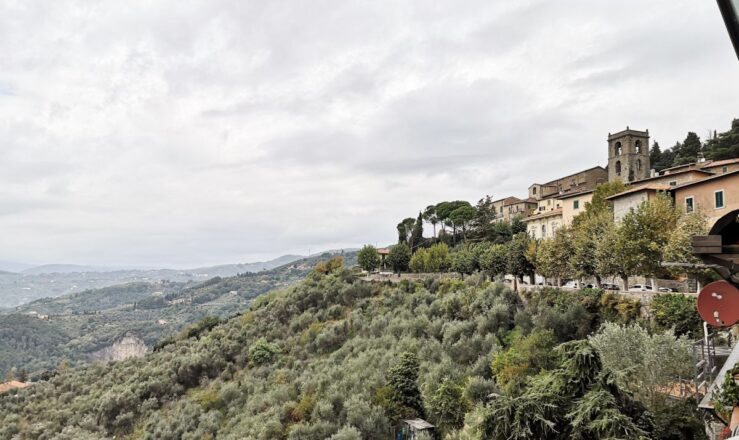
Montecatini Alto perched above the thermal town, with the Tuscan countryside stretching into the distance | Photo: Travel In Culture
Montecatini Alto is not simply another attraction to add to a Montecatini itinerary. It provides the historical counterpart to the spa town below. While Montecatini Terme grew around the thermal springs and became fashionable during the eighteenth, nineteenth, and early twentieth centuries, the settlement above preserves the atmosphere of an older fortified village.
🚞 Getting there: The historic funicular connects Montecatini Terme with the hilltop village
⛰️ Setting: Around 300 metres above sea level, overlooking the Valdinievole
🏰 Character: A small medieval settlement with remnants of its former fortifications
📍 Main square: Piazzetta Giusti is the natural place to pause, eat, and watch village life
🌄 Best reason to go: Combining the historic village with panoramic views creates a very different experience from the spa town below
Taking the Funicular to Montecatini Alto
The most enjoyable way to reach Montecatini Alto is by funicular. The railway began operating in 1898, linking the spa town with the hilltop settlement and making the journey itself part of the experience. Two red cars, traditionally known as Gigio and Gigia, travel between the lower and upper stations, passing each other midway along the steep route.
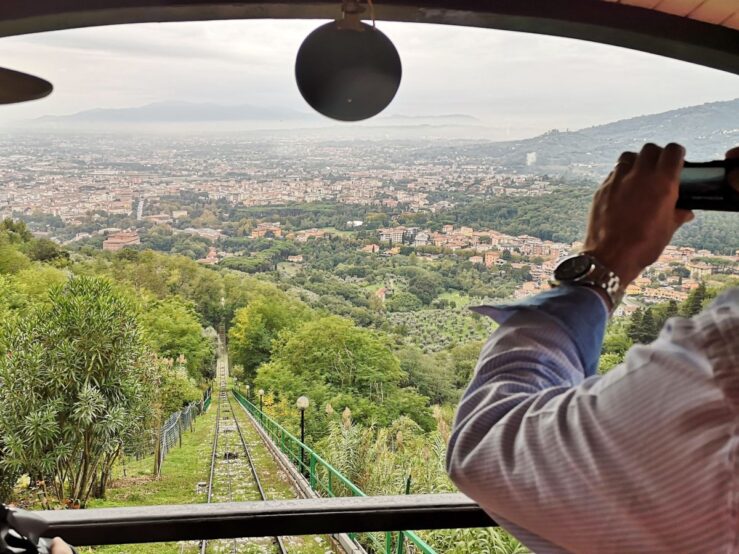
Looking out over Montecatini Terme and the Tuscan landscape while ascending to Montecatini Alto by funicular.
As the car climbs, the view gradually opens across the rooftops and the Valdinievole. The short journey takes only a few minutes, but it provides a useful sense of the geography of Montecatini: the fashionable spa town below and the much older settlement above are physically close, yet they feel distinctly different.
The funicular is also part of Montecatini’s history rather than simply a convenient means of transport. Its inauguration in 1898 took place during the period when the spa resort was becoming an international destination, and Giuseppe Verdi was among those present.
For a first visit, take the funicular upwards and then allow some time to wander before deciding how to return. The contrast between the two parts of Montecatini becomes much clearer when you are not rushing through the village.
Wandering Through Montecatini Alto’s Old Village
Montecatini Alto grew around a medieval fortified settlement, and traces of that defensive past can still be found among the houses and lanes. The village was attacked and largely destroyed during the Florentine siege of 1554, after which its political and strategic importance declined. Some remnants of the old fortifications and towers remain, giving the village a stronger historical character than the elegant spa town below.

Piazza Giusti in Montecatini Alto, where outdoor restaurant tables bring a lively atmosphere to the historic hilltop village.
Piazzetta Giusti forms the social centre of Montecatini Alto. The small square, surrounded by restaurants and wine bars, is a natural place to stop after exploring the lanes. Rather than rushing through it in search of individual monuments, it is worth lingering here and taking in the setting.
Among the village landmarks are the remains of the Rocca and Torre del Mastio, the medieval Palazzo del Podestà with its Loggia del Parlascio, and the Church of San Pietro. The Torre del Carmine, also known as the Clock Tower, is another reminder of the fortified settlement that once occupied the hill.
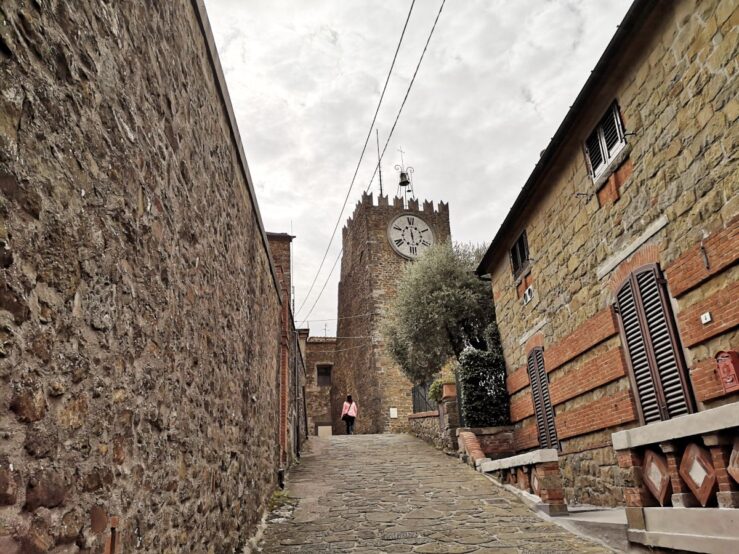
A steep street in Montecatini Alto leading towards the historic clock tower, with the hilltop village unfolding around it.
The pleasure of Montecatini Alto, however, is partly in between the landmarks. Walking uphill through the narrow streets, turning into a small passage, or suddenly finding an opening towards the valley gives the visit a more intimate character than the formal spa quarter below.
| If you have… | Make time for… |
|---|---|
| 1–2 hours | The funicular journey, Piazzetta Giusti, the main historic streets, and the principal towers and remains |
| Half a day | A slower exploration of the village, lunch or a drink in Piazzetta Giusti, and time to enjoy the views |
| A relaxed day | Montecatini Alto combined with the thermal quarter and a leisurely walk through Montecatini Terme |
Montecatini Alto preserves the atmosphere of an older fortified village, although its character is quite different from other Tuscan hill towns such as Volterra, where Etruscan and Roman remains form a much more prominent part of the townscape.
Looking Out Across the Valdinievole
One of the pleasures of reaching Montecatini Alto is seeing the landscape from above. The Valdinievole stretches out below, with wooded hills, olive groves, villages, and patches of farmland creating a softer landscape than the built-up spa town suggests from ground level.
The views are particularly rewarding when the weather is clear. Rather than treating the panorama as a brief photo stop, find a quiet place to look across the valley and you begin to understand why the hilltop settlement was strategically important long before Montecatini became a spa destination.
The contrast is striking: below lies the planned world of thermal gardens, avenues, hotels, and grand spa buildings; above, the older village retains its compact, defensive form. Seeing both in the same visit makes Montecatini easier to understand as a place with two very different identities.
🚞 Go up: Take the funicular from Montecatini Terme rather than driving
🏘️ Wander: Explore the lanes and historic corners before settling in Piazzetta Giusti
🍷 Pause: Have lunch, a coffee, or a drink while enjoying the village atmosphere
🌄 Look out: Allow time for the views across the Valdinievole
🚶 Return: If you enjoy walking, consider descending on foot rather than immediately taking the funicular back
Montecatini Alto works particularly well as part of a day divided between the two sides of Montecatini. Spending the morning among the thermal buildings and gardens, then climbing towards the medieval village in the afternoon, creates a natural change of pace. By the time you are sitting in Piazzetta Giusti looking across the valley, the elegant spa town below feels surprisingly distant.
5. Planning Your Trip to Montecatini Terme
Montecatini Terme is easy to visit as a day trip from Florence or Siena, but allowing more time changes the experience. A few hours are enough for the historic centre and spa quarter, while a full day gives you time to include Montecatini Alto without rushing. Staying overnight lets you experience the town when the daytime visitors have gone and the streets become quieter.
The town is also straightforward to explore on foot. The central spa quarter, Viale Verdi, Piazza del Popolo, and many of the historic buildings are within easy walking distance, while the funicular provides the natural connection with Montecatini Alto.
How Much Time Do You Need?
| Time available | What to do |
|---|---|
| 2–3 hours | Walk through the historic centre and spa quarter, including Viale Verdi and the thermal gardens |
| Half a day | Explore Montecatini Terme and continue to Montecatini Alto by funicular |
| One full day | See the principal sights, explore Montecatini Alto, have lunch, and leave time for wandering |
| One or two nights | Experience the town at a slower pace and use it as a base for exploring Tuscany |
When to Visit Montecatini Terme
Spring and early autumn are particularly appealing for exploring Montecatini, with comfortable conditions for walking and spending time in the gardens and surrounding countryside. Summer brings longer evenings and a lively atmosphere, although it is also a busier period for travelling through Tuscany.
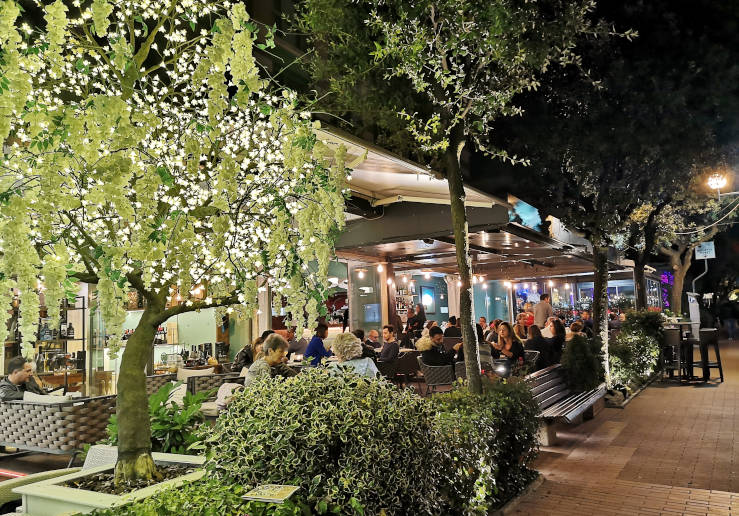
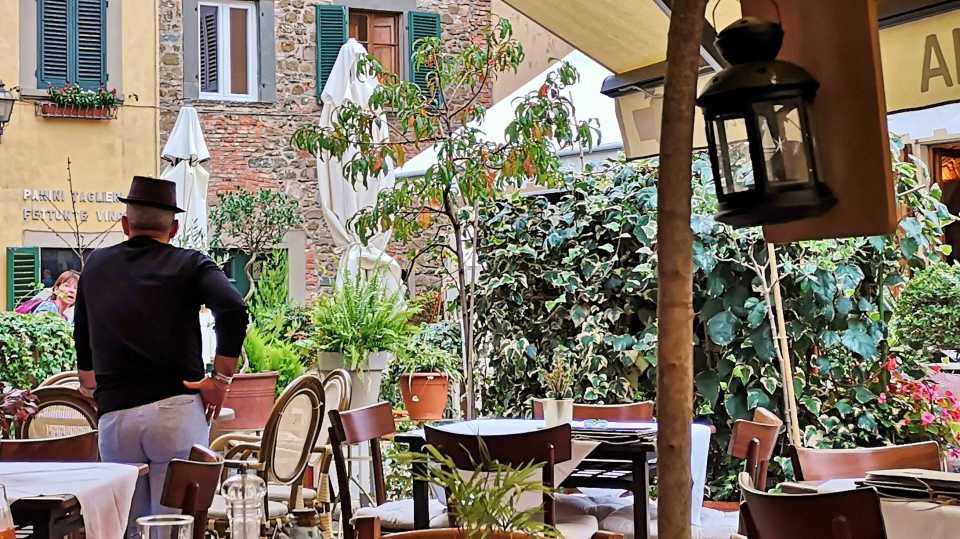
An evening in Montecatini Terme, with people dining outdoors beneath trees and softly glowing lights.
Autumn has its own charm as the surrounding landscape changes colour, while winter is quieter and can suit travellers more interested in architecture, cafés, and the historic character of the spa town.
If the thermal experience is an important reason for your visit, check the current opening arrangements of the individual establishments before travelling. Montecatini’s historic spa buildings do not all operate in the same way today, so it is worth knowing what will actually be available during your stay.
Getting Around
Walking is the best way to experience Montecatini Terme itself. The streets around the thermal quarter and historic centre are relatively compact, and moving between the parks, cafés, squares, and spa buildings on foot allows you to appreciate the town’s distinctive atmosphere.
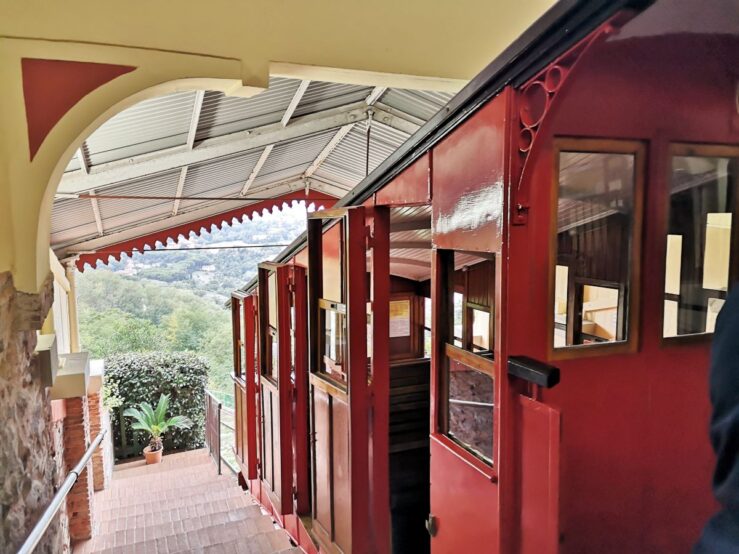
The historic funicular connecting Montecatini Terme with Montecatini Alto.
The funicular to Montecatini Alto is an essential part of the experience rather than simply a means of transport. If you have more time, you can also explore the surrounding hills on foot.
A car becomes more useful if you are using Montecatini as a base for visiting smaller Tuscan villages and countryside attractions. For a stay centred on Montecatini, however, you can comfortably manage without one.
🚶 Walk first: Give yourself time to discover the spa quarter without following a rigid sightseeing schedule
🚞 Go uphill: Include Montecatini Alto for a completely different perspective on the town
♨️ Check before booking: Confirm current opening arrangements if you specifically want a thermal treatment
🌙 Consider staying overnight: The quieter evening atmosphere is one of the pleasures of experiencing Montecatini at a slower pace
Montecatini rewards a little unstructured time. After seeing the main sights, you might find yourself lingering over coffee, walking beneath the trees along Viale Verdi, or watching the evening settle over the town. Those quieter moments are part of what makes Montecatini different from a destination visited simply by moving from one attraction to the next.
6. Montecatini Terme Day Trips and Tuscany Itinerary Ideas
Montecatini Terme works particularly well as a base for exploring central Tuscany. Its position between Florence and Lucca makes it possible to combine the spa town with historic cities, medieval hill towns, and the surrounding countryside without changing accommodation every night.
For a wider Tuscany itinerary, Montecatini can be combined with destinations such as Lucca, Siena, or Volterra, depending on whether you are looking for walled-city atmosphere, medieval heritage, or deeper archaeological history.
The choice depends largely on the kind of day you want. Florence brings Renaissance art and monumental architecture, while Lucca offers a more intimate historic centre. Siena provides a grander medieval experience, while San Gimignano and Volterra offer very different hill-town perspectives. After a day of sightseeing, returning to Montecatini brings you back to a slower rhythm.
Florence: Renaissance Tuscany
Florence makes an obvious day trip from Montecatini if you want to combine the spa town with Tuscany’s great Renaissance city. The contrast is part of the appeal: Florence is filled with museums, churches, palaces, and monumental squares, while Montecatini is centred on thermal culture, gardens, and leisurely promenades.
For a first visit, focus on a manageable area of the historic centre rather than trying to see everything in one day. You can then return to Montecatini in the evening and enjoy a very different atmosphere.
For more inspiration, see the guide to the best things to do in Florence.
Lucca and Siena: Two Different Historic Cities
Lucca is another natural companion to Montecatini. Its Renaissance walls, narrow streets, elegant squares, and compact historic centre make it particularly enjoyable for walking. It is the sort of city where leaving some time for wandering rather than following a strict sightseeing list can be rewarding.
For a closer look at the city, see our guide to Lucca.
Siena offers a very different experience. Its historic centre climbs and descends across the hills, with narrow streets opening unexpectedly onto grand spaces such as Piazza del Campo. The Cathedral and surrounding medieval streets make the city particularly rewarding for travellers interested in history, architecture, and traditional Tuscan urban life.
For more inspiration, explore the guide to Siena in Tuscany.
Either makes a good choice when you want a day devoted to history and architecture before returning to Montecatini for a slower evening.
San Gimignano: Medieval Towers and Tuscan Scenery
San Gimignano provides a more quintessential Tuscan hill-town experience, with its medieval towers rising above the surrounding countryside. The historic centre, atmospheric piazzas, and surrounding vineyards make it a natural choice for combining sightseeing with the landscape and food culture of Tuscany.
If you are particularly interested in medieval towns, you can explore the complete San Gimignano guide for a closer look at what to see and how to plan your visit.
Rather than trying to combine several major destinations in one day, give San Gimignano most of a day and allow yourself time to stop for lunch, look beyond the main streets, and enjoy the countryside on the way back.
Volterra: Etruscan and Roman Tuscany
Volterra offers a very different experience. Its Etruscan origins, Roman remains, medieval streets, and long alabaster tradition give it a sense of history stretching well beyond the medieval Tuscany usually associated with hill towns.
For travellers interested in archaeology and the deeper layers of Tuscan history, Volterra is one of the most rewarding additions to a Montecatini itinerary.
The two destinations also complement one another visually. Montecatini is characterised by its elegant spa architecture and landscaped parks, whereas Volterra rises dramatically above the countryside, with ancient and medieval remains woven into the town itself.
A Slower Day Close to Montecatini
A day trip does not always have to mean driving to another famous destination. If you have already spent a busy day in Florence or another Tuscan city, consider keeping the following day closer to Montecatini.
Montecatini Alto is the obvious choice, but the surrounding Valdinievole also invites a slower exploration of small villages, wooded hills, olive groves, and the Tuscan countryside. This can be one of the most enjoyable ways of experiencing the area, particularly if you are travelling by car.
🎨 Florence: Renaissance art, architecture, museums, and the Medici heritage
🚲 Lucca: Historic streets, Renaissance walls, and a more intimate city atmosphere
🏛️ Siena: Medieval architecture, Piazza del Campo, and a distinctive historic atmosphere
🏰 San Gimignano: Medieval towers, hill-town scenery, and Vernaccia wine
🏺 Volterra: Etruscan and Roman history, medieval streets, and alabaster craftsmanship
🌿 Valdinievole: Countryside, smaller settlements, and a slower Tuscan experience
Montecatini is therefore particularly useful within a longer Tuscany journey. You can spend one day among Renaissance masterpieces, another exploring a medieval hill town, and then return to the spa town to slow down. That change of rhythm is perhaps the most appealing reason to use Montecatini as a base rather than simply passing through it.
7. Where to Stay in Montecatini Terme

Gioachino Rossini spent extended periods at the Locanda Maggiore in Montecatini; his music room is still preserved there today.
Staying overnight gives you a chance to experience Montecatini beyond its thermal establishments. The town is at its most interesting when you are not rushing through it: walking along Viale Verdi, lingering over dinner, or sitting in a café as the evening begins.
If you are planning to use Montecatini as a base for exploring Tuscany, its central position also makes staying for several nights particularly practical. Florence, Lucca, Pistoia, and other destinations can be reached as day trips, allowing you to return to the same hotel rather than changing accommodation every day.
8. Montecatini Terme Travel FAQs
Is Montecatini Terme worth visiting?
Yes, especially if you enjoy historic spa towns, architecture, gardens, and a slower pace of travel. Montecatini Terme combines grand thermal establishments, Belle Époque and Liberty architecture, elegant avenues, cafés, and the hilltop village of Montecatini Alto. It is also one of the eleven towns included in the UNESCO World Heritage property The Great Spa Towns of Europe, which recognises the development of European spa culture from the eighteenth century to the 1930s.
How long do you need in Montecatini Terme?
A full day is enough to explore the main spa quarter, walk along Viale Verdi, see the historic centre, and visit Montecatini Alto. If you want to experience the town at a more relaxed pace, staying one or two nights is worthwhile. An overnight stay also makes it easier to enjoy the town in the evening and use Montecatini as a base for exploring Tuscany.
Is Montecatini Terme a good base for exploring Tuscany?
Yes. Montecatini Terme is well placed for combining a spa-town stay with day trips to cities and historic towns in Tuscany. Florence, Lucca, Pistoia, Siena, San Gimignano, and Volterra can all be considered when planning a wider itinerary, although travel times vary and some destinations are better suited to a full day. Staying in Montecatini can be particularly appealing if you prefer returning to the same hotel rather than changing accommodation between destinations.
How do you get to Montecatini Alto?
The most enjoyable way to reach Montecatini Alto is by the historic funicular from Montecatini Terme. The railway opened in 1898 and connects the spa town with the hilltop village, making the journey part of the experience. Once in Montecatini Alto, you can explore the historic streets, Piazzetta Giusti, remnants of the old fortifications, and the viewpoints across the Valdinievole.
Can you visit Montecatini Terme without a car?
Yes. Montecatini Terme itself is compact enough to explore largely on foot, with the main spa quarter, Viale Verdi, Piazza del Popolo, gardens, cafés, and historic buildings within a manageable area. The funicular provides the natural connection with Montecatini Alto. A car becomes more useful if you want to explore smaller villages and countryside attractions beyond the town.
When is the best time to visit Montecatini Terme?
Spring and early autumn are particularly pleasant for walking, exploring the spa gardens, and visiting Montecatini Alto. Summer offers longer evenings and a livelier atmosphere but can be busier. Autumn can be attractive for exploring the surrounding Tuscan landscape, while winter is quieter and may suit visitors more interested in architecture, cafés, and the historic character of the town. If visiting specifically for thermal treatments, check the current opening arrangements of the individual establishments before travelling.
Continue Exploring Tuscany
Montecatini Terme makes a particularly good base for exploring Tuscany. Within easy reach are Renaissance cities, medieval hill towns, historic walled towns, and the quieter landscapes of the Valdinievole. Continue your journey with some of our guides to Tuscany’s most rewarding destinations.
- 🏛️ Florence – Renaissance art, architecture, museums, and the extraordinary heritage of the Medici.
- ⚔️ Siena – Medieval streets, Gothic architecture, Piazza del Campo, and the enduring traditions of the historic Palio.
- 🚲 Lucca – An elegant walled city of historic streets, churches, Renaissance architecture, and tree-lined city walls.
- 🗼 San Gimignano – Medieval towers, atmospheric streets, hilltop views, and the surrounding Tuscan countryside.
- 🏺 Volterra – Etruscan and Roman history, medieval streets, archaeology, and Volterra’s distinctive alabaster tradition.
- 🚗 Day Trips from Florence – Ideas for exploring Tuscany beyond the Renaissance capital, including historic towns and countryside destinations.
- 🍷 Tuscany Travel Guide – Explore Tuscany’s cities, hill towns, countryside, cultural heritage, and travel ideas.