



Where to Stay in Tuscany: Best Areas, Towns & Hotels
By ANL | UPDATED:
All photographs in this article were taken by Travel In Culture.
Where to Stay in Tuscany
Tuscany offers an extraordinary range of places to stay, from historic cities and medieval hill towns to vineyards, country estates, agriturismi, and coastal resorts. Choosing where to stay therefore depends as much on how you want to experience Tuscany as on which sights you want to visit. Our cultural travel method offers a useful way to think about destinations through their historical, architectural, cultural, and landscape layers.
Tuscany is a large and varied region, and there is no single best base for everyone. Florence is particularly convenient for first-time visitors and travellers without a car, while Siena offers a more intimate medieval atmosphere and a central position for exploring southern Tuscany. For vineyards and countryside, Chianti is an attractive choice, while the Val d’Orcia is ideal for scenic rural stays and romantic getaways.
Other options include San Gimignano for a classic Tuscan hill-town experience, Lucca for a relaxed historic city stay, and the Tuscan coast if beaches and seaside resorts are part of your plans.
🏛️ First time in Tuscany: Florence or Siena
🚆 Without a car: Florence, Siena, or Lucca
🍷 Wine and countryside: Chianti
❤️ Romantic escape: Val d’Orcia or Chianti
🏰 Medieval hill-town experience: San Gimignano
🚗 Tuscany road trip: Chianti, Val d’Orcia, or a countryside base
🌊 Beach holiday: The Tuscan coast
The right choice also depends on whether you want to stay in a historic centre or in the countryside. A town makes sightseeing and dining easier, particularly if you are travelling without a car, while a countryside hotel or agriturismo offers a slower experience surrounded by vineyards, olive groves, and Tuscan landscapes.
This guide focuses on the best areas and towns to stay in Tuscany rather than providing a hotel list for every destination. The aim is to help you choose the right base for your trip, whether you are visiting Tuscany for the first time, travelling as a couple, exploring by car, or looking for a countryside retreat.
For more detailed accommodation advice within individual destinations, see our guides to where to stay in Florence and where to stay in Siena. And if you are deciding how to combine different parts of the region, our Tuscany itineraries and road trips provide ideas for planning your route.
Where to Stay in Tuscany: Quick Overview
If you are wondering where to stay in Tuscany, the best choice depends on the kind of trip you are planning. Tuscany combines major cultural cities, medieval hill towns, wine country, rolling countryside, and a Mediterranean coastline, so staying in the right part of the region can make a significant difference to your experience.
For a first visit, Florence is often the easiest base, particularly if you are travelling without a car and want to combine Tuscany with the city’s Renaissance heritage. Siena is a better choice if you want to stay in a historic Tuscan city with a more intimate medieval atmosphere.
If your priority is the Tuscan countryside, consider staying in Chianti or the Val d’Orcia rather than in a city. Here, the accommodation itself can be part of the experience, whether you choose an agriturismo, historic villa, country estate, or hotel surrounded by vineyards and olive groves.
| Place | Best for | Without a car | Atmosphere |
|---|---|---|---|
| Florence | First-time visitors, art & culture | ★★★★★ | Historic city |
| Siena | Medieval Tuscany & central location | ★★★★☆ | Medieval city |
| Lucca | Relaxed city stays & families | ★★★★★ | Walled city |
| Chianti | Wine, countryside & couples | ★★☆☆☆ | Rural |
| San Gimignano | Hill towns & classic Tuscany | ★★☆☆☆ | Medieval hill town |
| Val d’Orcia | Romance, scenery & countryside | ★☆☆☆☆ | Rural / scenic |
| Tuscan Coast | Beaches & summer holidays | ★★★☆☆ | Seaside |
🏛️ Florence: Best for art, architecture, museums, first-time visitors, and travelling without a car
🏰 Siena: Best for medieval history, atmosphere, and exploring central and southern Tuscany
🚶 Lucca: Best for a relaxed historic-city stay and easy independent travel
🍷 Chianti: Best for vineyards, wine, countryside, and romantic stays
🗼 San Gimignano: Best for a classic medieval hill-town experience
❤️ Val d’Orcia: Best for scenic countryside, romantic escapes, and rural accommodation
🌊 Tuscan Coast: Best for combining Tuscany with a beach holiday
There is also an important difference between staying in a Tuscan town and staying in the countryside. A town is usually the better option if you want restaurants, sightseeing, and public transport close at hand. A rural property can be much more rewarding if you have a car and want to wake up among vineyards, olive groves, cypress trees, and rolling hills.
For many travellers, the ideal solution is therefore not to choose one place for the whole trip. If you have a week or more, you can combine Florence with a countryside or southern Tuscany stay, giving you both easy access to major cultural sights and a slower experience of the Tuscan landscape.
Best Places to Stay in Tuscany by Travel Style
There is no single best place to stay in Tuscany. The ideal base depends on whether you want to spend your days visiting museums and historic cities, driving through vineyards, relaxing at a countryside hotel, or combining sightseeing with time by the sea.
The following choices are a useful starting point if you already know what kind of Tuscany trip you want.
Florence
The easiest choice if you want Renaissance art, major museums, historic architecture, restaurants, and good public transport.
Siena
Choose Siena for medieval streets, Gothic architecture, Piazza del Campo, and a distinctly Tuscan city atmosphere.
Chianti
Ideal for vineyards, olive groves, country estates, wine experiences, and scenic drives between Tuscan villages.
Val d’Orcia
A particularly attractive choice for couples and travellers looking for landscapes, historic villages, spas, and atmospheric countryside accommodation.
Lucca
A good option if you prefer a compact historic centre, pedestrian-friendly streets, city walls, and a slower pace.
Tuscan Coast
Choose the coast if you want to combine Tuscany’s cultural attractions with beaches, seaside towns, and summer relaxation.
Florence – Best for First-Time Visitors
Florence is the best choice for a first trip to Tuscany if you want Renaissance art, museums, historic architecture, restaurants, and easy day trips. Our Florence itineraries can help you decide how many days to spend in the city and how to combine it with wider Tuscany. It is also the best base without a car, with good public-transport connections to several Tuscan destinations.
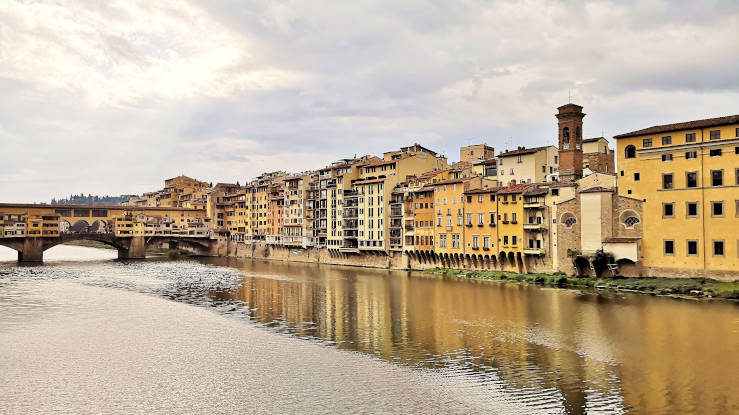
Ponte Vecchio and the Arno River in Florence, with the city’s historic centre easily explored on foot.
For neighbourhoods and accommodation options, see our guide to where to stay in Florence.
Siena – Best for Medieval Tuscany
Siena is ideal if you want to stay in a historic Tuscan city with a strong medieval atmosphere. Its location also makes it a useful base for exploring southern and central Tuscany.
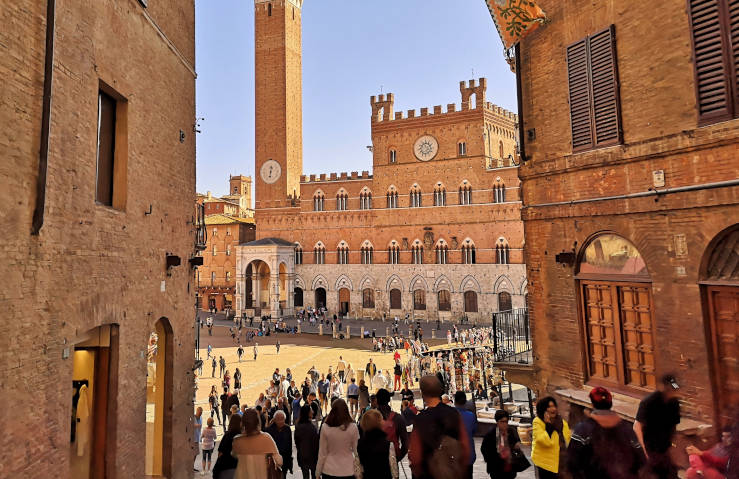
Piazza del Campo, the heart of Siena’s historic centre, captures the medieval atmosphere that makes the city an appealing base in Tuscany.
See our guide to where to stay in Siena for the best areas and accommodation options.
Chianti – Best for Wine and Countryside
Chianti is a good choice if you want the Tuscan countryside to be part of your stay. Vineyards, olive groves, historic villages, agriturismi, country estates, and villas offer a very different experience from staying in a city.
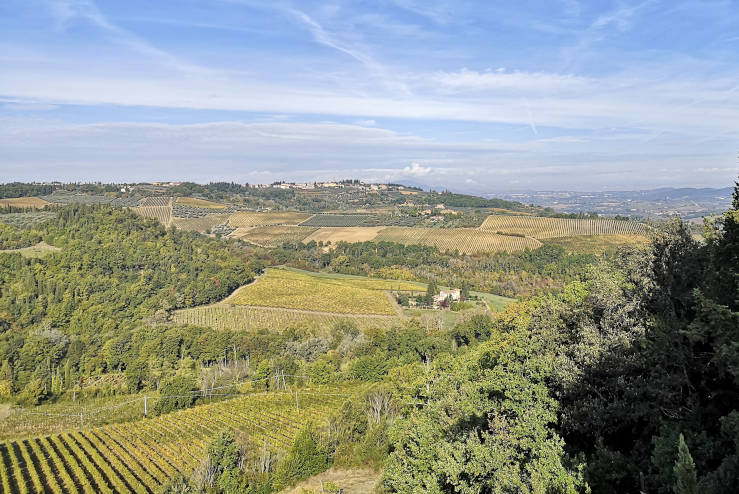
The Chianti countryside, with vineyards, olive groves, small forests, and a hilltop village, is ideal for a rural Tuscan stay.
A car is particularly useful, as many rural properties are away from railway stations and major bus routes.
Val d’Orcia – Best for a Countryside Escape
The Val d’Orcia is ideal for travellers looking for rolling landscapes, historic hill towns, vineyards, thermal springs, and a slower rural atmosphere. Pienza, Montalcino, San Quirico d’Orcia, and Bagno Vignoni are among the possible bases.
A car is strongly recommended, particularly if you want to stay in the countryside between the towns.
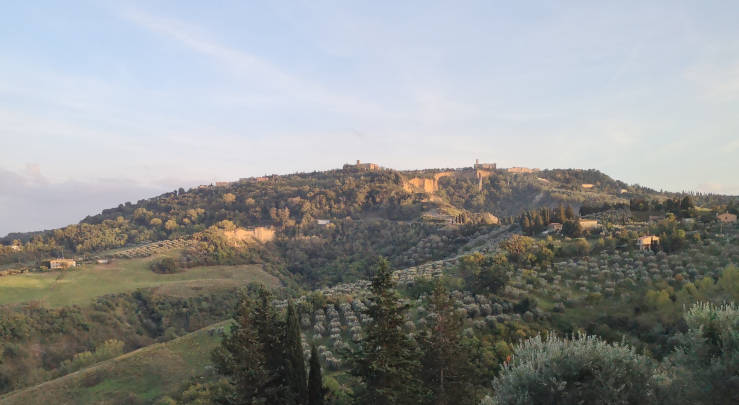
A hilltop village surrounded by olive groves illustrates the rural landscapes that make a countryside stay in Tuscany so distinctive.
Lucca – Best for a Relaxed Historic-City Stay
Lucca is a good alternative to Florence if you want a smaller historic city with a relaxed atmosphere. Its compact centre and Renaissance walls are easy to explore on foot, and the railway station makes it a convenient choice without a car. See our guide to where to stay in Lucca for advice on the best areas.
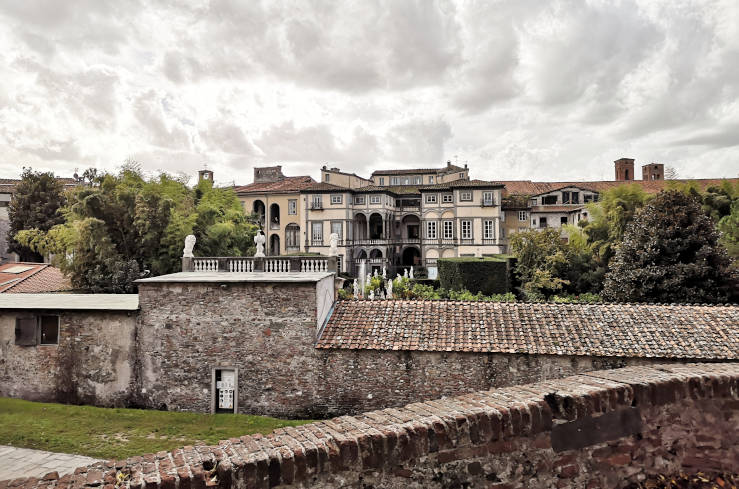
Lucca’s Renaissance walls offer views across the historic centre and surrounding neighbourhoods, highlighting the city’s compact and relaxed character.
The Tuscan Coast – Best for a Beach Holiday
For a summer holiday combining Tuscany with time by the sea, consider the Tuscan coast. Beach resorts, sandy beaches, pine forests, and Mediterranean landscapes offer a different side of the region and work particularly well for families.
The coast is less convenient, however, if your main aim is to explore Florence, Siena, Chianti, and the Val d’Orcia.
Choose Florence for culture and car-free travel.
Choose Siena for medieval atmosphere and a central southern-Tuscany base.
Choose Chianti for wine and countryside.
Choose the Val d’Orcia for romance and landscapes.
Choose Lucca for a relaxed historic-city stay.
Choose the coast for beaches and a summer holiday.
Where to Stay in Tuscany Without a Car
You can explore Tuscany without renting a car, but choosing the right base becomes more important. For a car-free trip, the easiest approach is usually to stay in a well-connected historic city or town rather than in a rural property.
Florence is the strongest overall base without a car. It combines a major cultural experience with excellent regional connections, making it possible to stay in one hotel while exploring other parts of Tuscany on day trips.
Lucca and Siena are also good choices if you prefer to stay in a smaller historic city. Both have compact centres that can be explored on foot and work well for travellers who do not want to drive.
🚆 Florence: Best overall for transport, culture, and flexibility
🚶 Lucca: Best for a relaxed historic-city stay
🏛️ Siena: Best for medieval atmosphere and central Tuscany
The main limitation is the Tuscan countryside. Chianti, the Val d’Orcia, and other rural areas are much more difficult to experience independently without a car, particularly if you want to stay at a countryside hotel, villa, or agriturismo away from a town.
If you are travelling without a car, prioritising location and transport connections over rural seclusion is usually the better approach. You can still experience Tuscany’s countryside through day trips and organised excursions while keeping a convenient base in a historic town. For current train schedules and connections, see Trenitalia.
For ideas on how to combine Florence with excursions into Tuscany, see our Florence day trips guide. For longer journeys through the region, see our Tuscany itineraries.
Best Tuscany Bases for a First Trip
For a first trip to Tuscany, the best place to stay depends on whether you want to prioritise Renaissance cities, medieval towns, or the Tuscan countryside. There is no need to change hotels every night: one well-chosen base can work very well for a first visit.
Florence is the easiest choice if you want to combine Tuscany with its extraordinary Renaissance heritage. It offers the greatest concentration of major cultural sights and is particularly practical if you are travelling without a car.
Siena is a better choice if you want your accommodation itself to feel more immersed in historic Tuscany. Its medieval centre provides a very different atmosphere from Florence and makes a good base for exploring central and southern parts of the region.
If your priority is the Tuscan countryside, consider staying outside the major cities. Chianti is particularly attractive for vineyards, wine estates, and scenic drives, while the Val d’Orcia is better suited to travellers looking for dramatic landscapes, hill towns, thermal experiences, and a slower rural stay.
🏛️ Choose Florence if culture, Renaissance heritage, and convenience are your priorities.
🏰 Choose Siena if you prefer medieval atmosphere and a smaller historic city.
🍷 Choose Chianti if the countryside and wine are central to your trip.
🌄 Choose Val d’Orcia if you want landscapes, hill towns, and a rural escape.
For a first visit of only a few days, trying to cover the whole region from a remote countryside base can make the trip feel unnecessarily rushed. Staying in a central city such as Florence or Siena makes it easier to combine historic sights with excursions, while a rural base becomes more attractive when you have several days and a car.
If you are staying for longer, splitting your accommodation between two different parts of Tuscany can also work well. For example, you could combine a city stay with several nights in the countryside rather than spending the entire trip in one location.
Best Places for a Romantic Tuscany Stay
Tuscany is particularly well suited to a romantic getaway, whether you picture a historic hotel in a medieval town, a countryside estate surrounded by vineyards, or a secluded property with views across the hills.
For couples, staying in the Val d’Orcia offers a particularly appealing way of experiencing Tuscany. Its rolling landscapes, hilltop villages, vineyards, thermal springs, and historic country properties create a slower atmosphere, with time to explore the villages, enjoy the scenery, and simply settle into the rhythm of the countryside.
Chianti is another strong choice, especially if wine, food, and countryside scenery are part of the experience you are looking for. Staying at a vineyard estate, agriturismo, or country hotel can make the accommodation an important part of the trip rather than simply a place to sleep.
Best for landscapes
Romantic countryside hotels, hill towns, vineyards, and thermal experiences.
Best for wine & food
Vineyard stays, agriturismi, country estates, and scenic countryside.
Best for historic atmosphere
A romantic alternative if you prefer medieval streets and a walkable historic centre.
If you prefer a city break with restaurants, museums, and evening activity, Florence or Siena may be more suitable than a rural property. Florence offers more choice and convenience, while Siena provides a smaller and more intimate historic setting.
For a countryside stay, a car is strongly recommended. Rural properties are often located away from public transport, and having your own transport makes it easier to explore villages, wineries, viewpoints, and restaurants.
Choose the Val d’Orcia for landscapes and tranquillity.
Choose Chianti for wine, food, and countryside properties.
Choose Siena for medieval atmosphere without staying in the countryside.
Where to Stay in Tuscany for a Road Trip
If you are exploring Tuscany by car, you have much more freedom when choosing where to stay. You can stay outside the main cities, explore smaller villages, and make the journey between destinations part of the experience.
For a road trip, Chianti is one of the most convenient areas for a countryside base. Its vineyards, hilltop villages, wine estates, and scenic roads make the landscape itself part of the journey. A countryside hotel or agriturismo can work particularly well here.
The Val d’Orcia is another excellent choice, especially if you want to explore southern Tuscany. Staying around Pienza, Montalcino, San Quirico d’Orcia, or another small town gives you easy access to the surrounding countryside and historic villages.
If you want to combine several parts of Tuscany, Siena can also make a useful intermediate base. Its position allows you to reach both central and southern parts of the region while still having the advantages of a historic city.
For a road trip, however, there is no need to choose a base purely for its transport connections. Instead, consider parking, location, and access to the countryside. A property just outside a historic town may be more convenient by car than accommodation inside the centre, where traffic restrictions and limited parking can make arrival more complicated.
🚗 Free or convenient parking: Particularly important if you are staying in or near a historic centre.
📍 Good road access: Avoid properties that require long drives on difficult rural roads unless that is part of the experience you want.
🌿 Countryside location: Consider an agriturismo or country estate if the landscape is an important part of your trip.
🏛️ Historic-town access: Staying just outside a town can give you both parking and easy access to restaurants and evening walks.
A road trip also makes it easier to combine a countryside stay with visits to smaller destinations that are less convenient by public transport. For longer routes through the region, see our Tuscany itineraries and road trips.
Hotels, Agriturismi & Other Places to Stay
Where you stay in Tuscany can be part of the experience itself. A historic hotel in a medieval town, a farmhouse surrounded by vineyards, or a restored country estate each gives you a different way of experiencing the region.
Rather than choosing accommodation only by price or location, consider what kind of Tuscany you want to wake up in. This is particularly important once you leave the larger cities, where the accommodation can become an integral part of the landscape and local character.
Historic Hotels in Tuscany
Staying in a historic centre is often the simplest way to experience Tuscany if you want to spend your evenings walking to restaurants, cafés, and squares. In cities such as Florence, Siena, and Lucca, a hotel can place you directly within the architectural and cultural landscape that brought you to Tuscany in the first place.
For a first visit or a shorter stay, this type of accommodation also has a practical advantage: you can spend more time exploring and less time travelling to and from your hotel.
Agriturismi and Countryside Stays
An agriturismo offers a different experience. These properties are typically connected to agricultural land and can provide a much stronger sense of rural Tuscany than a conventional hotel.
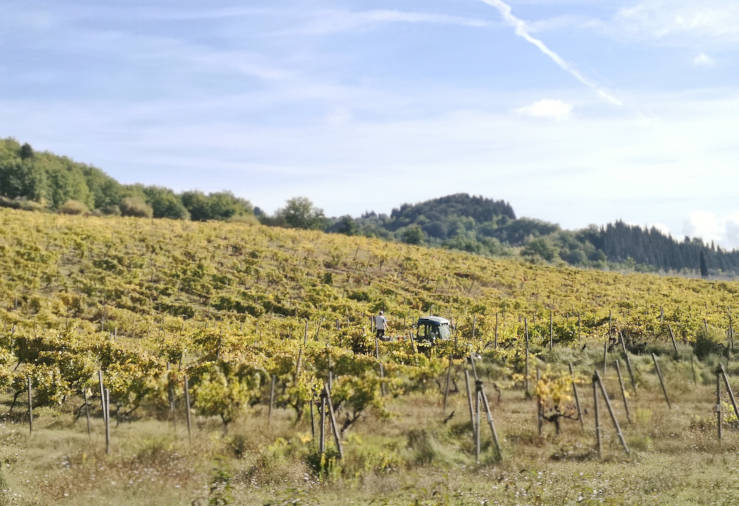
A wine farmer works among the vines in the Tuscan countryside, illustrating the agricultural landscape associated with rural stays and agriturismi.
They are particularly appealing in areas such as Chianti and the Val d’Orcia, where vineyards, olive groves, cypress-lined roads, and rolling hills form an important part of the landscape. Some properties are simple and farm-like, while others have been transformed into highly comfortable countryside retreats.
The trade-off is convenience: a rural stay usually works best with a car, and you may be farther from restaurants, shops, and public transport.
How to Choose Your Tuscany Accommodation
Thinking of accommodation as part of the itinerary, rather than simply somewhere to sleep, can change the way a stay in Tuscany feels. Waking up among vineyards and olive groves, for example, makes the countryside itself part of the experience.
If you want to walk out of your hotel into a historic centre, choose Florence, Siena, Lucca, or another town. If you want to wake up among vineyards and olive groves, look towards an agriturismo or country estate. And if you are travelling with family or friends for a longer stay, a villa or apartment may provide the space and independence that a hotel cannot.
🏛️ Historic city atmosphere: Hotel in Florence, Siena, or Lucca
🌿 Rural Tuscany: Agriturismo or countryside hotel
🍷 Wine & landscape: Vineyard estate or country property
🏡 Longer or group stay: Villa or apartment
🚗 Remote countryside property: Best with a car
The most memorable Tuscany stays are often those where the accommodation and the landscape belong together. That is one reason to consider staying outside the main cities for at least part of a longer trip, rather than treating your hotel simply as a convenient base between sightseeing days.
Tuscany Where to Stay FAQs
What is the best area to stay in Tuscany?
The best area depends on your trip. Florence is the easiest choice for first-time visitors and travellers without a car, while Siena suits those looking for a historic base. Choose Chianti for vineyards and countryside, the Val d’Orcia for scenic rural stays, or the Tuscan coast for a beach holiday.
Is it better to stay in Florence or in the Tuscan countryside?
It depends on how you want to experience Tuscany. Florence is more convenient for museums, historic sights, restaurants, and travelling without a car. A countryside stay offers more space, scenery, and a slower atmosphere, but usually works best if you have a car.
Where should I stay in Tuscany without a car?
Florence is generally the easiest base without a car, thanks to its railway connections and frequent public transport. Siena and Lucca are also good options if you prefer a smaller historic city. Rural accommodation in Chianti or the Val d’Orcia is considerably more difficult to reach and explore independently without a car.
How many nights should I stay in Tuscany?
For a first visit, 5–7 nights gives you enough time to combine a historic city with countryside or smaller towns without constantly changing accommodation. With only a few nights, choosing one well-connected base can make the trip more relaxed.
Is Tuscany better for a hotel or an agriturismo?
Choose a hotel if you prioritise a central location, restaurants, sightseeing, and convenient transport. Choose an agriturismo if you want vineyards, countryside landscapes, outdoor space, and a more rural experience. Agriturismi are generally most convenient with a car.
Should I stay in one place or move around Tuscany?
For most first-time visitors, one or two bases are enough. Staying in one place reduces packing and driving, while two bases can combine the convenience of a city with the atmosphere of the countryside. Moving every night is usually unnecessary unless you are specifically planning a road trip.