



Where to Stay in Siena: Best Areas & Hotels for Every Traveller
By ANL | UPDATED:
All photographs in this article were taken by Travel In Culture.
This guide to where to stay in Siena explains the city’s best areas based on atmosphere, convenience, and travel style. Whether you are visiting Siena for the first time, planning a romantic Tuscan getaway, or using the city as a base for exploring the surrounding countryside, it will help you choose the area that suits you best.
If you are planning your wider trip, you may also enjoy our Siena travel guide, Tuscany travel guide, and Italy travel hub for attractions, itineraries, and cultural travel inspiration.
This guide follows our Cultural Travel Method, which focuses on choosing accommodation based on experience, atmosphere, and travel style rather than simply price or hotel ratings.
Selected for Overall Appeal → Hotel Athena
Selected for Historic Centre Location → Albergo Chiusarelli
Selected for A Quiet Stay → Hotel Certosa di Maggiano
Selected for Drivers → Hotel Santa Caterina
1. Where to Stay in Siena: Quick Overview
Siena is much smaller than Florence, making it easy to explore on foot regardless of where you stay. The main decision is whether you want to stay inside the medieval city walls, where historic surroundings and walkability are the biggest advantages, or just outside the centre, where hotels often offer easier parking, larger rooms, and quieter surroundings.
If you are planning your sightseeing, our Siena travel guide covers the city’s main attractions, walking routes, and practical travel tips.
| Area | Best For | Atmosphere |
|---|---|---|
| Historic Centre | First-time visitors and sightseeing | Medieval, lively, and highly walkable |
| San Domenico & Fortezza Area | Quieter stays close to the centre | Relaxed, scenic, and convenient |
| Outside the City Walls | Parking, road trips, and longer stays | Peaceful, spacious, and surrounded by countryside |
For most visitors, the Historic Centre is the best place to stay in Siena. It places Piazza del Campo, Siena Cathedral, Torre del Mangia, restaurants, and museums within a short walk, while allowing you to experience the city’s unique medieval character from early morning until late evening. Travellers arriving by car or planning to explore Tuscany may prefer accommodation just outside the city walls, where parking is easier and hotels often offer more space and countryside views.
The good news is that almost everywhere recommended in this guide is within a 10 to 20-minute walk of Piazza del Campo, making Siena one of Italy’s easiest historic cities to explore on foot.
🏛️ First-time visitors → Historic Centre
🚶 Walk everywhere → Historic Centre
🌿 Quieter atmosphere → San Domenico & Fortezza Area
🚗 Parking & Tuscany road trips → Outside the City Walls
💕 Romantic city break → Historic Centre or San Domenico Area
💡 Simple rule: If this is your first visit to Siena, stay inside the medieval city walls. The historic centre is compact enough to explore almost entirely on foot, while hotels just outside the walls offer easier parking and a quieter setting.
2. Best Area to Stay in Siena for First-Time Visitors
If you are visiting Siena for the first time, the Historic Centre is the best area to stay. Within the medieval city walls, you will be within easy walking distance of Piazza del Campo, Siena Cathedral, Torre del Mangia, and most of the city’s museums, churches, restaurants, and cafés. Staying here also allows you to experience Siena at its most atmospheric in the early morning and evening, when many day visitors have left. For ideas on what to see, our Siena travel guide covers the city’s main attractions and walking routes.
Unlike larger Italian cities, Siena is remarkably compact. Nearly all of the main sights can be reached on foot within 15 to 20 minutes, making location less about transport and more about the type of experience you want. Staying inside the historic centre means spending your entire visit surrounded by medieval streets, Gothic architecture, and lively piazzas.
For most first-time visitors, the convenience of staying within the city walls outweighs the slightly higher accommodation prices. You can easily explore the city without needing buses, taxis, or a car, while restaurants, wine bars, and cultural attractions remain close at hand throughout your stay.
(who should stay here)
🏛️ First-time visitors to Siena
🚶 Walking to Piazza del Campo, the Duomo, and major attractions
📸 Classic medieval atmosphere and sightseeing
Why Stay in Siena’s Historic Centre?
The Historic Centre offers the most immersive experience of Siena. Staying within the medieval walls means stepping outside your hotel into a maze of narrow brick streets, historic churches, and lively piazzas that have changed remarkably little over the centuries. Many of the city’s most memorable moments come not from visiting individual landmarks, but simply from wandering between them.
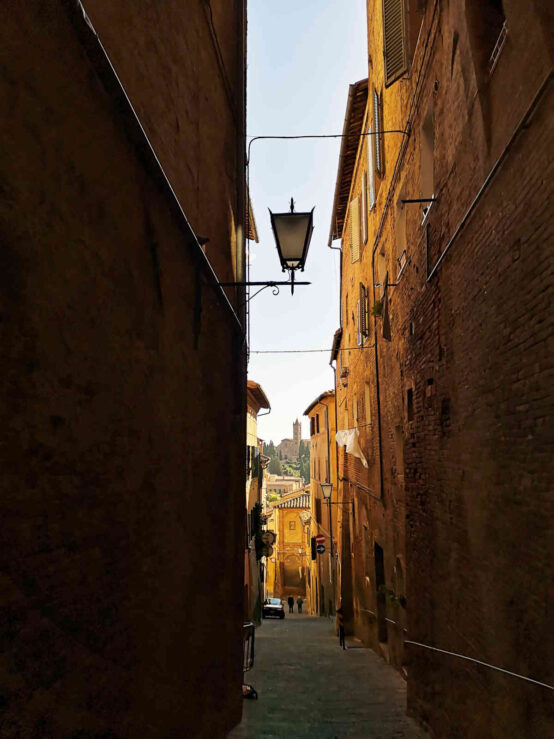
Staying in Siena’s historic centre means discovering quiet medieval streets and unexpected rooftop views between the city’s famous landmarks | Photo: Travel In Culture
Staying within Siena’s medieval walls provides several benefits:
- Walking distance to Siena’s main attractions
- Exceptional medieval atmosphere
- Excellent choice of restaurants, cafés, and wine bars
- No need for public transport during your stay
The main disadvantages are that accommodation is often more expensive, parking is limited, and many streets are steep or pedestrianised. If you are arriving by car, you may find it easier to stay just outside the city walls, where several hotels offer private parking while remaining within walking distance of the historic centre.
While the Historic Centre is the best choice for most first-time visitors, other areas may better suit your travel style. The next section compares the best places to stay for travellers seeking quieter surroundings, easier parking, or a convenient base for exploring the wider Tuscany region.
3. Best Areas to Stay in Siena by Travel Style
The best place to stay in Siena depends largely on how you plan to experience the city. While the Historic Centre is the best choice for most first-time visitors, other areas may be a better fit depending on your priorities. Some travellers want to stay within the medieval walls, while others prefer quieter surroundings, easier parking, or a convenient base for exploring the Tuscan countryside. This approach follows our Cultural Travel Method, where accommodation is chosen to enhance the overall travel experience rather than simply offering the lowest price.
Siena is compact enough that even hotels just outside the city walls remain within comfortable walking distance of the historic centre. As a result, choosing where to stay is less about distance and more about ambience, convenience, and travel style.
First-Time Visitors → Historic Centre
Romantic Getaways → Historic Centre or San Domenico Area
Quiet Atmosphere → San Domenico & Fortezza Area
Driving & Parking → Outside the City Walls
Tuscany Base → Outside the City Walls
Best Area for a Romantic Stay
Siena’s medieval streets, intimate piazzas, and historic hotels make it one of Tuscany’s most romantic cities. Staying within the Historic Centre allows you to wander atmospheric lanes after the crowds have departed, while hotels around San Domenico combine peaceful surroundings with beautiful views over the city’s rooftops.
Best Area for a Quiet Stay
If you prefer a more relaxed atmosphere, the San Domenico and Fortezza area offers a good balance between convenience and tranquillity. You remain within easy walking distance of Piazza del Campo and the Duomo, while avoiding some of the busiest streets in the heart of the city.
Best Area if You Are Driving
Visitors arriving by car often find accommodation outside Siena’s medieval walls the most practical choice. Many hotels offer private parking, and you can usually reach the historic centre with a short walk through one of the city gates, avoiding the restrictions of Siena’s limited traffic zone (ZTL).
Whether you choose to stay within the medieval walls or just beyond them, Siena remains an exceptionally walkable city. The following sections explore each area in more detail and include carefully selected hotel recommendations for different travel styles and budgets.
4. Historic Centre: Best Place to Stay in Siena
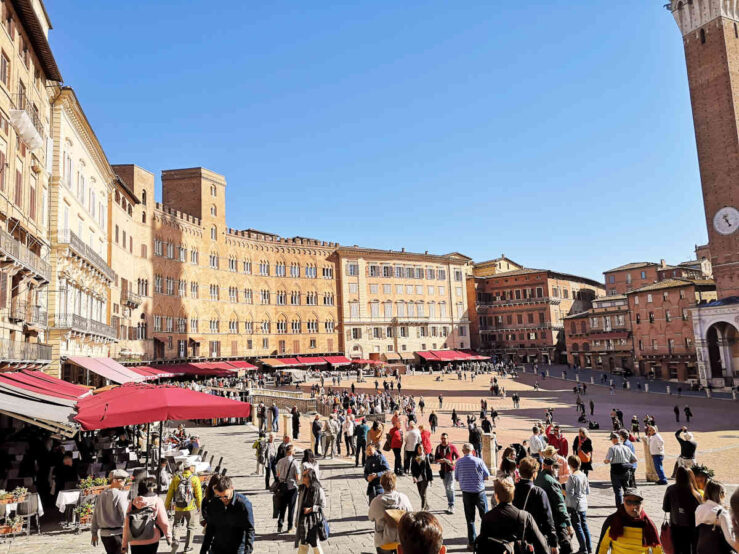
Many of Siena’s hotels are located within a short walk of Piazza del Campo, making it an ideal base for exploring the city’s medieval streets, Siena Cathedral, and main attractions on foot.
(who should stay here)
🏛️ First-time visitors to Siena
🚶 Walking to Piazza del Campo and Siena Cathedral
📸 Classic medieval atmosphere and sightseeing
The Historic Centre is the best place to stay in Siena for most visitors. Enclosed by medieval walls and recognised as a UNESCO World Heritage Site, it places you within a short walk of Piazza del Campo, Siena Cathedral (Duomo), Palazzo Pubblico, Torre del Mangia, and countless historic streets, churches, and artisan shops. Siena’s historic centre is divided into seventeen historic contrade, each with its own traditions, symbols, and role during the famous Palio horse race. If you are planning your sightseeing, our Siena travel guide covers the city’s principal attractions and walking routes in greater detail.
Many visitors arrive by train. Local buses connect Siena railway station with the historic centre, although many visitors choose to walk or take a taxi to their accommodation.
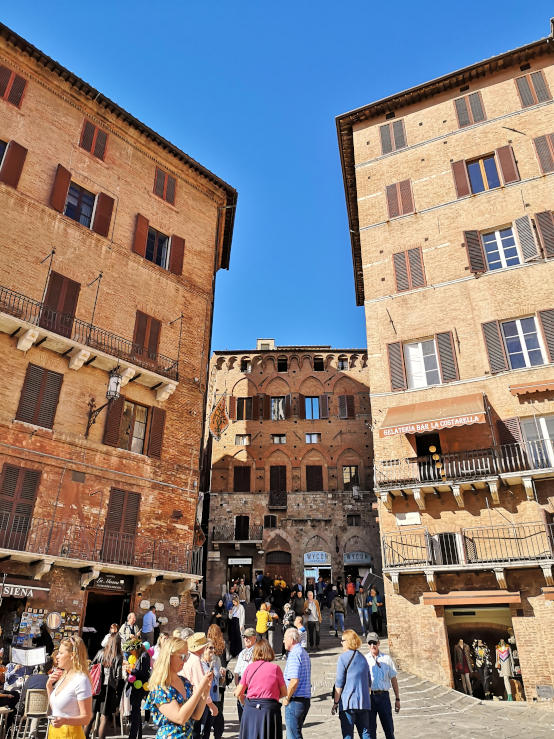
Narrow medieval streets converge on Piazza del Campo, making Siena’s compact historic centre easy and enjoyable to explore on foot from almost any central hotel.
One of Siena’s greatest advantages is its compact size. Unlike larger Italian cities, nearly all of the main sights can be reached on foot within ten to fifteen minutes, allowing you to experience the city without relying on public transport. Staying within the medieval walls also lets you enjoy Siena early in the morning and after most day visitors have left, when its medieval streets become noticeably quieter and more atmospheric.
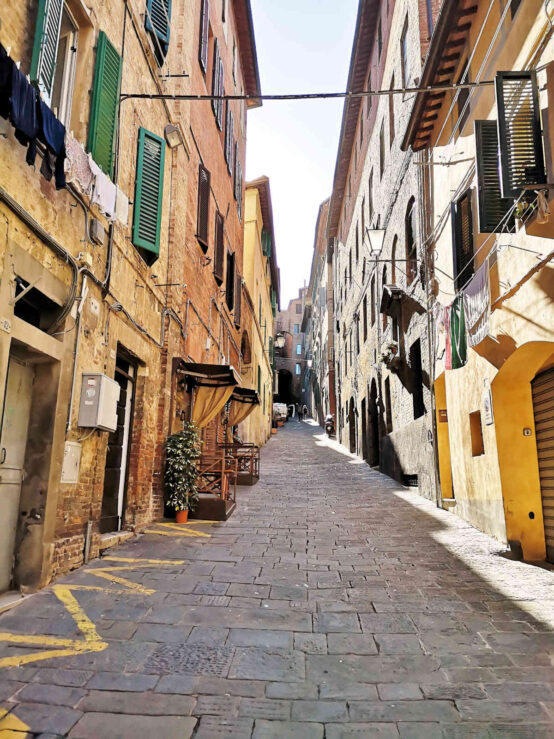
Mornings reveal a quieter side of Siena’s historic centre, where cafés, medieval houses, and narrow streets create one of the city’s most atmospheric places to stay.
Accommodation ranges from elegant boutique hotels in restored palaces to charming guesthouses tucked away along narrow medieval lanes, many of them housed in centuries-old buildings. Many properties retain original architectural features such as exposed brickwork, timber beams, vaulted ceilings, and historic courtyards, all of which add to the sense of place. Some smaller hotels and guesthouses also feature rooftop terraces or views across Siena’s terracotta rooftops, offering a memorable perspective over the medieval city.
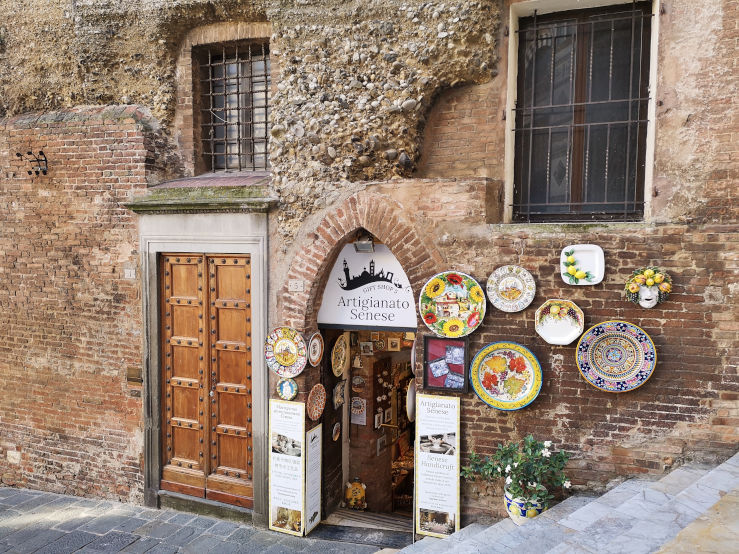
Staying within Siena’s historic centre means you are never far from artisan shops, traditional crafts, and centuries-old streets that are best explored on foot.
The main disadvantages are higher accommodation prices and limited vehicle access. Much of the historic centre lies within a restricted traffic zone (ZTL: limited traffic zone), parking is generally outside the walls, and some historic buildings have steep staircases or no lifts. Nevertheless, these are small compromises for the convenience of staying in one of Italy’s finest preserved medieval cities.
For most first-time visitors, staying within the Historic Centre provides the best balance of atmosphere, convenience, and cultural experience. You can walk almost everywhere, enjoy Siena’s cafés and restaurants in the evenings, and appreciate the city before and after the busiest sightseeing hours.
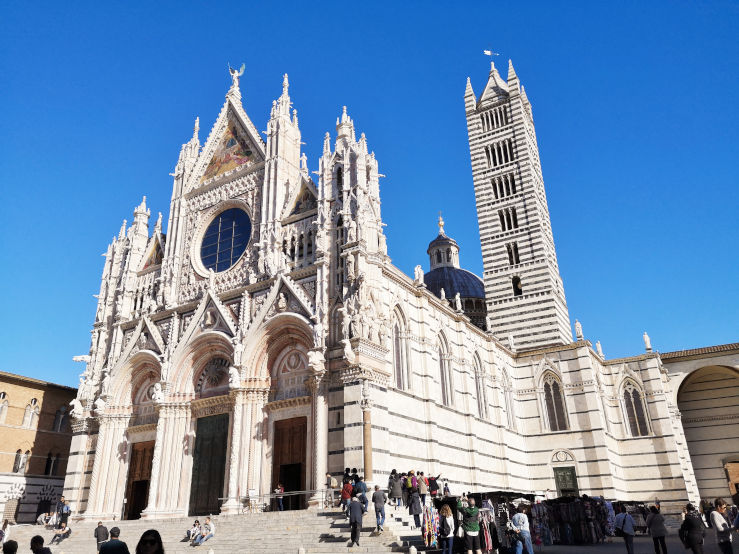
Siena Cathedral (Duomo) stands at the heart of the Historic Centre, making this one of the most convenient and sought-after areas to stay for first-time visitors.
The hotels below are among the best-rated options for travellers who want to stay within walking distance of Siena’s main attractions while enjoying the setting of the historic centre.
Visitors staying in the Historic Centre enjoy Siena’s widest choice of boutique and luxury accommodation, much of it housed in beautifully restored medieval buildings. Staying within a few minutes’ walk of Piazza del Campo or Siena Cathedral provides the most immersive experience, especially on a short visit.
Tip: Accommodation prices rise considerably during the Palio festivals in July and August.
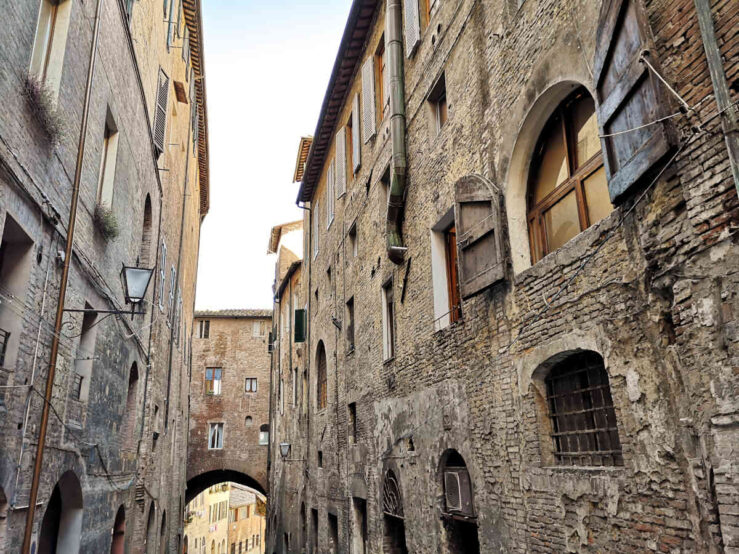
Covered medieval passages such as this are characteristic of Siena’s historic centre, where centuries-old buildings line a maze of narrow streets.
Exploring these atmospheric streets is one of the greatest pleasures of staying within Siena’s historic centre, where even short walks often reveal unexpected architectural details.
Tip: Many streets are steep and paved with stone, so rolling large suitcases can be tiring.
Planning activities after choosing where to stay? These are among the most popular experiences for visitors to Siena.
5. San Domenico: A Quieter Central Stay
(who should stay here)
🌅 Panoramic city views
🚶 A quieter location easily reached on foot from the Historic Centre
🍷 Couples and travellers seeking a more relaxed ambience
Although Siena’s historic centre is compact, the area around Basilica di San Domenico has a noticeably quieter atmosphere than the streets surrounding Piazza del Campo. Located on the western side of the medieval city, it combines easy access to the main attractions with peaceful lanes, attractive viewpoints, and a more residential feel. You can explore more of Siena’s historic landmarks in our Siena travel guide.
This neighbourhood is ideal if you want to stay close to the action without being in the busiest part of the city. Piazza del Campo, Siena Cathedral, and the city’s principal museums are all within a comfortable ten to fifteen-minute walk, while many hotels enjoy elevated positions with views across Siena’s terracotta rooftops and the surrounding Tuscan countryside.
The streets here feel particularly atmospheric in the early morning and evening, when local residents outnumber visitors and the city’s medieval character is at its most authentic. Small cafés, traditional trattorias, and quiet piazzas create a slower pace than the central tourist routes.

The area around the Basilica of San Domenico offers a quieter place to stay in Siena while remaining within an easy walk of Piazza del Campo and Siena Cathedral.
Accommodation ranges from elegant boutique hotels occupying historic buildings to charming guesthouses with panoramic terraces. This area is especially popular with couples and travellers looking for a quieter stay without sacrificing walkability.
The only minor disadvantage is that some streets are steep, reflecting Siena’s hilltop setting. However, most visitors find the short uphill walks a small price to pay for the peaceful surroundings and excellent views.
Hotels around San Domenico combine historic character with a quieter setting than the heart of the Historic Centre. Many also offer panoramic terraces or private parking, making them an attractive choice for visitors spending several days in Siena.
6. Outside the City Walls: Best for Parking & Countryside Views
(who should stay here)
🚗 Travellers arriving by car
🌄 Panoramic Tuscan countryside views
🏊 Hotels with gardens, terraces, and more space
Just outside Siena’s medieval walls, the atmosphere changes quickly from dense historic streets to open views across the Tuscan countryside. This area is ideal for travellers who want easier access by car, more spacious accommodation, and a quieter environment while still staying within walking distance of the historic centre.
One of the main advantages of staying here is practicality. Parking inside Siena’s historic centre is extremely limited due to restricted traffic zones, so hotels just outside the walls often provide private parking and easier arrival logistics. From most properties, it is still only a short walk or taxi ride into Piazza del Campo and the city’s main sights.
This area also allows you to enjoy some of the most memorable views of Siena. Many hotels are positioned on gentle hills overlooking the city, where you can see the medieval skyline rise above the surrounding landscape. In the evening, the city lights combined with the rolling Tuscan hills create a very different atmosphere from staying inside the centre.
Accommodation here tends to be more spacious than within the walls, with country-style hotels, historic villas, and converted monasteries offering gardens, pools, and terraces. This makes it especially appealing for longer stays or summer visits when outdoor space becomes more valuable.
The main trade-off is atmosphere. You are no longer staying inside Siena’s medieval core, so you will not have the same immediate access to narrow streets and early-morning city scenes. However, the walk into the centre is short enough that most visitors find this a very good compromise between comfort and experience.
Hotels just outside Siena combine countryside calm with convenient access to the historic centre. These properties are especially popular with travellers arriving by car, families seeking more space, and visitors planning to explore the wider Tuscany region.
7. Siena Accommodation FAQ
Is it better to stay inside or outside Siena’s city walls?
For most first-time visitors, staying inside Siena’s medieval city walls offers the best experience. You will be within walking distance of Piazza del Campo, Siena Cathedral, museums, restaurants, and cafés, while enjoying the city’s unique atmosphere after many day visitors have left. If you are arriving by car or planning to explore Tuscany by road, accommodation just outside the walls may be more practical thanks to easier parking and quieter surroundings.
How many nights should you stay in Siena?
One night allows you to experience Siena in the evening and early morning, when the city is at its most atmospheric. However, two nights provide a more relaxed visit and leave time to explore museums, churches, local restaurants, and nearby Tuscan destinations without rushing.
Can you explore Siena without a car?
Yes. Siena is one of Italy’s most walkable historic cities. Most attractions within the UNESCO-listed historic centre can be reached on foot in 10 to 20 minutes, and visitors staying in the centre rarely need public transport. If you plan to visit the surrounding Tuscan countryside, hiring a car or joining organised tours may be worthwhile.
Is Siena a good base for exploring Tuscany?
Yes. Siena is well placed for visiting many of Tuscany’s most famous destinations, including the Chianti wine region, San Gimignano, Montepulciano, Pienza, Montalcino, and the Val d’Orcia. Travellers planning several day trips often prefer hotels just outside the city walls, where parking is easier and road access is more convenient.
Is it worth staying overnight in Siena?
Yes. Although many visitors arrive on day trips from Florence, staying overnight allows you to experience Siena at its most memorable. Early mornings and evenings are considerably quieter, making it easier to appreciate the city’s medieval streets, piazzas, and restaurants without the busiest daytime crowds.
When should you book accommodation in Siena?
Accommodation should be booked well in advance if you plan to visit between May and September or during the Palio di Siena. Hotels within the historic centre are especially popular during these periods, and the best-located properties often sell out several months ahead.
Plan the Rest of Your Siena & Tuscany Trip
Now that you have chosen where to stay in Siena, it is time to plan what to see and how to explore the rest of Tuscany. These guides will help you make the most of your visit.
- 🏛️ Siena Travel Guide – Discover the city’s top attractions, museums, churches, viewpoints, and practical travel tips.
- 🏛️ Florence – Renaissance masterpieces, world-famous museums, and historic piazzas.
- 🏰 San Gimignano – Medieval towers and one of Tuscany’s most iconic hill towns.
- 🪨 Volterra – Etruscan history, alabaster craftsmanship, and dramatic hilltop views.
- 🌿 Lucca – Renaissance walls, elegant squares, and one of Tuscany’s most charming cities.
- 🗺️ Tuscany Travel Guide – Explore the region’s cities, hill towns, scenic drives, and cultural highlights.
- 🚗 5 Top-Tier Day Trips from Florence
- 🗺️ Best Tuscan Itineraries
- 🎟️ Hotels, Tours & Travel Resources
- 🇮🇹 Italy Travel Hub – Browse all of our Italy destinations, itineraries, and cultural travel guides.